Only 16% of cancer medications reimbursed by the government - European data
Malta has high survival rates for most frequent cancer types, but patients have 'significant disadvantages' when it comes to medicine access.
Patients in Malta have only 16 per cent of cancer medicines reimbursed by the national health service, compared to 100 per cent in other countries, according to European Cancer Organisation data.
The figure was highlighted at a debate in the European Parliament held on the occasion of World Cancer Day, prompting PN MEP Peter Agius to call for the urgent inclusion of cancer medicines in the government formulary and to seek a bolder European effort to beat rare cancers in Malta.
The Health Ministry did not deny or confirm the figures by the time of writing, but last year, it was announced that 10 additional new cancer medicines out of a planned 40 would be added to the national formulary.
The government formulary does not cover all cancer drugs and the gaps in access to specialised medicines are funded through the Malta Community Chest Fund Foundation.
The foundation has been in talks with the Health Ministry for a handover of these responsibilities.
The ministry also hands millions of euro to the MCCF for cancer medicines that are not on the government’s formulary.
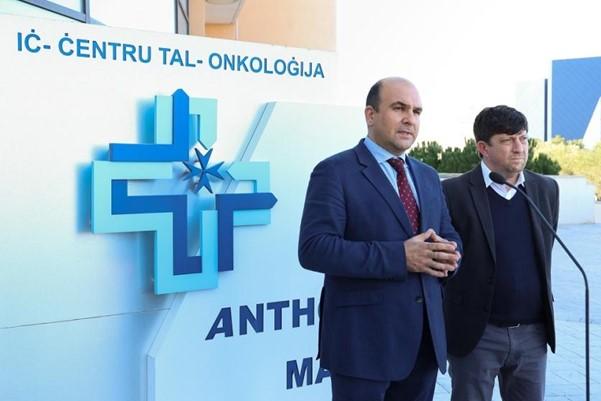 MEP Peter Agius has called for the urgent inclusion of cancer medicines in the government formulary
In 2024, Prime Minister Robert Abela said the government expected to take over the funding of cancer medicines and reliance on the MCCFF by the following year.
While Malta provides free, state-funded access to a wide range of essential cancer treatments for residents, it has ranked among the lowest in the EU for the availability of newly approved, innovative cancer medicines.
The EP Health Committee’s high-level debate singled out Germany and Estonia as the countries that reimbursed all cancer medicines for patients.
It put a spotlight on Malta’s health services, which stood out for having “one of the best survival rates for most frequent cancer types”, including breast and prostate, while underlining “significant disadvantages” for Maltese patients when it came to medicine access.
Reacting to the data, Agius reiterated that Maltese patients needed to source private funding for the latest, high-cost therapies, or plead to the MCCFF “under immense time pressures and stress”.
He said it was “high time we end this and include cancer medicines in the government formulary list” – an ongoing debate frequently brought up in the past.
The government has been criticised over the years for the situation that sees cancer patients having to apply to the MCCF for expensive medicines. The charity has said that funding for these takes up the lion's share of its budget and fund-raising activities.
The Nationalist Party has also insisted patients should not be made to beg for medicines and these should be funded directly by the government.
In his intervention in the debate, Agius also highlighted how Malta has some of the best care levels for the frequently occurring cancer types but then suffers from lower survival rates for rarer cancers.
Survival rates for some rarer gynaecological cancers have been estimated to vary by a difference of over 20 per cent when comparing Malta and other smaller Member States with larger countries like Germany and France.
“This is exactly where Europe needs to make a difference. We must leverage European collaboration to advance cancer diagnosis and care in smaller Member States with fewer facilities,” Agius said.
Suggested solutions included further bolstering the European Reference Networks for doctors so that rare cancer patients can access specialised expertise regardless of where they live. There have also been calls for an increased and systematic use of the Cross Border Health Directive in Malta for rarer cancer types.
Other MEPs also appealed for an expansion of cross-border clinical trials to ensure patients in smaller Member States were not left behind.
The remaining disparities across Europe in cancer care were emphasised by the European Cancer Organisation during the debate, with warnings that access to care still depended heavily on geography.
GWU warns of cancer risks to workers as a result of EU deregulation
The General Workers' Union, in a statement on Wednesday to mark World Cancer Day, warned that the European Commission’s deregulation agenda risks exposing more workers — including in Malta — to cancer-causing substances.
The European Commission is proposing changes that would make it easier for companies to use substances that are carcinogenic, mutagenic, or toxic for reproduction (CMR) in the production of cosmetics and fertilisers, it said. These substances are known to pose serious risks to human health and have long been subject to strict controls to protect workers and the public.
"The GWU stresses that Maltese workers in sectors such as manufacturing, agriculture, waste collection, cleaning services and personal care services, including hairdressing and beauty salons, could be directly affected by these changes. Many of these workers already operate in environments where chemical exposure is a daily reality, and any weakening of safeguards would increase the risk of cancer and other serious illnesses," said Secretary General Josef Bugeja.
"At a time when Malta and Europe should be strengthening occupational health and safety standards, these proposals move in the opposite direction and place profits before people."
The GWU said that as the European Parliament considers a report on the Commission’s so-called “Chemicals Omnibus”, it is aligning itself with the European Trade Union Confederation (ETUC) in calling on members of the European Parliament to defend workers’ health and safety and reject any attempt to weaken existing protections.
"Health and safety at work is a fundamental right. Workers should not be made to pay with their health for deregulation that benefits multinational companies," it said.