98-year-old among 28,000 to sign up for AI course
Government-funded AI4All scheme is expected to cost taxpayers around €7 million
A 98-year-old is among the 28,000 people who have signed up for the national artificial intelligence scheme since it was launched in May, according to figures shared with Times of Malta.
The youngest registered participant was 14, the minimum age required to take part in the government-funded AI4All scheme.
Run by the Malta Digital Innovation Authority (MDIA), it offers participants a free one-year subscription to either ChatGPT Plus or Microsoft Copilot once they complete an online course.
The scheme is expected to cost taxpayers around €7 million.
MDIA chief executive Kenneth Brincat said the free one-year subscription attracted participants but that the programme’s main objective was to improve AI literacy across the population.
“You need to incentivise the Maltese to do the course,” he said. “We wanted to educate as many people as possible,” he said.
More than 17,600 participants passed all three modules, averaging a score of 95 per cent, and were then given the free subscription.
Who signed up?
The data shows participants came from all localities across Malta and Gozo. St Paul’s Bay recorded the highest number of enrolments, followed by Mosta and Birkirkara.
“A person of 98 enrolled, there was another of 97 and another in their nineties,” Brincat said.
However, because access is linked to an eID account, the registration data cannot rule out the possibility that a younger child completed the course using an elderly relative’s account.
The largest age group was those aged between 25 and 34, with around 5,400 participants.
Men accounted for 60% of participants and women for 40%.
Most learners were in full-time employment, although the programme also attracted more than 2,200 students and almost 500 retirees.
The majority, 65%, said they already use AI daily in their personal life, while 57% use it daily at work. Nearly a third said they had little or no experience of using AI before taking the course.
The questions covered AI fundamentals, everyday use and learning.
After completing the course, learners were asked to rate their confidence in using AI responsibly. More than 94% said they felt confident that they understood the technology’s risks and limitations and could identify practical uses for it.
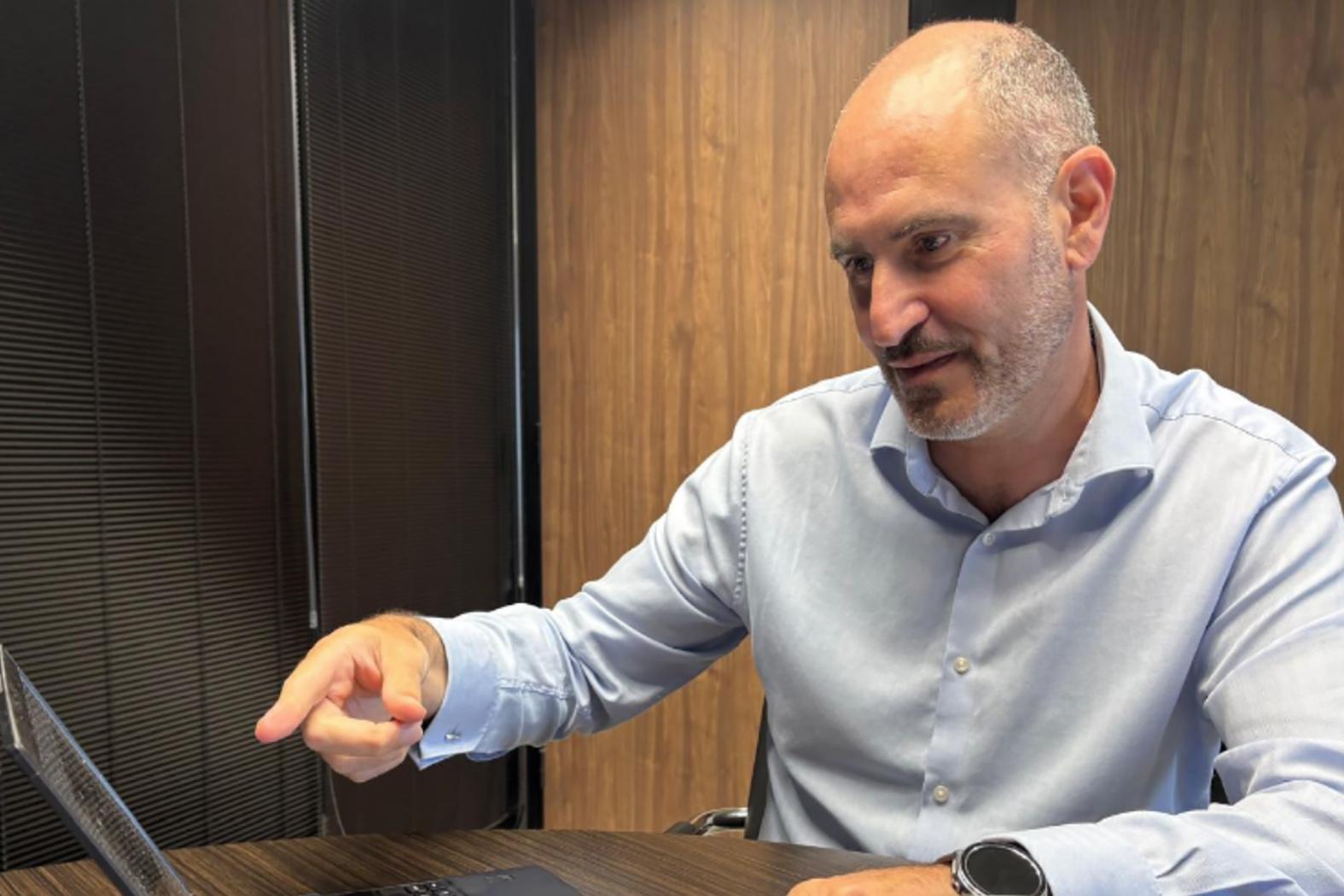 MDIA chief executive Kenneth Brincat
Which AI model works best in Maltese?
Alongside the programme, the MDIA commissioned an assessment comparing four leading AI chatbots: ChatGPT, Microsoft’s Copilot, Google’s Gemini and Anthropic’s Claude.
The systems were tested using Maltese-language prompts based on social media posts, news articles and citizen queries, including spelling mistakes and everyday language.
According to Brincat, Copilot performed best for Maltese-language understanding and data sovereignty, while ChatGPT and Gemini scored highest for overall reliability. Claude ranked highest for safety but lagged behind in speed and Maltese-language comprehension.
Brincat said Copilot’s performance was likely helped by Microsoft’s longstanding relationship with the Maltese government.
“Students use Microsoft products, so Copilot has a large Maltese-language dataset available,” he said.
He added that ChatGPT had also improved considerably as increasing numbers of Maltese users interacted with it in the local language.
Overall, the evaluation concluded that ChatGPT and Copilot were the strongest choices for everyday users.
“The choice between them depends more on policy decisions than on their technical capabilities,” he said.
Google wanted ‘exclusivity’
Google’s Gemini was initially considered for the programme but was dropped after the company insisted on being the sole provider.
“Google wanted exclusivity. They wanted it to be just them,” Brincat said.
“We felt it would be better to have more than one choice. We asked them if they would join alongside the other two and they said no.”
Negotiating with Microsoft was relatively straightforward because the company already has a presence in Malta. Reaching an agreement with OpenAI, however, proved more difficult.
“We were struggling for a long time,” he said. “It was thanks to the intervention of the American Embassy in Malta that we managed to make contact with George Osborne.”
Osborne, a former UK Chancellor of the Exchequer, joined OpenAI in 2025 and leads its ‘OpenAI for Countries’ programme. Negotiations were conducted directly with Osborne’s team, Brincat said.
Brincat believes Malta has achieved one of the highest levels of public participation in an AI literacy programme anywhere in the world.
He cited Finland’s Elements of AI course and a similar scheme in Singapore as the closest comparisons.
“Finland reached around 1.1 per cent. We reached 3.5 per cent [of the population],” he said. “I think Malta really excels when it comes to AI. The Maltese are a curious people. They like experimenting, they like testing things and the results prove it.”
I think Malta really excels when it comes to AI. The Maltese are a curious people. They like experimenting, they like testing things and the results prove it- Kenneth Brincat
However, he acknowledged that the comparison was not exact because Finland’s course was available internationally, while Malta’s programme is limited to residents.
Brincat believes widespread adoption of AI should change the way employers and educators assess people’s work.
“We should spend less time asking people to produce reports because a report can simply be generated,” he said. “We need to dedicate more time to brainstorming, more time to collaboration and more training in creative thinking.”
The current budget measure funds the programme for one year only and the agreements with OpenAI and Microsoft also run for a year. No decision has been taken on whether it will be extended.
“There is no commitment from the government beyond one year. Nothing has been decided beyond that,” Brincat said.
He said the subscription is personal and cannot be used for work purposes. “You link it to your Gmail account, not your work email. It’s for you as an individual,” he said.
Asked whether someone who completes the course in January would still hold a valid subscription months later, he confirmed: “Exactly. You’d still have it until April.”
Maltese citizens and residents aged 14 and over who possess an eID account are eligible to participate. The course is accessible online.