A monastery within
Pete Farrugia speaks to Fr Charlo Camilleri about the Mdina Priory’s cultural initiatives and the growing awareness of personal spirituality in contemporary Malta. Artistically and architecturally, the Mdina Priory is one of the most important churches...
Pete Farrugia speaks to Fr Charlo Camilleri about the Mdina Priory’s cultural initiatives and the growing awareness of personal spirituality in contemporary Malta.
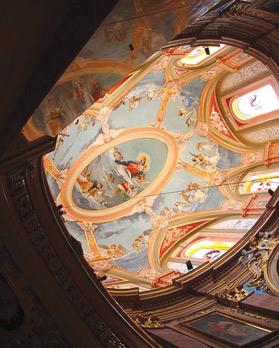 Artistically and architecturally, the Mdina Priory is one of the most important churches in Maltese baroque architecture.
Inspired by the Magisterium on Culture and New Evangelisation, the Carmelite Priory in Mdina has become a hub for new approaches in bringing spirituality and education to the island.
Rather than the staid (largely ineffectual) attempts at outreach practised by many other programmes, the Priory has gone out of its way to attract a diverse section of the population with a line-up that includes cultural events, exhibition openings, concerts and seminars.
A recent book launch, promoting hitherto unavailable work by Maltese poet and philosopher Anastasju Cuschieri, is one recent example of current efforts bearing fruit.
Asked about the objectives underpinning this initiative, Fr Charlo Camilleri says: “When Fr Alexander Vella was provincial, he laid out a plan for renovating the Priory and making it a centre for the study of Christian and Carmelite Spirituality while promoting dialogue with contemporary culture.”
This vision has paid dividends with the Priory, a popular destination for countless visitors to Mdina, all eager to explore the order’s local history. Carmelite friars first came to Malta from Sicily during the 15th century, settling in the outskirts of Rabat in the moor of St Leonard, on land bequeathed to them by Margerita d’Aragona in 1418.
In 1659 they moved to Mdina with a first house on St Peter’s Street – a portion of that property still exists. The Carmelite church itself is attributed to Mederico Blondel, renowned French architect.
“Artistically and architecturally,” says Fr Camilleri, “it is one of the most important churches in Maltese baroque architecture. The Priory is attributed to Lorenzo Gafa, with features that include a proportioned cloister, a large refectory decorated with impressive murals, an oratory, a chapter hall and library dating back to the 16th century, and obviously the period friars’ cells.”
The place is imbued with a particularly Carmelite spirituality, a contemplative sense of peace and a focus on recollection and the experience of beauty. This is what it is all about, “being an open space in which God may dwell”.
A place is being created for people to experience God through silence, beauty, culture, lectures and events
The Carmelite Priory plays host to the Carmelite Institute Malta, a joint venture of Carmelites and Discalced Carmelites. The organisation offers courses in Spirituality as an accredited MA, in collaboration with the University of Malta, and a series of other courses open to the public.
The Institute also collaborates with diverse foreign institutes of spirituality, organising seminars and conferences on spiritual theology.
One of the group’s latest events was a meeting of international experts that treated themes of biblical spirituality. Renowned theologians like Sandra Schneiders, and other participants from various denominations and faith traditions, were invited to participate.
Perhaps unique to the Priory and its goals is an openness to new means of communicating the contemplative message of faithfulness. The Priory is available for theatrical performances and discussion groups, offering a safe space where individuals from every walk of life can explore their spiritual journey.
Central to the Carmelite way is a profound respect for the integrity and dignity of earnest seekers.
“We’ve always encountered a positive and encouraging response,” says Fr Camilleri, “and dialogue with contemporary culture is always dynamic. It’s never ending. We’re involved in an ongoing process where those engaged in this type of dialogue feel blessed and learn a lot from each other. It is not a question of convincing people about faith, or doctrine… it is a humble offering of a space where all people of good will are welcome.”
This vision of the monastery as a welcoming space where a person can experience God in the simple act of hosting, welcoming, and being welcomed, is an important element in the Priory’s success at reaching new visitors. The virtue of hospitality, with its universal appeal, becomes a doorway to deeper connections and a sense of true communion.
“I think we’ve achieved a lot in five years, since the project first began. If an evaluation can be made, I must say it is a spiritual achievement. A place is being created for people to experience God through silence, beauty, culture, lectures and events.
“Obviously, you get those who do not capture the spirit of the place and of the vision, thinking that the Carmelite Priory was converted into a museum for lack of vocations or for business purposes, but there’s no lucrative profit in the project. We struggle and find it difficult to make ends meet.
“Funds and donations are always needed. Right now, the church bells are in urgent need of repair. Yet, the spiritual vision keeps us going on, aiming only to share the richness of our cultural and spiritual heritage.”
Fr Camilleri and his brother friars, who call the Priory home, have helped build a space where encounters with the numinous are brought within reach for those of us absorbed in a wild, ever-changing world. It is this promotion of culture, research and study, all in a context of dialogue that best expresses the kind of evangelising quality the Church will have to harness in order to continue a positive impact in Maltese society.
By supporting initiatives like the Priory, an integral element of Malta’s heritage is being preserved, while ensuring that an encouraging message for the future reaches an eager and receptive audience.