A ‘doctor’ for our times
Saint, scholar, seeker: Why John Henry Newman’s legacy matters now more than ever
On July 31, Pope Leo XIV announced that the Church would recognise John Henry Newman as a ‘Doctor of the Church’. This title is bestowed on 37 saints whose scholarship and doctrinal teachings have given great advantage to the Church as a whole. This comes at a very propitious time. Not only are Newman’s works still relevant but his experience has much to teach our divided, difficult and troubled times.
If you were one of Newman’s contemporaries, your opinion on him depended very much on where you stood. If you were a Catholic, Newman was a hero who had seen the light, crossed the Tiber and embraced the Holy Mother Church. If you were a Protestant, Newman was a traitor who embraced the idolatrous and foreign Whore of Babylon. The man, who sought a ‘via media’ for much of his adult life, was not to be accorded one until much later in life, if not posthumously.
Sir John Everett Millais’s beautiful portrait of Newman gives us some glimpses into these two positions. On the one hand, Newman’s aged and worn face looks determined yet kindly and gentle. On the other hand, Newman is dressed in the finest scarlet regalia with lace trimmings as Prince of the Church. In some ways, as one of his biographers describes him, a “reluctant eminence”, but, to his audience, it could be a reminder of “Henry VIII’s Cardinal Wolsey”, a “devious papal emissary”.
Newman, of course, was so much more than this. He was, first and foremost, a human being in search of the truth. His life is very much a chiaroscuro painting – of darkness, light and shadows. Some of his famous writings give us a glimpse of this. In Lead Kindly Light – based on a Biblical text from the book of Exodus – he speaks of an “encircling gloom”, of being far from home, of a dark night; of a “garish day” and fears. And, yet, the presence of a “kindly light” leading home is never far. On his tombstone, his etched words which sum up his life: “From symbols and shadows – to the truth.”
One-hundred-and-thirty years after his death, on the occasion of his canonisation, Newman was celebrated in ways unimaginable during his lifetime. The then-heir to the throne, now King Charles III, wrote a beautiful piece in L’Osservatore Romano, describing Newman as a man of “fearless honesty, unsparing rigour and originality of thought”. Five years later, on the announcement that he was to be declared Doctor of the Church, the same university from which he had to resign after his conversion to Catholicism issued a statement praising“his emphasis on the tutorial system of teaching and on the personal, moral and social development of students”.
Newman’s life, of course, is far too rich to condense in a short article. Yet, there are three elements which can be discerned from his life which are much needed in the present: community, beauty and truth.
Newman’s life is one lived in community. It was in the community of Oriel College that Newman’s talents flourished. It was a life of routine – of regular meals, structured church services, pastoral duties and student contact – yet, it was also a fulfilling life where friendships could be formed and sustained. Creating lasting friendships in academic settings is a miracle in itself!
John Henry Newman, of course, was the ultimate educator- André DeBattista
As Newman matured in his reading and reflection, he moved into another community at Littlemore where he lived a more structured life based on the praying of the breviary, meditation, fasting and study of the Church Fathers – the latter being seminal to his understanding.
After his conversion to Catholicism, he joined the Congregation of St Philip Neri, widely known as the Oratorians. In death, he was buried in the same plot as his close friend Ambrose St John. It is hard to imagine Newman outside the context of a community or without friends. His 30-volume collection of letters is a testament to his dedication to friends and community.
It was through and with these friendships that Newman could search for beauty. His journey to the Mediterranean, particularly to Italy, would change his life and outlook. As a young Anglican priest, Newman visited Rome and took in the sights. In a visit to the Vatican Museums, he was captivated by the beauty of Raphael’s paintings. The site of St Peter’s basilica was, to him, one to behold. The churches and the ruins, the blend of splendour and asceticism piqued his curious intellect.
This, in turn, led him to a long search for the truth – through reading, writing, preaching and prayer. Newman contended that religion and knowledge are connected because
religion forms part of the broader corpus of knowledge. This is a lesson that needs to be relearned today. We often fail to understand our societies because we do not understand the moral underpinnings which shaped them into existence, warts and all!
Newman, of course, was the ultimate educator. The role of education, regardless of denomination, is to make ‘the gentleman’. In The Idea of a University, he posits that this involves having “a cultivated intellect, a delicate taste, a candid, equitable, dispassionate mind, a noble and courteous bearing in the conduct of life… these are the connatural qualities of a large knowledge; they are the objects of a university”. Taking this as the yardstick of success of an educational system seems, in my view, a perfect place to start.
His life speaks volumes to societies marred by political polarisation and hatred; to a world blighted by war and mass killings and, on a national level, to a society which is absorbed by a culture of death visible in all aspects of public life – from our day-to-day political debates, to our laws which indirectly promote the further uglification of our landscapes, to the lack of courtesy we show one another, particularly those who have no voice.
Newman – the great Doctor of the Church – reminds us that no person can flourish without community, beauty and truth. He is, indeed, the ‘doctor’ we all need.
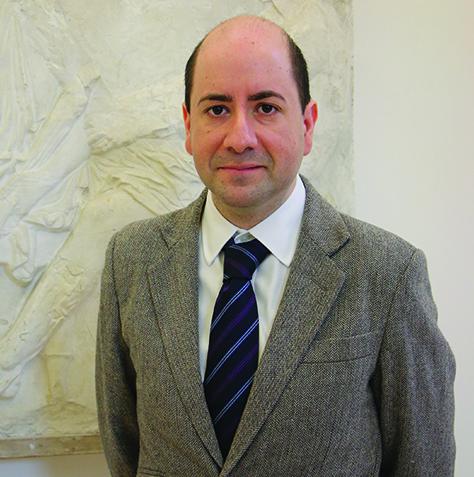 André DeBattista