A special tribunal for Ukraine
Edward Zammit Lewis on establishing legal redress for Ukraine’s suffering
Malta is a constitutionally neutral country. This does not however mean that Malta does not have a role to play in international fora, even where there are conflicts and wars. A few weeks ago, the president of Ukraine and the Council of Europe (COE), which Malta currently presides over, signed an agreement on the establishment of a Special Tribunal for the Crime of Aggression against Ukraine, including the Statute of the Special Tribunal.
This tribunal will address one of the gravest violations of international law: the crime of aggression. It will do so by ensuring that those who hold power are not shielded by it. They will be held accountable – not through retaliation but through the rule of law.
What happened a few weeks ago came after a process that began with Russia’s invasion of Ukraine, which triggered an international response on several levels, including those of the United Nations (UN), the COE and the European Union (EU). From the outset, a process was initiated to preserve evidence of war crimes and other serious violations of international law – a process that is vital for eventual effective prosecution.
This work began through the International Centre for the Prosecution of the Crime of Aggression against Ukraine (ICPA) as well as the Independent Commission of Inquiry on Ukraine, which was established in 2022 by the Human Rights Council. Since 2022, there has already existed a momentum for the COE to take a leading role.
In May of 2023, the Fourth Summit of the Heads of State and Government and the signing of the Reykjavik Declaration established the Register of Damage Caused by the Aggression, through the ‘Enlarged Partial Agreement’ Treaty. This gave greater flexibility for the initiative to be opened to non-members of the COE, international organisations and other states that voted in favour of the UNGA Resolution calling upon Russia to pay reparations for damages caused by the invasion of Ukraine (November 2022).
The need for this initiative arose from the fact that the International Criminal Court’s (ICC) jurisdiction over the crime of aggression is limited to states that are parties to the Rome Statute. This means that Russia, which is not a party, does not fall under the ICC’s jurisdiction according to international law.
This would have killed the initiative even before its birth, as Russia – being the main party responsible for the aggression against Ukraine, including Russian politicians, leaders and senior military officials – would have been effectively untouchable from the ICC’s perspective.
As a result, 38 states (including Ukraine), the COE, the European Commission and the European External Action Service basically signed three draft documents:
1. The so-called ‘Schuman Draft Statute’, which represents the core legal text that will govern the functioning of the Special Tribunal. This establishes a definition of the crime of aggression, the court’s jurisdiction and applicable law, key parameters for investigation, prosecution and trials, including the appointment of a prosecutor, and matters relating to immunities.
2. Secondly, an Enlarged Partial Agreement on a Special Tribunal, which will serve as an international treaty under the Vienna Convention on the Law of Treaties, covering the management and funding of the Special Tribunal.
€274bn in Russian assets are being held, mostly in EU member states and the US- Edward Zammit Lewis
3. Finally, a third document which extends Ukraine’s domestic jurisdiction under international law to that of the Special Tribunal.
However, there are three main hurdles to this important initiative that we must be aware of from the outset and be determined to overcome.
Firstly, the agreement on the technical process of developing a Special Tribunal for the Crime of Aggression may not necessarily translate into broad and effective political support to establish it.
Unfortunately – but such is politics – states have various competing interests, including ending the war, reinforcing European defences, reducing the risk of conflict with key international allies and conserving political capital for securing other national interests. Thus, real and effective political support is key for this initiative to materialise.
Secondly, the cost of establishing this Special Tribunal, as separate and distinct from the ICC, might be viewed as very high. Therefore, the Special Tribunal must focus on broad prosecutions to justify its creation and existence. It must not limit itself to a small group of elite prosecutions in absentia, which would be extremely costly and with no guarantee of ever apprehending, let alone convicting, the suspects.
Finally, the establishment of a Register of Damages does little to advance justice for victims without the creation of a corresponding Claims Commission supported by a Compensation Fund to provide reparations, with appropriate facilities and resources. The question of whether Russian assets can be seized or leveraged to support this fund remains a point of contention among states and under international law.
However, I must say that the wind has recently been blowing in the right direction. It is estimated that around €274 billion in Russian assets are currently being held, mostly in EU member states and the United States. Nevertheless, an International Claims Commission still needs to be established to hopefully replace the Register of Damages.
One must remember that it took over two years to reach an agreement on the technical aspects of establishing the Special Tribunal. Time is of the essence if the system is to provide effective redress through what we hope will be an efficient Claims Commission with broad international legitimacy.
Malta’s role in the process reflects its broader commitment to Ukraine’s cause. Under the Maltese presidency, the Council of Europe will focus on operationalising the tribunal and supporting Ukraine through coordinated multilateral initiatives, in an effort to expedite the process explained above.
Russia has flagrantly violated the UN Charter, as well as international humanitarian and human rights law. Russia must bear the legal consequences of its internationally wrongful acts, including making reparations for the damage caused. To uphold a rules-based international order and the integrity of international law, we – as part of the international community – must pursue meaningful and effective accountability for the crime of aggression. The pursuit of accountability is a matter of principle.
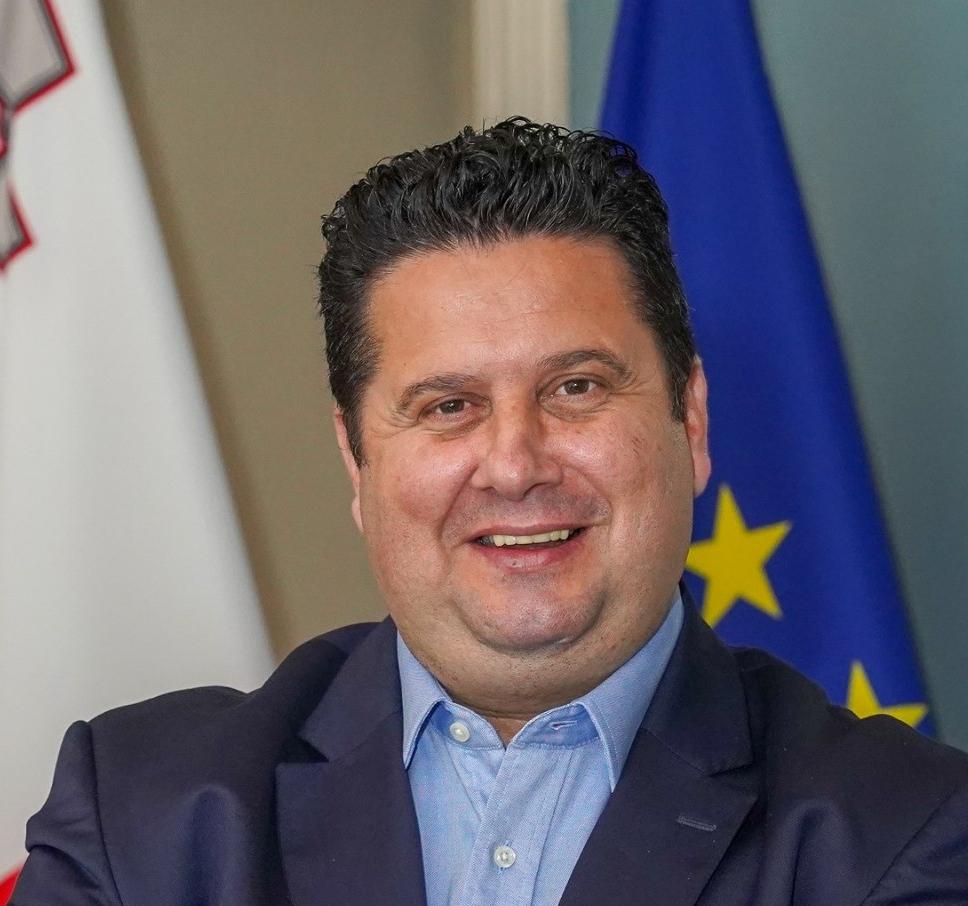
Edward Zammit Lewis is chairperson of the Foreign and European Affairs Parliamentary Standing Committee and a former European affairs minister.