A strange creature in the dark night: ‘Emvin Cremona’s The Glass Collage’
The exhibition focuses on a brief period in the artist's career
Emvin Cremona’s The Glass Collage at the Victor Pasmore gallery crackles with energy, both physical and psychological.
Because of the shattered materials, I walked into the exhibition anticipating suffering and intensity – a sort of intensity akin to Robert Rauschenberg in 1953 asking Willem de Kooning for a drawing that he would erase, transforming destruction into a creative process – but what I found was more surprising: a vision that proposed rupture as a precondition for clarity.
The exhibition focuses on a brief period in Emvin Cremona’s career when, alongside his realist Church commissions, he developed a technically complex series of collage paintings.
 Emvin Cremona with his glass works. Photo:Courtesy of the Cremona Family Archives
These works mark a radical departure from what the public expected of him – not only are they wholly abstract, but they also incorporate materials such as shattered glass, tar, gravel, rope and sand.
As one narrator in the exhibition states, these were the things Cremona would make in his own time, after he was done with the religious commissions.
The works themselves are stunning. They are dynamic and confidently executed, balancing materials effortlessly – shattered glass panes placed over thickly applied beds of impasto create beautiful and nuanced surfaces.
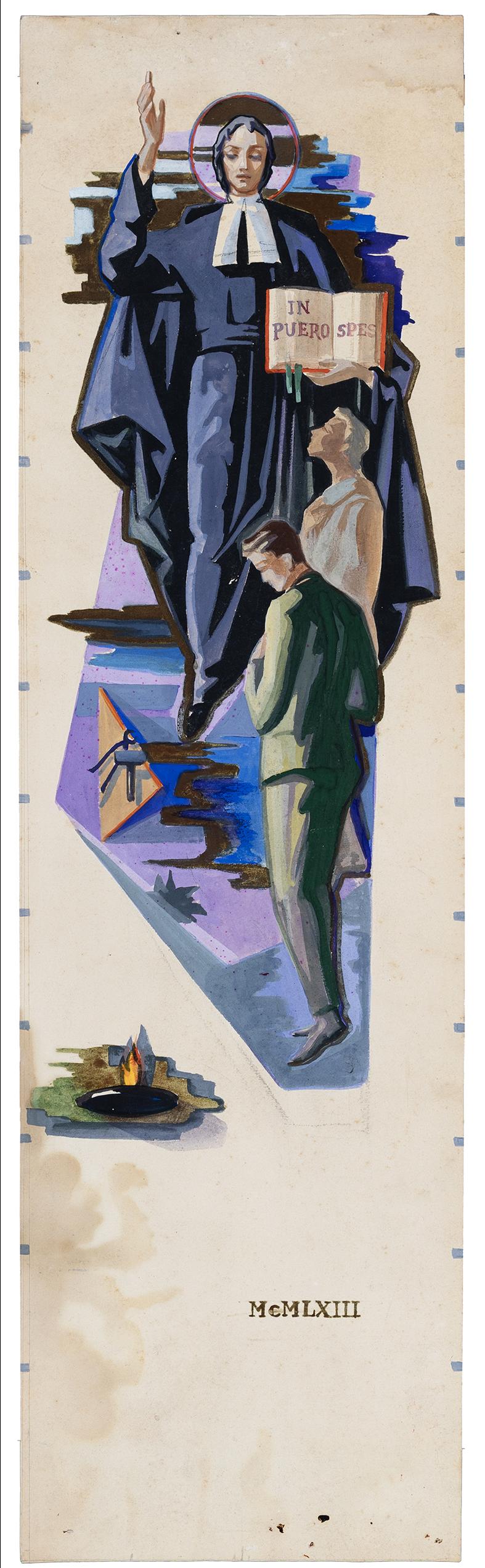 Preparatory drawing for the De La Salle Monument.
Their initial promise is the ability to turn a destructive act into a creative force and it is impossible not to read these artworks as a response to the political and social upheaval that Cremona must have felt at the time, brought about by World War II and Maltese independence.
The exhibition does an excellent job of bringing the viewer into the socio-historical context and, thus far, we have the Rauschenberg move. But beneath the struggle, something deeper is at play.
Cremona did not call these images the ‘broken glass series’, or any similar phrase that focused on the process of breakage. Instead, he termed them ‘glass collages’.
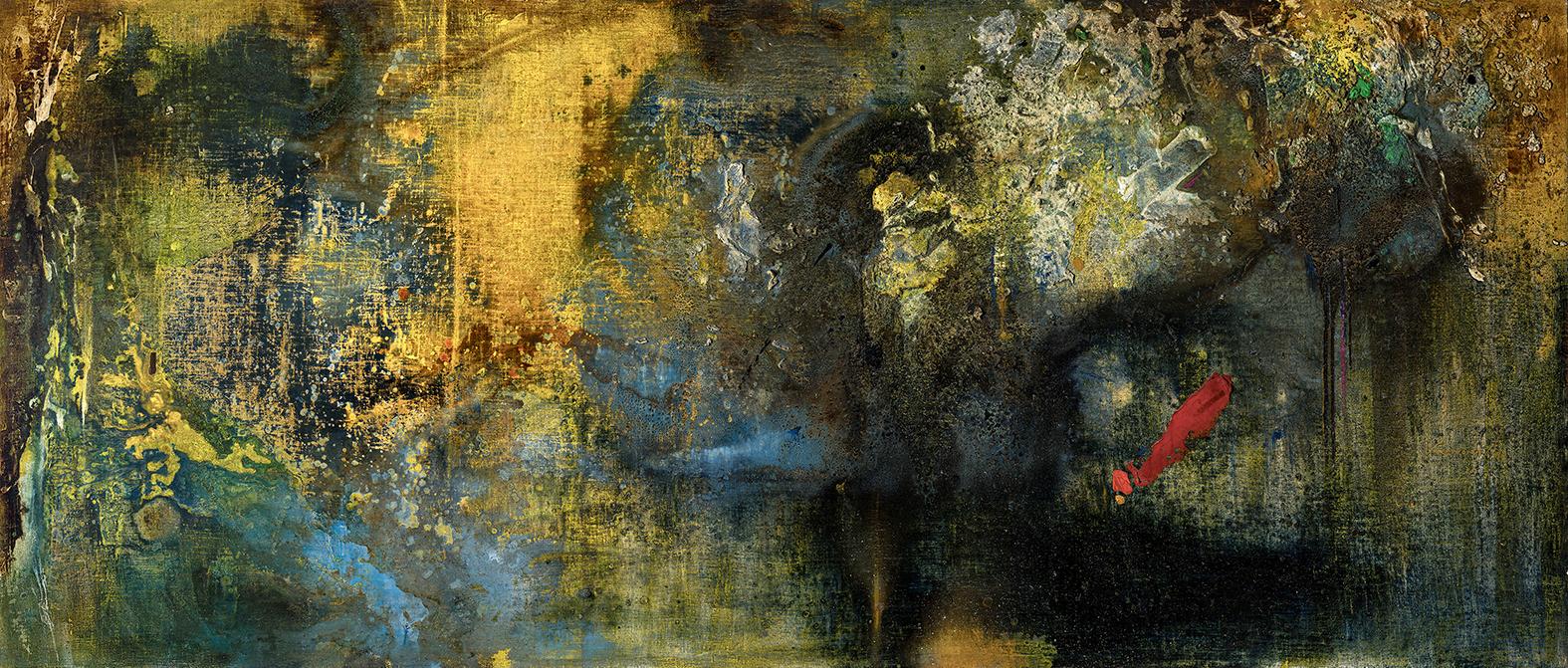 Untitled, 1968
The crucial difference is that collage is a constructive process of composition that builds something whole out of disparate parts, and therefore moves one step beyond the notion of creative destruction. It’s not just about making meaning from wreckage; it’s about deliberately building something new from disjunction.
Or in other words, a random process is relinquished in favour of self-conscious articulation, remaking as whole the thing that has been broken. Less of a trauma response, more a deliberate means of expression.
Untitled (1970) is particularly interesting because Cremona goes so far as to incorporate his elegant signature directly into the picture plane. His name hovers in the middle of the canvas, atop a landscape of crushed glass, beneath a white moon (or sun, or eye, or soul) as a key compositional element in the image. Within Untitled (1970), Cremona’s materiality lifts into an abstracted idealism: as your eye travels up the canvas, moving from what reads as earthly to what reads as ethereal, the painting offers a total cosmology.
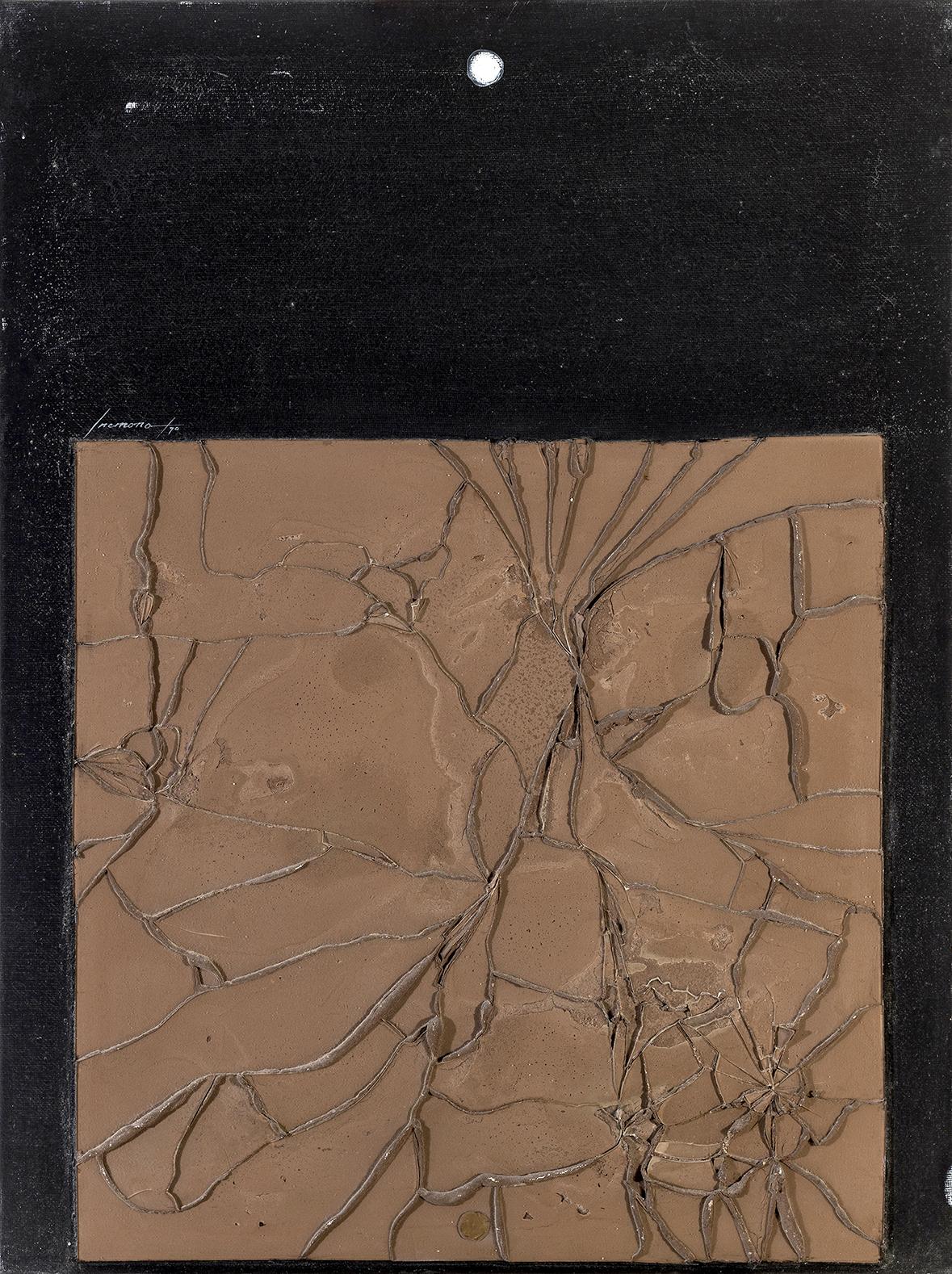 Untitled, 1970
‘What does all this mean?’, I wondered to myself. ‘What is Cremona trying to say and do with all this?’
Thinking back to the story of modernism, by erasing de Kooning’s drawing, Rauschenberg ushered in an era of new art – the contemporary.
The days of emotional splurge and abstract experimentation were coming to an end and being replaced by a type of art that did not only reflect the world, but absorbed it into its innermost fibre, transforming it and mining it for fossilised meaning, considering everything, even materials, as symbols.
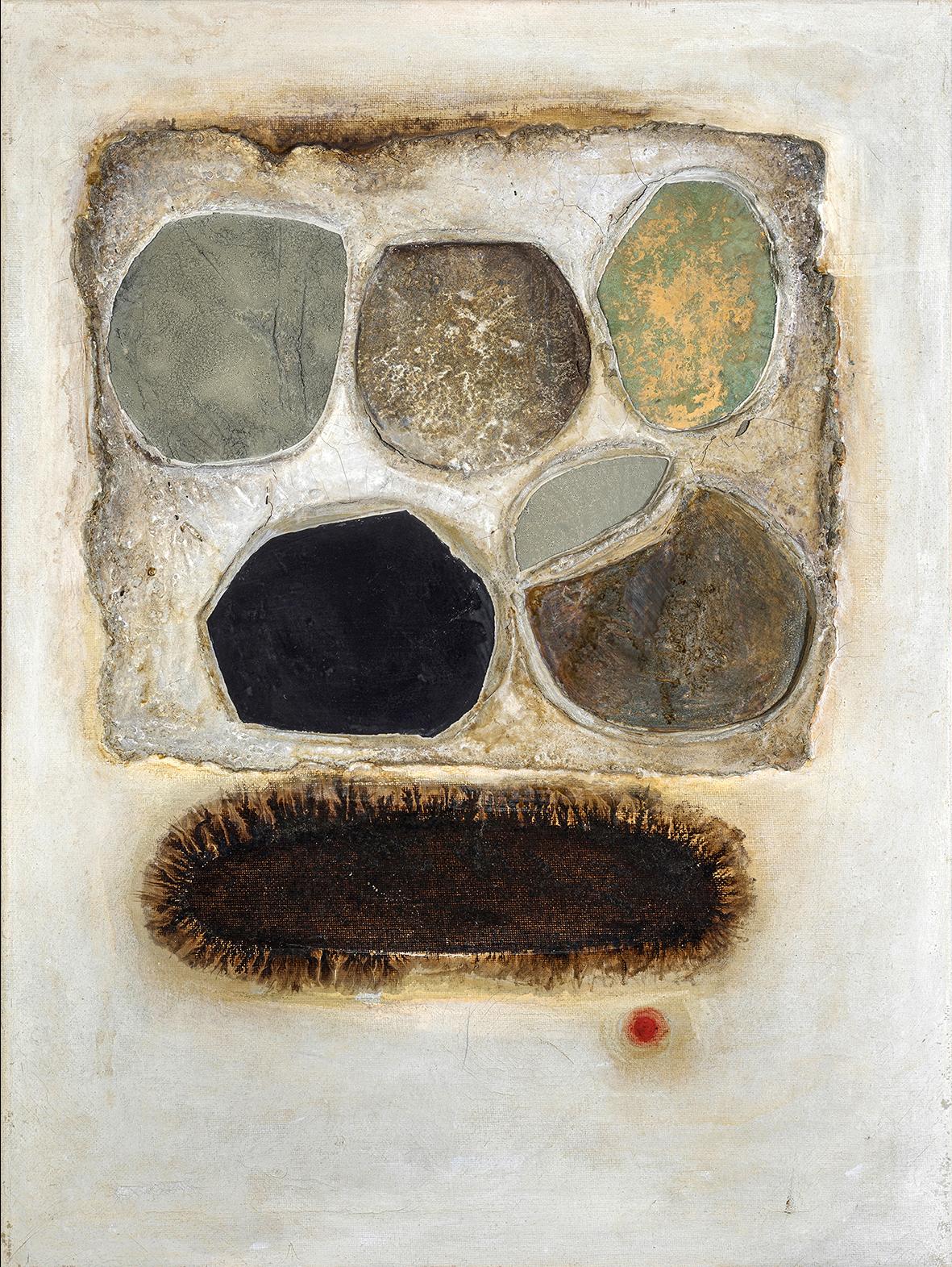 Untitled
Perhaps, as stated in the exhibition catalogue, Cremona was “shouting into space against reason and order” or perhaps, the glass collage series testifies to “his disillusion, unsatisfied as he was by the inadequacy of his artistic contributions and the constraints imposed upon him, especially of his religious and ecclesiastical commissions”.
The exhibition does not go too far beyond these speculations and adheres closely to a familiar art-historical discourse, which feels like a missed opportunity.
There is a new way of thinking that examines how art connects to lived experience, how it engages with the world and how it relates to life. The exhibition does not bridge the art-and-history discourse with more sustained speculation about how Cremona’s work connects to his life, inner and outer, or with our own lives in the present. One wonders what more might have been uncovered by following that thread.
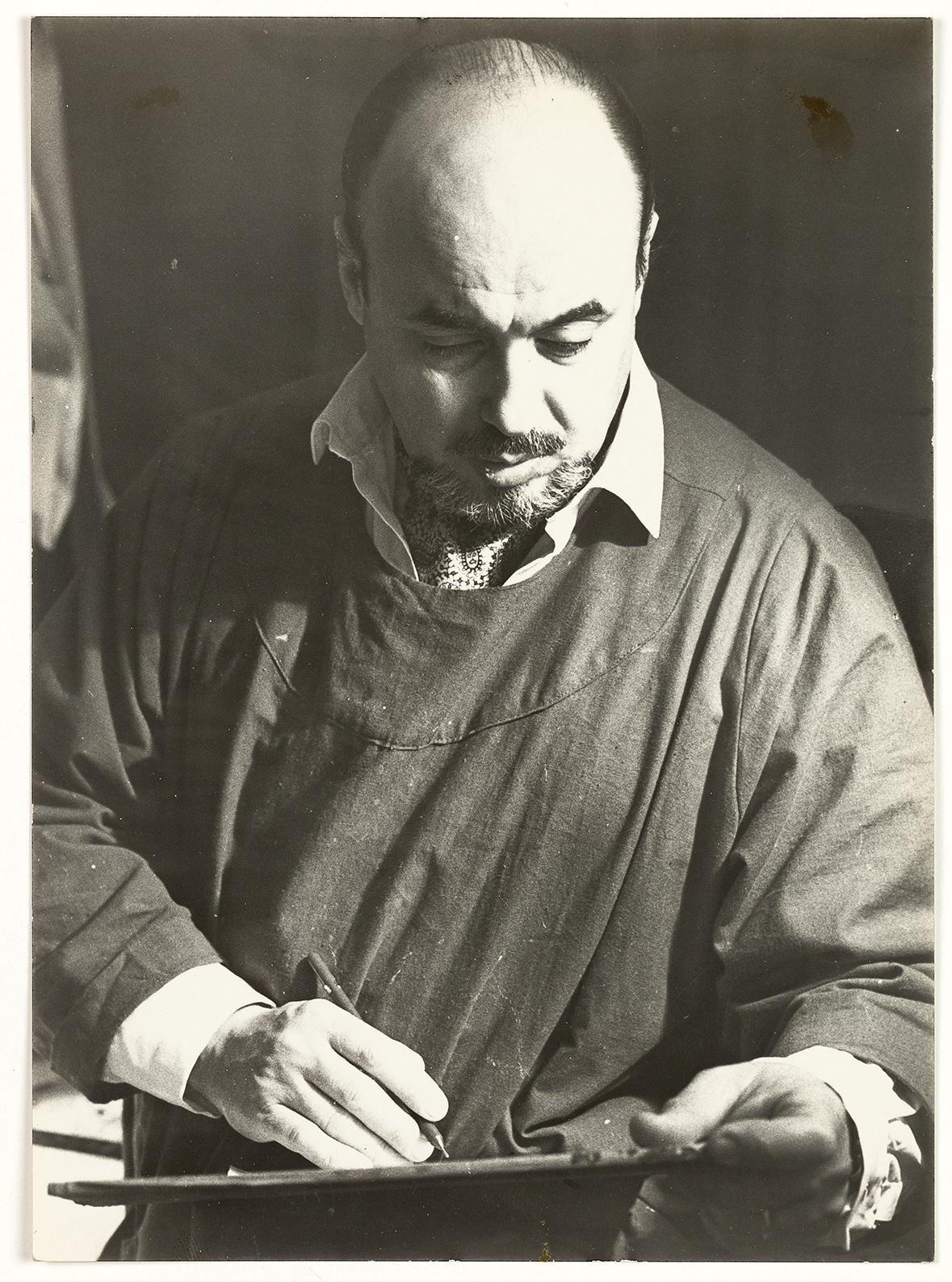 Cremona in his studio. Photo: courtesy of the Cremona Family Archives
Cremona was also famously private, so perhaps the full story is beyond discovery. The exhibition traverses the surface of this ambiguity deftly, even if it declines to dip into it.
What we do know is that when they were first unveiled in an exhibition in 1969, the glass collages confused a general public that was accustomed to a diet of conventional and easy-to-consume Church art, and so Cremona received lots of criticism for the work, so much so that he never again showed the glass collage series in Malta, retreating to the safety of his realist and design work.
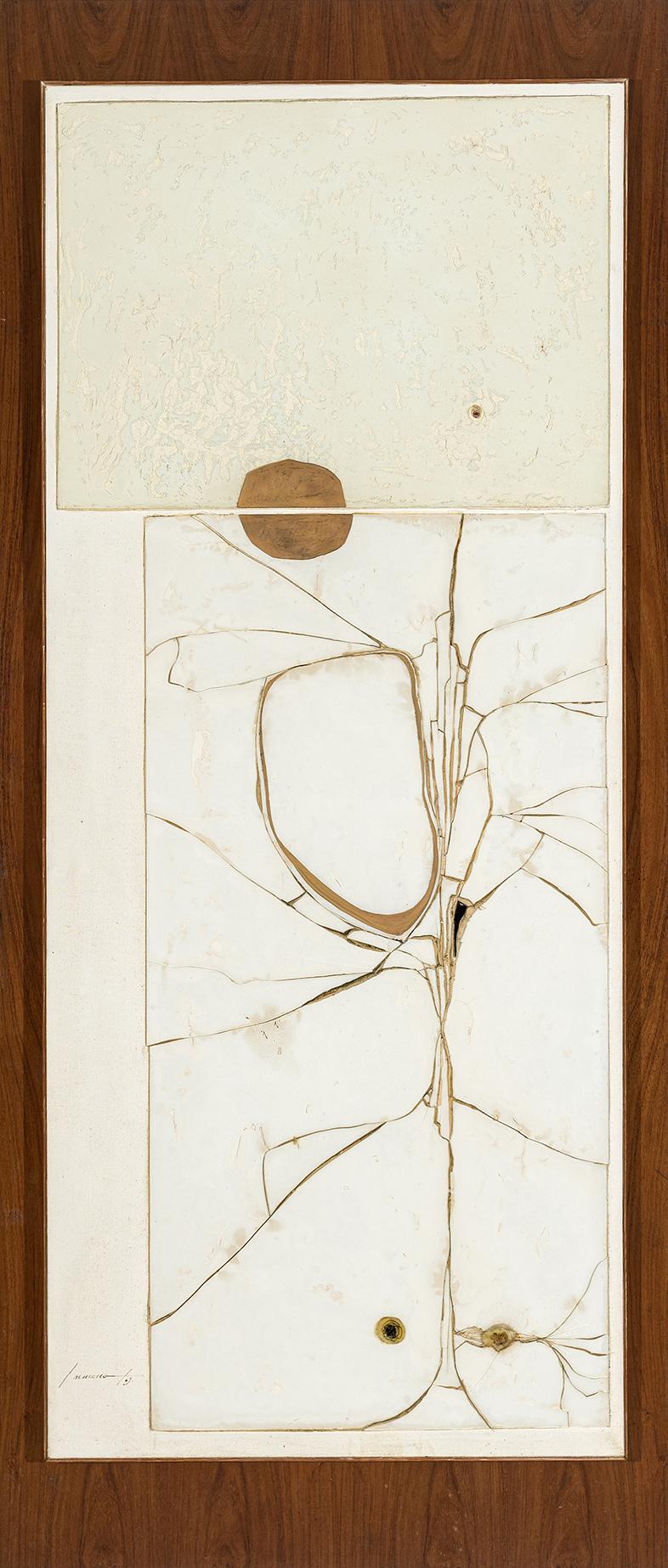 Intention M 306-69, 1969
In a sense, therefore, Emvin Cremona’s The Glass Collage is also a retrospective exercise in rehabilitation. Fondazzjoni Patrimonju Malti is an institution that has the power to write art-historical narratives, which it applies judiciously and with great tact, making its mark by rejuvenating surprising and neglected slivers of cultural history.
This exhibition was a pleasure to absorb. As per FPM standard, it is confidently curated and full of subtle insight that moves beyond the obvious but I couldn’t help but feel that there is more to be said about Cremona’s strange ‘three-year flirt’, as it has been described elsewhere, with destruction, construction and reconstitution.
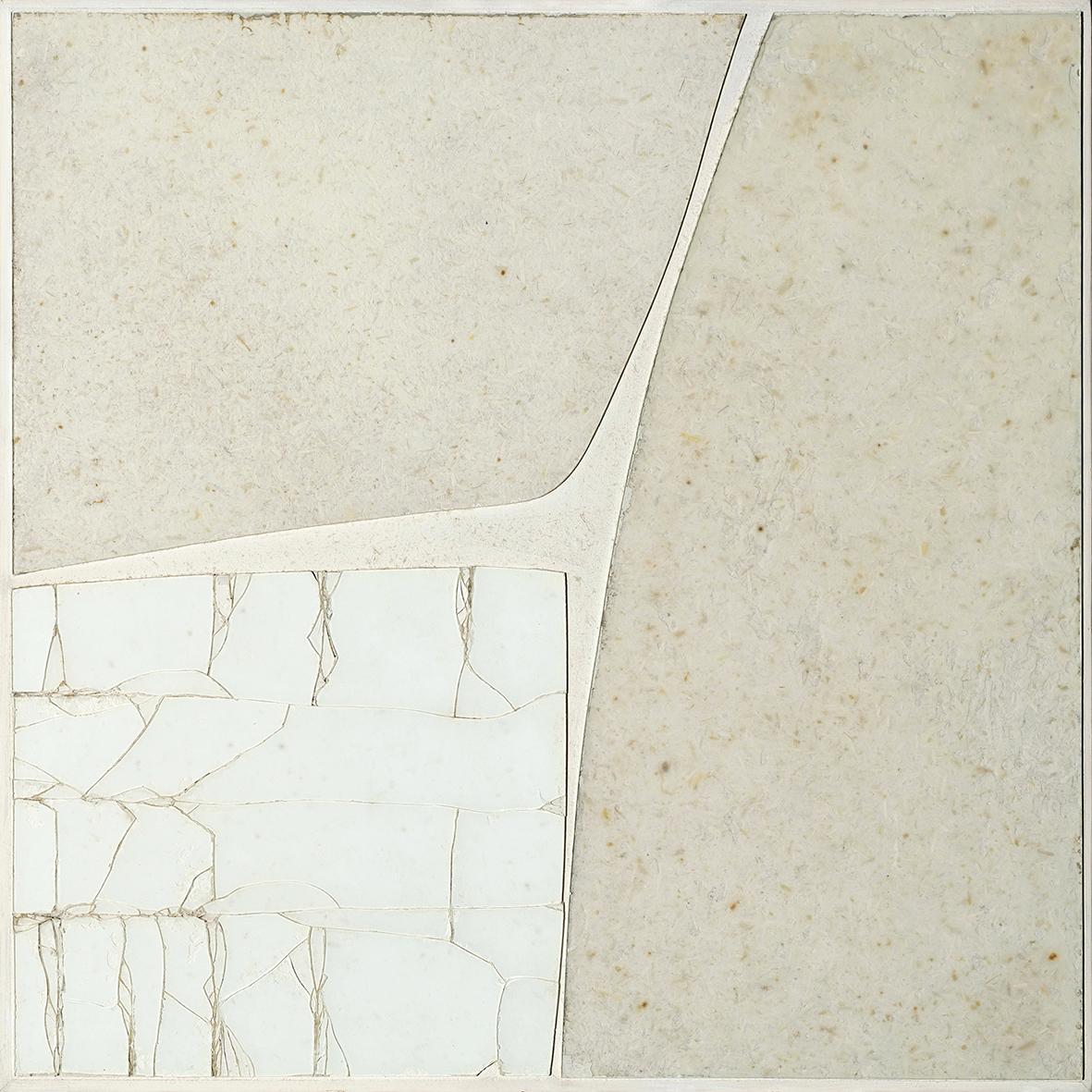 Untitled
Cremona wasn’t erasing a master’s line like Rauschenberg, nor does he come across as too deeply interested in the hidden histories of matter; instead, he seems to be inscribing his name in the rubble anew, not despite the fracture but because of it.
Long after I had left the exhibition, I kept thinking about that signature, lurking above the debris like a strange creature in the dark night.