Abela pledges planning appeal reform in first 100 days
Prime Minister says seven legal changes are on the way as delegates confirm PL leadership trio
Prime Minister Robert Abela has pledged to introduce, within his government’s first 100 days, a long-promised reform to halt development works while a planning permit is still under appeal.
Speaking at the close of Labour’s general conference, where delegates formally confirmed the party’s leadership team following its recent general election victory, Abela said the government would give “strong signs of things to come” before the next budget in October.
Abela was confirmed as Labour leader with 627 votes, equivalent to over 95% of the votes cast.
Ian Borg was confirmed as deputy leader for parliamentary affairs with 639 votes, or just under 98%, while Alex Agius Saliba was confirmed as deputy leader for party affairs with 598 votes, nearly 92%.
The planning proposal, included in Labour’s election manifesto and first announced in 2023, was tied to a wider planning overhaul that was shelved following public backlash.
Abela used his closing speech to look beyond the internal vote, saying that while strong economic growth, job creation and credit ratings were important, they were only building blocks that formed the foundation for the government’s work.
“When you invest in people, that’s the strongest investment you can make,” he told delegates, repeating his campaign message that Labour wanted to be present for people from birth through to old age.
He said Labour’s electoral manifesto was a “natural evolution” of the decisions taken by the government during recent crises, from the pandemic to inflation, wars and the spike in oil prices caused by the US and Israel's war on Iran.
According to Abela, the government had consistently acted as a shield for families and businesses against global shocks and was now seeing a return on the investment made during the pandemic.
“We don’t want to leave any parent behind,” he said. “We are ready to do everything for the wellbeing of the nation’s children.”
“When everyone succeeds, the nation succeeds. This is the new Maltese dream.”
Seven reforms in 100 days
Abela said the government would introduce seven major legal changes within its first 100 days targeting those most in need.
These would include further IVF reform, constitutional protection for disabled people, legislation on personal autonomy and the protection of vulnerable adults, and legal safeguards for parks and open spaces created in recent years.
He also pledged changes to planning appeal rules, saying works should not be able to start while an application was still being contested. Appeals, he said, would also have to be decided promptly, and successful appellants should be refunded.
Other reforms would seek to reduce bureaucracy for voluntary organisations and lead to a national convention on equality, aimed at ensuring civil rights introduced since 2013 could not be reversed but instead be strengthened.
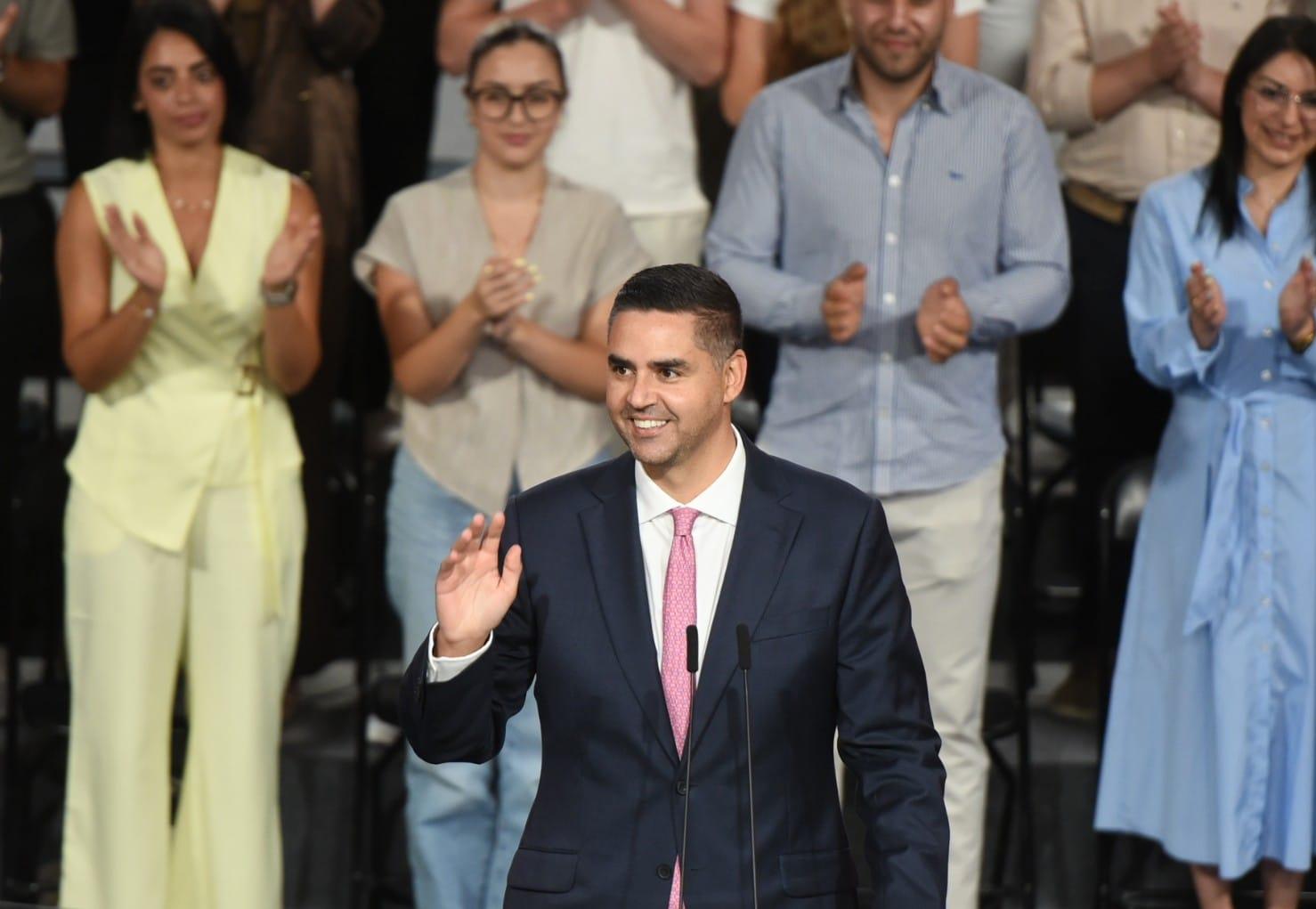 Ian Borg was confirmed as deputy leader for parliamentary affairs with 639 votes. Photo: Chris Sant Fournier.
Abela also pointed to three other initiatives in the pipeline, including a pilot project offering swimming lessons to children, beginning in Cottonera, preparatory work on a secure care facility for adolescents and an aftercare programme for young people leaving institutions at 18.
The aftercare programme, he said, would guarantee access to education and training, short-term housing support and financial assistance.
“I believe in second, third, fourth, even fifth chances,” he said.
'Malta not in a bubble'
Abela said people had asked why the government was moving so quickly during summer, but said the answer was simple.
“We are going through challenging times on the geopolitical front,” he said, describing the international situation as worrying. “But for our country, good times are ahead because we are economically and fiscally strong.”
He warned, however, that Malta did not live “in a bubble” and had to remain focused.
“You can’t twiddle your thumbs while this is going on. You have to work even harder,” he said.
Abela said emerging sectors such as artificial intelligence and robotics could bring significant prosperity but could also become a liability if not properly managed.
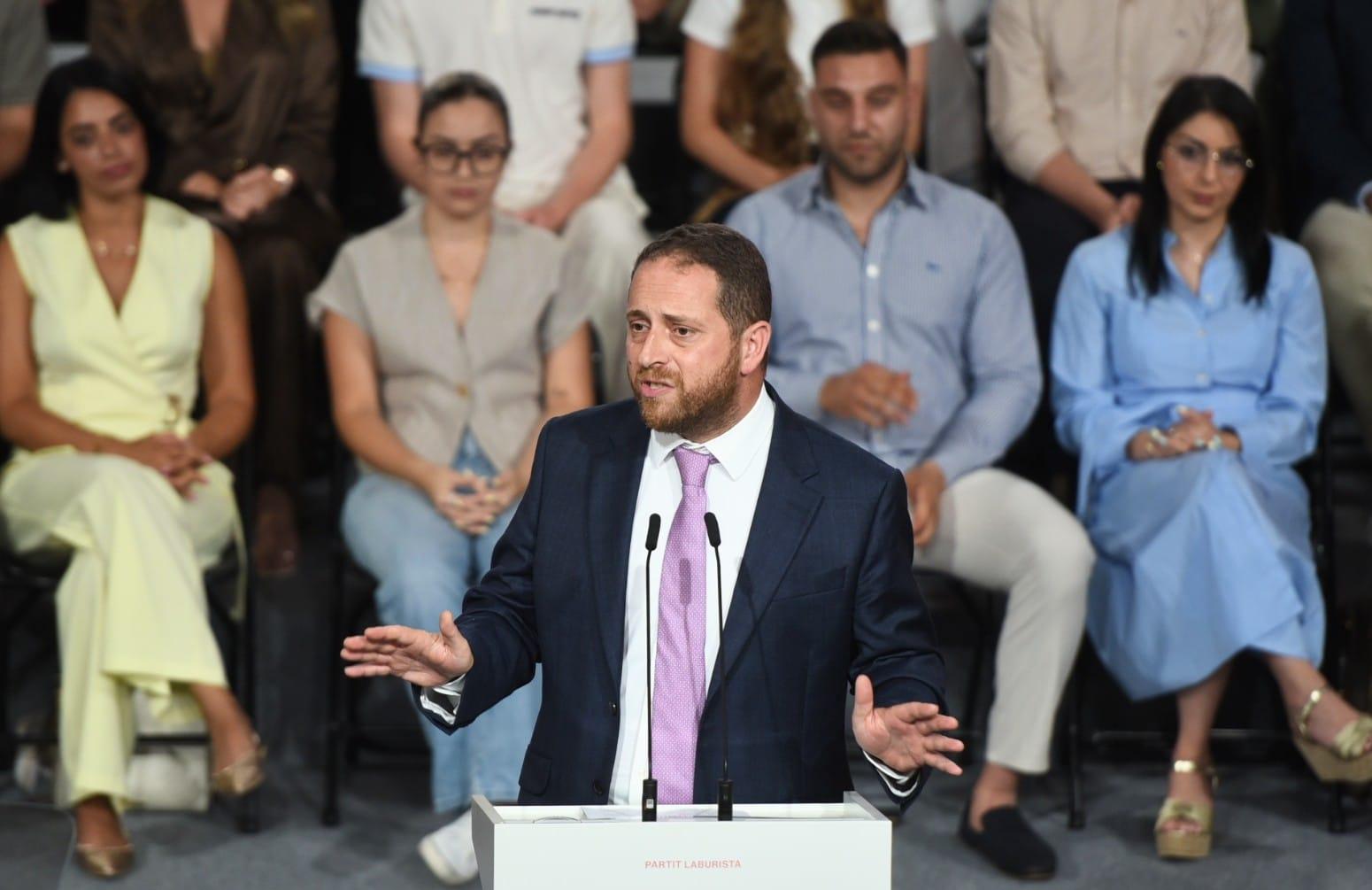 Alex Agius Saliba was confirmed as deputy leader for party affairs with 598 votes. Photo: Chris Sant Fournier.
Climate change, the move away from fossil fuels and sustainable mobility would likewise have to be handled carefully, he said.
The prime minister acknowledged that Labour had asked a lot of voters in seeking a fourth consecutive term and said there were things the party could have done better or differently.
But he insisted that only Labour could lead the country through the challenges ahead, saying the party had the “best minds” and the drive needed to deliver reforms and take Malta to “the next level”.
Election victory 'a new chapter'
Earlier, newly confirmed deputy leader Ian Borg said Labour’s success was built on “united leadership, energised leadership and a team that works together”.
Borg described Abela as a resilient leader who had weathered the storms caused by global events and said his appointment as health minister gave him an opportunity to make a difference in a sector that touched every Maltese citizen.
He said Labour’s latest victory should mark “a new chapter” with more wealth and justice for all.
Agius Saliba, confirmed as deputy leader for party affairs, said it was a privilege to serve in the role and described the vote as a strong endorsement.
He said Labour had always been his family and pledged to continue working to strengthen the party.
“These are not the easiest times to govern,” he said, while noting that Labour had secured a historic fourth mandate.
Labour president Alex Sciberras also warned delegates that a fourth consecutive victory did not give the party permission to think it was above the people.
The party, he said, should be proud but not arrogant, and should not forget that Labour’s success had begun with people’s desire for change.