If AI can learn your day-to-day work, your livelihood is already on the line
It's time to look at your career with a critical eye before you're caught off-guard, warns Mark Camilleri Gambin
Last year, I attended a prestigious Human Resources conference in London. As I listened to the experts on stage, I was momentarily stunned by a dawning perspective. While it came as no surprise that everyone was obsessed with Artificial Intelligence, even in the field of Human Resources, I had a moment of realisation that felt both cold and clarifying.
The advice being given to your HR manager is quite specific: stop focusing on the people and start focusing on the nature of work.
This should make us all pause and consider the implications. If the very people tasked with well-being are being asked not to focus on employees, who is left to worry about them? It was an unsettling glimpse into a mindset that views tasks as abstract units of efficiency, detached from the human beings who perform them.
As AI becomes more and more critical for our economy, this detachment is our greatest risk. We cannot be passive observers. We know AI is a given, and we must learn to use it. But we must also ensure that the pursuit of efficiency never comes at the cost of our human dignity and creativity. Ultimately, as individuals, we need to be worrying about our livelihoods.
To navigate this transition, I believe we must distinguish between two very different applications of this technology.
In areas like medical diagnostics, data processing, and administrative drudgery, AI is indispensable. In fact, in just about every job, AI is freeing us from the mundane and accelerating breakthroughs. While this is most impactful in fields like cancer research, the benefits extend to just about every job you can imagine. In this regard, we need to embrace the efficiency this brings.
Creativity, on the other hand, which may be a component of many different jobs, is more nuanced. It is a sensitive area where the "human premium" is becoming even more valuable. We do not believe AI should be banished from the arts; rather, we envision it as a powerful instrument in an artist's toolkit, much like a camera is to a photographer.
Take the video game industry as an example. Recent hit game ARC Raiders was a massive success. The game developers used machine learning to create reactive environments and voice lines that have allowed them to build a world far larger than their team size otherwise would have allowed. This is an example of AI empowering the creator - they are now able to surpass any technical barriers to explore and deliver on a grander vision.
However, we must tread carefully. A counter-argument comes from the potential of platforms like Spotify to dilute our culture. Playlists are already being flooded with AI-generated tracks purely to avoid paying royalties to creators/artists. If this continues unchecked, we risk a "cultural recycling loop," whereby we strip humanity out of art for the sake of better profit margins. It is more important than ever that we place value on authenticity, and we need to work within a framework that respects this.
This brings us to preparedness. I was heartened to see the government’s recent promise to provide AI training to all Maltese citizens. It is a promising first step. I am curious about the quality of the content. We must not simply "open the valve" and flood the workforce with technical instructions. We need to create understanding and also direct the flow of AI use to maximise effectiveness.
Training must go beyond "how to use ChatGPT” as we need to teach critical thinking around knowing why a tool is useful, and more importantly, when it ought not be used.
The conversation about preserving the unique human intent cannot be just an afterthought - it should be central to any discussion about AI. We must teach the next generation how to use these tools to enhance their work while strongly emphasising the unique human intent that gives it value.
Look at your own career with a critical but hopeful eye. If you do not act now, the disruption will surprise you at your doorstep. If your daily work consists entirely of tasks that a machine can learn, now is the right time to pivot. I encourage you to focus on the skills that remain uniquely human: compassion, leadership, negotiation, complex strategy, and empathy.
AI can draft a contract, but it cannot build trust. It can diagnose a patient, but it cannot offer comfort. As for the economy, the "efficiency gains" promised by AI cannot simply vanish into shareholder profits. A sizable portion of these gains must be reinvested in the workforce.
We need a society-wide and policy-led mobilisation to support people as they transition. Whether it is upskilling for a new role or adapting to a changing one, we must ensure that as the "nature of work" evolves, the people remain its most valuable asset.
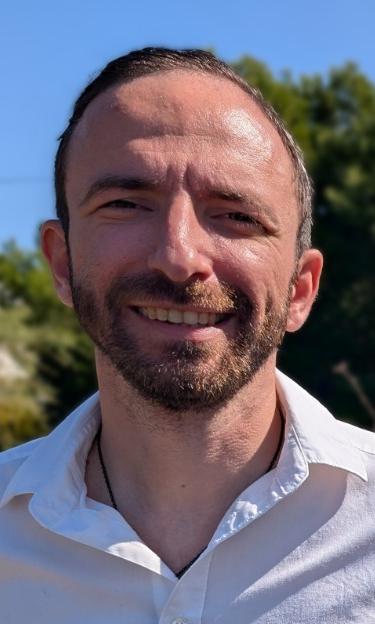
Mark Camilleri Gambin is a tech entrepreneur and general secretary of Momentum.