AI to be taught to Year 6 students as part of Malta’s digital education strategy
Year 4 students to be taught how to tackle misinformation and disinformation
From next year, Year 6 students in all schools will be introduced to artificial intelligence and its various functions as part of the government's new digital education strategy.
The strategy says students will learn how to use AI for image creation, text-to-speech and online searching.
The 2025-2030 Digital Education Strategy, announced by Education Minister Clifton Grima on Tuesday, aims to make digital literacy an integral part of students' education.
The strategy focuses on five pillars: nurturing digital global citizens, empowering educators, community engagement and collaboration, and enriching digital resources.
Regarding Artificial Intelligence, it says students will be exposed to “virtual and augmented realities” that utilise AI, which will be incorporated into their learning. The strategy also aims to support educators in incorporating AI in the classroom.
Speaking to Times of Malta, Grima said: “AI is part of our daily life; therefore, it is important to note that we cannot just ignore this reality.”
Asked whether systems will be in place to catch students who might abuse AI to plagiarise, Grima said there are already tools in place to catch plagiarism.
“Tools will be in place to catch those who intend to use it disingenuously,” Grima warned.
However, he did not identify a tool that would identify whether a piece of text was written by AI.
Meanwhile, the strategy reiterates the government's plan to provide tablets to primary schools and laptops to secondary schools.
Students were already handed laptop-tablet devices last week.
To tackle misinformation and disinformation, starting from Year 4, students will learn how to browse safely, create secure passwords and also identify misinformation, disinformation and fake news.
To aid educators, the Directorate for Digital Literacy and Transversal Skills (DDLTS) will be organising digital literacy weeks that will help and push teachers to incorporate these skills in their lessons.
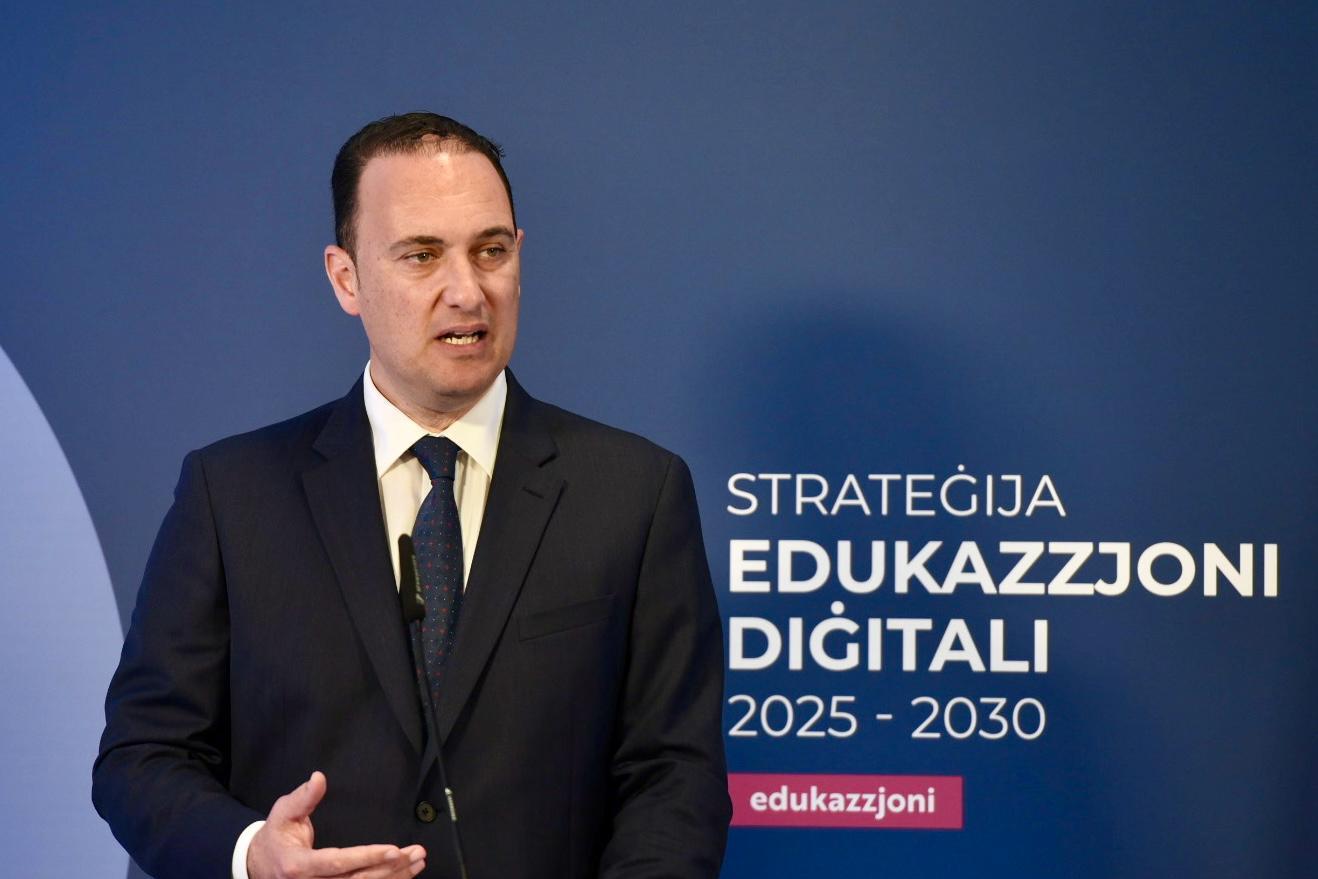 Education Minister Clifton Grima announcing the 2025-2030 Digital Education Strategy. Photo: Chris Sant Fournier
It also mentions the introduction of an online system where teachers will be able to share lessons, lesson plans and resources online for students to access.
To help students access all these resources, the strategy mentions a single sign-on system that will give students access to all resources offered by the different government entities.
To recognise advancements in digital literacy, the DDLTS will host a yearly award ceremony to congratulate educators, schools, or students who excelled in digital literacy.
The strategy also focuses on educating guardians and parents how to teach them digital skills that will help learning after school hours. Besides this, the DDLTS will also inform parents and guardians about safe internet use.
The strategy also promises to incorporate these targets:
- Year 4 students will learn how to combat misinformation, disinformation and fake news;
- Digital literacy weeks for educators, incorporating the use of AI in the classroom;
- Sharing lessons and teaching material online;
- A yearly award ceremony for people who excel in digital literacy;
- Workshops for guardians about digital skills for learning after school hours;
- Guidelines to strengthen home-school links;
- Safe internet skills for guardians;
- Include male and female role models in digital literacy and computer science;
- Tablets for primary schools and laptops for secondary schools;
- Providing Maltese content for students;
- Merging eSkola with DDLTS;
- Projects promoting Maltese culture and Identity on a European online platform;
- A single sign-on system that will have access to all online tools in collaboration with all stakeholders.