What’s in the air?
A University group is setting up new particulate matter monitoring network across Malta
From traffic fumes to sea spray and Saharan dust, the air over the Maltese islands carries more than most people realise. Much of this pollution is invisible, yet some of the tiniest particles are among the most harmful to human health.
These particles, known as particulate matter, can enter the respiratory system and, depending on their size, travel deep into the lungs. Their effects have been linked to asthma, cardiovascular disease, stroke, type 2 diabetes and impaired brain health, making air pollution one of the world’s leading environmental threats.
To address this, the Atmospheric Monitoring and Research Group within the Department of Geosciences at the University of Malta is establishing a new particulate matter monitoring network across the Maltese islands. Led by the group’s coordinator, Prof. Alfred Micallef, and supported by Prof. Adam Gauci and Rebecca Caruana, the initiative aims to understand how air pollution varies across Malta and Gozo in far greater detail than has previously been possible.
Using optical sensors, the network will measure different particulate matter fractions (PM1, PM2.5 and PM10) alongside key meteorological parameters. Around 30 stations are planned across urban, suburban and rural environments, providing real-time data through a publicly accessible platform. This will bring environmental science closer to the public while supporting both research and policymaking.
The Maltese archipelago presents a particularly interesting case study. Small, densely populated and influenced by a complex mix of local and regional pollution sources, the islands can show different air quality readings depending on location. A roadside urban site may tell a very different story from a coastal or rural one.
A denser monitoring network will help reveal these differences and improve understanding of where particulate pollution originates.
The network’s scientific value is further strengthened through co-location with reference-grade instruments, including a GRIMM dust monitor, a CIMEL sun-photometer at Xewkija and aerosol instruments at Ta’ Giordan Lighthouse in Gozo. Ta’ Giordan is particularly valuable for monitoring regional background conditions, including air masses crossing the Central Mediterranean and, at times, volcanic emissions from Mount Etna.
Beyond the data it will collect, the network is designed to answer pressing questions: How much does air quality differ between localities? How much pollution is locally generated versus arriving from abroad? What occurs during Saharan dust events?
For small islands sitting at the crossroads of the Mediterranean, these are questions whose answers remain, quite literally, still in the air.
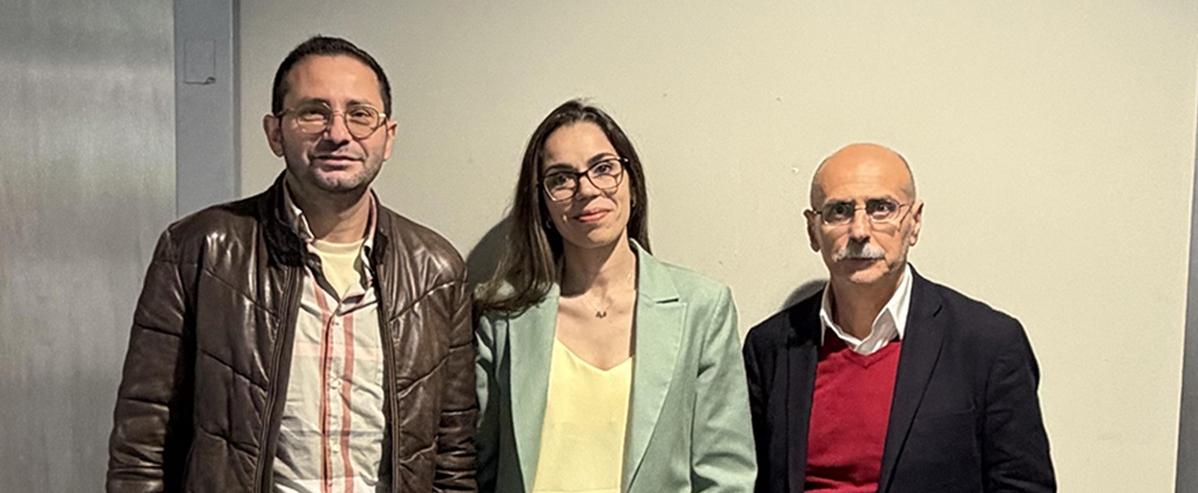 Adam Gauci, Rebecca Caruana and Alfred Micallef
Alfred Micallef, Adam Gauci and Rebecca Caruana are members of the Department of Geosciences at the University of Malta.
Did you know?
• Between April 2025 and March 2026, around 14% of all passenger rail journeys in Great Britain were made on the Elizabeth line.
• Archaeologists in Egypt recently found a fragment of Homer’s Iliad inside the wrappings of a roughly 1,600-year-old mummy. The papyrus contains part of the Catalogue of Ships from Book II.
• In Chennai (India), several red traffic lights are heart-shaped. The road-safety initiative is intended to remind drivers that every life matters.
• During the German occupation of The Netherlands, thousands of Dutch bicycles were confiscated. The episode later inspired a long-running joke and football taunt, with Dutch supporters sometimes demanding that Germany “give us our bicycles back”.
For more trivia, see www.um.edu.mt/think
Sound bites
• Before 1993, Usenet saw a predictable influx of inexperienced users each September, when new university students first gained internet access. Most gradually learned the community’s unwritten rules. When commercial internet access expanded, however, newcomers began arriving throughout the year, and the disruption never seemed to end. Veteran users dubbed this phenomenon “Eternal September”.
• Gold may have a secret self-defence system that helps it resist tarnishing. Researchers discovered that atoms on gold surfaces reorganise themselves into patterns that block oxygen from reacting with the metal, suppressing oxidation by up to a trillion-fold. Beyond explaining why gold jewellery stays bright for generations, the finding could help scientists create more powerful gold-based catalysts for manufacturing and clean energy.
https://www.sciencedaily.com/releases/2026/07/260710003511.htm
For more soundbites, listen to Radio Mocha every Saturday at 7.30pm on Radju Malta and the following Monday at 9pm on Radju Malta 2 https://www.fb.com/RadioMochaMalta/
Photo of the week
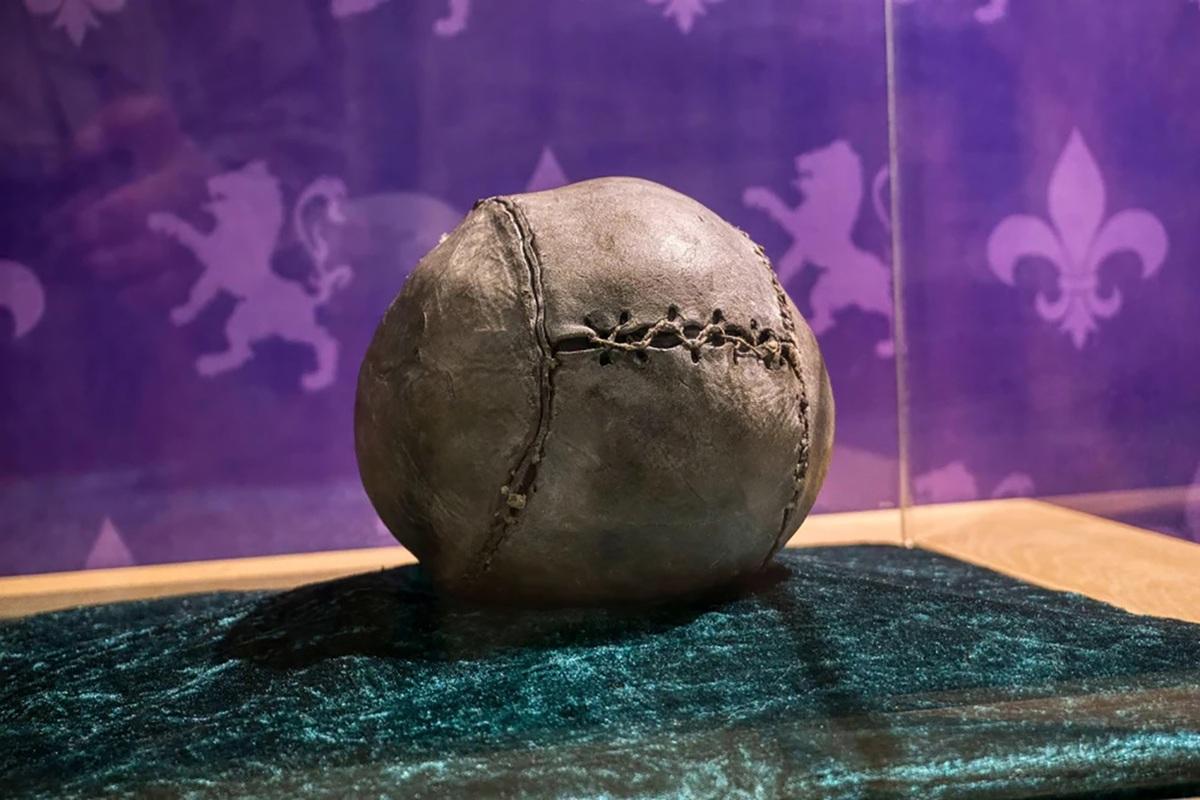 Photo: Alamy
Photo: Alamy
Believed to be the world’s oldest surviving football, this hand-stitched leather ball dates from between 1540 and 1570 and has an inflated pig’s bladder at its core. It was discovered behind panelling in the Queen’s Chamber at Stirling Castle, where Mary, Queen of Scots, once lived. Nearly five centuries later, it travelled from Scotland to Miami for its first public display in the United States and attended Scotland’s final Group C match against Brazil at Miami Stadium on June 24, its first appearance at a FIFA World Cup match. Brazil won the game 3-0.
Myth debunked: Did Americans invent the word ‘soccer’?
Every World Cup revives the familiar argument: is it football or soccer? The myth is that “soccer” is an American invention imposed on a sport the rest of the world correctly calls football. In fact, the word was originally born in Britain.
During the 19th century, several games were known as football, each with different rules. The Football Association, founded in England in 1863, established a standard code that became known as “Association Football”, distinguishing it from rugby football.
British students, particularly at Oxford, enjoyed shortening words and adding the suffix “-er”. Rugby became “rugger”, while “association” was shortened to “assoc”, then “assoccer”, and eventually “soccer”. Printed examples appeared by the late 1880s.
For decades, “soccer” was not regarded as foreign or incorrect in Britain. It appeared in newspapers, television programmes and even the titles of books by prominent football figures.
Only later did “football” become overwhelmingly preferred in Britain, while “soccer” remained useful in countries where another sport already claimed the name football.
That is why Americans use soccer: not because they invented a new term, but because American football already occupied the linguistic ground. Canada, Australia and Ireland have also used soccer for similar reasons.
So, while “football” is the world’s dominant name for the game, “soccer” is not an American corruption. It is a thoroughly British export.