'All I could do was cry': Women share stories of baby loss on maternity wards
National conference on miscarriage highlights lack of separate hospital ward
After learning she had miscarried, Yazmin Helledie was kept in a maternity ward surrounded by baby bumps and balloons, a painful setting for a woman grieving the loss of her own pregnancy.
"All I could do was cry,” she said.
Helledie, 30, a television presenter and social media influencer, had long dreamed of becoming a mother. But in November she was told she had lost the pregnancy after six weeks.
Her world "stopped spinning" and the situation was made worse by the setting in which she was asked to begin grieving.
Mater Dei Hospital does not have a dedicated ward for women experiencing miscarriage or pregnancy loss. This means patients like Helledie are often placed in the same wards as pregnant women.
Despite a 2022 announcement that a dedicated unit for women facing pregnancy complications would be set up at Mater Dei, there has been no public update on its progress.
The absence of this facility was highlighted during a national conference held on Wednesday to discuss the possibility of introducing miscarriage leave in Malta.
Helledie was one of two women who spoke publicly at the event, sharing their personal experiences to highlight the gaps in support for women and famlies going through pregnancy and baby loss.
Melanie Kelly, a television presenter and producer, also shared her story - a miscarriage that occurred five months into pregnancy. She was also placed in a shared ward with pregnant women.
“I cried so much, and at a point I felt bad I was crying next to this mother who was expecting," she said.
A miscarriage is the loss of a pregnancy during the first 23 weeks, while a stillbirth is the loss of a baby after that stage.
Kelly later gave birth to a stillborn baby girl, whom she named Eve. “I looked at her and with all her imperfections, she was perfect," she recalled, 11 years later.
 Yazmin Helledie, left, and Melanie Kelly, right with a sketch drawn by artist Alfie Gatt at the conference. Photo: DOI
The head of obstetrics and gynecology at Mater Dei, Yves Muscat Baron, told the conference he was disappointed that pregnant women and women experiencing a miscarriage are still placed in the same award.
Directly addressing Kelly, he said: “I have been trying to separate you (women who miscarry) from pregnant women for years,” he said.
“I tried my best and for a while I managed but then the hospital went back to the same situation of sharing the ward.”
He recalled how his own mother had a miscarriage when she was 24 weeks pregnant.
“We were a family of four boys and my mother always wanted a girl. She had a miscarriage and lost her daughter, and it was this family experience that pushed me into the role I am today,” he said.
Importance of paid leave
Both women and the gynaecologist agreed on the importance of paid miscarriage leave for giving people the space to physically and emotionally recover.
But none of the experts speaking during the conference offered suggestions for how long women should be entitled to or how it would work.
Yves Muscat Baron said it was a delicate balance. He said while three days is not enough for miscarriage leave, he disagreed with a long period, such as six weeks.
“Six weeks is too long, and the woman should not be stuck inside alone for so long as it might have a more harmful impact," he said.
There is currently no legal entitlement to leave following a miscarriage. Women who need time off can apply for sick leave, while their partners receive no statutory time off.
At the conference Parliamentary Secretary for Social Dialogue Andy Ellul said he had held discussions with medical professionals and unions to discuss the introduction of miscarriage leave.
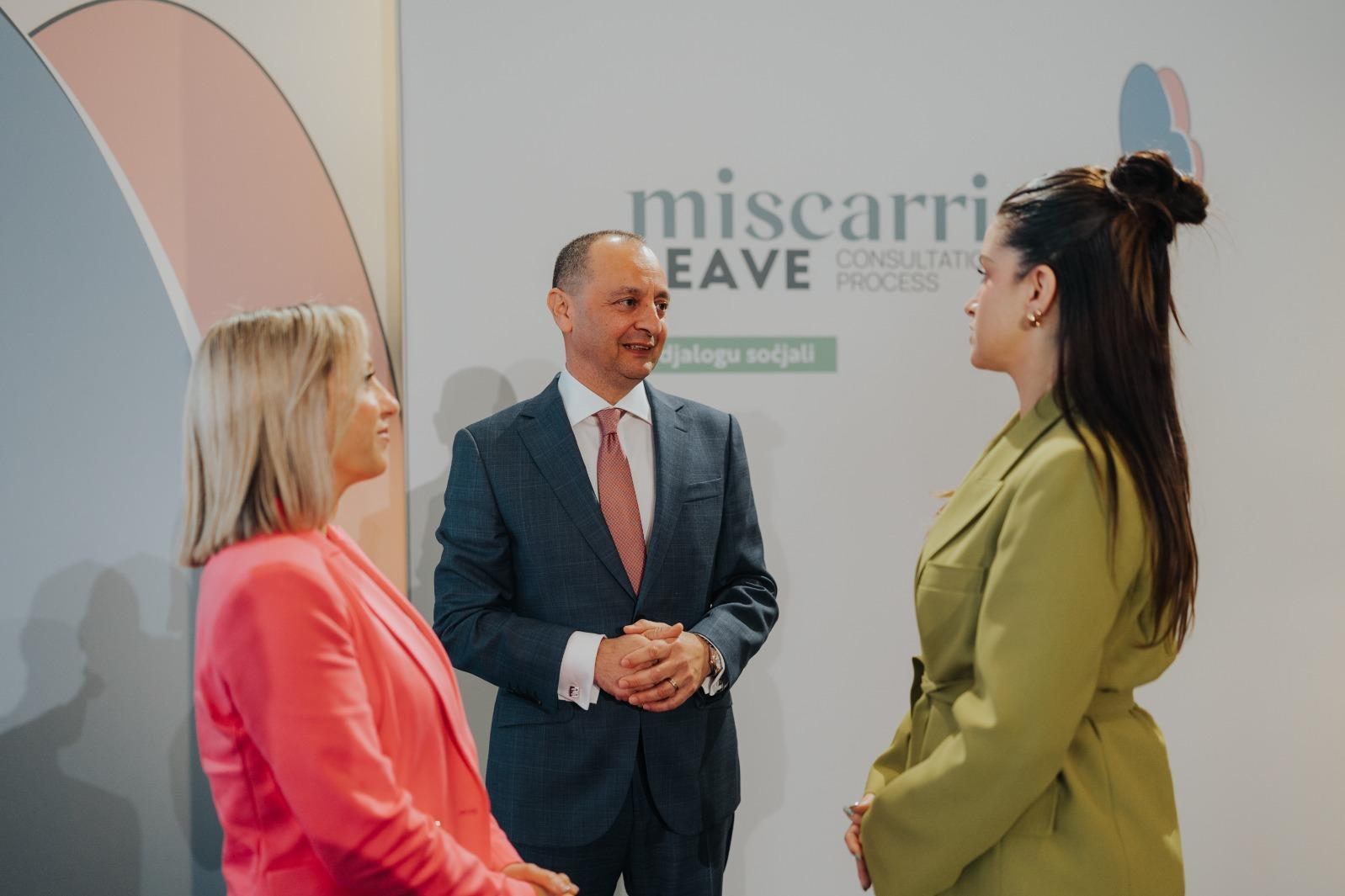 Melanie Kelly, left, Andy Ellul, centre, and Yazmin Helledie at the conference. Photo: DOI
“A miscarriage is not just a medical experience, but also an emotional and physical one, and we cannot act as if nothing happened to the couple," he said. "For some couples, a miscarriage is the end of a beautiful dream of becoming a family, and they deserve to have the time to process that loss.”
He said official statistics suggest around 300 miscarriages occur each year in Malta, but real numbers could be as high as 1,000 due to underreporting.
Under the proposals, the government would cover the cost of any new leave. Discussion are ongoing on whether to include partners.
Helledie, who was self-employed and able to take the time she needed to recover, said she was struck by how many women reached out to her after she posted about her loss online, naming her baby Buzz.
“I realised I was one of many women who experience this, and I was unaware how common this experience was,” she said.