How Times of Malta was born 90 years ago
Today’s generation may find it hard to believe how cumbersome newspaper production was 90 years ago
Former editor VICTOR AQUILINA maps out the birth of Times of Malta and the journey from hot metal to computerised typesetting, as the organisation marks its 90th anniversary
Imagine for just a while that you are living way back in 1935. Then think of something big happening, say, for instance, a plane crash somewhere in Asia. Times of Malta would have received the news through the navy’s official wireless service but it would only have been able to carry a picture of the crash three or even four days later. Why? Because pictures were mailed, yes mailed, not transmitted electronically, giving editors untold frustration. The contrast with today’s instant access to news and pictures can hardly be starker.
As it happens, the wirephoto service of the Associated Press, the news agency that supplied Times of Malta with pictures, was introduced in that same year. But it would take years before the newspaper would have the means to take the pictures electronically.
Today’s generation, technologically savvy from an early age, may find it hard to believe how cumbersome newspaper production was then, right from the moment the content was set on huge Linotype machines up to printing.
None of the newspapers published at the time Times of Malta was born are still alive today. None had therefore gone through the revolutionary switch from hot metal to computerised typesetting. The leap to digitisation has been exhilaratingly transformative.
The three most widely read newspapers at the time were Daily Malta Chronicle, Malta and Malta Herald, to which Lord Strickland contributed a great deal before he set up his own printing house. But it was the Chronicle, regarded as the island’s national newspaper, that the Stricklands wanted to edge out of the market.
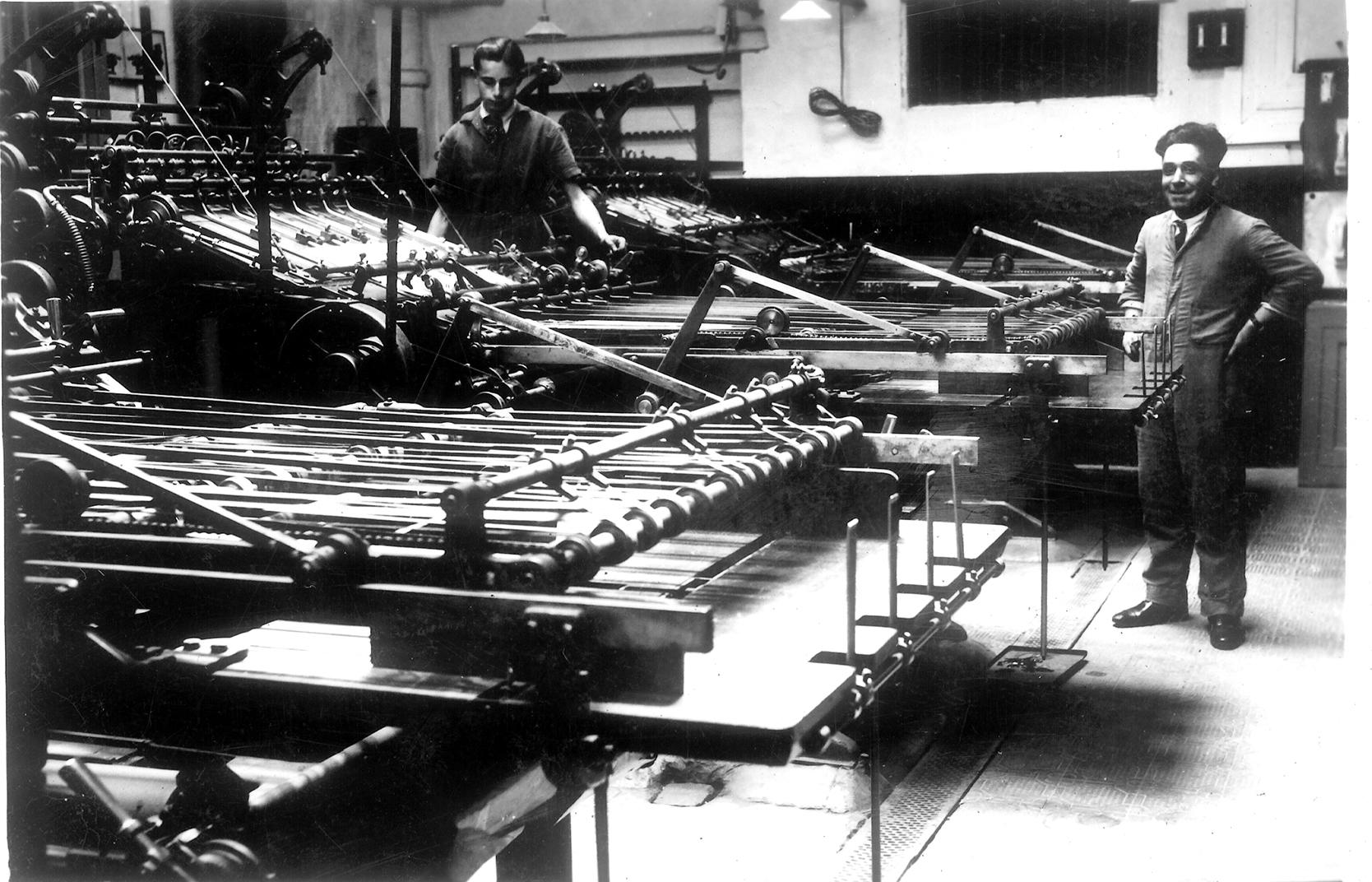 A centurette on which Times of Malta was first printed.
Malta, pro-Italian and rabidly anti-British, folded when its editor, Enrico Mizzi, was arrested in May 1940. Together with other Italian sympathisers, he was deported to Uganda in 1942. Malta had been in circulation for 57 years. When the Chronicle folded, Times of Malta stepped right into its shoes.
But who thought of the idea of publishing Times of Malta?
Strickland had already been publishing a string of newspapers, all meant to support his political party, Anglo-Maltese, when one of his daughters, Mabel, told him: “As things are in Malta today, I am leaning heavily to the view of the need for a daily English [language] paper or [and she underlined the ‘or’] control of the Chronicle, the latter I prefer.”
Much as she was later criticised for her indecisiveness (a close aide used to relish saying she had a grasshopper’s mind), and tantrums, she set out working on her project with such determination that impressed not only her father but also her stepmother, Margaret, daughter of a British newspaper magnate.
With her father usually busy in politics, either in Malta or in England, Mabel took charge of all the preparations, not exactly easy for a woman in those times.
She meant to call her newspaper Morning Telegraph but an internal ‘spy’ made this known to the Chronicle people, and she had to change it to Times of Malta, a title her father first used for a supplement to a weekly, Progress, and, later, for a new title, The Times of Malta u ’l Progress, a bilingual newspaper.
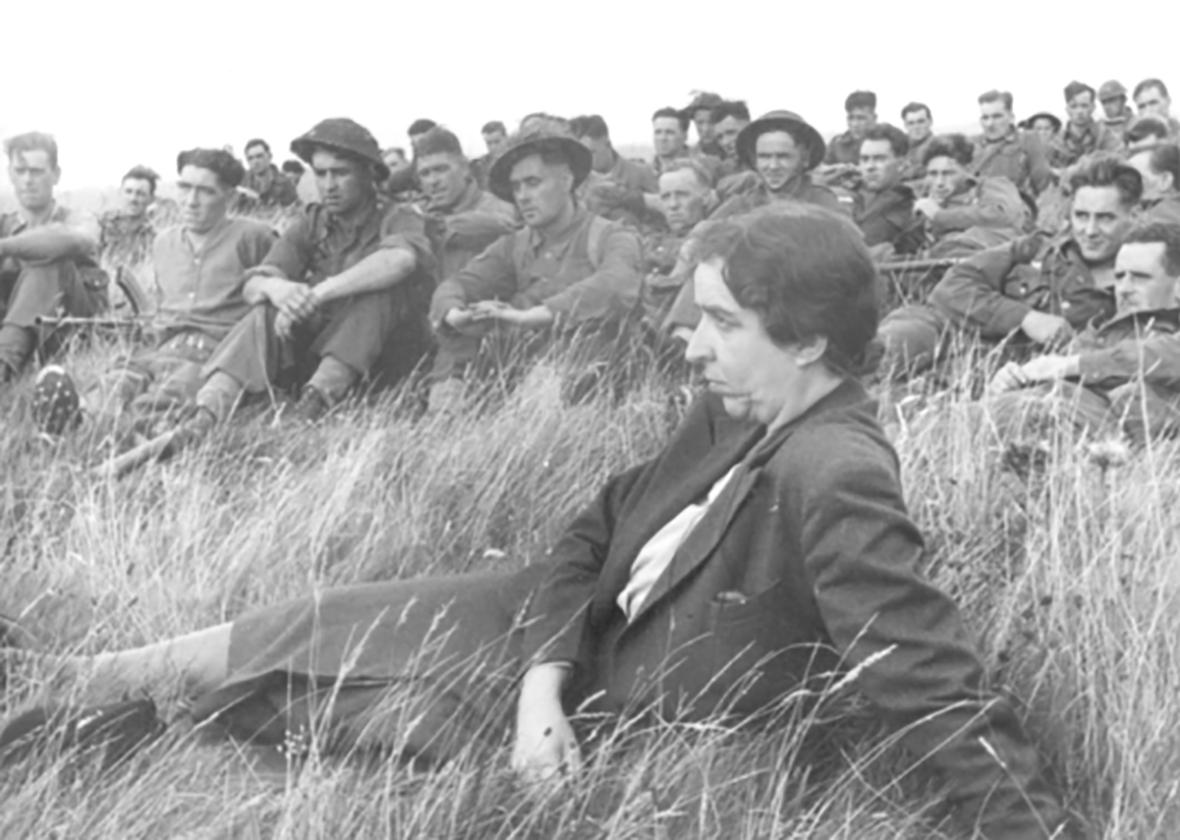 Mabel Strickland at an army briefing. She was the registered editor but the hands-on editor was Joseph Olivieri Munroe.
Strickland started off his newspaper business when he returned to Malta after his last governorship post in New South Wales, Australia, opening a small printing shop in Strada Reale, next to the church of Santa Barbara. His first newspaper, Progress, was a four-page weekly. It was later called il Progress, still unhyphenated as the standard orthography had not yet come into force.
He had other newspapers but the flagship was Il-Berqa, which had been extremely successful until it was killed off by L-Orizzont in 1968. By 1931, Strickland moved to a building in St Paul Street, bought on Mabel’s behalf out of a loan of £5,564 18. 6d, provided by Margaret. By 1948, the value of the whole building was estimated at £22,000, a fraction of the price it would have fetched today.
Their new home was called Strickland House, a powerhouse of political controversy and a strong defender of the island’s links with Britain. A thorn in Dom Mintoff’s side, Strickland House paid the heaviest price for its strong opposition to his policies in 1979 when supporters taking part in a demonstration (called following what appears to have been a fabricated story of an attempt on the prime minister’s life), razed the building to the ground in one of the largest fires Valletta had seen since the war.
As law and order collapsed in an orgy of violence, the police looked on, seemingly obeying a warning Mintoff had once given Strickland House that he could not guarantee its protection.
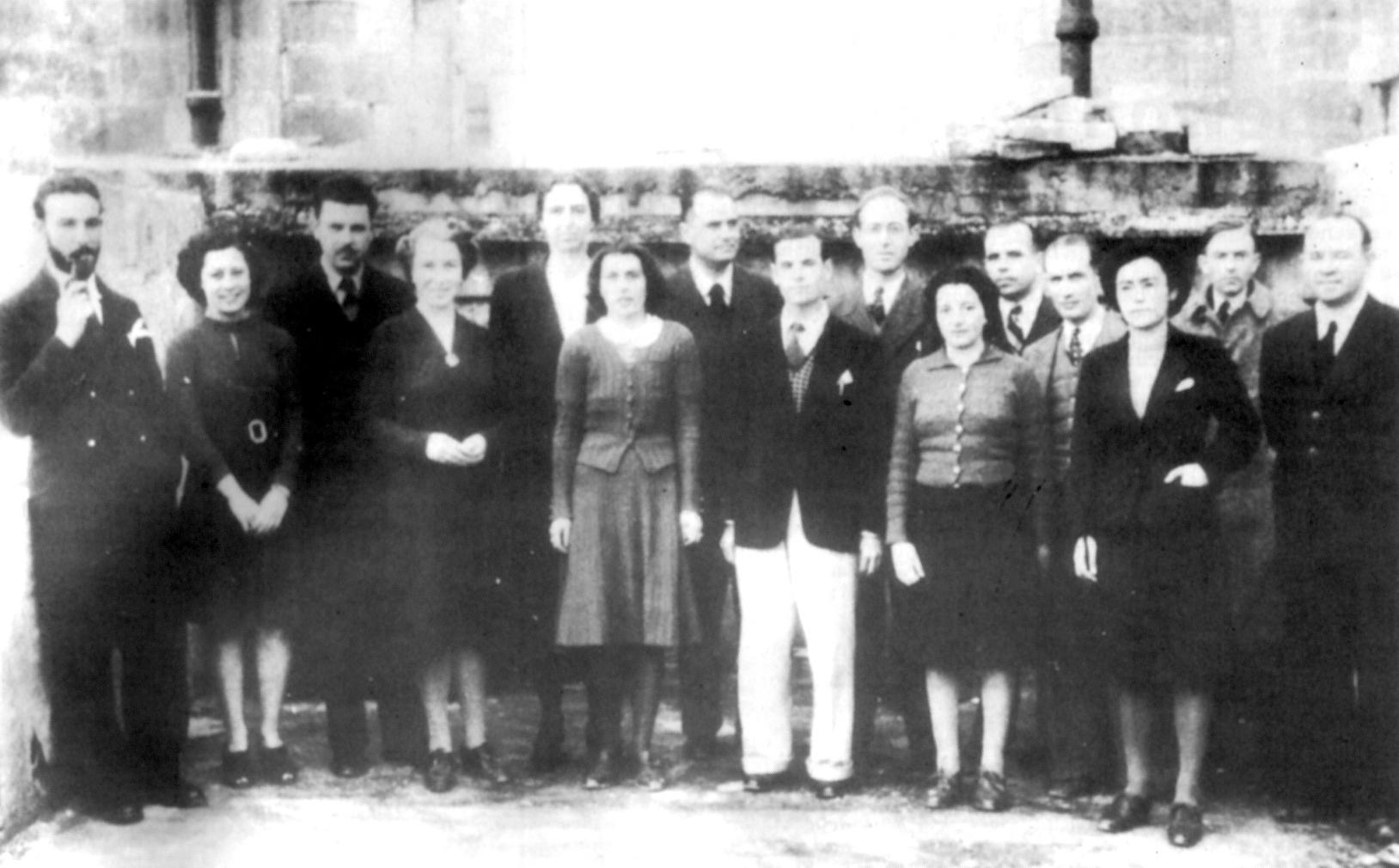 Mabel Strickland (fifth from left) with her editorial team in the first years of the publication of Times of Malta. Joseph Olivieri Munroe is third from left; Tom Hedley, a much-respected figure at Strickland House, is fifth from right. He was sports editor before taking over as editor.
Many years later, Mintoff told me he didn’t have a police force strong enough to stop them. Well, he may not have had a strong police force but just a word from him to desist from going into a violent rampage would have been enough to keep them away.
The younger generation would have no clue today of the part Strickland House played in the island’s politics, with Times of Malta – a breeding ground for young lawyers wanting to have some practical experience in public life – at the forefront of many political battles.
Mabel was not the first editor of Times of Malta. She had most unwisely picked a very young man for the post, an Australian, aged only 24. He lasted less than a month.
She then registered herself as editor of both the daily and the weekly. Though she had been close to her father and knew the ins and outs of the organisation they had built up since moving from Strada Reale (Republic Street) to St Paul Street, she did not have any experience in editorship, or in journalism for that matter. She may have thought she had but the people who ran the show for her knew better.
She had gone on record saying it was the exigencies of the war clouds over the Mediterranean during the Abyssinian crisis that made her take over the editorship of Times of Malta. Yet, for a long time she had remained as the registered editor, it was Joseph Olivieri Munroe, a man of many talents, who edited the English-language newspapers for her.
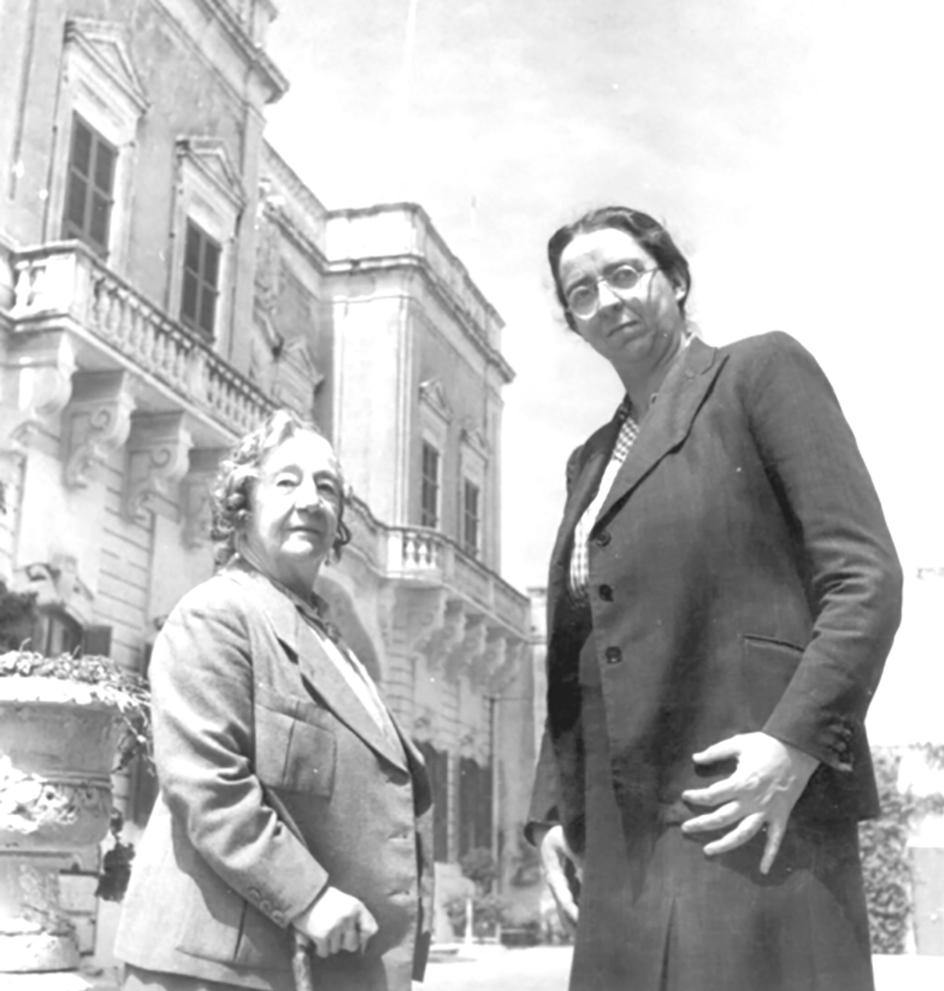 Mabel Strickland with her stepmother, Margaret, at Villa Bologna, their stately home in Attard. Margaret was daughter of newspaper pioneer Edward Hulton. His successors had come out with Picture Post, a news magazine that had the largest circulation in Britain
Times of Malta was launched on August 7. The first issue was out at 8.30 am. It sold for 1d. The lead story was about Italian plans for the invasion of Abyssinia. From that first issue on, the newspaper never looked back; it has reported the life and times of the country uninterruptedly, including during the war, not a mean feat considering that its printing house stood at the edge of Grand Harbour. Indeed, it was hit twice.
Right from the start, the Stricklands aimed for quality and with Margaret around, one had to be constantly on one’s guard not to make even a spelling mistake as Mabel would have had to pay for it.
Unlike her father, Mabel did not excel in politics but she stood out well in the way she managed her newspapers in wartime and for the way she campaigned for women’s participation in politics and for voting rights for women.
Her father would have been simply amazed at how digitisation has today transformed the transmission of news into a 24-hour cycle, with people able to access news on their mobile phones everywhere.
The change has put print in steady decline, bringing about huge financial strains and stresses to media houses everywhere.
But that is another story.