Anonymous reports about cannabis smells won't be considered, ARUC says
New measure has drawn criticism from both users and civil society groups
People won’t be fined over cannabis smells unless complaints are serious and come from named individuals, the cannabis authority has said as it tries to calm fears a new rule could be used unfairly.
Joey Reno Vella, chairperson of the Authority for the Responsible Use of Cannabis (ARUC), said the authority would only act on “grave” cases.
“We will not tolerate anonymous reports,” he said, stressing the authority was aiming for fairness and transparency. “[But] the right to enjoy one’s property has never been absolute.”
The new measure, which allows for a €235 fine in cases of excessive cannabis odour, has drawn criticism from both users and civil society groups who fear it could be misused by neighbours acting out of spite.
Police Commissioner Angelo Gafà has also suggested it would be challenging to enforce.
Addressing concerns about privacy, Vella said ARUC officials would not enter private homes to assess smell.
“If a complaint is made externally from the property, it can be investigated externally,” he said.
Should a complaint escalate to legal proceedings, the investigating official would be expected to testify under oath, similar to how cases in animal welfare are handled, he added.
Vella also emphasised that the new fines would be strictly administrative and would “never” result in a criminal charge. While the police could still be notified of complaints, most cases would be handled directly by ARUC.
He said the authority was responding to a “minority” of residents who had raised odour concerns and stressed that most cannabis users were responsible.
“We’ve only had a few hundred complaints,” he said, estimating that cannabis users in Malta are in the tens of thousands.
To reduce odour, Vella encouraged users to install carbon filters at home, describing them as affordable and effective.
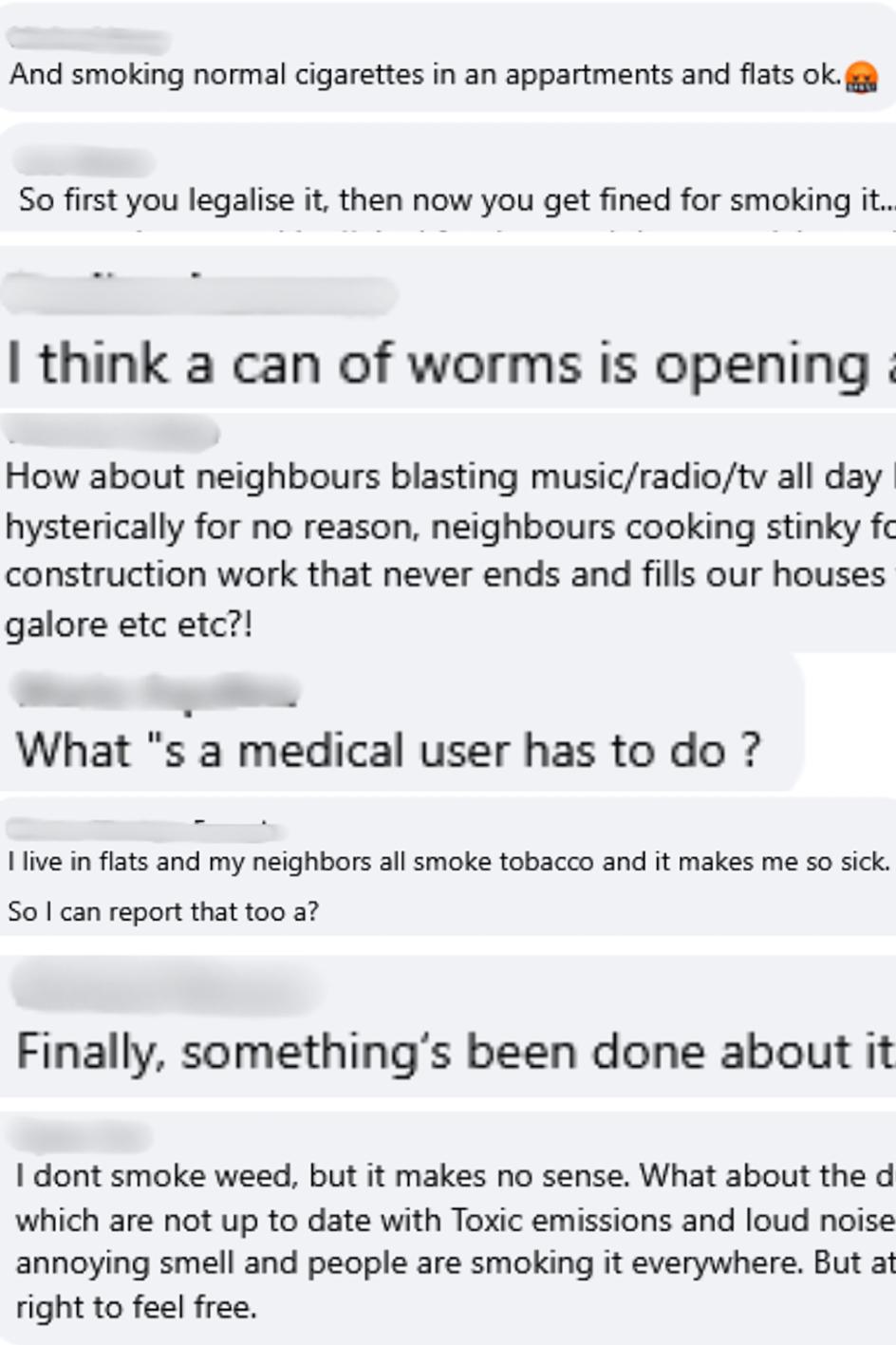 The new law attracted mixed reactions online.
‘Soviet style’ surveillance
The fine was not part of the original amendments to the law and was introduced in a surprise move during the committee stage before being approved earlier this month.
One cannabis user told Times of Malta the rule reminded him of “Soviet-style” surveillance, where neighbours were encouraged to inform on each other.
Another said they feared the impact on their family life if an authority visited their home due to a complaint.
NGOs Releaf and Moviment Graffitti also warned in a statement last week that the measure could “do no good to society” and would leave users “living in fear”.
“What if a neighbour just doesn’t like you and decides to complain? It could be used as an excuse to punish someone they don’t like,” said one cannabis user.
Describing the measure as “a bit vague”, he questioned how it might be enforced and what action would be taken by the authorities investigating complaints: “How will it be proved?”
Some residents, however, have welcomed the rule, saying persistent cannabis odour is affecting their quality of life.
Michael, who did not want to provide his last name for fear of retribution from his neighbours, said he was forced to deal with the “constant smell of weed, day and night”.
Stressing that, while he did not want to “step on anyone’s liberties, people still need to respect others. Your freedom ends where mine begins”.
“I wouldn’t call the police for someone smoking one or two joints at night but when someone smokes constantly there’s no break from it,” he said.
Simone Magri agreed, telling Times of Malta she was “fed up” with the smell emanating from a neighbouring apartment.
“All day long I can’t open the shaft windows because the smell leaks inside and it’s very strong. On nice days they smoke on the balcony and I can’t keep it open,” she said.
“I’m super fed up.”
Call for fairer enforcement of other nuisances
Others questioned why cannabis was singled out.
Asthma sufferer Kyle Drakard, who doesn’t use cannabis, said he had repeatedly reported loud music, BBQ fumes and tobacco smoke to the police, only to be told they were civil matters.
“It’s ridiculous that I’m going through all this and I’m not protected, but if it’s cannabis then someone gets a fine,” he said, urging the authorities to bring in similar procedures for other infractions or drop the measure.
Responding to other complaints, Vella said: “I’m responsible for cannabis; I cannot address other issues but it is important to note that cannabis, unlike BBQs and tobacco, is a controlled substance internationally and is still considered a drug.”
ARUC plans to launch a freephone number to handle queries and complaints and offer guidance to cannabis users.