Appeal launched to trace Mario Agius sculptures for landmark publication
Comprehensive illustrated volume planned
Collectors and owners of sculptures by Gozitan sculptor Mario Agius are being invited to take part in an ambitious publication that aims to document the artist’s five-decade career and preserve his work for future generations.
The comprehensive illustrated volume, currently in preparation with the support of Arts Council Malta, will bring together original scholarly research and newly commissioned photography to create what is expected to become the most extensive study of the artist’s artistic legacy to date.
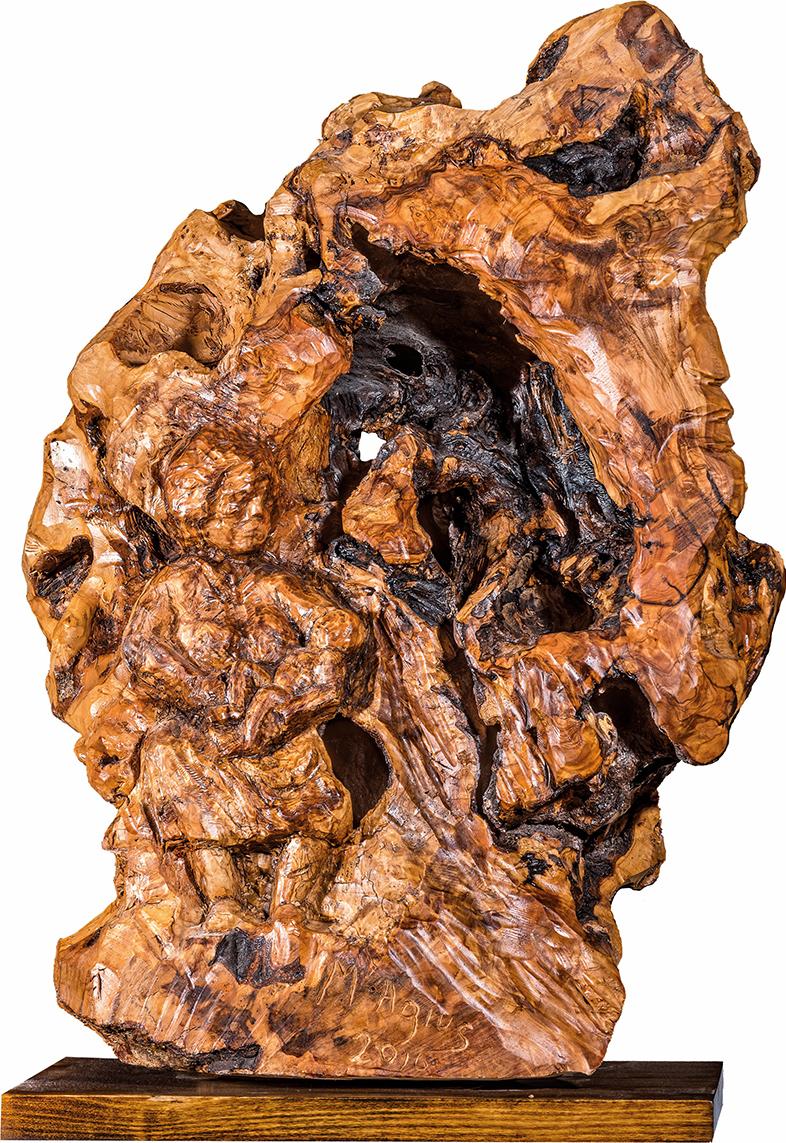 Sheltered
The effort is being coordinated by the artist’s son, fellow artist Victor Agius, who is appealing to owners in Malta and abroad to help locate sculptures held in private and public collections so they can be professionally photographed for inclusion in the publication.
The publication seeks to record sculptures held in churches, institutions, public spaces and private collections, many of which have never been formally documented. By bringing these works together in a single volume, the project aims to create an enduring visual and scholarly archive of one of Gozo’s best-known contemporary sculptors.
Several scholars are contributing original research examining different aspects of Mario’s artistic practice, while the photography and design of the publication are being entrusted to Daniel Cilia.
‘More than a book’
For Victor, the publication documenting the life and work his father represents the fulfilment of a wish shared for many years by the family, fellow artists and admirers of the Gozitan sculptor.
“This publication is much more than a book,” Victor says. “For many years it has been my father’s wish, and that of our family, fellow artists, friends and art enthusiasts, to see his life’s work documented and studied in a publication that reflects the depth of his 50-year artistic journey.”
The decision to embark on the project, he explains, came at a natural point in Mario’s career.
“After five decades of continuous artistic practice, we felt the time had come to bring together his work, archives and the reflections of leading scholars in a publication that does justice to the breadth of his contribution while ensuring that future generations can appreciate and study it.”
Having grown up watching his father dedicate his life to sculpture, Victor says the publication is also deeply personal.
“I have witnessed a lifetime of unwavering dedication to sculpture. My father’s life has always revolved around making art, studying it and generously sharing his knowledge with others.”
He points to Mario’s formative years studying in the United Kingdom during the 1980s and his mentorship under Anton Agius, followed by decades balancing his own artistic practice with teaching sculpture at the Gozo School of Art, and Art and Design in Wood at the Gozo trade schools.
“He has never stopped learning, experimenting and inspiring younger generations of artists,” Victor says.
Although Mario’s sculptures are well known in churches, public spaces and private collections across Malta and abroad, Victor believes much of the artist’s output has remained undocumented.
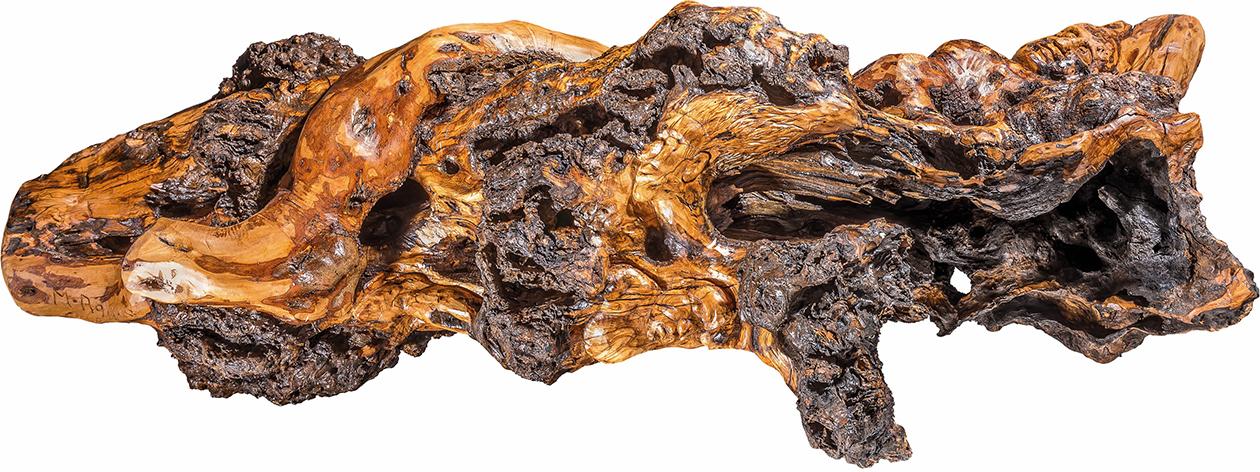 Natura.
“The project was born out of a desire to document and preserve this remarkable body of work,” he explains. “As the research developed, it became clear that this publication should be far more than a catalogue. It is evolving into an important scholarly study, bringing together original research, critical essays and historical documentation.”
Asked what most defined Mario’s artistic vision, Victor immediately points to his father’s relationship with nature.
“What has always distinguished my father is his ability to recognise artistic potential where others might see only ordinary matter. Nature became his greatest collaborator and teacher.”
He describes the landscapes of Gozo, its prehistoric and sacred sites, weathered limestone, olive trees and the rhythms of island life as influences that have profoundly shaped Mario’s artistic language.
“Whether carving olive wood, Gozitan limestone, Gozo hardstone or Italian Carrara marble, his approach has always been one of revealing rather than imposing form – as though each sculpture already existed within the material, waiting to be liberated through the patient and rhythmic dialogue of his chisel.”
Over more than five decades, Mario’s sculptures have become part of churches, civic spaces and private collections throughout Malta and Gozo, while also entering important collections across Europe and the United States.
Victor notes that the sculptor’s public legacy will continue to grow with the installation of a monumental sculpture in Gozo hardstone in Xagħra, selected through the Eco Gozo initiative in the Ministry for Gozo.
Beyond the sculptures themselves, however, Victor believes his father’s greatest achievement lies in the people he has influenced.
“Countless students, artists and members of the public have sought – and continue to seek – his guidance in his studio, inspired not only by his technical mastery but also by his humility, generosity and profound respect for nature, craftsmanship and the spiritual dimension of art.”
For Victor and his family, the publication is ultimately both a tribute and an act of stewardship.
“It seeks to preserve, archive and critically position my father’s work within the history of modern Maltese wood sculpture,” he says. “With contributions from a number of distinguished scholars, it aims not only to celebrate an extraordinary artistic career but also to become a lasting scholarly resource that places Mario’s work within the wider narrative of modern Maltese art, ensuring that it is preserved, studied and appreciated by future generations.”
Those wishing to participate are invited to contact the project team via e-mail at [email protected] or by telephone on 7959 4508 or 9947 2831. All information provided will be treated with the strictest confidentiality, and no personal details or identifying information will be published unless expressly authorised by the owner. The publication’s photography and design are being entrusted to Daniel Cilia, while the project is being supported by Arts Council Malta.