Architect proposes alternative to Portelli plans for former Balzan pasta factory
Theo Cachia unveils a redesign that retains elements of the existing building after demolition application is filed
An architect has put forward an alternative vision for the former Balzan pasta factory after it emerged that developer Joseph Portelli had filed an application to demolish the landmark building.
Theo Cachia, a Malta Architect Awards winner, shared his proposed design for the Macaroni Premier factory on Triq in-Naxxar, Balzan, in a social media post earlier this week. He said he had been encouraged by friends to publish the concept after news broke of Portelli’s redevelopment plans.
Portelli’s application, PA/00505/26, proposes the demolition of the existing structure and its replacement with a new development comprising two basement levels for garages, a ground-floor showroom with retail space and a cafeteria, and 29 residential units from the first floor upwards. The plans also include two penthouses with pools at a receded floor level. It is designed by his architect of choice, Maria Schembri Grima.
Cachia was sharply critical of the proposal, describing it as “at best uninspired and at worst a leech sucking on the already depleted urban vitality of the neighbourhood”.
He added that in Portelli’s application, “the factory is deleted without a trace and replaced by something generic by Joseph Portelli”.
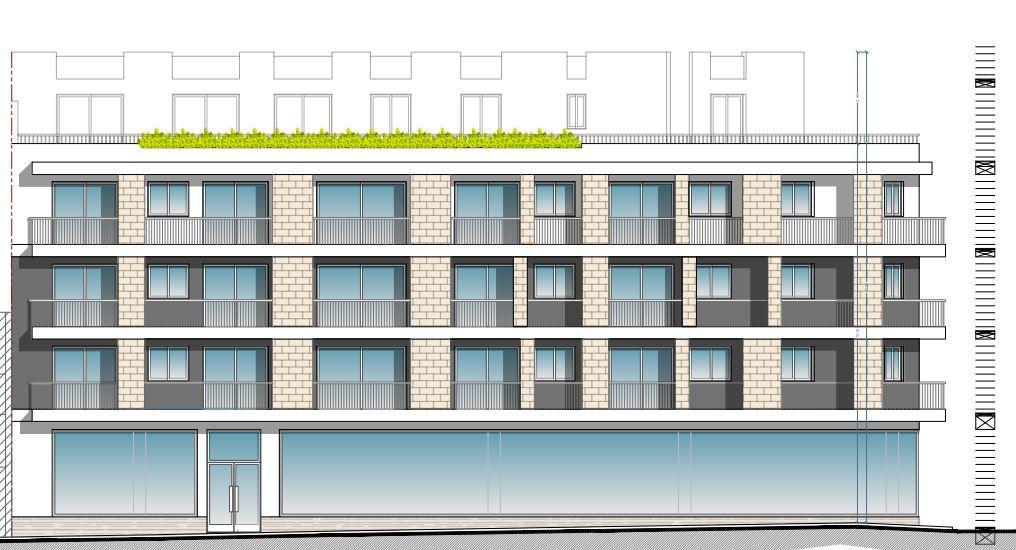 What the proposed building would look like when viewed from Naxxar Road. Photo: Planning Authority
In contrast, Cachia’s alternative design seeks to retain key elements of the existing building. His proposal maintains the façade material of the current structure and introduces restrained balconies at the first-floor level, while emphasising that levels zero and one should reflect the proportions of the old factory.
Cachia also noted that “since the PA in its infinite wisdom has decided this area is allowed another two floors, we build up to fill legal height, but we do so with style and purpose.”
He argued that his design respects the history of the site and offers wider benefits beyond commercial use. According to Cachia, “it gives something back not only to its owners, but also to whoever visits, works or looks at it”.
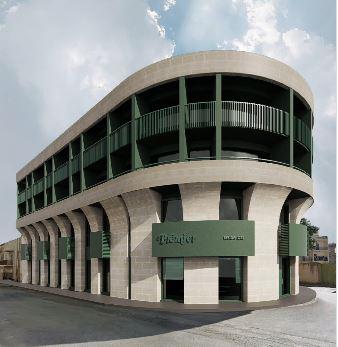 Theo Cachia's proposed design as he shared on his Instagram. Photo: Theo Cachia Social media
The proposal has drawn significant attention online, with Cachia’s post receiving hundreds of likes and more than 50 reposts on Instagram. Several commenters voiced support for the alternative design. One wrote: “You should seriously consider sending JP this.” Another added: “Yours over the other”.
However, not all reactions were positive. One user questioned whether redevelopment was necessary at all, suggesting the structure was adequate in its current form. Responding to one such comment, Cachia said that if this had been “even remotely possible”, he would not have produced the video presenting his proposal.
Planning permission for development on the site was first issued in 2009, when approval was granted for a six-storey building. That permit was subsequently renewed in 2013 and again in 2018.
During previous renewal applications, the Superintendence of Cultural Heritage did not raise a specific objection to the project. However, it noted that the proposal could not be properly assessed within the confines of a renewal application.