Artist Aldo Micallef-Grimaud retrospective under way at MUŻA
The exhibition interweaves rarely seen paintings with personal archives and family reflections
This month, Heritage Malta invites the public to rediscover Aldo Micallef-Grimaud (1925-2010), a paragon of traditional Maltese painting, in a deeply intimate exhibition that spans seven decades of his prolific artistry.
In collaboration with his daughter, Nadine Micallef-Grimaud, this retrospective interweaves rarely seen paintings with personal archives and family reflections, offering a richly layered tribute to an artist whose technical mastery and emotional sensitivity endure.
Aldo’s artistic journey began early, when his teacher Ramiro Calì, impressed by his natural talent, secured him a place at the Malta School of Art at just 11 years old. There, he studied under Robert and Edward Caruana Dingli, alongside other luminaries, even continuing his lessons amid the bombing raids of World War II.
That early commitment defined him for life: an artist, an accountant by profession, and a keen observer whose art would chart the changing face of Maltese culture.
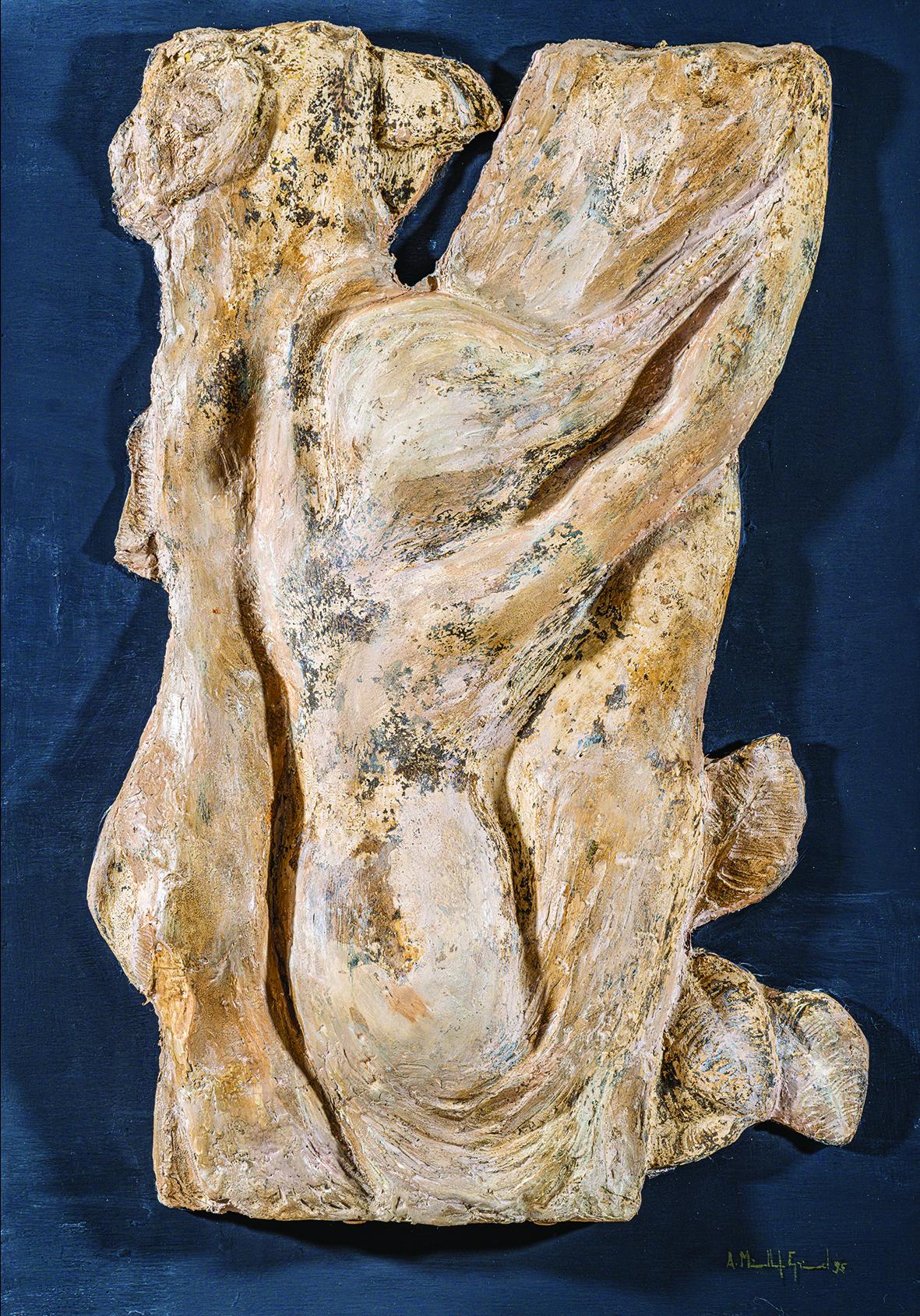 Arbre Enchanté, fiberglass, 1995.
Nadine’s perspective: a daughter’s tribute
For Nadine, this exhibition is deeply personal. Growing up surrounded by her father’s canvases, she recalls a home infused with creativity yet marked by his quiet humility.
“My father painted every day, not because he had to, but because he couldn’t imagine a day without art,” Nadine shares. “He worked with the same care on a church ceiling as he did on a portrait of one of us, always striving for beauty and truth.”
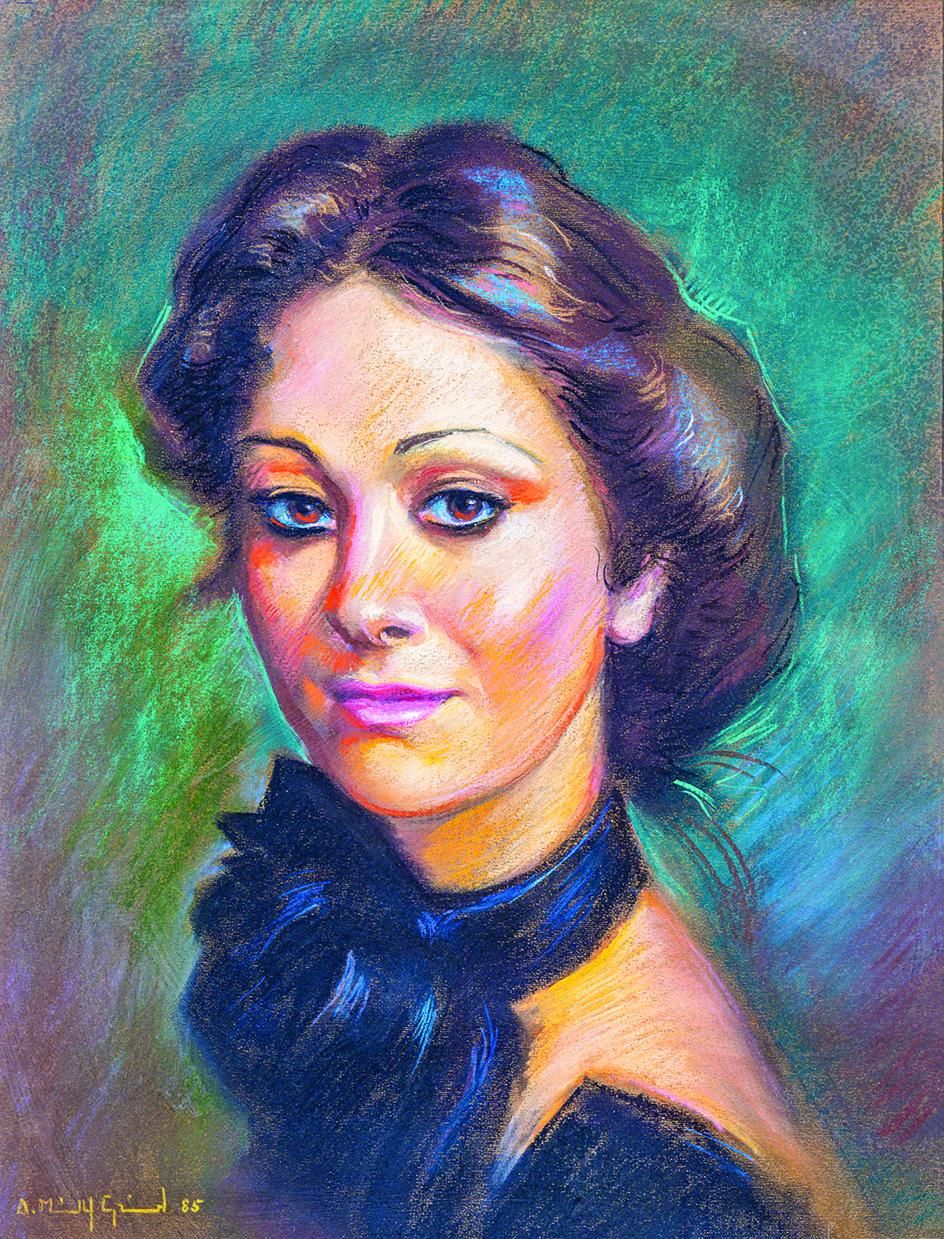 Nadine, pastel, 1985
Nadine’s meticulous work in cataloguing her father’s paintings, preserving family correspondence, and donating key works to national collections has been essential in preparing this retrospective. Through her contributions, visitors encounter Aldo not only as a painter but also as a father, mentor, and a man whose life was inseparable from his art.
Highlights of a master’s oeuvre
The exhibition brings together many of Micallef-Grimaud’s most compelling works: a large self-portrait painted in oils, a three-quarter length figure wearing the emblematic St Agatha’s Order white cloak with a red collar and the cross insignia with a gold border. This study of himself reveals an intensity and focus that defined his career. One of the most striking portraits in this collection on show at MUŻA is Portrait of Nadine (1985, soft pastels), a moving, tender depiction of his daughter that captures their closeness while demonstrating his growing mastery of colour and light.
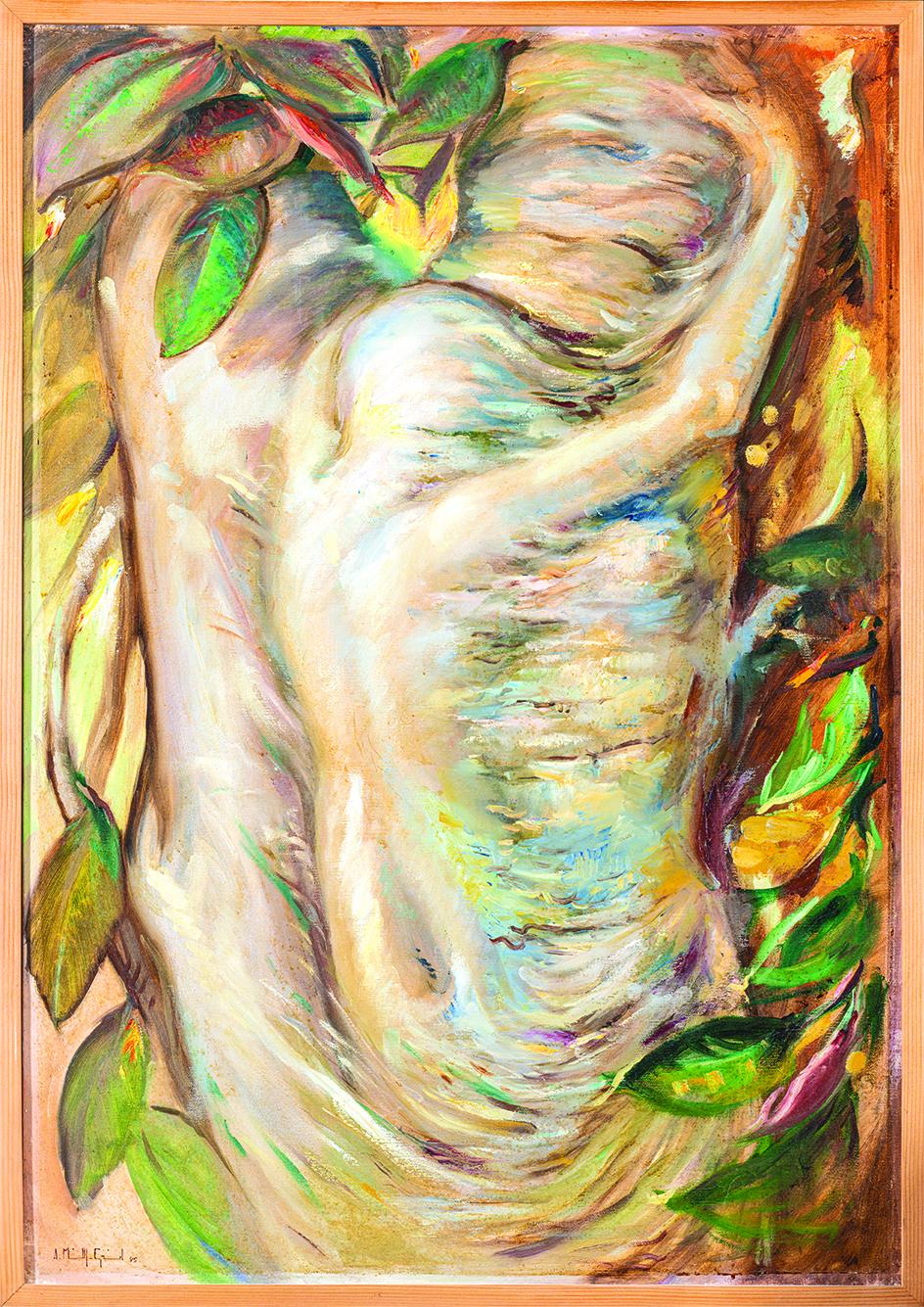 Arbre Enchanté, oil on canvas, 1995
In the book The Artistic Legacy of Aldo Micallef-Grimaud (1925-2025) which I wrote to mark the centenary from the artist’s birth, published for the occasion by Heritage Malta, we find examples of his extensive portraits of various local personalities. One of them is the notable portrait of Monsignor Isidoro Formosa (1851-1931), founder of the Congregation of the Ursuline Sisters in Sliema. The painting shows the monsignor in his traditional vestments: a black cassock with a red mantle, red buttons, and red trim along the collar, cuffs, and hem.
A red cincture circles his waist, and a golden cross on a chain hang around his neck. Behind him are a set of books and a small statue, while a painting of St Angela Merici, founder of the Ursuline Sisters, hangs on the wall to the right. The artist effectively used a spotlight effect, highlighting the monsignor’s face, hands, and parts of the background, emphasising his humble character.
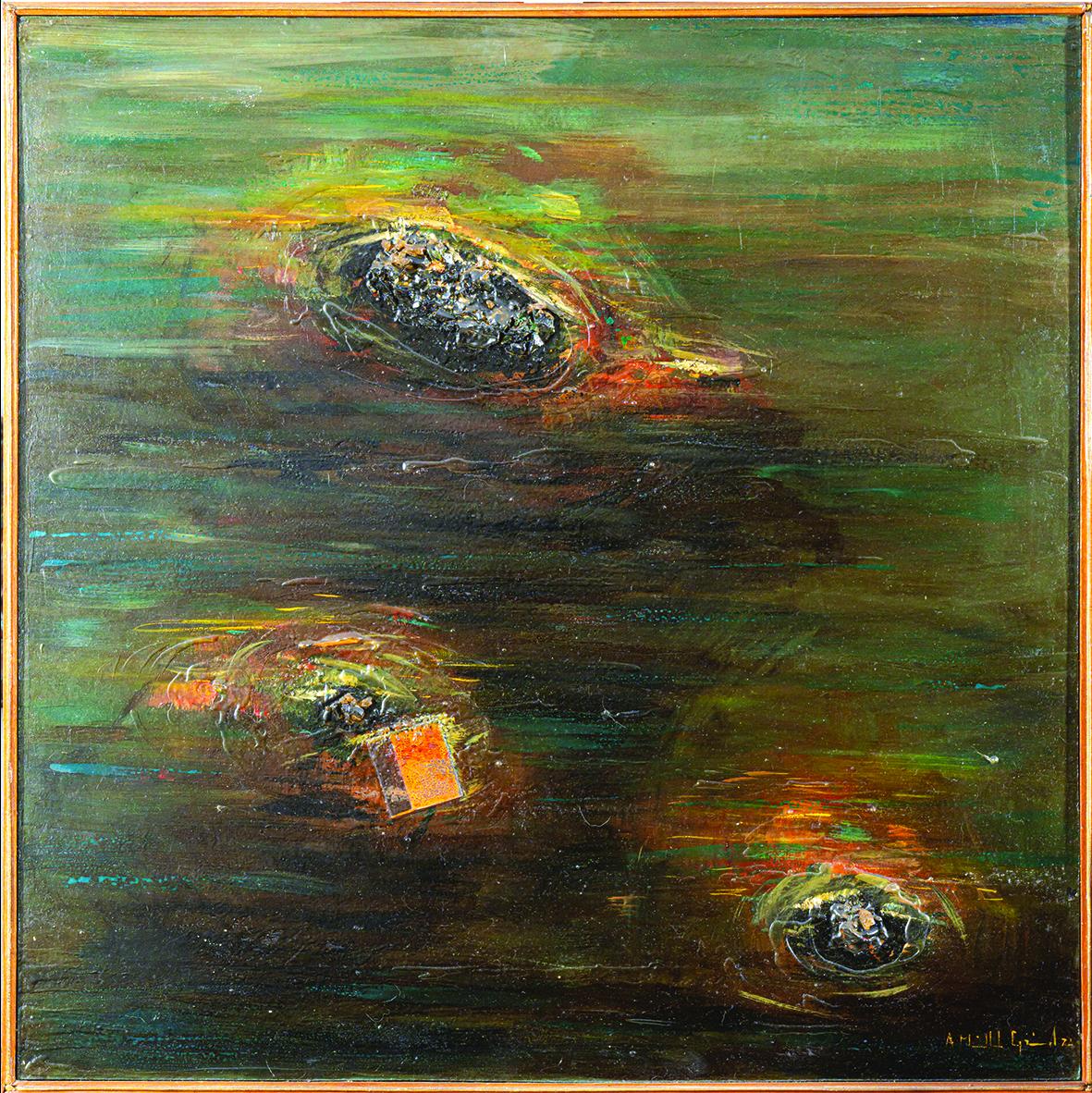 Pollution, mixed media, 1974
The Flagellation, also on display, is a striking example of Micallef-Grimaud’s mastery, demonstrating his ability to infuse a sacred subject with both anatomical precision and emotional gravity.
The composition is meticulously balanced, with every contour of Christ’s suffering body rendered with a sensitivity that reflects both technical skill and profound spiritual empathy.
This work exemplifies his dedication to faithfully interpreting religious themes while imbuing them with a deeply human dimension. His religious art beyond the studio, which were mostly religious commissions grace over many churches across Malta and abroad, including St Augustine’s in Valletta, the parish church in Mqabba and the English Martyrs Church in London.
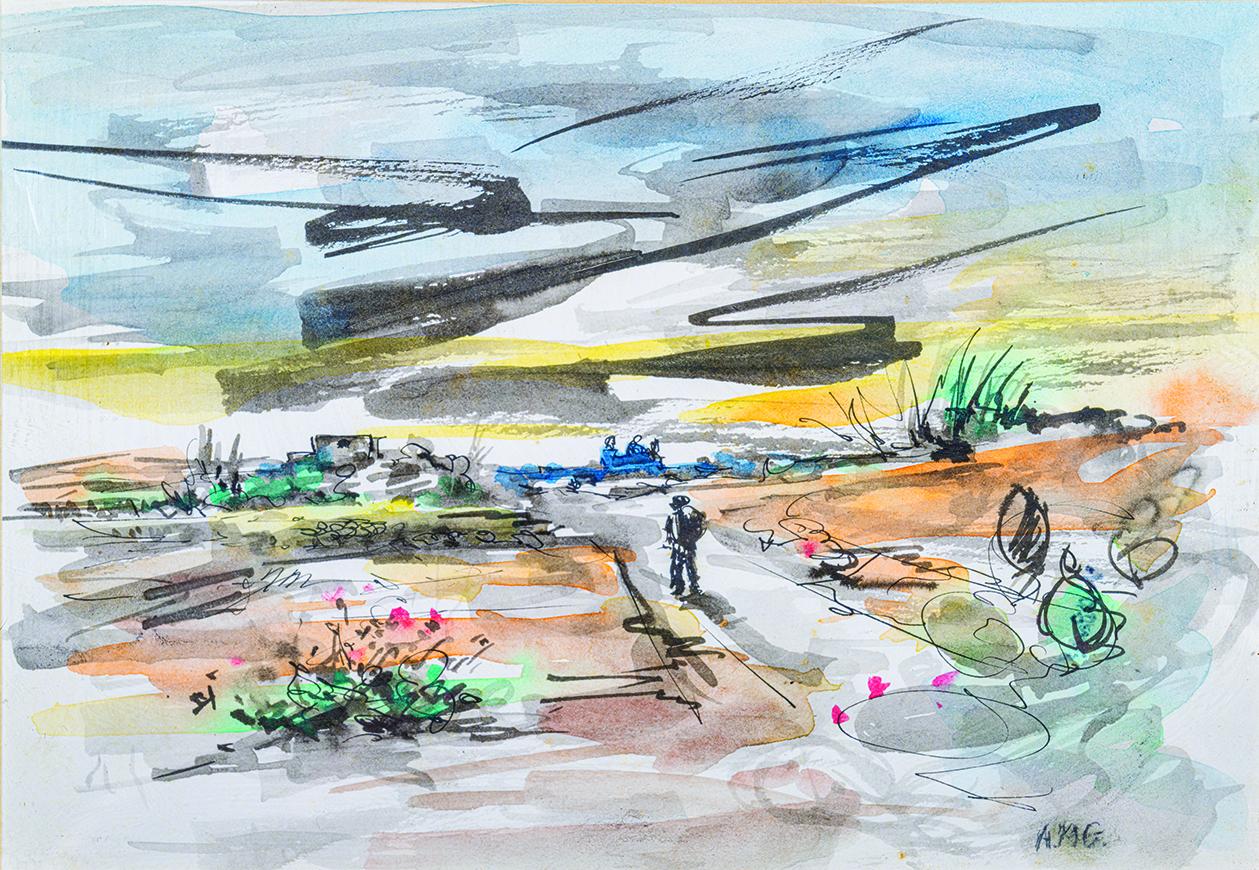 Going Home, watercolour and ink, undated
His landscapes immortalise Malta’s rural past. In his plein air painting sessions Micallef-Grimaud portrayed crumbling farmhouses, and sun-drenched fields rendered with loving detail. His landscapes stand among his most evocative works, capturing Malta’s rugged beauty and rural charm with a painter’s sensitivity and a historian’s eye.
His depictions of Fawwara and Ħal-Xluq convey a deep reverence for the island’s agricultural traditions, with terraced fields and winding stone walls bathed in soft Mediterranean light. In his paintings of Baħrija and Mtaħleb, he celebrates the untamed character of these remote areas, using earthy tones and textured brushwork to evoke their windswept terrain and rustic serenity. Together, these landscapes not only document Malta’s natural heritage but also elevate it into timeless reflections of place, memory, and identity.
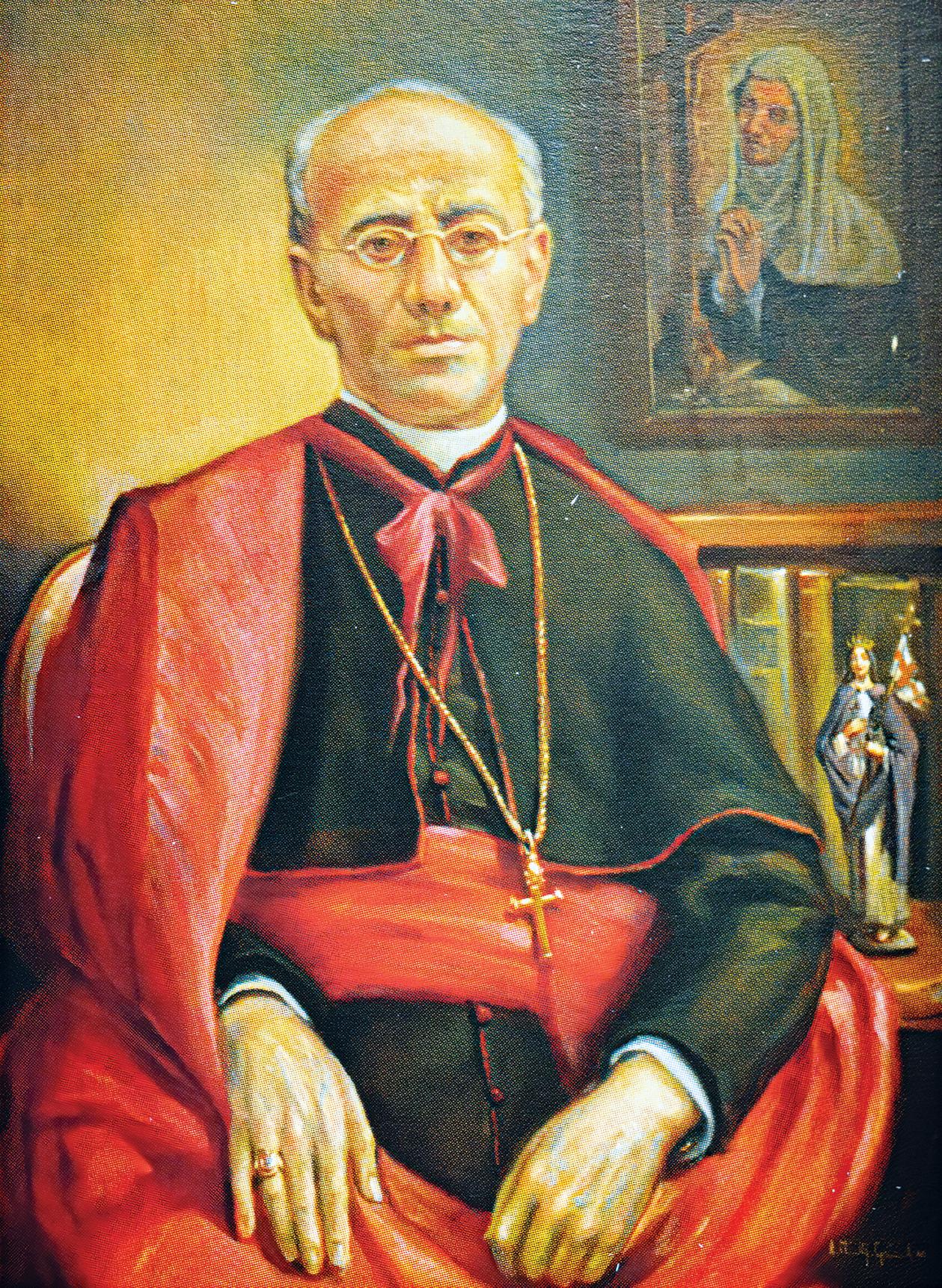 Portrait of Monsignor Isidoro Formosa, oil on canvas
By the 1990s, his style embraced greater abstraction and spontaneity, as seen in Going Home (ink and watercolour) and Pollution (1974, oils, fibreglass, and mixed media), a strikingly experimental piece addressing environmental themes, revealing Aldo’s versatility and willingness to embrace modern ideas.
The central piece in this collection of works at this retrospective exhibition at MUŻA is Arbre Enchanté (oil, 1995), where a tree morphs into a feminine figure in motion, proof of a restless creativity that endured into his later years.
His engagement with natural forms, now rendered in tactile, dimensional surfaces, underscores a growing commitment to personal symbolism and a more expressive, imaginative interpretation of his surroundings. This work was later cast in fiberglass and cement from the clay model.
A family legacy preserved
The exhibition is not simply a showcase of paintings but a family narrative. Nadine has been instrumental in ensuring her father’s work remains visible and valued, donating paintings to national institutions and supporting Heritage Malta’s mission to protect and promote cultural heritage.
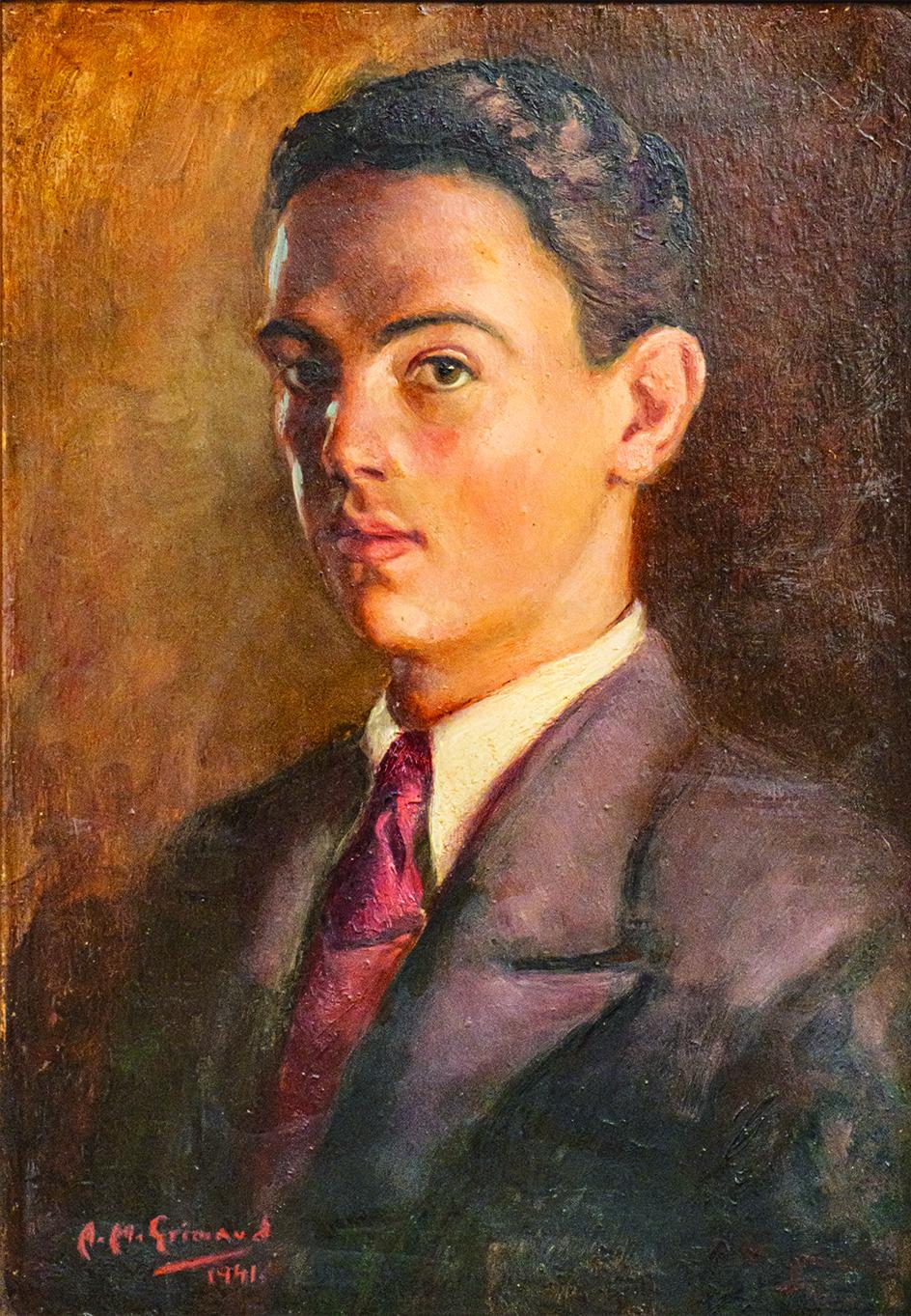 Self Portrait (aged 15 years), 1941
“Growing up, I didn’t fully realise the extent of his talent,” she reflects. “But every brushstroke carried his love for Malta, his faith, and his family. This exhibition is my way of giving back, to him and to the country he celebrated in his art.”
Why his art matters today
In today’s era, dominated by conceptual installations and digital art, this exhibition reaffirms the timeless power of painting. It is a reminder that skill, observation, and emotional resonance are not relics of the past, but essential components of enduring art.
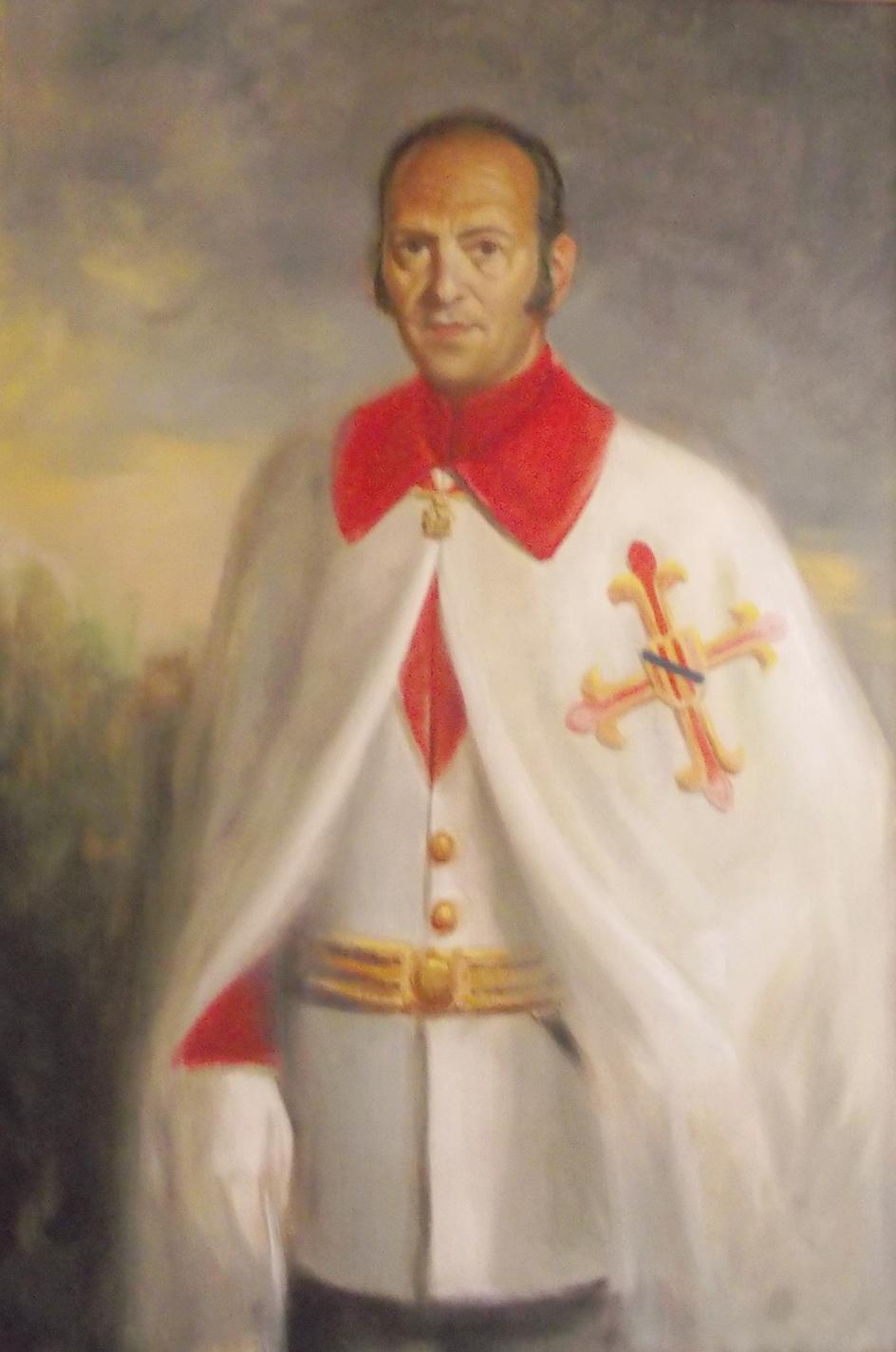 Self Portrait, undated
Through this exhibition and its accompanying Heritage Malta publication, Aldo Micallef-Grimaud’s contributions are reframed not as nostalgic echoes of tradition but as profoundly contemporary, speaking to the universal need for beauty, memory, and artistry.
Hosted by Heritage Malta at Auberge d’Italie (MUŻA), Valletta, until September 30. The accompanying publication, The Artistic Legacy of Aldo Micallef-Grimaud (1925-2010), by Louis Laganà, will be available at the exhibition venue and Heritage Malta outlets.
Louis Laganà is an associate professor, curator and practising artist.