Artistic vision of Pope Francis
A humble revolution for culture
In an era increasingly dominated by efficiency, consumerism and fleeting digital trends, few global figures have spoken with as much moral clarity about the enduring value of culture and the arts as Pope Francis.
His pontificate, often praised for its emphasis on compassion and dialogue, has also made a profound, if sometimes underappreciated, contribution to humanity’s artistic soul.
Pope Francis has consistently framed the arts not as a luxury for the few, but as an essential expression of the human spirit. In his 2016 address to artists at the Vatican, he affirmed: “Art must make the invisible visible. It must open up the horizons of the mind and of the heart.” With these words, Francis championed a vision of art that is not merely decorative or entertaining but deeply transformative.
This transformative power is not abstract for Francis; it is linked to hope, to social justice and to the sacredness of human dignity.
He has called artists “custodians of beauty”, a title that reflects a vocation rather than an occupation. In his 2022 address to the meeting of the Dicastery for Culture and Education, Francis said: “Beauty can pierce the heart and lead it upwards towards transcendence.”
For a world so often mired in cynicism and despair, the pope’s insistence that beauty is a gateway to God is a cultural intervention of the highest order.
Yet, Francis is no idealist in the naïve sense. He understands that art and culture are also arenas of struggle – spaces where the dignity of the marginalised must be affirmed and the voiceless given a voice.
His encyclical Fratelli Tutti (2020) is not an artistic treatise, but, within its pages, we find a philosophy deeply relevant to artists and cultural workers: the call to dream together, to weave new cultural narratives that unite rather than divide.
“Each one of us is called to be an artisan of peace, by uniting and not dividing, by extinguishing hatred and not holding on to it, by opening paths of dialogue and not constructing new walls,” he writes.
Here, Pope Francis elevates the role of the artist to that of a peacemaker, not a passive observer of the world’s beauty or pain, but an active participant in shaping it. This approach places heavy trust in artists as moral agents, as those capable of fostering what Francis calls “a culture of encounter”.
This “culture of encounter” is a phrase Francis returns to again and again. It is fundamentally opposed to the throwaway culture he decries in Laudato Si’ (2015), where people, like objects, are discarded when no longer deemed useful.
In a world so marked by utilitarian values, Francis challenges artists to resist these trends, to imagine alternative futures, to insist on the value of every person, every story, every culture.
His call is especially urgent in the realm of indigenous cultures and minority traditions, which he has repeatedly defended against erasure. Speaking at World Youth Day in Panama in 2019, he said: “Your people have much to teach us about how to live in harmony with nature... You are a living memory of the mission that God has entrusted to us all: the protection of our common home.”
Artistic traditions, whether expressed in language, ritual, song or visual form are integral to this living memory. Francis sees in them not mere artefacts of the past but dynamic sources of wisdom and resilience for the future.
Furthermore, Pope Francis’s understanding of the arts extends beyond the preservation of cultural heritage. He places enormous emphasis on the creative imagination. In his 2023 meeting with artists for the inauguration of the Vatican’s new Department of Culture, he urged: “We need the genius of new imagination to heal and transform.”
Francis’s cultural vision is not utopian but incarnational. It recognises both the brokenness of the human condition and its astonishing capacity for renewal- Mgr Claude Portelli
For a Church often perceived as slow to embrace change, Francis’s encouragement of creative dynamism is revolutionary.
Perhaps nowhere is his cultural sensibility more evident than in his deep appreciation for literature, poetry and cinema. He has often spoken about the spiritual depth of writers like Dostoevsky and Manzoni, or film-makers like Federico Fellini and directors of the Neorealist movement. Such references are not window dressing; they reveal a mind that sees storytelling as a central battleground for the human heart.
In his conversations with journalist Austen Ivereigh, collected in the book Let Us Dream (2020), Francis describes storytelling as a process that can either build bridges or walls: “Good stories sow seeds that bear fruit in people’s lives: they open up horizons, they encourage people to dream.”
The stakes, then, are profoundly moral. In a world increasingly overwhelmed by narratives of fear and exclusion, the pope’s insistence on the power of storytelling is a call to arms for all artists of goodwill.
It is also telling that Francis has broadened the definition of “artist” itself. For him, it is not a title reserved for painters, composers or film-makers alone. Every person, he suggests, is called to be a kind of artist in their daily life, crafting with patience and care the culture in which they live. This democratisation of artistic vocation reflects his larger theology: a Church not of elites but of the people, where holiness and creativity arise from the grassroots.
Critics may accuse Pope Francis of idealism, of placing too much faith in culture’s power to heal a fractured world. But in an age when the alternative is often despair or apathy, such hope is itself a radical stance.
Francis’s cultural vision is not utopian but incarnational. It recognises both the brokenness of the human condition and its astonishing capacity for renewal through beauty, truth and goodness.
In the end, Pope Francis’s contribution to culture and the arts is not a programme or a manifesto. It is a call, tender but insistent, to recover the human vocation to create, to imagine and to heal.
In a homily on the feast of the Epiphany in 2018, he captured this beautifully: “Like the Magi, we must set out anew, daily, toward the light and bring to the world the joy of a creativity born of love.”
There is no more urgent task for artists today and no greater encouragement than the quiet, insistent voice of Pope Francis, reminding us that beauty still matters, that culture still saves.
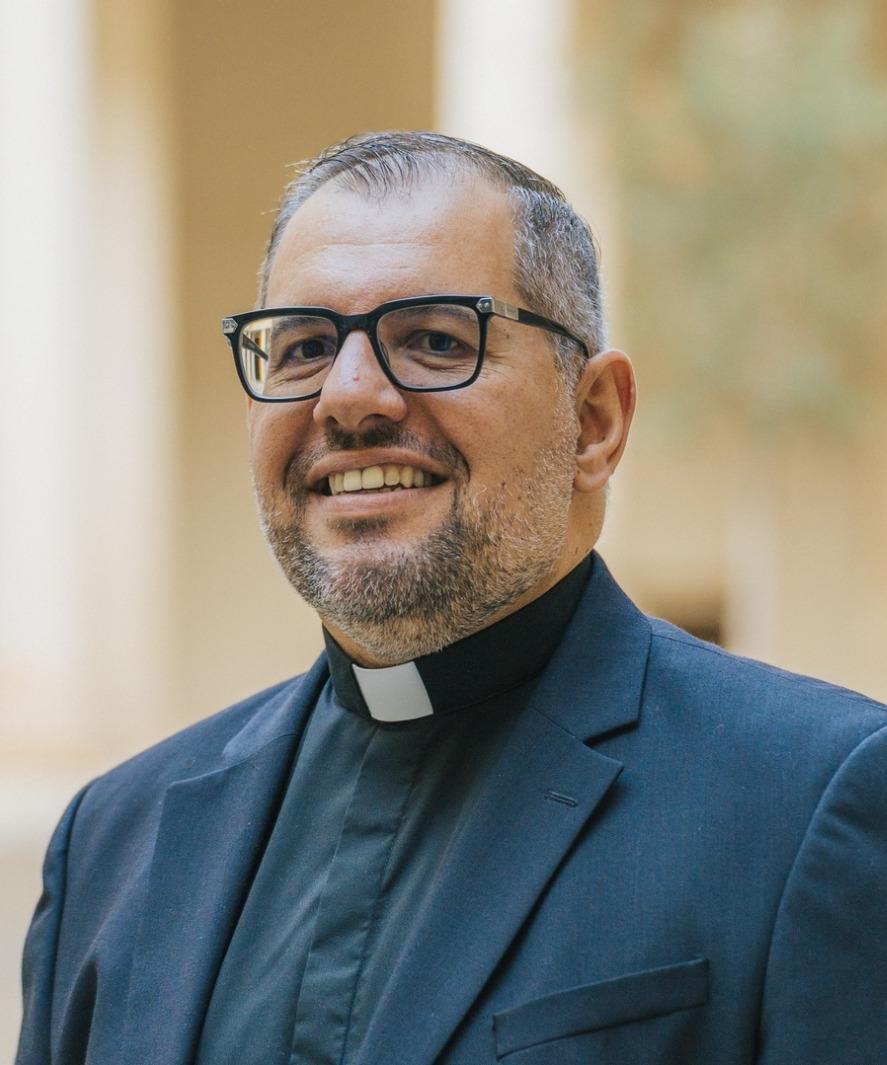
Mgr Claude Portelli is the Archbishop’s Delegate for Culture.