Arts Council Strategy aims to tell Maltese stories abroad
Plan focuses on internationalisation, cultural rights and professional development
The executive chairman of Arts Council Malta has promised to "tell Maltese stories outside of Maltese shores" as he launched its 2030 strategy.
Luke Dalli said the country had kept its art and stories in the country for too long and now plans to "export our beautiful talent".
The long-term vision, unveiled on Wednesday, aims to position Malta as a stronger global player in the arts and culture sector.
It is built around three main pillars: professional development, cultural rights and internationalisation, with the latter as a central focus.
During his address, Dalli said Malta must aim to strengthen its presence on the international cultural stage. He added that this would require a shift in how the country presents itself and its creative sector.
“Not letting ourselves be seen as just a sort of insect or small rock, but truly on par,” said Dalli.
Arts Council Malta has already supported a number of international projects, including the participation of Maltese artists in the Gwangju Biennale, the Venice Biennale and the London Design Biennale, where Malta won a gold medal in 2025.
In total, the strategy proposes 55 actions.
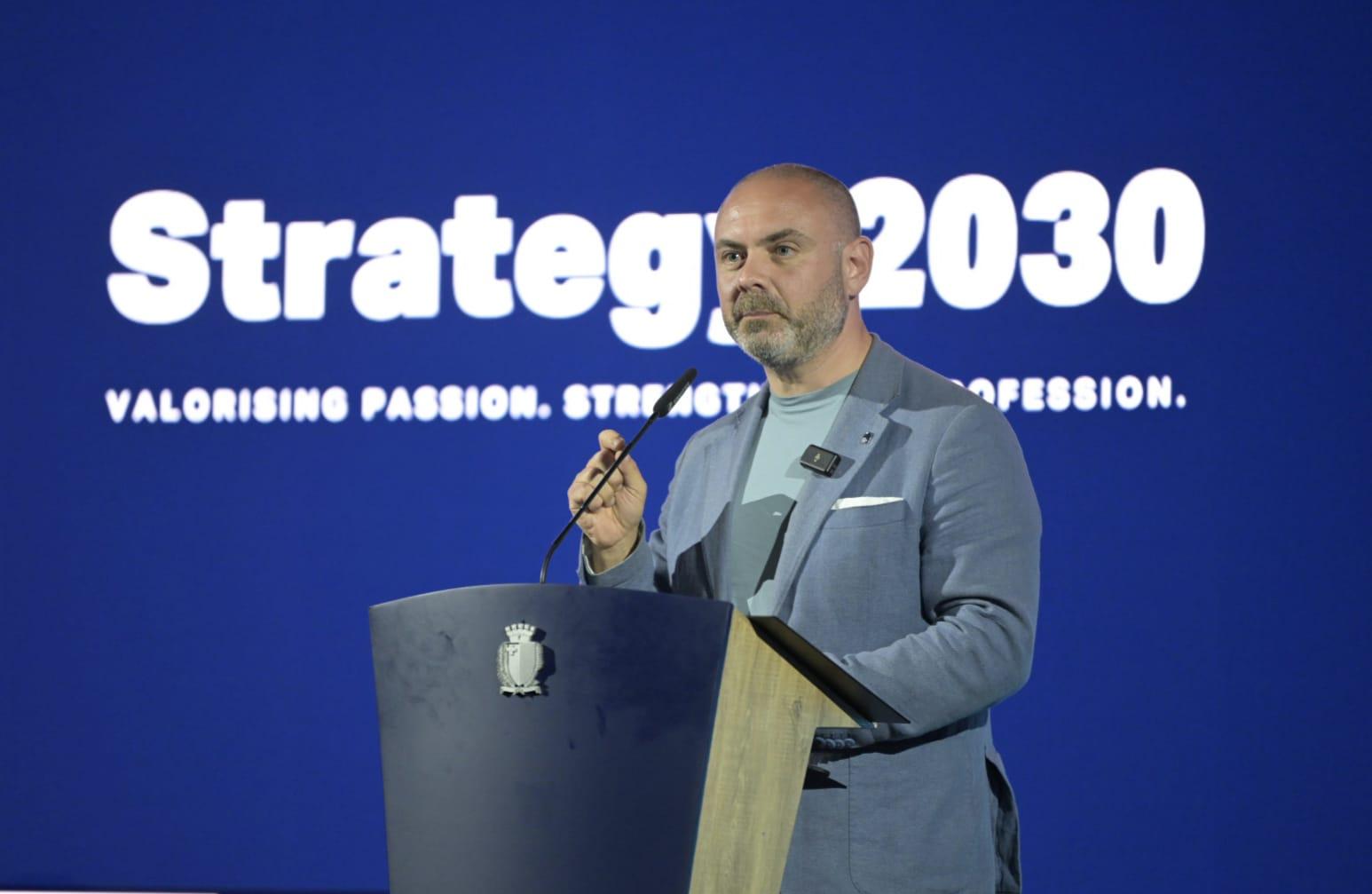 Owen Bonnici addressing the event. Photo: Matthew Mirabelli
Measures linked to internationalisation include appointing international cultural representatives in key regions, starting with the UK and the US, to promote visibility and cultural diplomacy. The plan also includes expanding funding schemes, as well as training and showcasing opportunities for artists.
The second pillar, professional development, focuses on improving financial support and resources for practitioners, enabling them to sustain and develop their work.
The third pillar, cultural rights, aims to ensure broader public access to culture and to move away from a system where the sector operates in isolation or feels accessible to only a handful.
“Now that we have created a solid base, it is now the time to take the next step forward and with the three pillars of Strategy 2030 we will be able to do just that,” Culture Minister Owen Bonnici said.
Attached files
The strategy also addresses the role of artificial intelligence in the cultural sector. According to the document, AI will primarily be used to strengthen institutional capacity and streamline administrative processes.
“By reducing bureaucratic burdens, AI enables practitioners to concentrate on core creative and strategic work, while enhancing digital, data and organizational competencies,” it states.