‘Back to the Lorry Sant days’: Anger mounts over new planning proposals
Critics slam new planning laws, say government determined to 'sell out' the country
Updated 9.40pm
Two new planning laws put forward by the government yesterday, which critics argue will hand unprecedented power to developers, have provoked fierce criticism.
ADPD deputy chairperson Carmel Cacopardo blasted the new laws tabled in parliament Friday as "turning the clock back to the 1980s, the Lorry Sant years”, while activist Wayne Flask said they “aim to facilitate money laundering in property”.
The two bills cover a vast range of planning processes, including the revocation of permits, compensation payouts, enforcement and planning and environmental appeals.
In a statement on Friday shortly after the bills’ tabling, NGO Moviment Graffitti said the two laws represented “a developer’s wish list”, “dismantling nearly all remaining legal safeguards”.
In a blog post Saturday morning, Cacopardo called the drafting of the laws “diabolic. There is no other way to express it”.
 Critics warn the changes will see development expand while ignoring environmental concerns. Photo: Matthew Mirabelli.
“I do not know which is the worst proposal, but maybe the right to resurrect expired permits takes the biscuit. The objective is possibly the resurrection of the Villa Rosa permit struck down by the Court of Appeal. Possibly there are other candidates”, he said.
“The number of horrible proposals is enormous,” the Green Party politician said, stressing it would “now be practically impossible to defend your rights without professional assistance”.
“A lawyer may not be enough. When things get too technical, even the lawyer will get lost,” he said.
“The net result of all this is that the clock has been turned back to the 80s, the Lorry Sant years,” said Cacopardo, referencing the policies of the former notorious Labour public works minister, who is remembered for his heavy-handed use of planning policies.
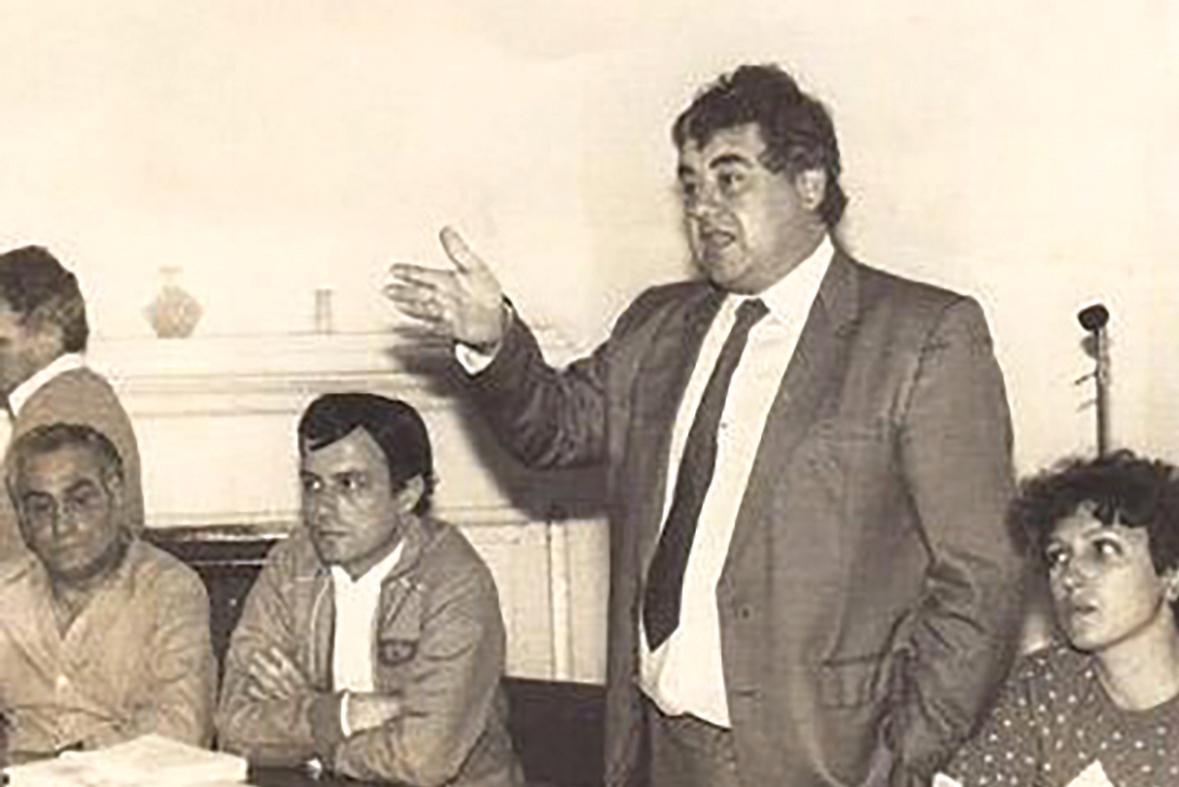 Former minister Lorry Sant. File photo: Times of Malta.
The country saw widespread granting of permits under Sant’s watch, including in rural areas, amid allegations of favouritism and corrupt practises.
“It is back to the stone age of land use planning,” said Cacopardo.
'Selling out the country'
Posting on Facebook, il-Kollettiv activist Wayne Flask said the new laws, “written by a small caste that also includes [lawyer] Robert Musumeci, aim to facilitate money laundering in property by extinguishing any form of recourse to justice that we may have”.
Musumeci is a long-standing government advisor, founding partner of architecture firm RMPERITI and was involved in the demerger of MEPA and ERA and setting up of the Lands Authority.
“The Cabinet is an accessory to [Prime Minister Robert] Abela's desire to win another election by selling out the country, party and people to another small caste made up of speculators, fraudsters, tax evaders, and even criminals”, said Flask.
“With this move Abela wants to silence the people and make them sleep under the building forever. He can retire peacefully, enjoy the yacht and the house in Żejtun, the retreat in Gozo, and who knows what else he has hidden in the trunk.”
Bill No: 143 of 2025 proposes over two dozen changes to the Development Planning Act, granting the Planning Authority more flexibility to revoke permits, limit compensation payouts and intensify enforcement against illegal development.
The new powers are time-bound; revocations may only be considered within one year of a permit being issued, unless they relate to public safety.
The bill also narrows the scope of compensation, limiting it to direct costs rather than any drop in land value or development potential.
Bill No. 144 of 2025, the Environment and Planning Review Tribunal Act, meanwhile, will overhaul how planning and environmental appeals are handled in Malta, promising a more independent, efficient, and digitally streamlined tribunal system.
NGO Moviment Graffiti has said the latter will allow the PA board to “deviate from planning policies and enable the Planning Board to disregard environmental considerations.”
In a video uploaded on Saturday, Andre Callus from Moviment Graffitti expressed his horror at the new proposed laws. He said the government was determined to dismantle the entire planning process. He urged the public to join them for a "big fight" ahead.
'An attack on democratic rights'
Din L-Art Ħelwa slammed the new bills saying they will "severely undermine the ability of residents to oppose over-development" and demanded the Bills should be withdrawn.
"We are very angry and hurt at these obscene developments," a spokeperson for Din L-Art Ħelwa told Times of Malta.
The NGO accused the government of introducing the proposed amendements to the law at a time when public scrutiny is at its lowest, during parliament's summer recess.
"If passed, the Planning Board will have sweeping powers to approve developments, even those that directly contradict established planning policies. Residents and stakeholders will be practically stripped of their right to effectively appeal these decisions, regardless of the damage they may cause to their communities or the environment," Din L-Art Ħelwa said on Saturday.
They added the Bils amount to a "direct attack on the democratic rights of the people of Malta and Gozo" adding they will pave the way for "unchecked, destructive development, and silence those who have long stood up for a more sustainable and just future".
'Disgraceful'
In its reaction to the news, Momentum "vehemently condemned" the proposed radical overhaul of the planning laws, saying the changes were "a clear attempt to favour big developers at teh expense of ordinary citizens and the natural environment".
"Rather than addressing the systemic failures that have led to overdevelopment and environmental degradation, these revisions will accelerate the damage to our communities and landscapes," Momentum chairperson Arnold Cassola said on Saturday.
He called the approach "short sighted" saying it will only "perpetuate the existing chronic problems of over-development affecting our country".
"By giving the PA discretion to ignore its own rules, stripping the courts of their power to revoke permits, and creating loopholes for so-called 'demountable' structures in ODZ, the government is prioritising the profit motives of powerful developers," Cassola said.
"Join the fight"
Wirt Għawdex on Saturday called on the public to "join the fight" against what it described as "horrible proposals" amending the planning laws.
The NGO expressed its "shock" at the overhaul to the planning laws saying the court's powers are being "severely diminished" with more power granted to the Planning Board.
"We will be fighting this alongside other NGOs. We strongly urge all people of good will to join the good fight against this horrible proposal," Wirt Għawdex said.
"The most corrupt planning reform"
Ramblers Malta president Ingram Bondin posted a video message on social media calling on everyone to unite to "stop this reform which will change our country forever".
Describing it as the "most corrupt planning reform" and a "punch in the stomach", Bondin accused prime minister Robert Abela of "backstabbing" environmentalists and was "writing laws to allow the worst elements of the construction sector enjoy the benefits".
"We are all angry about this," he said, pleading with the public to "stand up with us [NGOs] when the moment comes because this is the only way to save our country".
He also revealed that in a 2023 meeting with Abela and six other ministers, the only issue that they had agreed upon was the need to ensure that during an appeal process, the developer cannot continue with construction works.
Bill 144 proposes that construction projects can be suspended for up to 10 months across two rounds of appeals while an outcome is decided but a permit will not be revoked. Moreover, even if the appeal is upheld, any construction carried out in that window is not invalidated unless the permit was for sanctioning illegal works.
"Undemocratic"
Flimkien għal Ambjent Aħjar on Saturday evening "warned" all members of parliament that supporting this reform is "not only undemocratic but also a betrayal" of all citizens.
In a statement, FAA called on the Prime Minster and all MPs to vote against the "attempt by moneyed interests to completely hijack Malta's planning process", describing the reform as "a monster which [the government] cannot control".
FAA coordinator Astrid Vella pointed out that the Bills "obliterate" the amendment to Article 9 of Malta's Constitution which had introduced the State's obligation "to promote, nurture and support the right of action in favour of the environment".
"Whenever more power is given to developers in Malta and Gozo, many developers not only interpret that power as a fundamental economic and personal right afterwards but abuse it further due to lack of enforcement and ease of sanctionings," Vella said.
She added the Bills were the "most radical assault upon natural justice and ordinary people's right".
Vella also suggested that recent eNGO victories through the courts such as FAA's overturning of the Capitanerie permit at Gzira Gardens and that of the landmark Ramel Building at Balluta, "has prompted this backlash".
FAA added this represented a "wholesale violation" of the EU's Directive on Public Access to Environmental Information designed to protect people's right to live in an environment adequate to their health and well-being.
"Kafkaesque"
NGO Għawdix called on the government to "stop these Bills" and hold "real" public consultation.
In a statement, the NGO said the proposed laws will "throw [the country] to the dogs" as they will open the door to more construction in protected or rural areas, reduce transparency, weaken the public's right to appeal harmful projects while putting developers' interests ahead of the environment and residents.
Describing the "kafkaesque state of Malta", Għawdix said that "instead of fixing what is already largely broken, the government has decided to bulldoze even the little that still works".
"Rather than giving people a stronger voice over the environment, it has chosen to empower those already in control, gagging the public, and turning planning into a one-way conversation between developers and politicians."
Pointing out the proposed laws are "replete with loopholes", the NGO remarked that "if these bills weren't so destructive, they would almost be impressive".