Barbers and hairdressers in early Malta’s micro-history
Giovanni Bonello delves into the origins of the profession, going back almost 800 years
I do not propose to write an organic history of how the people of Malta dealt with body hair from the dawn of history to modern times. This evolution remains mostly undocumented. At most I will put together some episodic examples when hairdressers and barbers left faint footprints in the records, particularly during the Hospitaller period. Micro-history at its most dire.
Readers today should keep in mind a fact both surprising and shocking: up to relatively recently the terms barber and surgeon proved virtually interchangeable. Though not all barbers practised surgery, all surgeons were barbers. The joint profession went by the name of barber-surgeon in English and barberotto or barbitonsore in Italian.
Only university-trained physicians flaunted the title of ‘Doctor’. Tradespeople without university instruction settled for ‘Mister’ – today the snob appellation for surgeons in the Anglophone world. “In Malta it was customary to resort to the village barber to treat certain ailments, set broken bones a perform dentistry services.”
Perhaps the first mention of barbers in Maltese legislation harks back to the barbaria, almost 800 years ago, the 1241 official confirmation of the closed-shop nature of the profession, and the consequent tax on the income of its members. The levy on barbers yielded extraordinarily high returns – 340 tari from those practising in Malta and 80 from the Gozo ones.
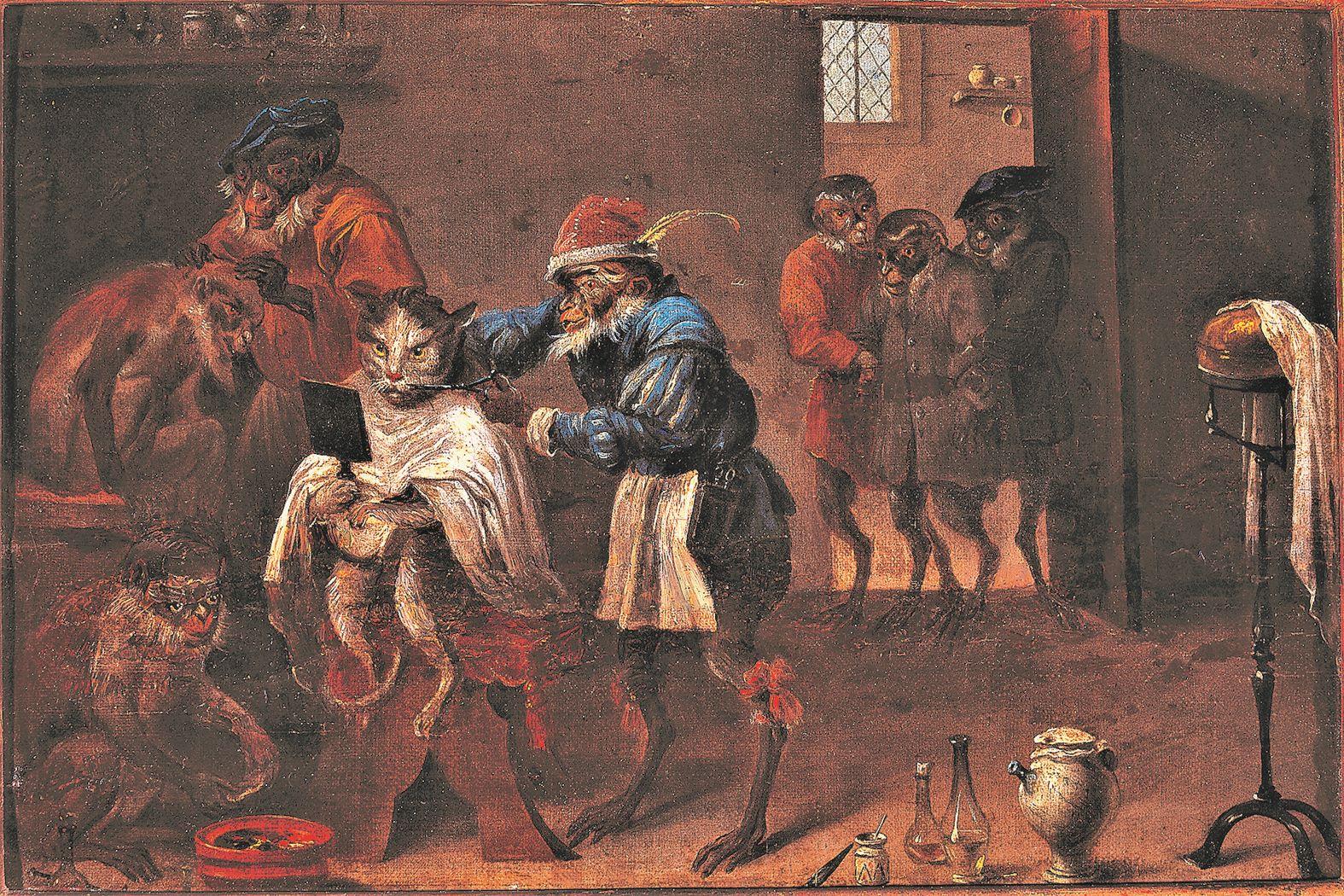 Monkeys’ barber shop for cats – a satirical scene by David Teniers. Photo: Courtesy of Palazzo Falson, Mdina
Conflicts between two Gozitan barbers in 1451 dragged all the way to the royal court of King Alphonse in Palermo. A tract of land in Gozo tal-Barbarija (the barber’s land?) from time immemorial served to provide the income for a barbitonsore in Gozo to act as barber and surgeon on the island.
After the death of the barber Francesco de Dato, both his son Giovanni and Nicola de Achive claimed this income and went to court about it. Through the intervention of common friends, the two barbers reached an out-of-court settlement recorded in a notarial contract, which the Viceroy of Sicily then ratified.
Not too long after, Xema (Zemah) Girbi, a Jewish barber reputed to be also proficient in surgery, was, in 1486, forced to stand down as head of the Jewish community in Malta to enable him to dedicate more time to those who needed his medical treatments.
The first mention of barbers in Malta harks back to the barbaria, almost 800 years ago
When the Ottomans conquered Rhodes in 1523 and expelled the Order of St John, a sizeable portion of the population followed the exiled knights. Among them six barbers, who preferred leaving their homeland rather than live under the new Turkish rule. The barber Francesco Myriti and his apprentice Sevasto de Lango feature among them.
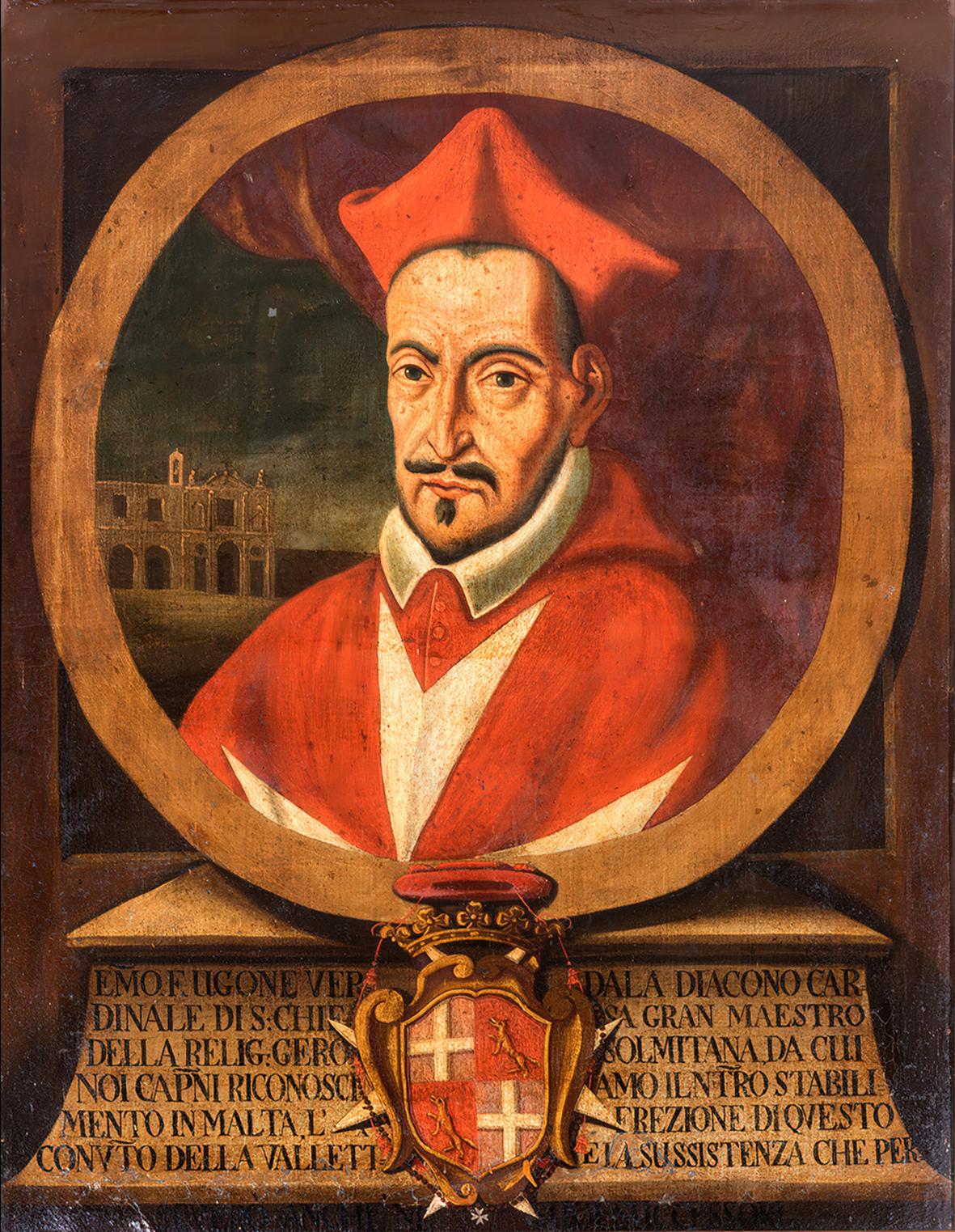 Grand Master Hugh Loubenx de Verdalle. Capuchin Museum Floriana. Photo: Courtesy of Daniel Cilia
Most of these displaced Rhodiots eventually settled in Malta. Giovanni Myriti, the renowned Maltese cartographer and cosmographer, illegitimate son of doctor Leonardo, Grand Master l’Isle Adam’s personal physician by his servant Mazina, was almost certainly Francesco’s nephew.
The records of Notary Salvatore Briffa have one of the early mentions of a barber during the rule of the Knights. In 1579, Paolo Burlò owed Julius Vatublin (or Vatubin), a barbitonsore, four ounces of silver, and the creditor proceeded to repossess property of the debtor.
The wife of the barber Aegidio caused an uproar in the convent in 1584 when caught cheating, apparently in flagrante, with the knight Fra Onofrio Mestre, in their own matrimonial home. The Council of the Order found the horny adulterer guilty and sentenced him to two months’ imprisonment in the tower.
In 1599, Gabriele Cassar, son on the renowned architect Girolamo, filed a formal report with the Castellania (the police station) against Pasquale Scerri, a barber, and Francesco Pace for having assaulted him, sword and dagger in hand, as he peacefully entered Porta Reale on his way home. Bystanders intervened to save his life. He listed Matteo Rodriguez and others as witnesses to the assassination attempt.
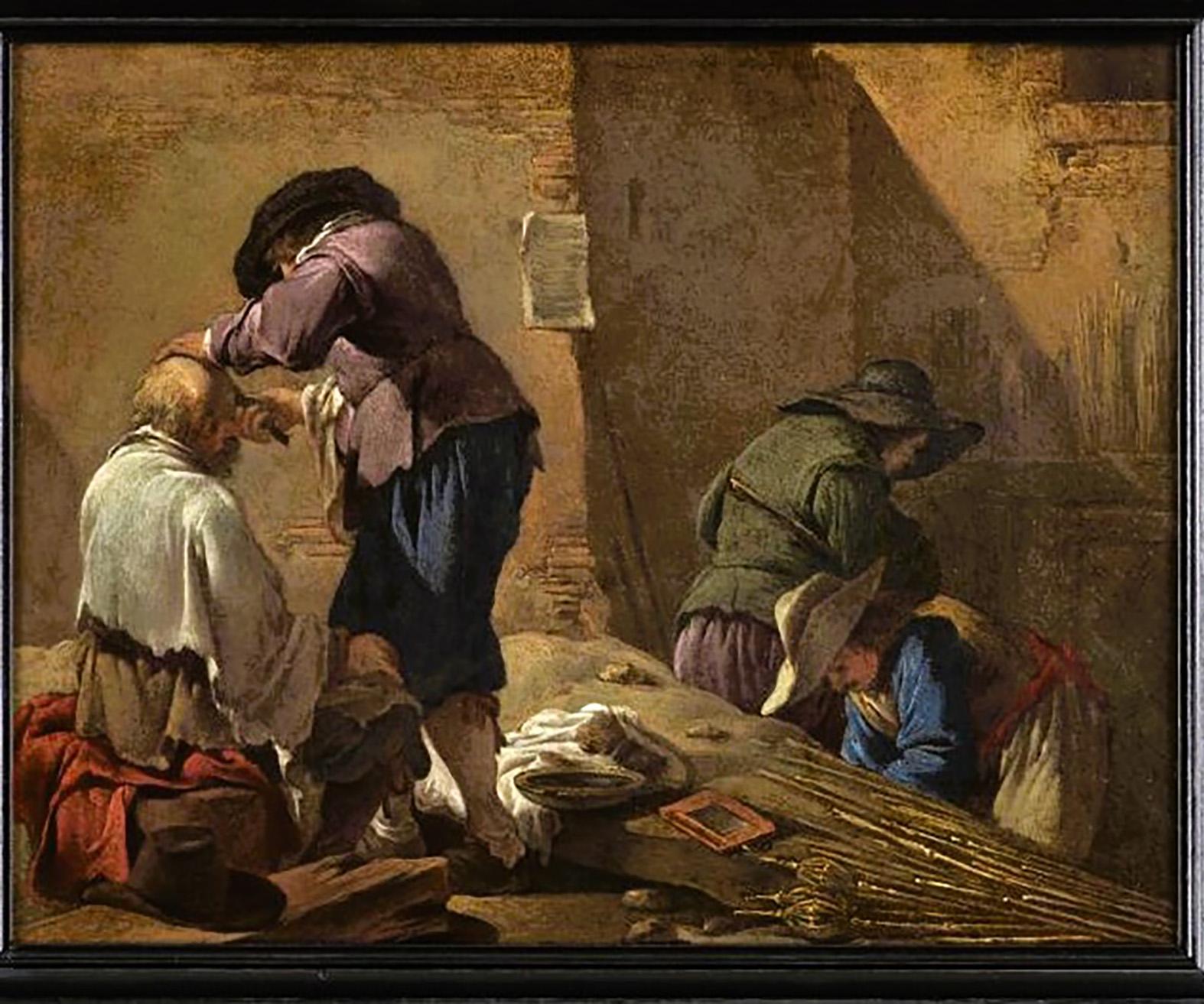 Farmers’ barber by Andreis Both, 1630s
Though centuries had to roll by for the concept of unionisation of labour forces to take shape, barbers who worked on the galleys of the Hospitallers risking their lives at sea, in 1608 collectively, if cautiously, threatened strike action.
The Order responded by increasing their wages to three scudi a month, provided they also cut the hair of everybody on board, including that of the bonavoglia (non-slave oarsmen) and of slave rowers. Before their protest, they had only groomed knights, who tipped generously. Less than a year later, Andrea Greco, the barber-surgeon of the galley San Luigi, lost his life at sea.
Giovanni Luca Sceberras, a barber from Naxxar who worked at the Sacra Infermeria in Valletta, found it difficult to reconcile his work commitments with his family bonds, particularly as his earnings did not allow him to relocate his household to the capital. In 1617, he petitioned the Grand Master for a rise, and Wignacourt increased his salary by over 35 scudi yearly.
Part of the essential duties of those barbers who also performed surgical procedures, included bloodletting, tending war wounds, setting fractured bones, amputations, tooth extractions and enemas.
But in the plague outbreak of 1623, though offered handsome recompense, almost all the barbers succumbed to the terror of contagion. With the exception of the barber Giovanni Andrea di Giuseppe, the others deserted their duties.
The Malta Inquisition records sometimes refer to barbers. One melancholy 1645 case highlights the penury of some ordinary priests who could not afford the services of Christian hair stylists and fell back on using infidel captives on entering the slaves’ prison itself for a shave or a haircut. This, according to the reports, caused major scandal.
Wig-making by hairdressers (hence their name parrukkier) only because popular in Malta at the peak of the baroque era. It is ironical that the last Grand Master not to wear a wig was the second Wignacourt, Adrien.
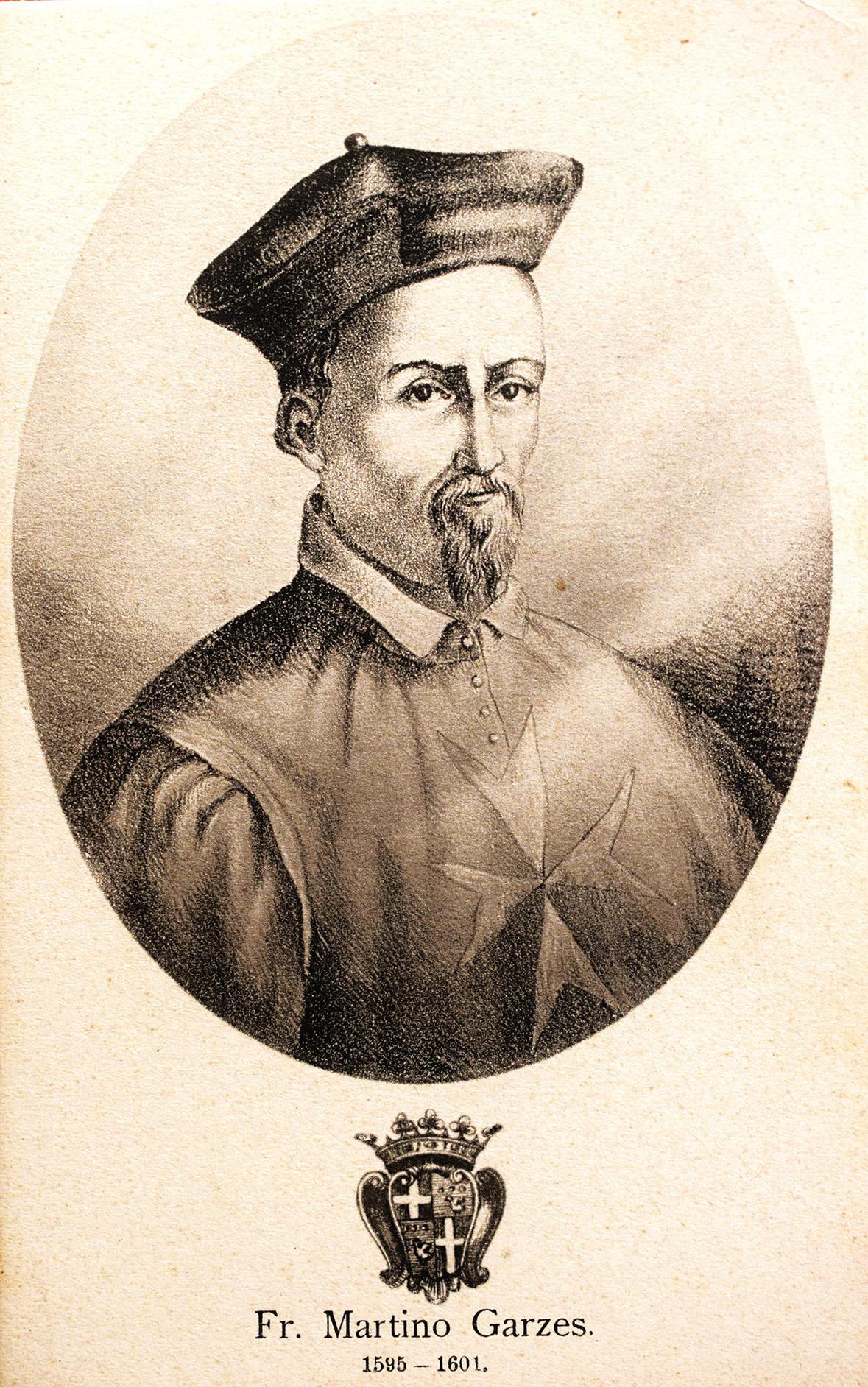 Grand Master Martin Garzes. Barber-related episodes are recorded during his rule.
A Venetian barber, Andrea Calzi, who had settled and married in Malta, in 1699 requested permission to open a barber shop in Valletta where he could also practise his professione di chirurgo, quoting his previous experience as barber-surgeon both on ships and on galleys. The protomedico, impressed by Calzi’s skill in bloodletting, cupping, applying leeches and treating simple wounds, approved.
An old barber brought about the death of Mattia Preti in 1699. The painter had been using his services over the past 30 years. Though his hands trembled violently and had repeatedly cut his customer’s face and nicked his warts, the kind-hearted artist could not find it in him to fire him.
One day, however, the barber sliced off entirely the largest wart on Preti’s right cheek, and he haemorrhaged uncontrollably. His face gangrened. The medics prescribed ineffective treatments, and the organic rot spread till it killed him two years later, when he was 84 years old.
Licences to practice as barbers, hairdressers and wigmakers could only be obtained from the Castellania and had to be renewed every three years. Anna Borg Cardone has studied these records, which usually contain the application, expert advice and the final decree.
She singles out Guglielmo Bonnici from Vittoriosa who, in 1710 requested permission to sell tobacco and hard liquor from his barber’ shop. The chief government medical officer (protomedico) refused his petition, almost disdainfully.
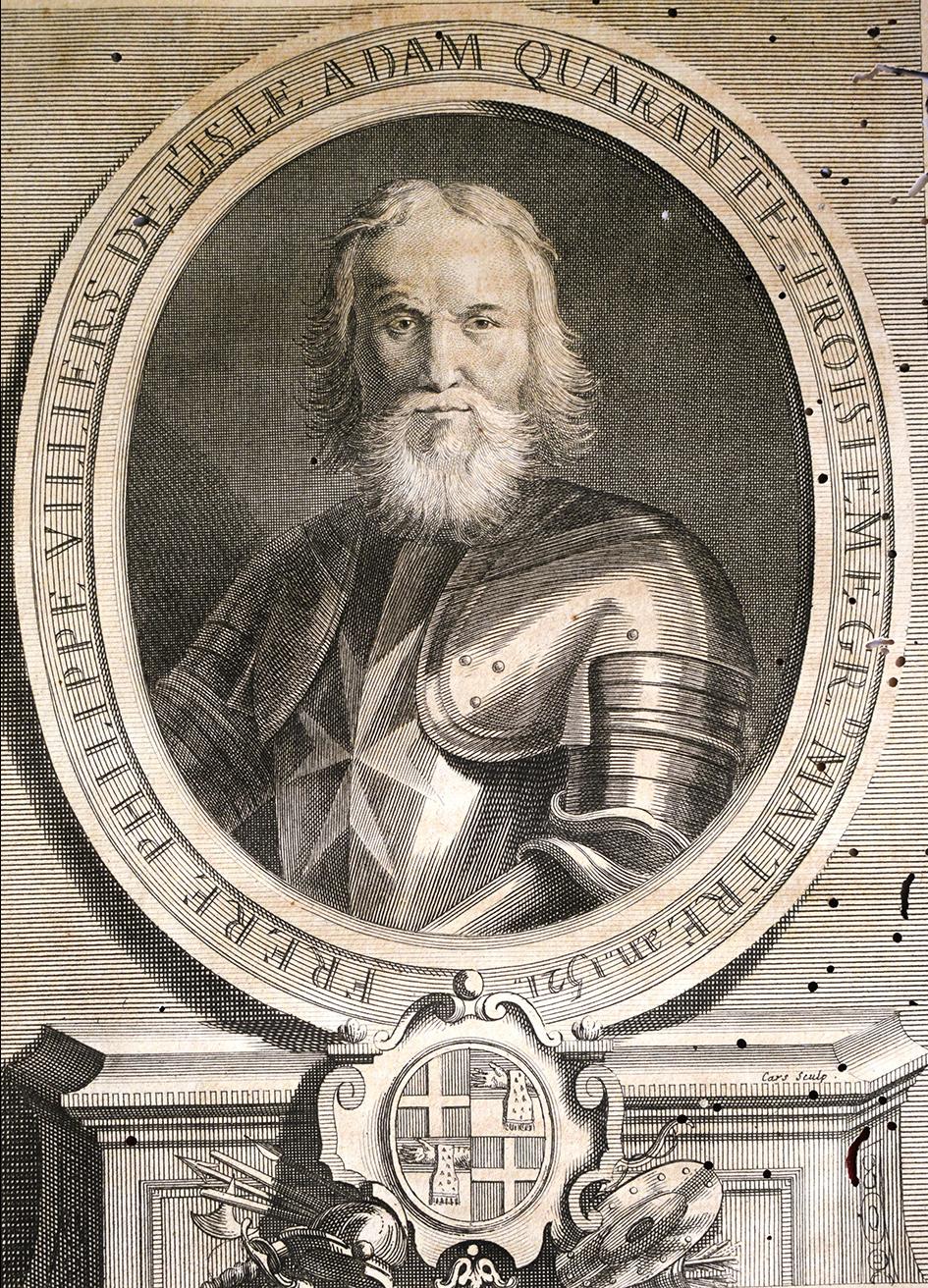 In 1523, the defeated Grand Master Philippe Villiers de l’Isle Adam left Rhodes. His entourage included six barbers.
But barely a year later, Clemente Mamo, a barber from Siġġiewi, applied to open a shop in Valletta from which he could also sell tobacco, aquavit and cotton. This time round the authorities raised no objection. Luck of the draw or brown envelopes? Immediately after, still in 1711, Domenico Fenech desired to run his barber and tailoring business under the same roof in Valetta, but his petition found no joy.
An old barber brought about the death of Mattia Preti in 1699
Concurrently, fortune smiled on Giuseppe Grech, who the Castellania authorised to open a business of barbiere e parrucchiere in Valletta. Often the authorities sought the advice of the protomedico, implying that the barber would be required to perform surgical practices.
Also in 1711, another foreigner who had lived in Malta for many years requested permission to work as a barber in Valletta: Giovanni di Lauro from Palermo.
The Castellania asked for the views of the protomedico; he considered di Lauro competent to pull out teeth, for bloodletting, sharpening razors and lancets.
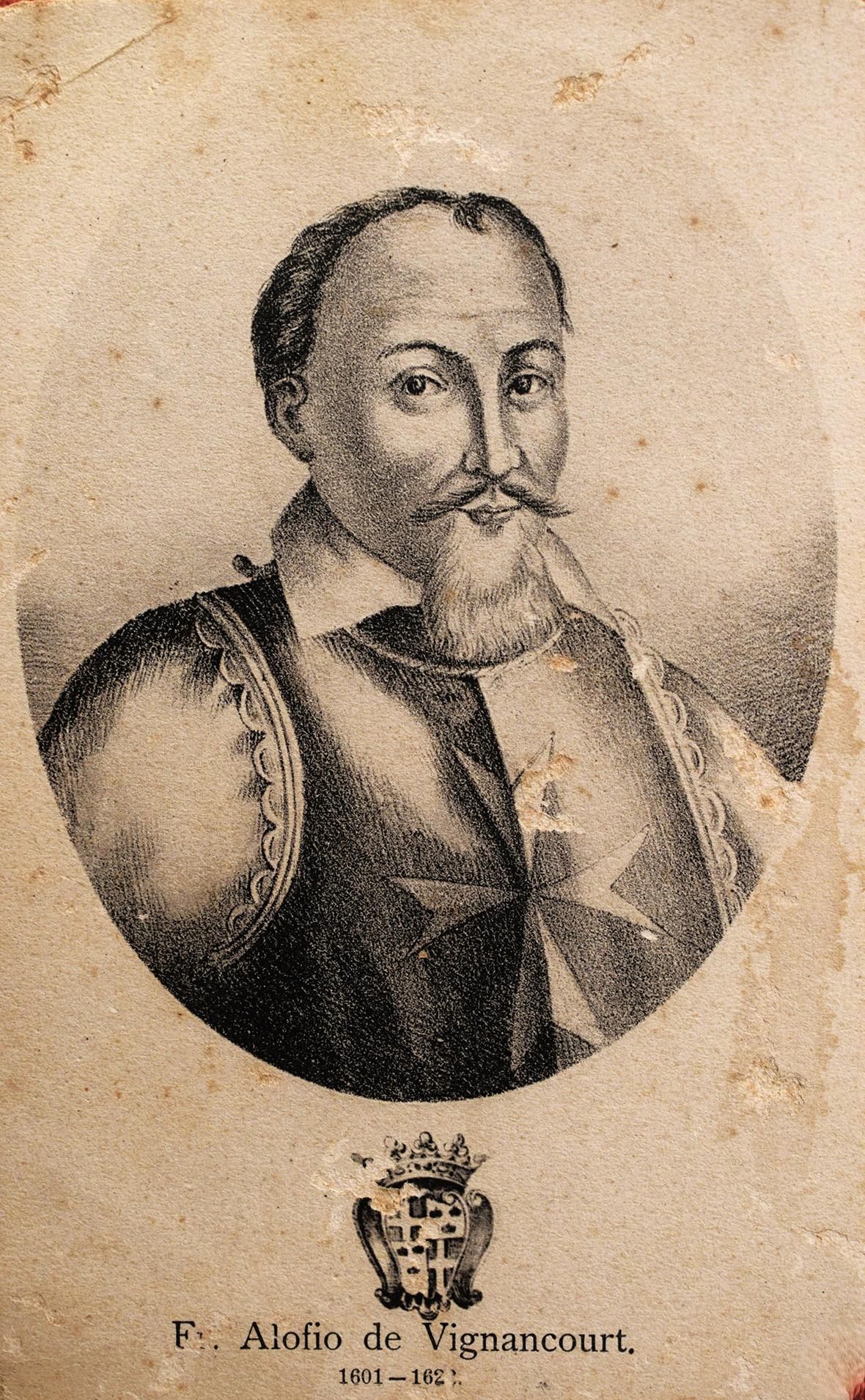 Portrait of Grand Master Alof de Wignacourt
A number of unnamed “barbers and hairdressers of this dominion” lamented in 1720 about the excessive numbers working in their professions. Overcrowding often gave rise to differences and arguments between them but, differently from all other callings, they did not have a consul to whom they could refer their conflicts.
They petitioned Grand Master Zondadari to delegate the Confraternity of Saints Cosmas and Damian (pious brothers who worked pro bono as surgeons of the poor) assisted by the protomedico, to appoint a consul, conferring on him all the honours enjoyed by consuls of the other professions, but without the power to demand payment or to obstruct anyone in his request to open for business but only limit himself to settle differences that arise between those who exercise these professions. Zondadari’s auditor favoured the approval of the request.
Anatolio Camenzuli, now 67 years old, had worked as barber in the Sacra Infermeria for 53 years. In 1737, he petitioned the grand master to relieve him of his duties.
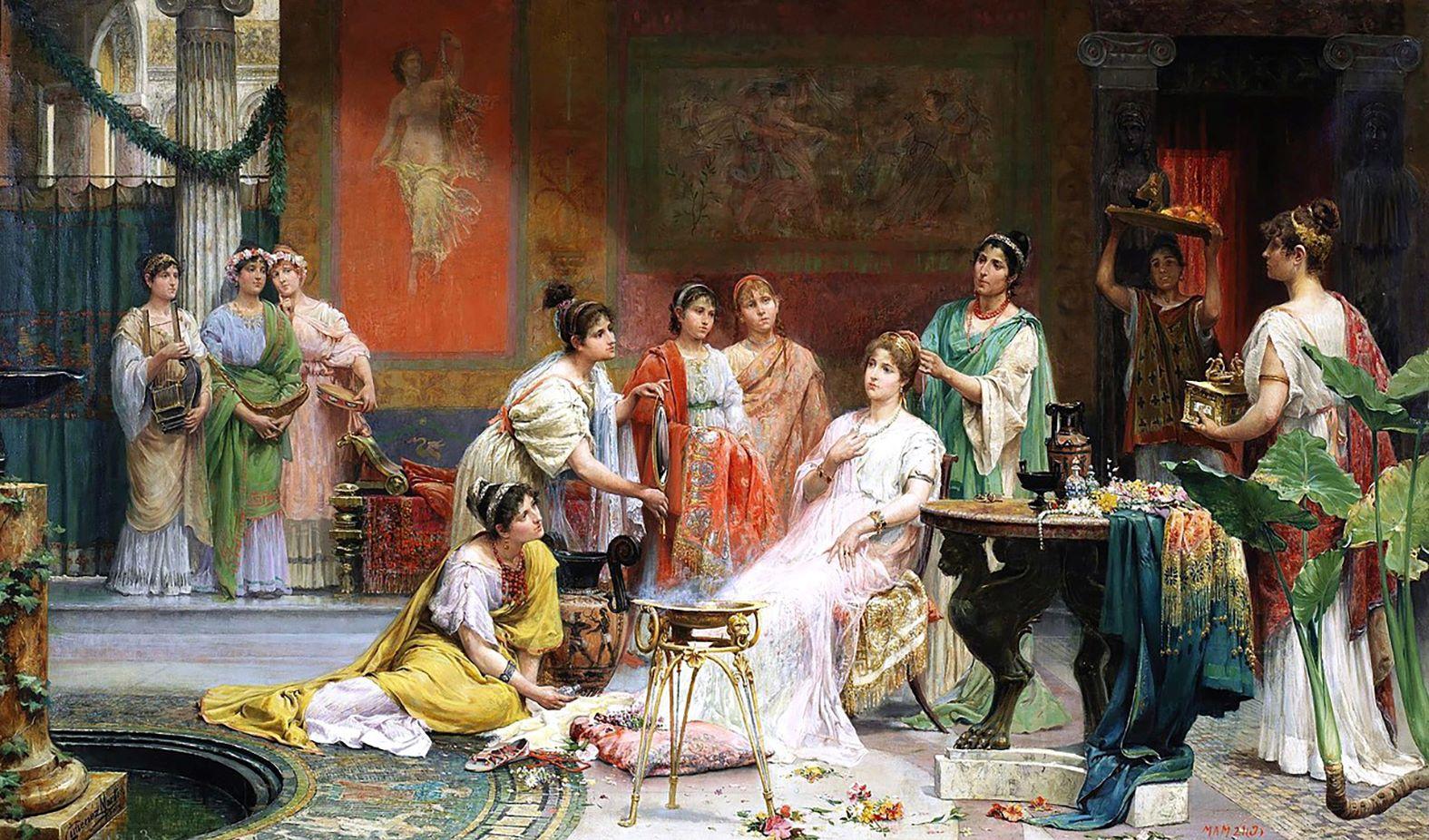 Roman Matron at the Hairdresser by Juan Gimenez
He had come to a private arrangement with another competent barber, Michele Farrugia, to pass over to him his work obligations, provided he retained half his food and lodging arrangements in the hospital and part of his salary, throughout his lifetime, “to be able, in his advanced age, to enjoy some rest”. Apart from its touching human content, this petition throws light on the working conditions and practices of the period.
Muslim slaves in Malta, out of necessity, had to learn the arts of hairdressing and of shaving, as by law they could not grow their hair but had to shave their head almost completely, leaving only a small tuft, the regulation bizbuza or ciuffo.
In 1740, one of the Algerian slave rowers claimed he earned his living as a barber and tooth-puller, and petitioned to be transferred from the Vittoriosa prison to the Valletta bagno where business was brisker. The Treasury agreed, on condition he reported for duty whenever his vessel was about to leave the harbour.
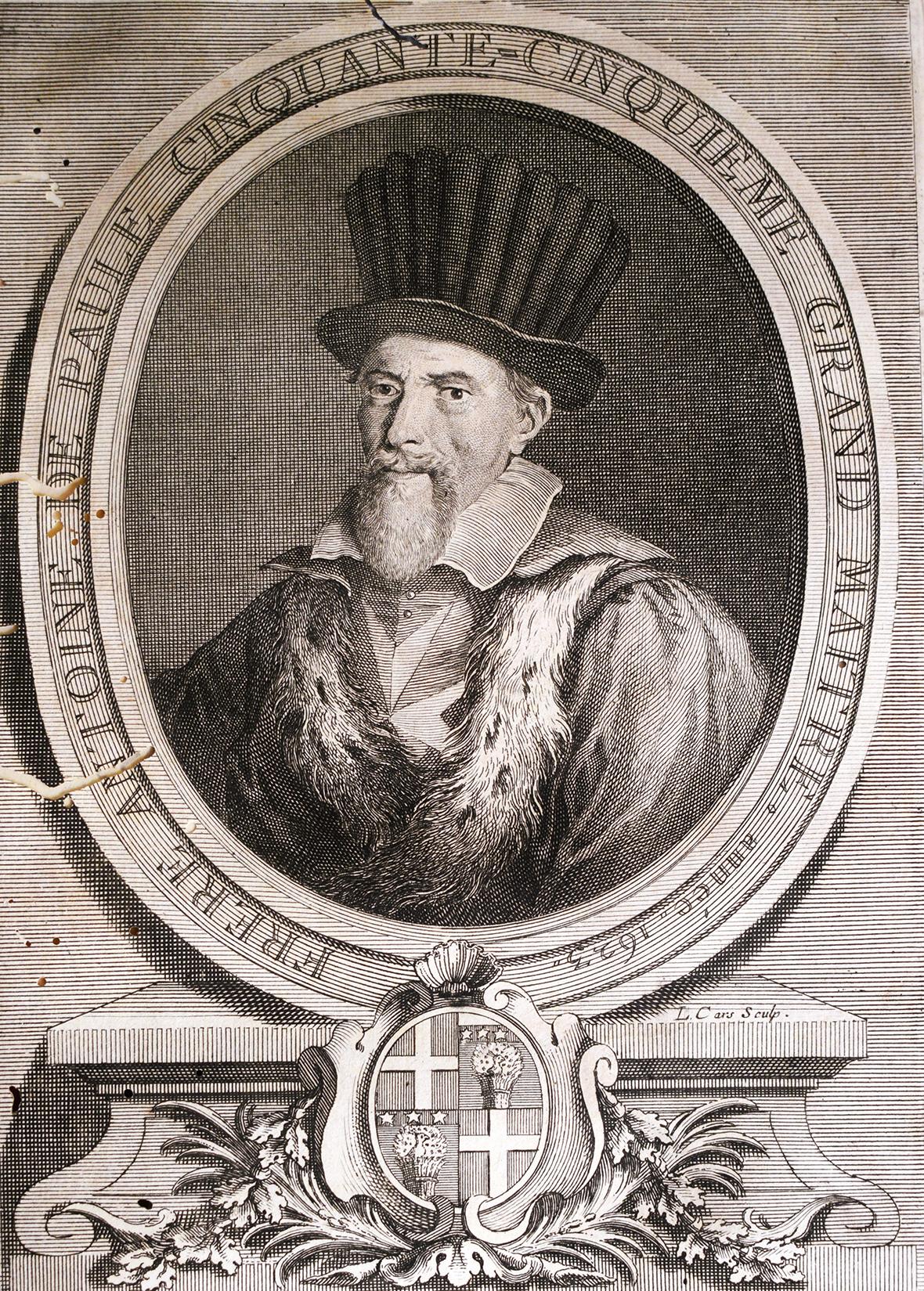 Portrait of Grand Master Antoine de Paule
A number of barbers had set up unlicensed booths all around the Grand Master’s Palace. This irked Pinto who in 1741 ordered their relocation to somewhere less conspicuous – the street behind the Jesuits’ church which had just been paved. He fixed their rent at 15 scudi per month, five to go for the upkeep of an altar in the nearby church and 10 to be distributed as alms to the poor. Rumour added that the barbers also had to cough up another five scudi every month to Captain Gianpatist Grima as protection money.
A galley slave who worked as a barber reported a curious theft in 1743 – unknown burglars stole various items from him, including a mirror and 49 razors.
Next recorded is a Jew-turned-Christian who earned his living as a professional barber from a shop close to the main square in Valletta. In 1744, through negligence, lack of skill or otherwise, he slashed the face of a customer, causing copious bloodshed and bruising.
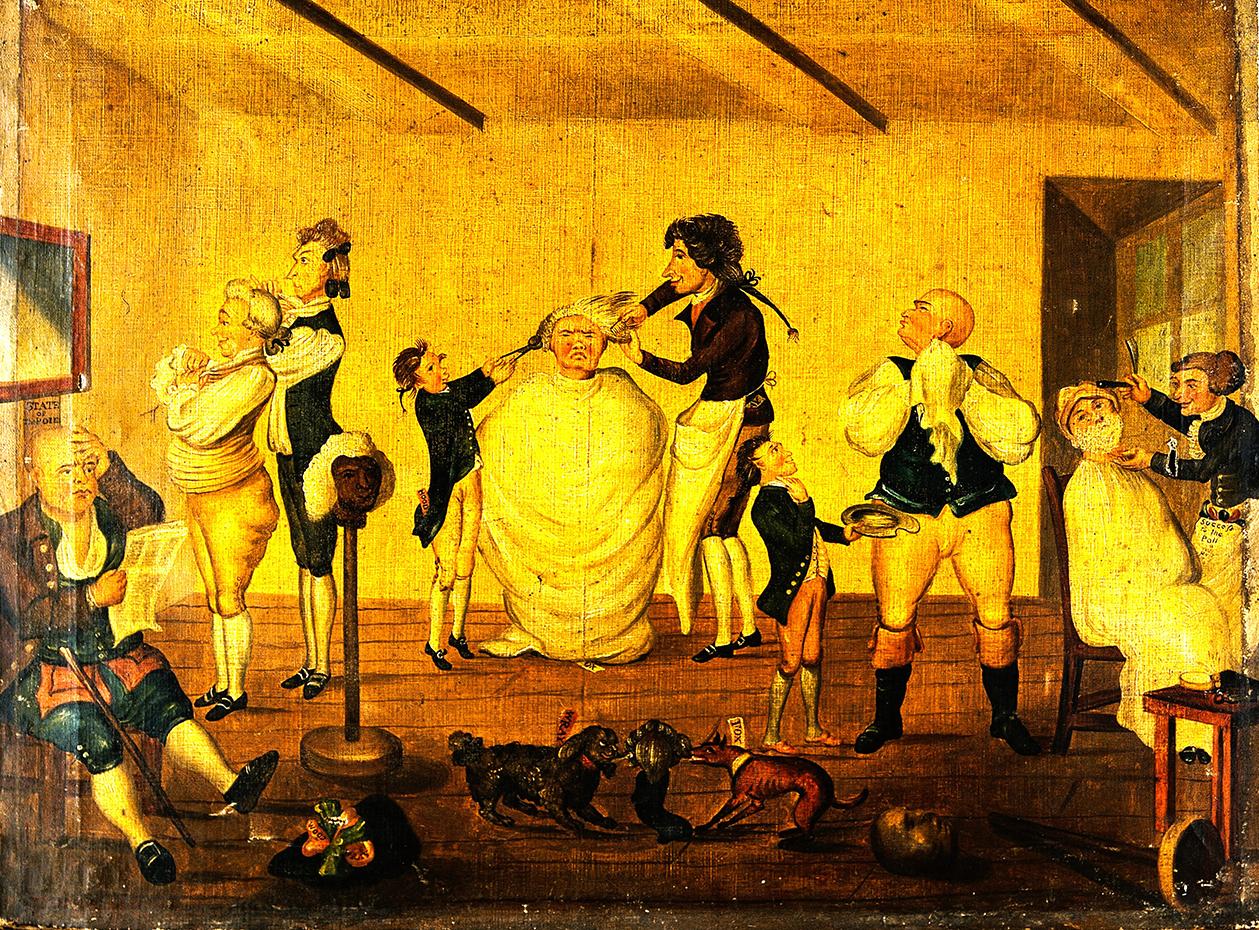 In a Barber’s Shop, by Henry W. Bunb
The police apprehended a barber from Floriana, Pietro Vella, in connection with the homicide, on January 21, 1745, of the widow of Judge Pietro Cassar, nicknamed Cassarino, mother-in-law of the lawyer Petit. The barber had asked the widow for a small loan which she refused. He returned with a knife to rob her, slit her throat and fled by jumping over roofs. After a lightning compilation of evidence and criminal trial, no lingering in death row, the Castellania hanged the “perfectly resigned” barber just three weeks later, on February 13.
The habit of barbers and hairdressers of operating from public open-air booths persisted well in the British period
Next recorded was a slave belonging to the French knight Chiassalett who kept a barbers’ shop. The Chappelle brothers had run up bill at his shop. In 1746, the barber’s patience ran out and his French owner intervened with Grand Master Pinto on his behalf. He finally managed to secure payment.
The law fell heavily on slave barbers in 1749 when it forbade them from setting up their street stalls anywhere in Valletta except in close vicinity of their prison guardroom near the Sacra Infermeria and on condition that their stands remained open during business hours. The habit of barbers and hairdressers of operating from public open-air booths persisted well in the British period. In 1827, George Bigelow described one near St John’s.
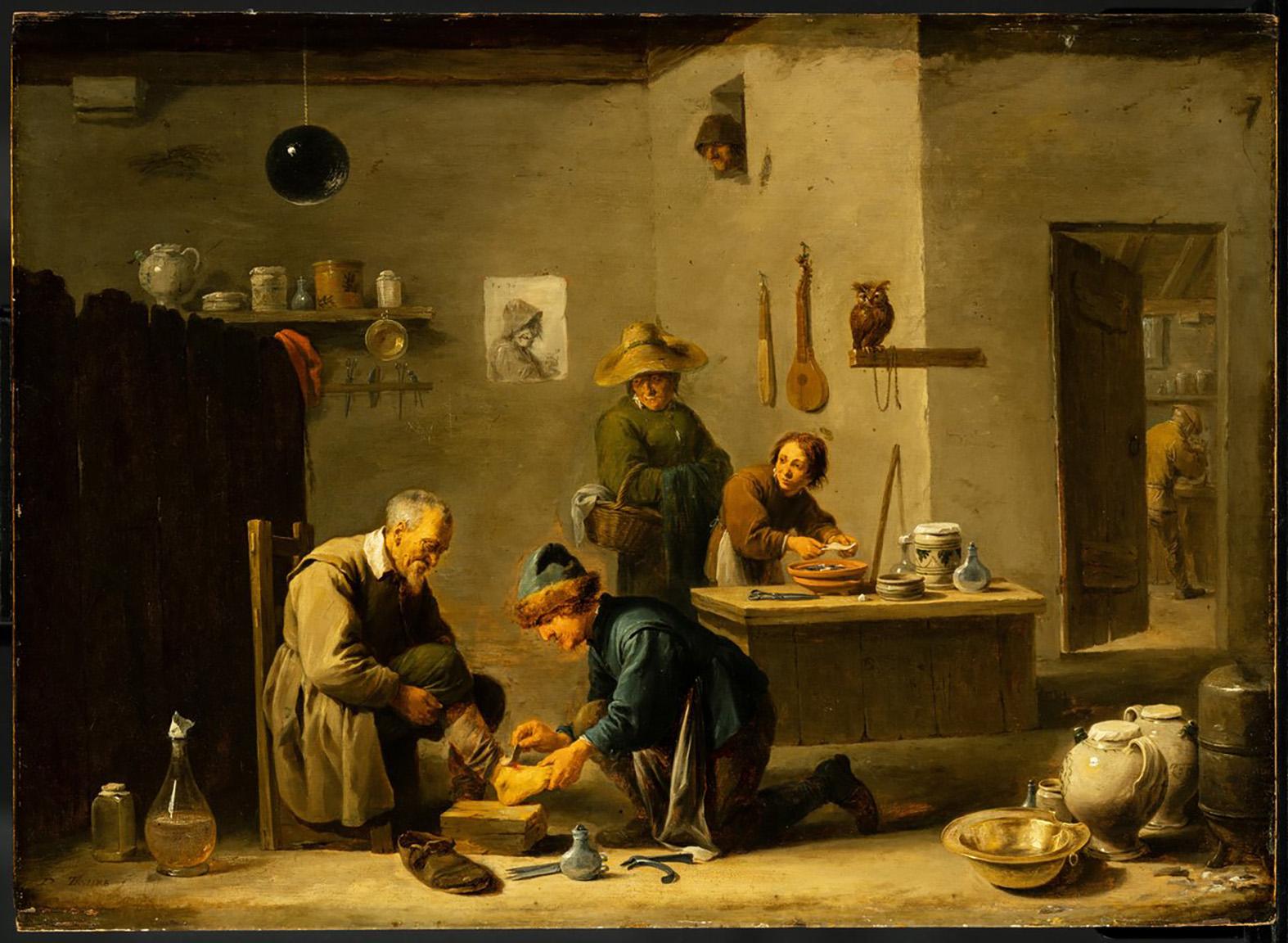 A barber-surgeon by David Teniers ‘the Younger’, 1636.
Giuseppe Marini, a barber-surgeon who had been working for the Order for the last eight years in the Infermeria, on the galleys during various campaigns and at the Lazzaretto, in 1768 petitioned Grand Master Pinto for reinstatement in his job, having been fired for half a day’s absence. The infirmarian, the French knight D’Auray de St Pois, recorded a favourable opinion.
Police investigations followed a murder in Vittoriosa by Giuseppe Buttigieg, the dissolute young nephew of a prominent ecclesiastic. The barber Nicola Papadoplo, in 1776, found himself mentioned in the contentious criminal proceedings. One of the whores of the accused tried to find refuge in the barber’s house but the sbirri apprehended her in time.
Three barbers ended under police investigation in 1770 after buying stolen saltpetre from a burglar for one scudo a rotolo. At that time, practitioners believed saltpetre to be an all-purpose medicament. The police arrested a convict whom they interrogated under prolonged torture on the cavalletto, iż-żiemel ta’ Cumbo, an atrociously painful torment. The suspect, not surprisingly, confessed that to be his third burglary. The torture session ended at 11 at night, but when the sbirri untied culprit, his haemorrhoids bled so profusely the chamber’s floor ended layered in blood.
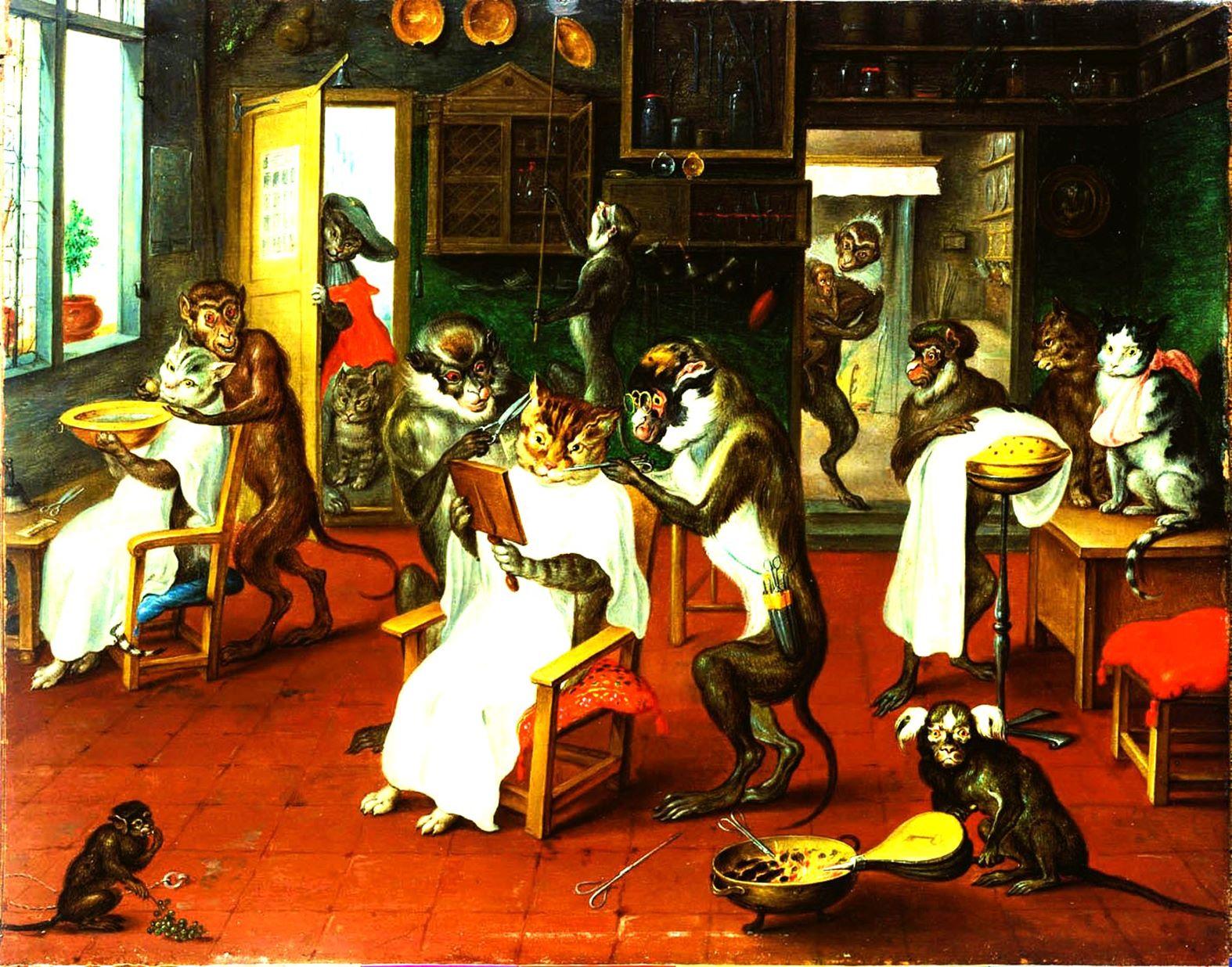 Barber’s Shop, Run by Monkeys for Cats by Abraham Teniers (17th century)
Antonio Delicata, the senior barber of the Hospital for Incurable Women (the ‘casetta’) in 1784 petitioned Grand Master de Rohan to allow him to hand over his job and emoluments to another barber, Carlo Matrenza, who was about to marry his daughter. He reminded Rohan of his servizio di moltissimi anni in favour of the Order, and trusted that the ingrained goodness and compassion of his sovereign would lead him to approve.
The infirmarian certified Matrenza to be an honest young man of good conduct and Fra Mignanelli, the knight protector of the casetta, attested Matrenza to possess the necessary qualities for the job.
A barber-surgeon who desired to change his profession to that of pharmacist, Giuseppe Ghiomier (Guillaumier?) in 1796 complained that he had been working at the Infermeria without remuneration for the past three years and reminded Grand Master Rohan that only one temporary dispenser (a speziarotto) was currently working there. He asked for an undertaking to be given the job when the first vacancy occurred.
Not very dissimilarly, the barber Antonio As (Hass?) informed the grand master in 1796 that his father Francesco had been serving as barber in the Floriana Institution (Reclusorio) of the Poor for the last seven years but had now grown very old. He asked de Rohan to authorise him to take over his father’s employment.
And finally, towards the very end of the Order’s rule, a petition by the hairdressers of Valletta. They had designated St Louis King of France as the Protector of their Confraternity and asked the Order to allow them to celebrate the feast day of their patron saint on the high altar of St John’s conventual church, and also to make use of the chapel of France once or twice a year to hold their congregations there. The prior of the church, Fra Albino Menville, advised that these requests be granted, subject to several conditions.
St John’s conventual church celebrated the feast of St Louis King of France with great solemnity on August 25. Malta housed the sword with which the King-Saint battled the infidels in the Seventh Crusade of 1249 but, in 1559, Grand Master de Valette donated the precious relic to the Viceroy of Sicily, the Duke of Medina Coeli. De Valette’s deplorable lack of foresight cheated Napoleon of the opportunity of adding another showpiece to his collection of choice Malta souvenirs.
Acknowledgements
Thanks to Anna Borg Cardona, Carmel Cassar, Jeremy Debono, Thomas Freller, Theresa Vella and William Zammit.