Our beat goes on
The Labour government knows what it stands for: a centre-left government with a strong sense of social justice, writes Mark Mallia
In times of global uncertainty, the Maltese electorate chose certainty, securing Labour a fourth consecutive historical win and Malta a stable government.
It was a choice based on the credibility and experience of Prime Minister Robert Abela and the Labour government’s track record of delivering on its promises.
“You are Malta: Your Dream, Our Project” was more than just a campaign slogan. It was intended to place the citizen at the heart of the country’s vision. Labour wanted to demonstrate that a new mandate would translate people’s aspirations into reality through initiatives and projects that improve the quality of life. People went to the polling stations secure in the knowledge that Labour would deliver on its promises because its track record spoke for itself.
For the past four years, notwithstanding a very challenging global situation – wars in Europe and the Middle East – Malta’s economy grew stronger, consistently maintaining its lead as the EU’s fastest growing economy. When an IMF delegation visited Malta last February for a routine inspection to closely examine the country’s economic and social performance, they described our economy as “an economy with surprising growth”.
So satisfied were they with Malta’s economic situation that they stated there is no longer a need to analyse the country’s economy every year. Instead, they will begin conducting their assessments every two years.
A few days before the general election, Moody’s, the leading international credit agency, gave Malta’s economy the thumbs up, saying that our economy will continue to grow at almost twice the European average and noting that energy subsidies are an important factor behind this.
In parallel, it gave five European Union countries negative outlooks.
As I write, the European Commission has published its latest consumer survey report. It finds that only consumers in Malta remain optimistic about the future, while pessimism is widespread across the rest of the EU. This contrasts with what is being observed in other EU countries.
In January of last year, full-time employment reached a new record, surpassing 305,000 for the first time. This means that, since March 2013, about 149,000 full-time jobs have been created, while part-time employment has also increased by about 38,000 jobs. Since Labour took office in 2013, after more than two decades of PN-led administrations, Malta has shifted from being the EU country with the second lowest employment rate to being the EU country with the highest employment rate.
An average of 40 jobs have been created each day, totalling about 187,000 new jobs. This rate of job creation is four times higher than that observed before 2013. Eight out of every 10 jobs created for the Maltese were in managerial, professional or technical careers.
Labour will show that economic success and social justice go hand in hand- Mark Mallia
Energy subsidies, a mainstay of the Labour-led governments, were crucial in cushioning Maltese families and businesses against international inflation. At the last general election, people voted for Labour, aware that it was the only political party that guaranteed these subsidies. The Nationalist Party had made it clear that it viewed them as ‘short-term’ measures, raising alarm bells among voters.
Unprecedented decisions regarding government land were made, with Manoel Island, White Rocks and Fort Campbell returned to the public. These shall now be transformed into open areas and green spaces for families.
Building on this excellent track record, voters gave Labour its fourth consecutive win, with a landslide margin of 22,000 votes over the PN. We won not because we surrendered our values but because we dared to be true to them, keeping people at the core of all our decisions.
This strong show of support places a significant responsibility on the new Labour government. There are significant challenges ahead but we don’t lose heart; we take heart from them. We shall, as we have always done, turn these challenges into opportunities for all.
The work has begun. Abela reopened parliament in record time after the general election because the tasks ahead cannot wait, nor can the people who are now looking forward to benefiting from Labour’s strong 1,000-plus proposals.
The government has already identified among its main priorities the reform of planning appeals, expanded access to IVF services, increased assistance for first-time homebuyers, support for families and improvements to pensioners’ incomes. On the same day the new parliamentary session was inaugurated, the government tabled a bill to amend the constitution to protect people with disabilities from discrimination. These measures are part of the government’s commitment to continue improving people’s quality of life and to keep delivering on its vision for the country.
At the beginning of this new and exciting chapter for Malta, Labour asks itself not how it will win again – people will judge us by our actions when we come to that – but how Malta will carry on winning.
In 2013, the challenges we faced were essentially local; since then, they have become increasingly global – the rapid rise of AI, the complexities of geopolitics, rising energy demands, an ageing population and the challenges posed by climate change and migration. We cannot shut our doors to these realities. Instead, we must embrace them and pull together, as one nation, to advance opportunity for all.
The government’s work must now be translated into the fulfilment of the promises made to the electorate, as the mandate obtained in the election carries a greater responsibility to ensure the country continues to move forward. With this new mandate, Labour will show that economic success and social justice go hand in hand.
The Labour government knows what it stands for: a centre-left government with a strong sense of social justice. That is how we shall remain – with you all the way. Our beat goes on.
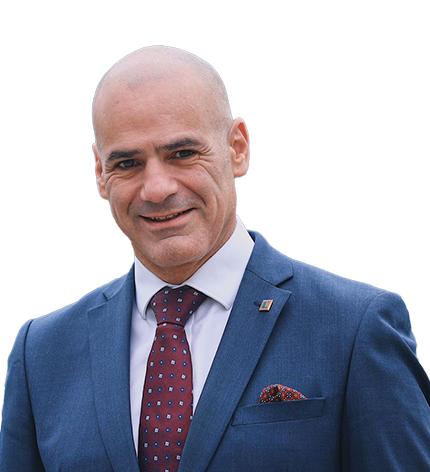
Mark Mallia is chief of staff at the Office of the Prime Minister.