Beyond GDP: how Labour’s manifesto puts well-being at the centre of politics
Labour’s manifesto proposes a shift in policy thinking, writes Silvio Schembri
The Labour Party’s electoral manifesto marks a significant evolution in the way political programmes are conceived, evaluated and communicated. Rather than measuring success solely through economic growth or fiscal performance, the manifesto places well-being at the centre of policymaking, arguing that the real measure of national progress lies in the quality of life experienced by people and families.
This approach represents a deliberate shift from traditional political thinking. For decades, governments around the world have relied primarily on economic indicators such as GDP growth, unemployment rates and public finances to assess progress. While these remain important, Labour’s manifesto argues that they are no longer sufficient on their own to capture the realities of modern life.
Economic success must translate into tangible improvements in people’s daily well-being, in health, work-life balance, environmental quality, social inclusion and personal fulfilment.
At the heart of this new approach is the introduction of a Wellbeing Index, designed specifically to measure the impact of the manifesto’s proposals on citizens’ quality of life. The index forms the intellectual and policy backbone of the manifesto, transforming it from a traditional catalogue of promises into a measurable framework for national development.
The manifesto explicitly states that wellbeing is not treated as an abstract concept or political slogan. Instead, it is translated into a structured and quantifiable model built around 10 equally weighted dimensions.
These dimensions include environmental sustainability, local environmental quality, health, personal wellbeing, housing, social protection, civic engagement and rights, income and wealth, education and skills, and job quality.
The methodology itself is particularly noteworthy. Each dimension contributes 10% to the overall index, while each dimension is measured through two equally weighted indicators. This creates a balanced framework where no single aspect of life dominates the assessment of progress. Economic output matters, but so do leisure time, minority rights, access to green spaces, adult learning and housing security.
For example, environmental sustainability is measured through carbon emissions and renewable energy generation. Health is evaluated through healthy life expectancy and obesity rates. Personal wellbeing incorporates indicators such as leisure time and life satisfaction while job quality includes both gender equality in employment and job satisfaction.
This means that policies are no longer assessed merely by how much economic activity they generate but by whether they improve people’s lived experience. Measures such as parental leave extensions, investments in mental health, support for first-time buyers, more flexible work arrangements and better access to open spaces are all integrated into a broader wellbeing architecture.
Importantly, the manifesto links wellbeing directly to Malta Vision 2050 and frames the electoral programme within a longer-term national transformation strategy. Economic growth remains a pillar of the vision but it is increasingly presented as a means rather than an end. The manifesto repeatedly argues that sustainable prosperity must create “a better balanced and sustainable life” for citizens.
Economic success must translate into tangible improvements in people’s daily well-being- Silvio Schembri
This shift also reflects broader international trends. Countries and institutions around the world are increasingly exploring alternative measures of national success beyond GDP. The OECD’s Better Life Index, New Zealand’s Wellbeing Budget and the United Nations’ Human Development Index all represent attempts to place human outcomes at the centre of policy evaluation. Labour’s proposal situates Malta within this emerging global movement while adapting the concept to local realities and priorities.
One of the manifesto’s most ambitious claims is that the implementation of its measures is projected to improve quality of life by more than 25% compared to current levels. This target is not presented merely as a political aspiration but as the measurable outcome of the Wellbeing Index itself. In other words, the manifesto seeks to establish a system where political commitments can be tracked, evaluated and benchmarked over time.
The political significance of this approach is substantial. It suggests a maturation in policymaking where governments are expected not only to deliver economic growth but also to demonstrate how that growth translates into healthier, happier and more balanced lives.
It also creates greater accountability. By defining measurable wellbeing indicators in advance, future governments can be assessed against clear benchmarks rather than broad political narratives alone.
At a societal level, the well-being framework also reflects changing public expectations. Citizens increasingly evaluate governments not simply on macroeconomic statistics but on issues such as affordability, quality of public spaces, mental health, work-life balance, environmental quality and social cohesion. The electoral manifesto acknowledges these evolving expectations and attempts to institutionalise them within the core machinery of governance.
Ultimately, Labour’s manifesto proposes a broader redefinition of progress itself. It argues that a successful country is not only one that grows economically but one where people enjoy more time with their families, stronger communities, better health, greater opportunity and a cleaner environment. In doing so, the manifesto attempts to move Maltese political discourse beyond purely economic metrics towards a more holistic understanding of national development.
Whether this wellbeing-centred framework ultimately succeeds will depend on implementation, consistency and public trust. But what is clear is that the manifesto introduces a new policy paradigm: one where wellbeing is no longer treated as a secondary outcome of economic growth, but as the principal measure by which political success itself should be judged.
 S
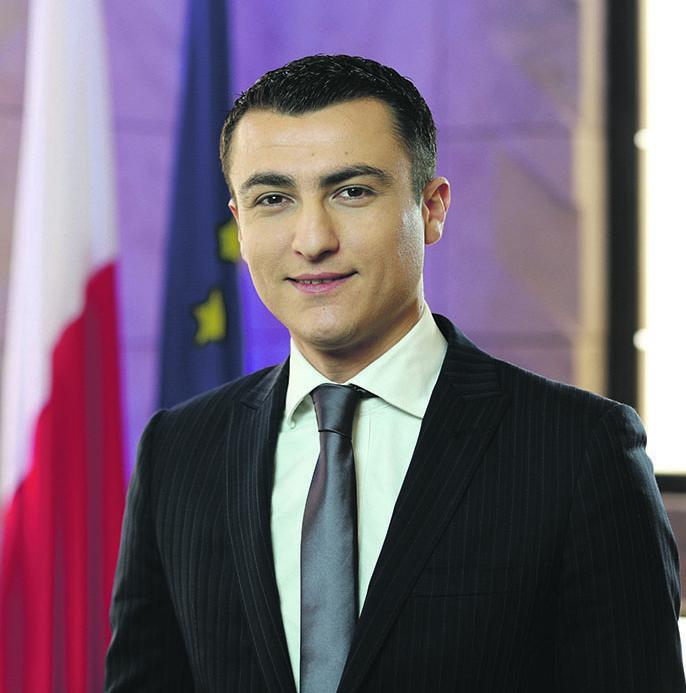
SSilvio Schembri is the Minister of the Economy and a Labour Party candidate on districts 6 and 7.