Biennale 2026 Malta Pavillion launched at MUŻA in Valletta
Pavilion hosts exhibition of contemporary works by five Maltese artists
Heritage Malta has officially launched the Malta Pavilion for the Malta Biennale 2026 at MUŻA in Valletta.
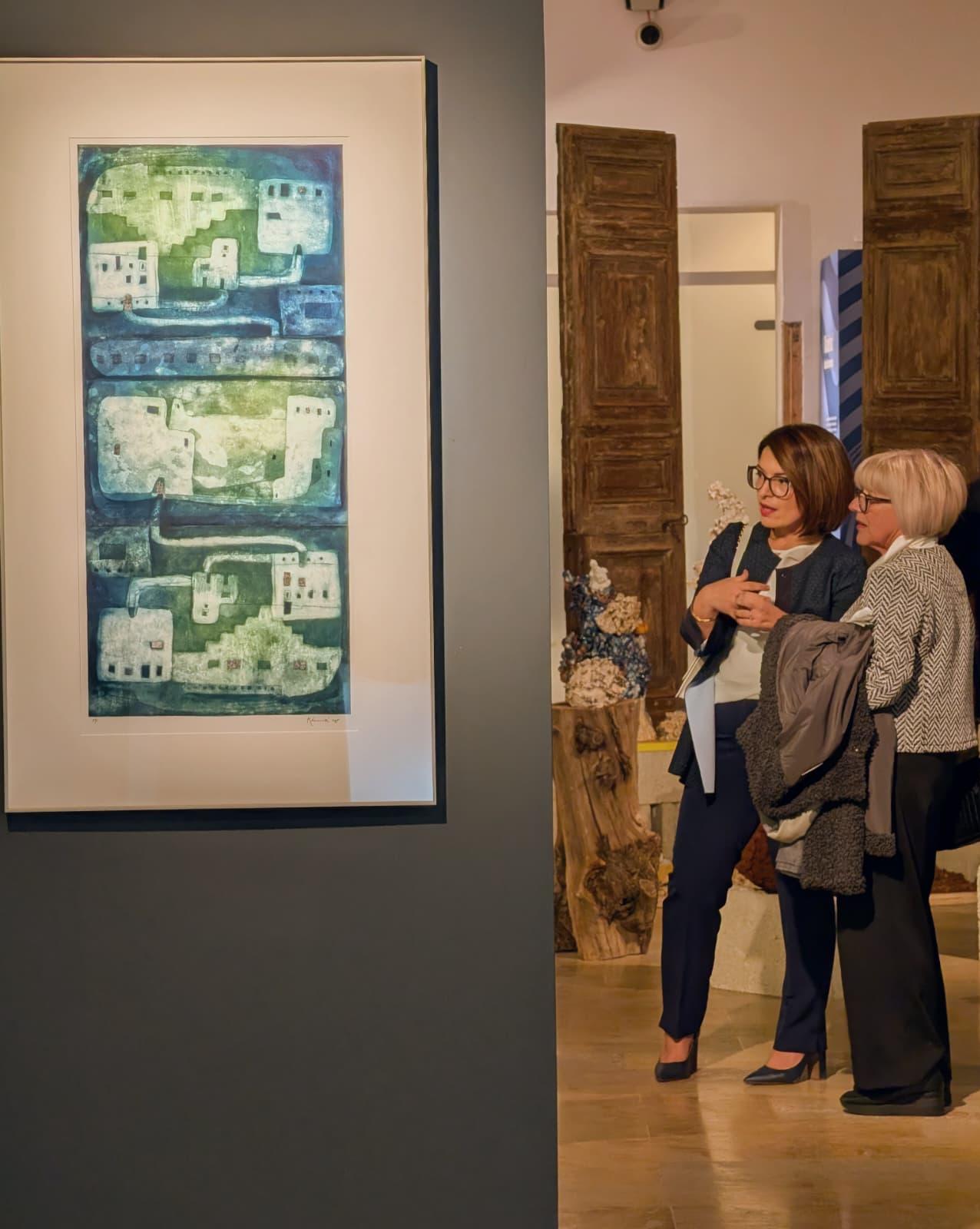 Works featuring in Roderick Camilleri's exhibit 'Our City: A Map of an Imaginary Nowhere'. Photo: Chris Sant Fournier
The pavilion consists of an exhibition of contemporary works by five Maltese artists explored thresholds between stability and disruption.
Titled Wonderland: Kaos Kontemporanju, it draws inspiration from the 19th-century classic Alice’s Adventures in Wonderland, presenting an immersive artistic journey through the subtle forms of disorder shaping modern life, Heritage Malta said in a statement.
It added that the pavilion invites visitors to question how technological progress, globalisation, and systems of control coexist with ecological fragility, social imbalance, and the accelerating rhythms of modern existence.
In KHAOS: Thresholds of the Anthropocene, Victor Agius presents the Anthropocene as a moment of profound uncertainty.
Fragmented materials hover between ruin and preservation, presenting chaos not only as destruction but as openness and possibility, challenging ideas of control and permanence.
A quiet yet unsettling encounter unfolds in Through the Looking Glass by Ġulja Holland.
Mirrored glass panels position humans and gorillas face to face, raising a disquieting question: who is observing whom? What initially appears serene gradually reveals ethical tensions surrounding conservation, extinction and spectatorship.
In Our City: A Map of an Imaginary Nowhere, Roderick Camilleri reimagines Valletta as a shifting terrain shaped by heritage, memory and erasure. Through reliefs, etched surfaces and archival fragments, the city emerges as both monumental and vulnerable, suspended between preservation and disappearance.
Slowness becomes an act of resistance in FARO: Landscape Twice Refracted, where Vince Briffa constructs large, labour-intensive imagined landscapes formed from countless gestures and marks.
The lighthouse’s revolving beam serves as a metaphor for cycles of illumination and blindness, suggesting that in an age of constant visibility, understanding does not necessarily follow.
Finally, The Triumph of Time by Pierre Portelli examines mortality, ageing and surveillance. Symbolic objects, sculptural forms and illuminated imagery reveal how both human and technological bodies are measured, regulated and exposed, while materials marked by wear remind viewers that permanence remains an illusion.
Culture Minister Owen Bonnici told the launch that this biennale edition built on the success of the first biennale and strengthened Malta’s position as a vibrant space for cultural dialogue.
"Over 11 weeks, more than 130 artists from 43 countries are meeting to share creativity, ideas and perspectives that will continue to place Malta on the international artistic map,” he said.
For Heritage Malta chair and biennale president, Mario Cutajar, MUŻA is the home of the biennale.
"The Malta Biennale is a living link between generations and makes Heritage Malta’s museums and sites more accessible and active in the society we live in. MUŻA is one of the museums that is transforming itself to achieve these goals.
"Over the past year, MUŻA has updated its permanent exhibition and has become a great experience, simultaneously strengthening the legacy of the Malta Biennale.”
More information here.