Bishop Giovanni Maria Camilleri, OESA: a life of faith and leadership
He led the Gozo diocese from 1889 to 1924
A devoted cleric and key figure in Gozo’s ecclesiastical history, Giovanni Maria Camilleri dedicated his life to the Church, joining the Augustinian Order, and later being anointed Bishop of Gozo. His tenure was marked by spiritual and administrative reforms, as well as significant contributions to the local religious landscape, foremost of which was the foundation of Ta’ Pinu Sanctuary, a site that remains a symbol of faith for the Maltese people.
Born in Valletta on March 15, 1843, to Joseph and Carmela née Borg, Giovanni was baptised in the parish of Our Lady of Porto Salvo, Valletta. His parents did their utmost to raise him in Christian duties and in the fear of God.
From his boyhood, he showed a love for learning and steady application to serious studies and pursuits that were later to bring him to the forefront. He received his first Christian education from the Dominican friars of Valletta, learning also the basics of Latin and Italian.
When he felt the call to consecrate himself to God, he approached the Augustinian friars, asking to join them. This desire was fulfilled on July 29, 1861, when he donned the habit of a monk.
Under the guidance of Master of Novices, Friar Giovanni Battista Cilia, OESA, novice Camilleri continued to train and absorb the value of the vows that in the future would shape him into a religious, living the teachings of St Augustine.
He made the profession of simple vows on August 15, 1862, and on October 1, 1865, he consecrated himself to God with solemn vows. He was ordained a priest by Bishop of Malta Mgr Gaetano Pace Forno, OESA, on December 21, 1867.
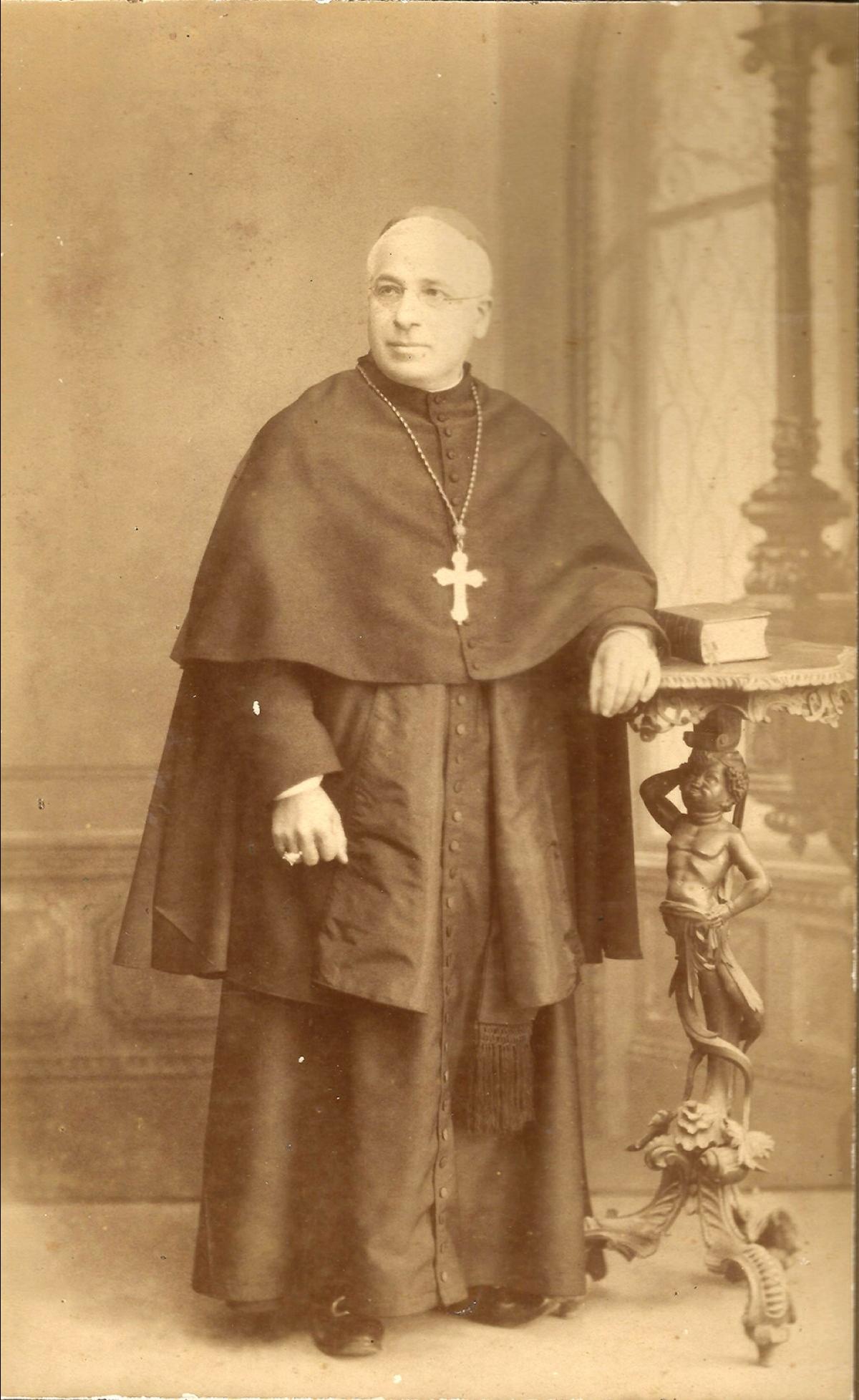 Bishop Giovanni Maria Camilleri, OSA
He continued his studies in philosophy and theology, and in 1870, he obtained the lecturer’s licence in Rome, and began teaching dogmatic and moral theology in Bracciano, Italy. In 1873, he returned to Malta where he taught Augustinian students while serving as vicar prior of the Rabat convent. On March 20, 1875, he became Regent of Studies. In 1880, he was chosen as provincial superior of the Augustinian Order in Malta, as well as rector of St Augustine’s School, Valletta, besides obtaining the degree of master of theology.
In April 1884, he was called to Rome as professor of moral theology at the International College of St Monica. On January 20, 1887, he was appointed as consultor of the Sacred Congregation of Bishops and Regulars.
Friar Camilleri was universally considered to be one of the best theologians, so much so that when Abbot Rohrbacher published the Universal History of the Church and misinterpreted some points of St Augustine’s teaching, the general of the Augustinian Order, Friar Pacifico Neno, OESA, commissioned Friar Camilleri to defend the teaching of St Augustine.
After deep study of Rohrbacher’s points, Friar Camilleri replied masterfully, quoting St Augustine’s teachings, in the book Giudizi dello storico Rohrbacher sopra alcuni punti della dottrina del S.P. Agostino, esaminati da Fr G. M. Camilleri, published in 1887. This book, in which he demonstrated profound thought and balance of arguments, brought great honour to Friar Camilleri, further increasing his fame.
On February 11, 1889, Pope Leo XIII chose him as bishop of Gozo, replacing Bishop Pietro Pace, who then became bishop of Malta.
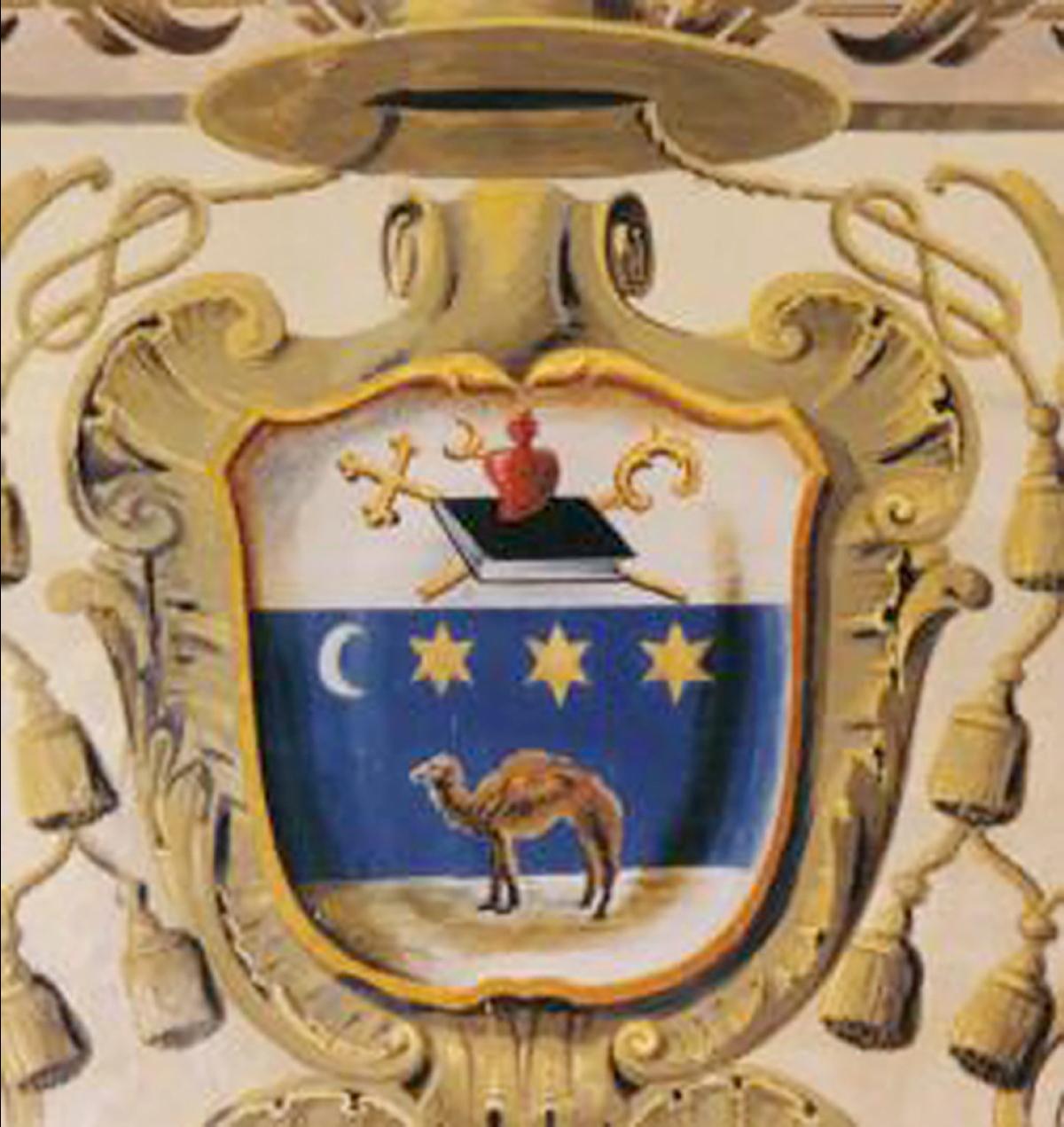 The episcopal coat of arms of Bishop Camilleri
He was consecrated on February 24, in the church of St Augustine, Rome, by Cardinal Mariano Rampolla, assisted by Mgr Pietro Pace and Mgr Guglielmo Pifferi, OESA.
From Rome he sent a pastoral letter to the clergy and the faithful of Gozo, outlining the agenda he wanted to carry out in his diocese.
On March 25, 1889, Mgr Camilleri arrived in Gozo and, on March 30, took possession of the diocese. On May 12, he made his solemn ingress to the Gozo Cathedral, amid festive rejoicing.
He immediately began to carry out the programme he had drawn up. His first thought was to improve the Gozo seminary by reforming the curriculum studied by young men preparing themselves for the priesthood. He taught moral theology at the seminary and introduced an annual retreat for priests.
He never missed an opportunity to meet people. He loved to take walks in villages
Between 1889 and 1921 he conducted 10 pastoral visits to Gozitan parishes, interviewing the clergy and listening to complaints and queries of the faithful, strengthening the faith and fortifying the fallen. Indeed, he never missed an opportunity to meet people. He loved to take walks in villages among the people, stopping often to talk to them.
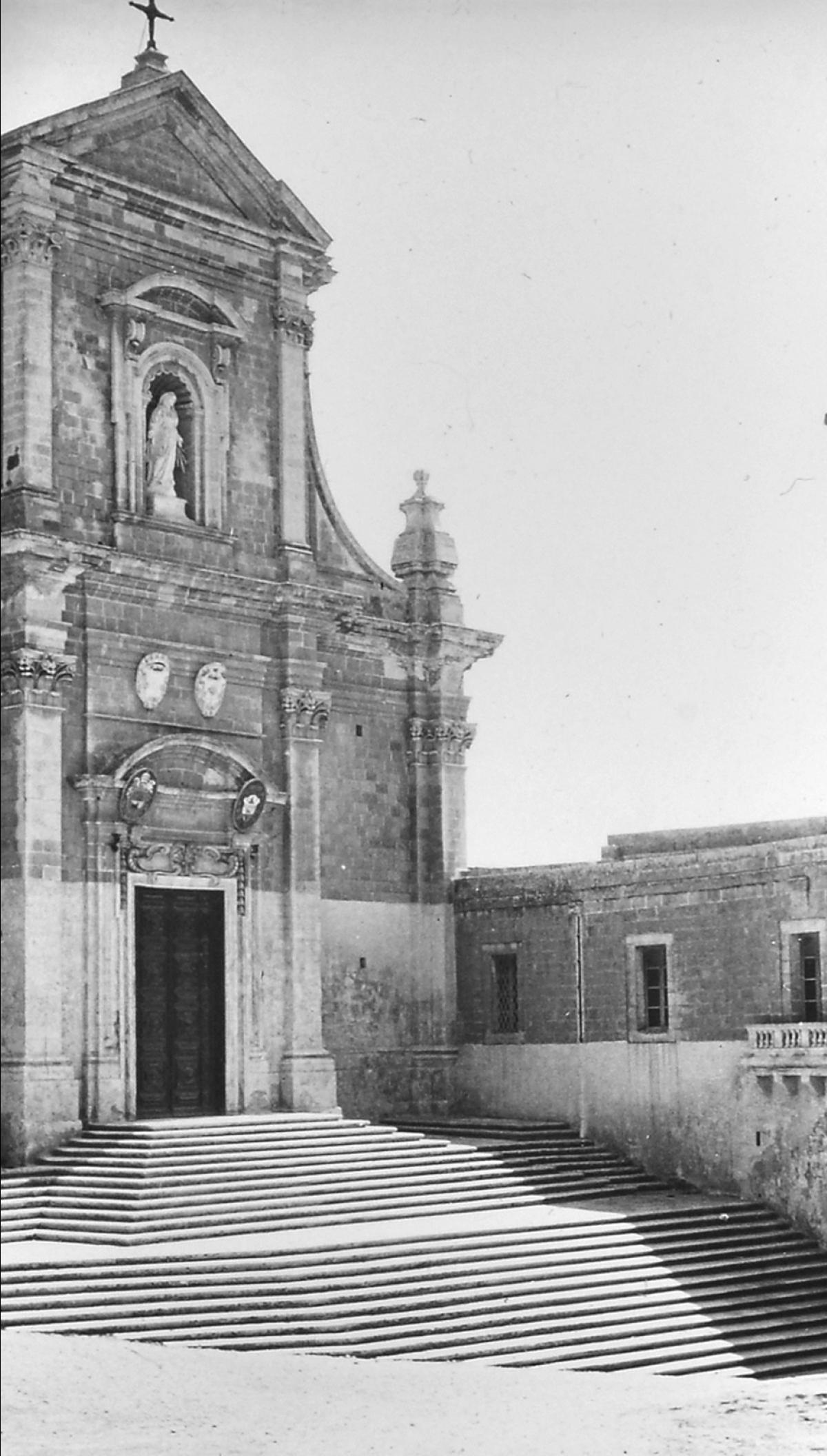 The Gozo Cathedral façade at the time when Camilleri was Bishop of Gozo. Photo: John Cremona Collection
He established the Lenten exercises throughout Gozo, exhorted parish priests to explain the Gospel on Sundays and teach the catechism, urged devotion towards the Eucharist and the Sacred Heart of Jesus, and initiated a fervent cult towards Our Lady of Ta’ Pinu, twice weekly going to visit the Blessed Virgin at the small chapel in Għarb. He was truly a merciful father to all, benevolent to the poor and the afflicted, always ready to give useful advice. He was a wise worker, a man given to prayer, discipline, goodness, simplicity of heart, and above all, dedicated to study divine science and the saints. He was very charitable with the poor, widows, institutes and churches.
On October 18, 1903, he held the first synod in Gozo, and with the help of other priests he published the Costitutiones et Decreta Synodi Gaudiensis primae anno MDCCCCIII in 1904.
During his episcopate, he founded three new parishes – San Lawrenz in 1893, Fontana in 1911 and Għasri in 1921; raised to collegiate status the parishes of Nadur in 1895 and Xagħra in 1900, and blessed and inaugurated the sanctuary of Lourdes in Mġarr in 1893.
He laid the first stone of Ta’ Pinu Sanctuary in 1920, built on a plan and under the direction of architect Andrea Vassallo.
While various parish churches were built during his time, he also consecrated 11 churches. He used his own money to have the Gozo Cathedral’s vault decorated and painted a fresco by Ġanni Vella.
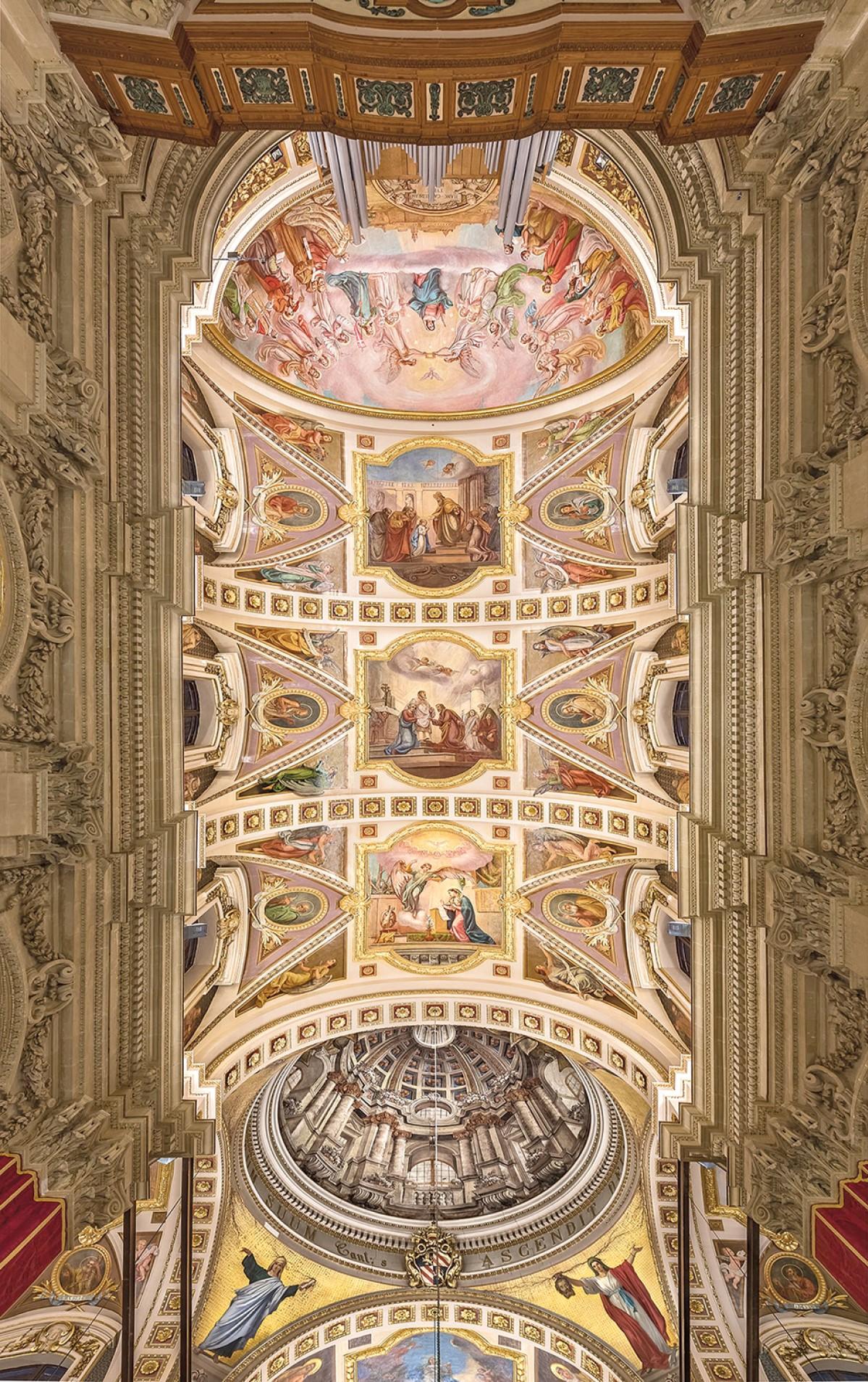 The vault of the Gozo Cathedral decorated and painted a fresco by Ġanni Vella. Photo: Daniel Cilia
On April 29, 1913, he was fortunate to welcome in Gozo Cardinal Domenico Ferrata, the papal delegate for the 24th International Eucharistic Congress that was being celebrated in Malta. Cardinal Ferrata blessed and reopened the church of Savina in Victoria, after its enlargement to become a place of perpetual adoration.
Mgr Camilleri also carried out some functions in Malta. On June 26, 1906, he consecrated St Mark’s church in Rabat, and on July 1, that of St Augustine in Valletta. He was one of the three consecrating bishops of Mgr Salvatore Gaffiero on January 15, 1899, and of Mgr Michael Gonzi, the new bishop of Gozo on July 20, 1924.
He assisted in the coronation of various images of Our Lady: of St Luke at the Mdina Cathedral in 1898, at Mellieħa in 1899, at Cospicua in 1904, at Tal-Ħerba, Birkirkara, in 1910, and at Senglea in 1921. In Malta, in addition to taking part in many functions, pontificals and processions, he also participated in the International Eucharistic Congress held in 1913.
Mgr Camilleri was renowned for the homilies he delivered on solemnities, which resembled an arrow aimed at a relentless apostolate among people of all social conditions in his diocese. He always sought to provide answers to the difficulties and problems that troubled his flock and, above all, showed special concern for the poor and the weak. He published these homilies in eight volumes over three years.
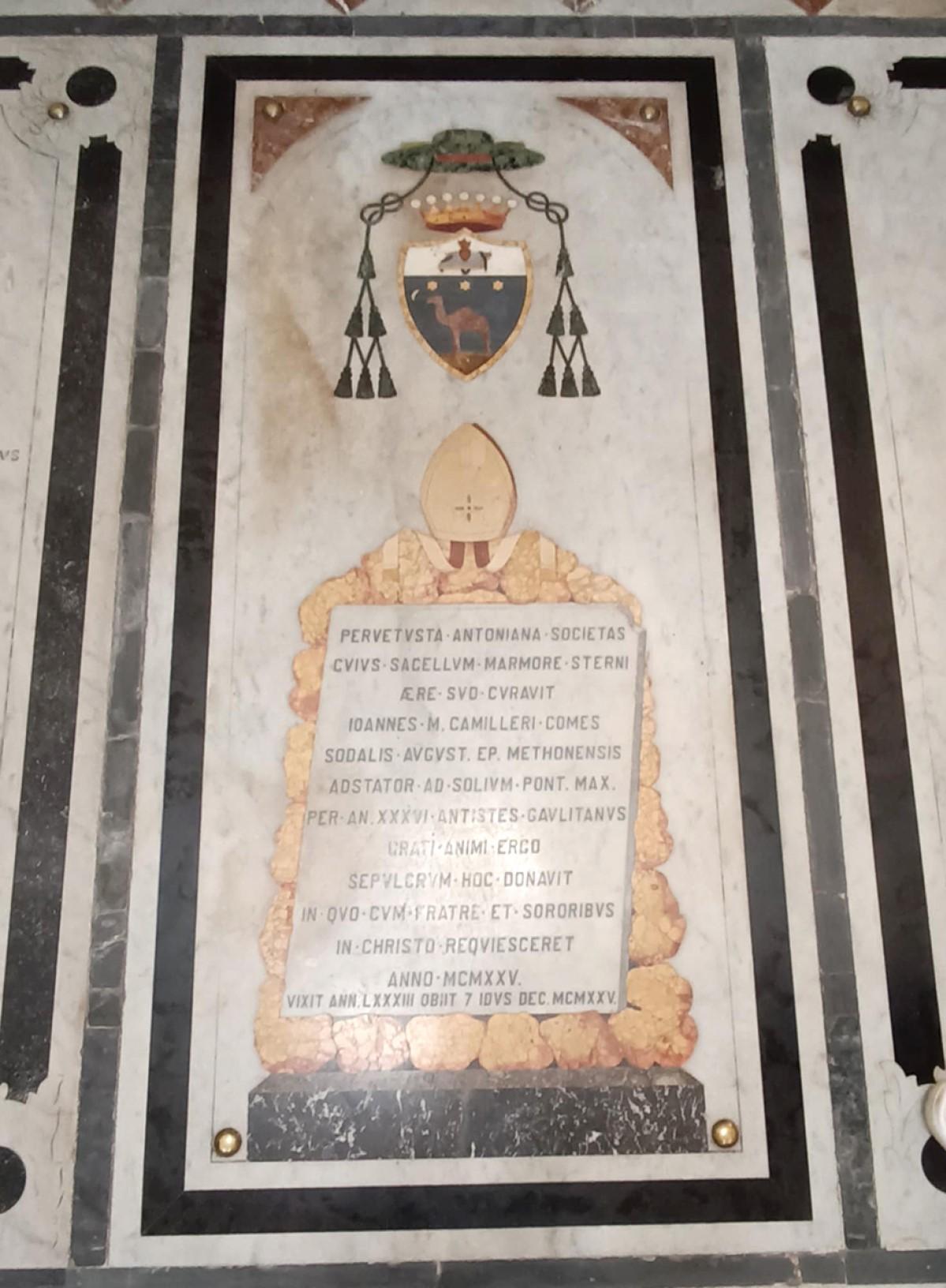 The marble slab and epitaph that covers the tomb in which Bishop Camilleri was originally buried in St Mark’s church, Rabat.
In 1914, Mgr Camilleri celebrated his episcopal jubilee and was created a Roman count by Pope Pius X. After marking his 25th year of pastoral service, he continued his work in the Gozo diocese for another 10 years. In 1924, old and exhausted, he asked Pope Pius XI to relieve him of his diocese and join his confriars in the convent.
Pius XI granted his wish, and on January 21, 1924, accepted his resignation and appointed him Titular Bishop of Methone. Although retired in the convent of St Mark in Rabat, Malta, he still administered confirmations and other functions.
On December 7, 1925 – 100 years ago – Bishop Camilleri died, surrounded by his Augustinian religious brothers.
On December 10, a solemn funeral was held at the Mdina Cathedral, conducted by Mgr Mauro Caruana, OSB, Archbishop-Bishop of Malta. The funeral oration was delivered by Bishop Angelo Portelli, OP. Bishop Camilleri was buried in the chapel of St Anthony Abbot in St Mark’s church, Rabat.
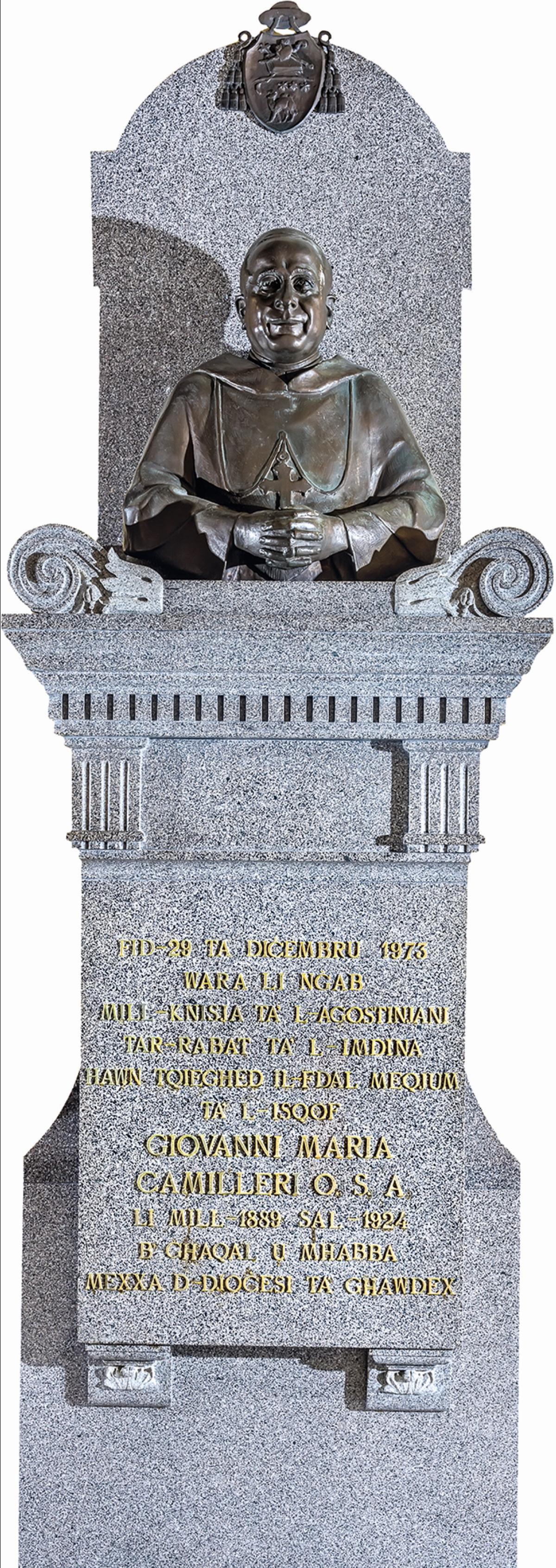 The marble and bronze monument erected at the Gozo Cathedral that holds the mortal remains of Bishop Giovanni Maria Camilleri, OSA. Photo: Daniel Cilia
Another solemn funeral was held at the Gozo Cathedral on December 14, led by Mgr Michael Gonzi, Bishop of Gozo. This time, the funeral oration was delivered by Mgr Alfons Maria Hili, who for many years was secretary of Bishop Camilleri.
The Daily Malta Chronicle of December 9, 1925, said that Bishop Giovanni Maria Camilleri was “a truly pious man, his rare talent, uncommon ability and vast erudition were excelled only by the simplicity of his life, his modesty, and his love and zeal for his flock. His fame was known far and wide in the Catholic world especially in Rome where he was justly regarded as one of the brightest ornaments of the Catholic hierarchy”.
In 1973, a marble and bronze monument, designed by Carmelo Grech Attard and executed by Carlo Pisi of Rome, was erected in his memory in the Gozo Cathedral. With the permission of the Provincial Friar Albert Borg, OSA, his council, and with the agreement of the community of the Augustinian friars, on December 19, 1973, the remains of Mgr Giovanni Maria Camilleri, OSA, were transferred to this monument, later inaugurated by Mgr Nicholas J. Cauchi, bishop of Gozo, on December 29.