Bishop Nikol Cauchi’s lasting legacy
Thank you, Lord, for sending us such an intelligent, humble and far-sighted servant
For an entire decade, I would witness the same daily scene: at 8am the baritone voice of Fr Renato Borg would accompany a knock at my neighbour’s door. A little while later, amid the murmur of conversation, I’d hear the distinctive sound of soft soles brushing the polished tiles of the Gozo Seminary corridor. As he approached my office, Bishop Nikol Cauchi would say: “Bonġu Rettur.”
At around noon, the voice of his personal chaplain, Fr Joseph Bajada, would reverberate in the corridors: “Sor tal-Isqof! – “Sister, the bishop’s food!” As Fr Joseph advanced in years, one could hear the tray thud against the table outside the bishop’s living quarters. He’d be a little out of breath after climbing 20 or so steps to bring it up.
By the time Bishop Cauchi returned to his room from the Curia at around 1.30pm, 2pm or even 3pm, his lunch would be stone cold. This is how he would always end up consuming it except on the rare occasions when he dined with us during festive meals – the Immaculate Conception, St Joseph, Christmas or the end of academic year dinner.
I served as the last of the eight rectors who lived and worked with Bishop Cauchi. He loved the Seminary, he loved it deeply, so much so that he chose it as his home, his place of residence.
This year marks the 15th anniversary of his death. Yet, his memory remains as vivid as ever, not only in the Seminary he cherished and in those who had the privilege of living alongside him, but throughout the Diocese of Gozo, which he served with intelligence, humility and far-sighted pastoral vision. His legacy continues to shape the Church in Gozo and the generations of priests who followed him.
Bishop Cauchi’s love for the Seminary went far beyond attachment to a place. From the beginning of his episcopate in 1970, he invited the Jesuits once more to lead the formation of future Gozitan priests, a mission they had first undertaken from the Seminary’s founding in 1866 until 1909. He also ensured that young priests were sent to study at the best pontifical universities in Rome so that the Seminary could have well-prepared professors.
It was the era of the Second Vatican Council – a time of renewal and enthusiasm. Bishop Cauchi understood the need for priests who were both faithful to tradition and open to the new breath of the Spirit inspired by the Council. The new professors, while honouring their predecessors who had taught in Latin, brought a fresh emphasis on Scripture, modern philosophy and the teachings of Vatican II.
Another of Bishop Cauchi’s far-sighted initiatives was to encourage young Gozitan priests to dedicate their first years of ministry to missionary work – not only in Europe but also in the Americas.
The final word was always his
What began as a practical initiative soon became a tradition, almost a duty, for priests to continue their studies overseas. And those who returned home after their studies abroad became an inspiration for seminarians still in formation. Today, more than 95% of Gozitan priests hold specialisations in philosophy, theology, or the human sciences and many have earned doctorates.
At a time when Gozo was still relatively isolated, Bishop Cauchi proposed that seminarians spend a full year away from home, ideally doing manual work. This proved a wise and truly pastoral decision: it broadened horizons, deepened human maturity and gave each seminarian the chance to test his vocation in real-life circumstances.
The monthly meetings of the Seminary Board were sacred. The bishop was always present and actively participated in discussions on candidates for the priesthood and the formation they received. He held the Seminary staff – rector, vice rector, spiritual director and counsellor – in high esteem. Occasionally, he displayed irritation when, in his view, I attached too much weight to the psychologist’s opinion. Occasionally, we disagreed quite animatedly. But the final word was always his.
Equally sacred was the monthly meeting with the seminarians in the chapel, which often took place before or after mass in the upper chapel, “the bishop’s chapel”, as we called it. Sometimes, without realising, we would enter while he was celebrating mass alone. His reverence for the sacred was profound. His devotion and humility were visible in every quiet, deliberate gesture as he vested for mass – as though a full congregation stood before him.
Jewish rabbis say that God provides every person with five fathers – as many as the books of the Pentateuch – to help them grow to maturity. I can say without any exaggeration that, after my own father – and Fr Arthur (Turu) Vella (who was a close friend of Bishop Cauchi) – that my third father was him. Not only did I receive from his hands the gift of ordination – as did many others, including my immediate predecessor Cardinal Mario Grech – but, in time, when we were neighbours, door to door in the Seminary, I learned much from him, which I hope to carry forward as one of his successors today.
I often find myself recalling our conversations in the Seminary office, during his quiet moments, or as he came and went from meetings. When, after eight years as rector, I told him: “I think it’s time for me to move on because being rector takes up so much energy,” he came up with a characteristic reply: “Well, when the pope accepts my resignation, I’ll accept yours.” In the end, we reached a compromise: I would send him my letter of resignation in advance, and, though he would simply ignore it, it would be there for his successor to see when the time came.
He also used to say: “Don’t pray to escape your work – more often than not, you’ll find yourself even more entangled in it.” I still remember that phrase every time I go to the Cathedral and stop at the small sacristy door facing his tomb. I look at his resting place – the sign of Eternal Life that he so truly deserves – and I pray for the diocese, for priests, for the practising faithful, for those who do not practise, for all Gozitans and foreigners living among us.
Thank you, Lord, for sending us such an intelligent, humble and far-sighted servant. Thank you, Bishop Cauchi, for all you did for Gozo and for its people. Your legacy lives on.
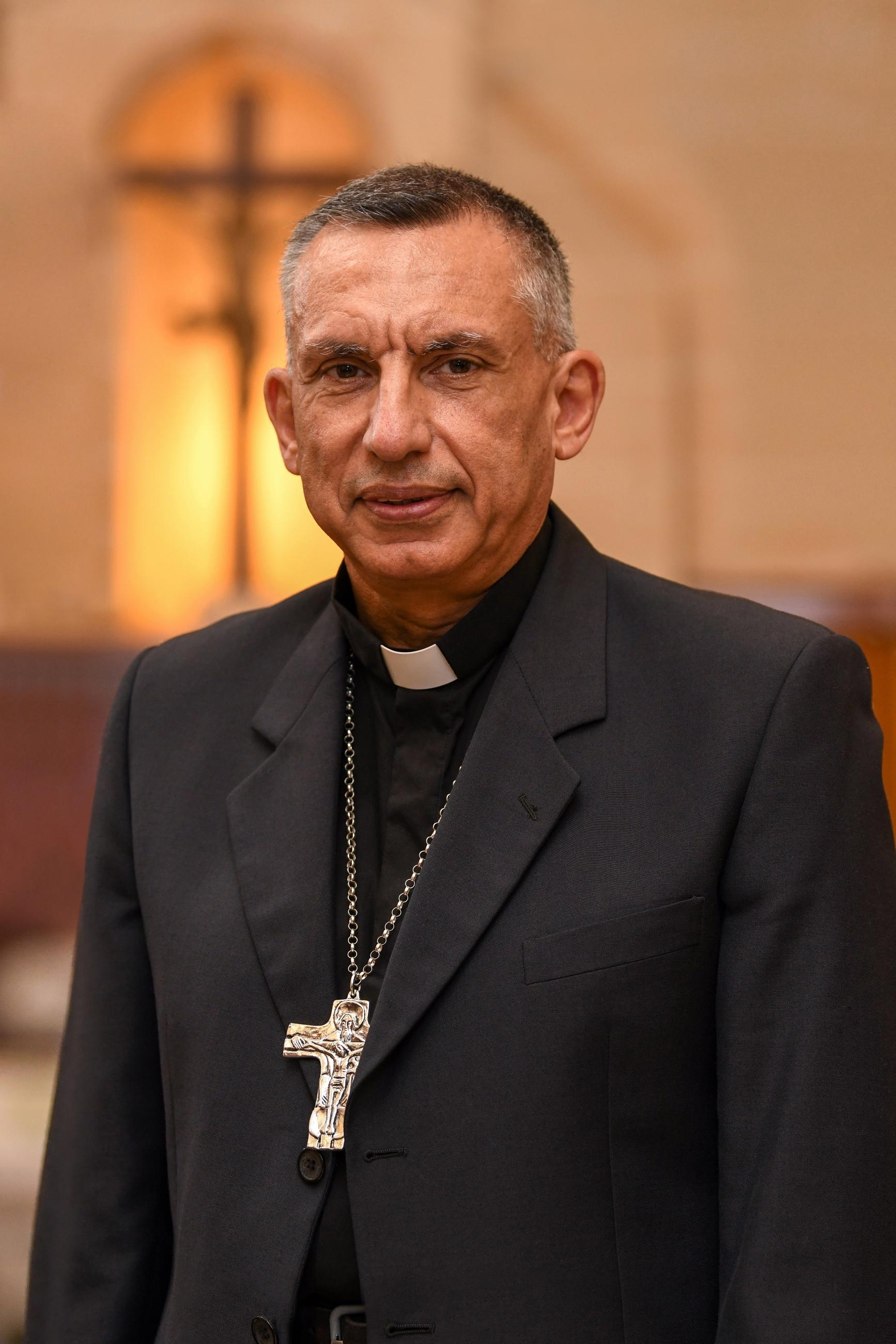
Anton Teuma is Bishop of Gozo.
This article was presented during a conference organised by the Il-Ħajja f’Għawdex Foundation which focused on Bishop Cauchi’s legacy.