BNF Bank spent over €1m fixing failed system upgrade, CEO says
Upgrade led to customer chaos, but the bank says things are now back to normal
BNF spent more than a million euros to bring its services back on track following a calamitous system upgrade which left customers in the lurch last spring, the bank’s CEO told Times of Malta in an exclusive interview.
In late March, BNF embarked on what it described at the time as “a major upgrade to its core banking and digital platforms,” warning customers that they would be unable to access their accounts over the weekend until the upgrade was finalised.
What followed was every banker’s worst nightmare.
Over the following weeks, customers took to social media to describe how they suddenly found themselves locked out of their accounts, others said they were unable to process payments or withdraw cash, and some reported funds mysteriously appearing or disappearing from their accounts.
In the midst of this, Malta’s banking regulator, MFSA, said it was keeping a watchful eye on the bank, later telling Times of Malta that it had asked the bank to “take corrective measures”.
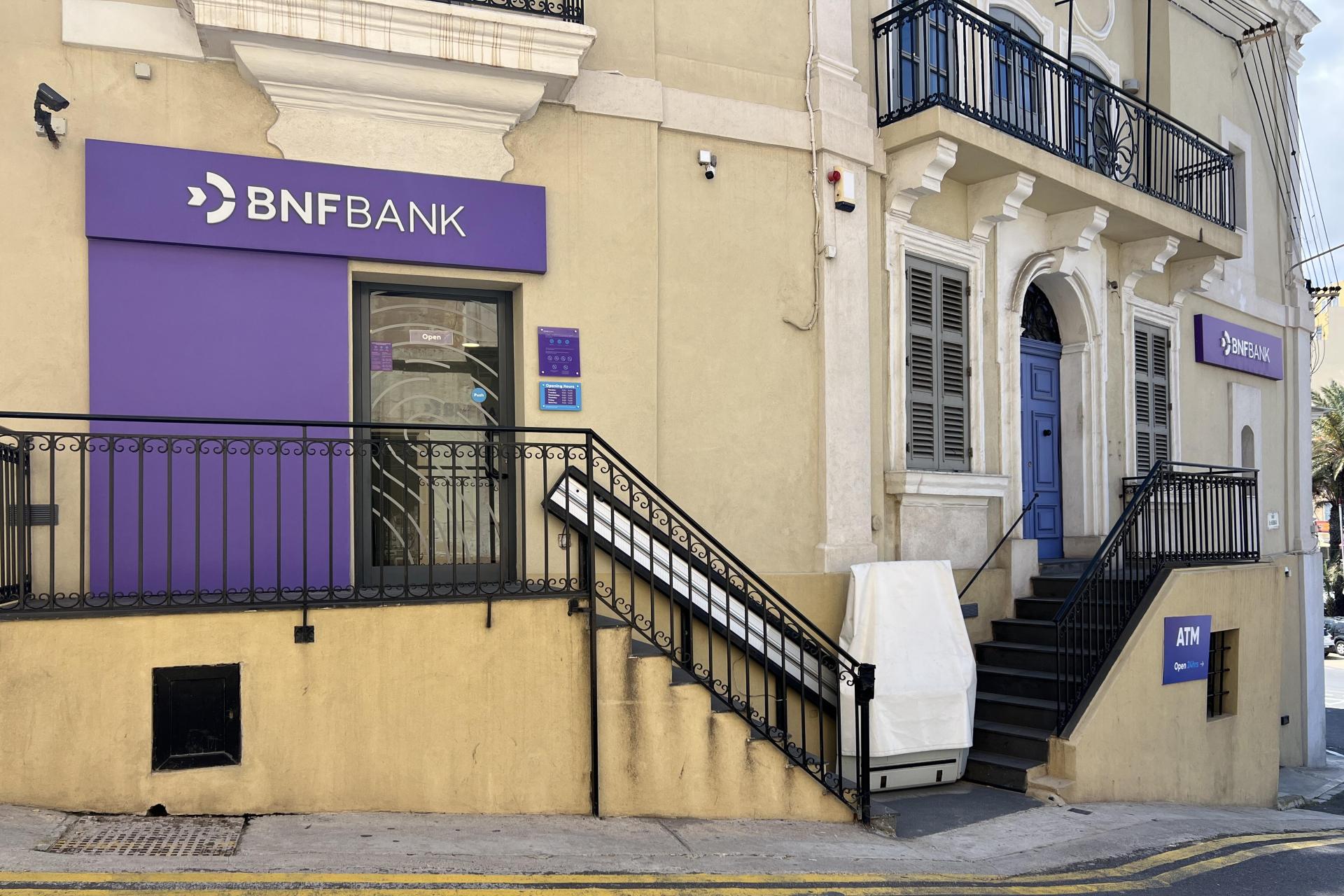 BNF customers complained of being unable to process payments or withdraw cash following a technical upgrade. Photo: Times of Malta
Almost six months on, the bank’s CEO David Power admits the system upgrade was more difficult than he expected.
“It was massive,” Power said, reflecting on the ambitious system upgrade. “We changed every single system in the bank and on top of that, we changed our card provider, from Visa to Mastercard. So, every possible thing that could have changed, was changed”.
The bank had been planning the upgrade for years, Power said, first planning to implement the changes in August 2024, only to postpone things to November.
When November rolled around, the bank decided to postpone the implementation date again, to give them more time to test the system.
“We went through 18 months of testing,” Power said. “We carried out over 3,500 tests on the system to make sure that it was working”.
But the tests couldn’t have prepared the bank for what was to come on the day itself.
“On go-live day, one of our service providers went offline for 24 hours, so that was the domino that fell first,” Power told Times of Malta. “None of us could plan for that, none of us could have known”.
As the days progressed, other related problems arose, with the bank scrambling to address issues as they cropped up.
Although Power says the bank fixed many of the smaller issues fairly quickly, “by that stage, social media had gone viral and we got stuck on the back foot”.
Power says he understood customers’ dismay, adding that customer complaints were justified.
“You go to your app and look for your money and it’s not there, or you see transactions that you don’t understand. That causes frustration,” he says.
Setting up 'a war room'
However, he insists, despite the bank’s customer-facing channels malfunctioning, its core banking system was not affected, and customers’ funds were never in danger.
The bank set up what Power describes as a “war room,” with bank officials working around the clock to fix issues and address complaints, as customers flocked to the bank’s branches.
“Our branches usually have footfalls of maybe six or seven thousand in a month,” Power said. “That suddenly went up to 32,000”.
Meanwhile, the bank was in continuous communication with the MFSA, sending the regulator weekly updates on its actions.
In the end, the bank had to dig deep into its pockets to bring things under control, more than it had initially hoped.
“We spent over a million euros on stabilisation,” Power says, pointing to how this was a key factor in the bank’s dip in profits throughout the year.
“When you’re a bank that’s making €8 million or €10 million in profit at the end of the year and you chop a million off in three months, that’s significant,” he said.
“It was an immensely stressful time,” Power admits, pointing to his “immense pride” for the way the bank’s staff handled the difficulties.
Did the bank bite off more than it could chew with the upgrade? Couldn’t the upgrade have been implemented more gradually?
The bank had little choice, Power argues, given the nature of the upgrade.
“If you’re upgrading from an existing system to the same provider, you can run the two in parallel. But when you’re moving from an old legacy system to a completely different operating system, it becomes really challenging.
“Once you’ve ripped off the band-aid, you have to deal with it. It’s too late to do anything else,” Powers says.
Lessons learned
However, he says, perhaps the bank could have made its life easier by not also switching card providers on the same day it was upgrading its system.
“I think one of the lessons learned is that maybe changing the card provider should have come later,” he admits.
Power insists that, ultimately, the botched upgrade didn’t result in an exodus of customers or deposits, with the bank’s daily monitoring showing “no abnormal patterns”.
Six months on, the bank’s operations are back to normal, he says.
“It’s now reduced to a number of little issues that are left,” he says, acknowledging that customer complaints still crop up on social media from time to time.
Meanwhile, the bank is getting ready to launch a full post-stabilisation review, having engaged an external firm to carry out the review, Power says.
He argues that the bank’s prospects are rosy, now that it is on the other side of the upgrade.
“We had to go through the pain to get to this point,” he says, but the bank now has a “system that lets us leapfrog over our competitors”.
Ultimately, Power says, BNF’s ambitions are different to those of Malta’s two banks.
“We certainly don’t want to become a BOV or an HSBC, that was never the intention of this bank,” he says, describing BNF as a “boutique-type commercial bank”.
“We’re not wanting to be the biggest, we just want to be the best at everything we do. And part of being the best is to implement a state-of-the-art system.”