Book review: Such things as faith is made on
A closer look at the decorative arts in Malta and their importance
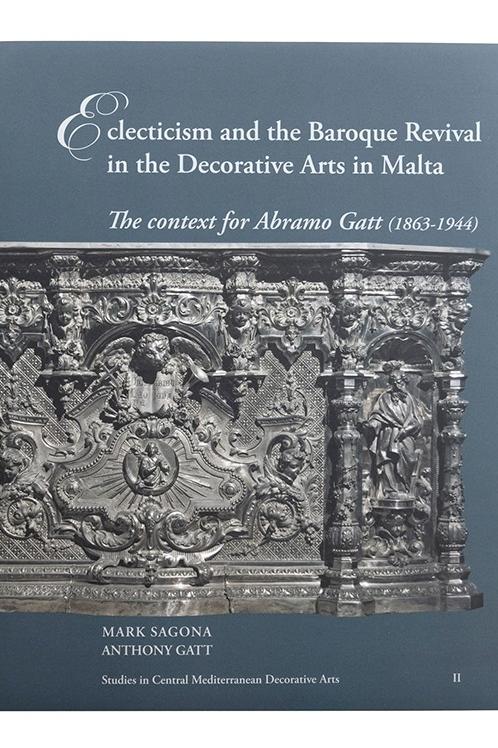
Eclecticism and the Baroque Revival in the Decorative Arts in Malta: The context for Abramo Gatt (1863-1944)
by Mark Sagona, Anthony Gatt, Tessa Murdoch and Roderick O’Donnell
Published by Midsea Books, 2024
Every year, around the end of November, the titular statue of the Immaculate Conception is taken out of its niche and perched on a pedestal in the parish church of Cospicua. It – or, rather, she – stands there until December 8, when she is carried in procession around the streets of the city.
The ‘ħruġ’ is actually two events: that at which the statue is taken out of its glazed seclusion, and that at which she emerges from her church to walk her streets among her people.
 .
.They are moments of what the social scientist Durkheim called “collective effervescence”: an overflow of intense emotion rooted in a shared meaning and purpose. It is hard not to be transported by the smell of incense, the sound of bells, the light bouncing off the masses of silver and gilt, the shouts of ‘Viva l-Immakulata!’, and the sight of men and women openly weeping pasts gone and a present lived.
Theirs is a faith rooted in tangible images and sensations. To moralise it away as graven-image paganism would be to miss the point of the power of the ritual object.
Not a mistake made in the book under review, which is valuable on at least two counts: first, as a study, based on thorough and first-rate scholarship, of one of the leading figures of the decorative arts in Malta and, second, as an account of the making of the opulence that is such a central part of Catholic praxis.
The volume is organised into four parts. Part one is by Mark Sagona, a specialist in the decorative arts and, by far, the major contributor. It places Abramo Gatt’s eclecticism in a broader context in Malta and internationally (exhibitions and pattern books, among other things, travelled well).
Part two, by architect and family descendant Anthony Gatt, strikes a biographical note and explores the artist’s relationship with his home city.
Part three is an extended critical piece on Gatt’s artistic idiom by Sagona, and part four is a fully illustrated definitive catalogue of his works, also by Sagona with skilful photography by Abner Cassar.
The book includes a brief hors d’oeuvre essay on the baroque revival in Britain by leading scholars Murdoch and O’Donnell.
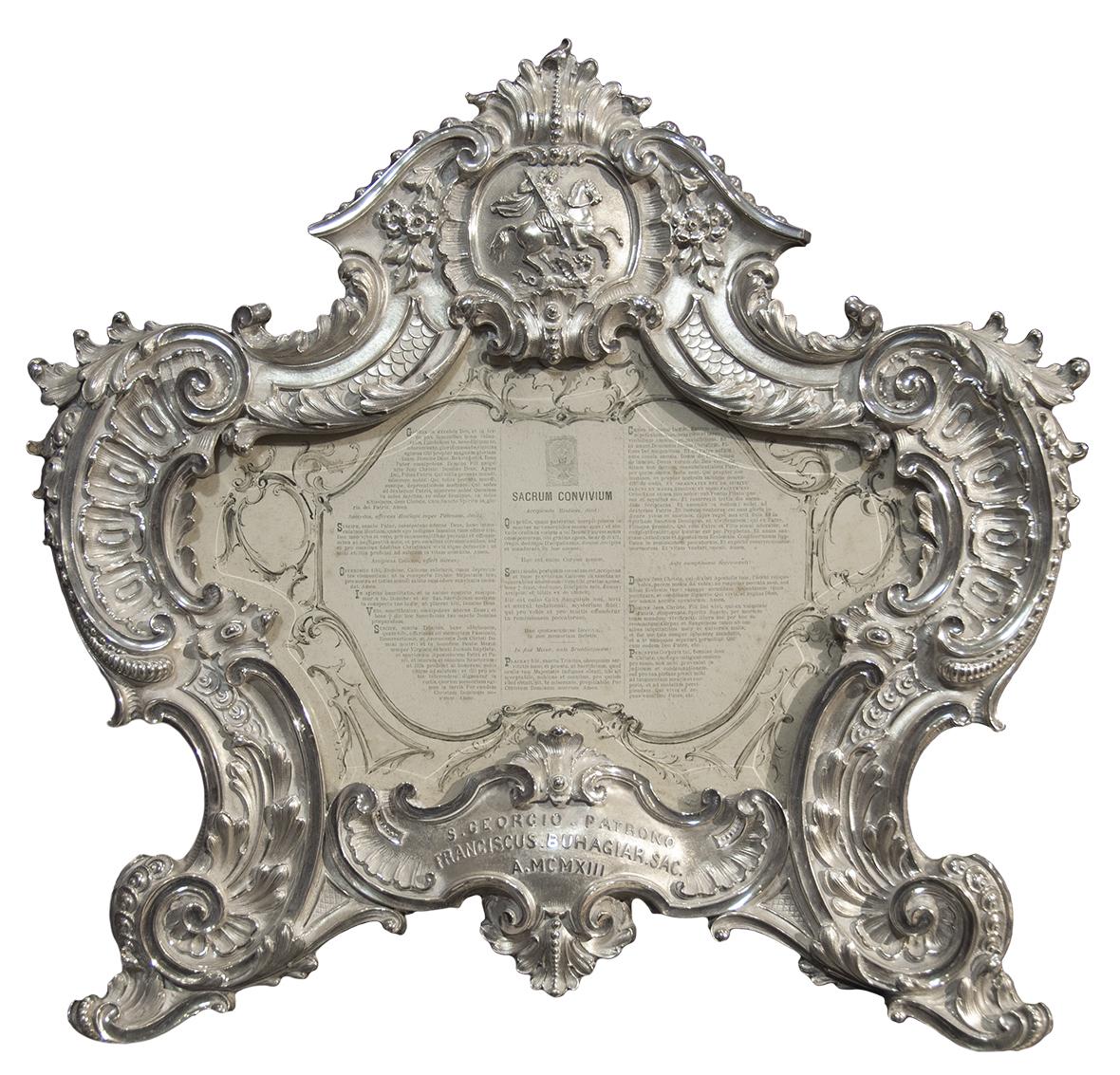 Carta Gloria (1913) at St George’s Basilica, Victoria
Abramo Gatt (1863-1944) was born and lived all his life in Cospicua, where he worked as a pattern maker at the navy dockyard. Cottonera during the British period has been described by historian Dominic Fenech as “neither rich nor good-looking”: it was routinely dismissed by travellers as a working-class industrial hotchpotch.
But Fenech also charts the rapidly rising level of education, the growth of mercantile wealth and a generally thriving population.
The craftsmen, artists and designers who lived and worked in the city were nourished by a maritime economy kept in place by a crown that professed an alien religion
Cospicua may have lacked the urbane sophistication of Valletta or the pedigree of Mdina, but it was home to many who did well enough to pour savings and bequests into ritual objects.
The craftsmen, artists and designers who lived and worked in the city were nourished by a maritime economy kept in place by a crown that professed an alien religion.
At the same time, their work fed an imagistic and sensuous Roman Catholicism. It was a happy, if unintended, twist in the tale of colonial encounter – and one of the subtexts of this book.
Abramo Gatt was in his early 20s when his star began to rise − first, as a maker of papier-mâché figures and, eventually, as a designer and gifted, if occasional, sculptor.
In 1892, his art had matured enough to earn him a commission for St George parish church in Qormi.
A couple of decades of frenetic activity followed, during which Gatt drew mainly on the eclecticism and baroque revivalism of his age to design scores of statues, antependia, pedestals, candlesticks, vases, lamps and a host of other devotional and ritual objects.
Even as he kept up the pace, he drifted in the last third of his life towards a more linear and restrained aesthetic.
Throughout, Gatt’s peerless skill in the handling of a range of styles and materials meant that commissions poured in from all over Malta and Gozo.
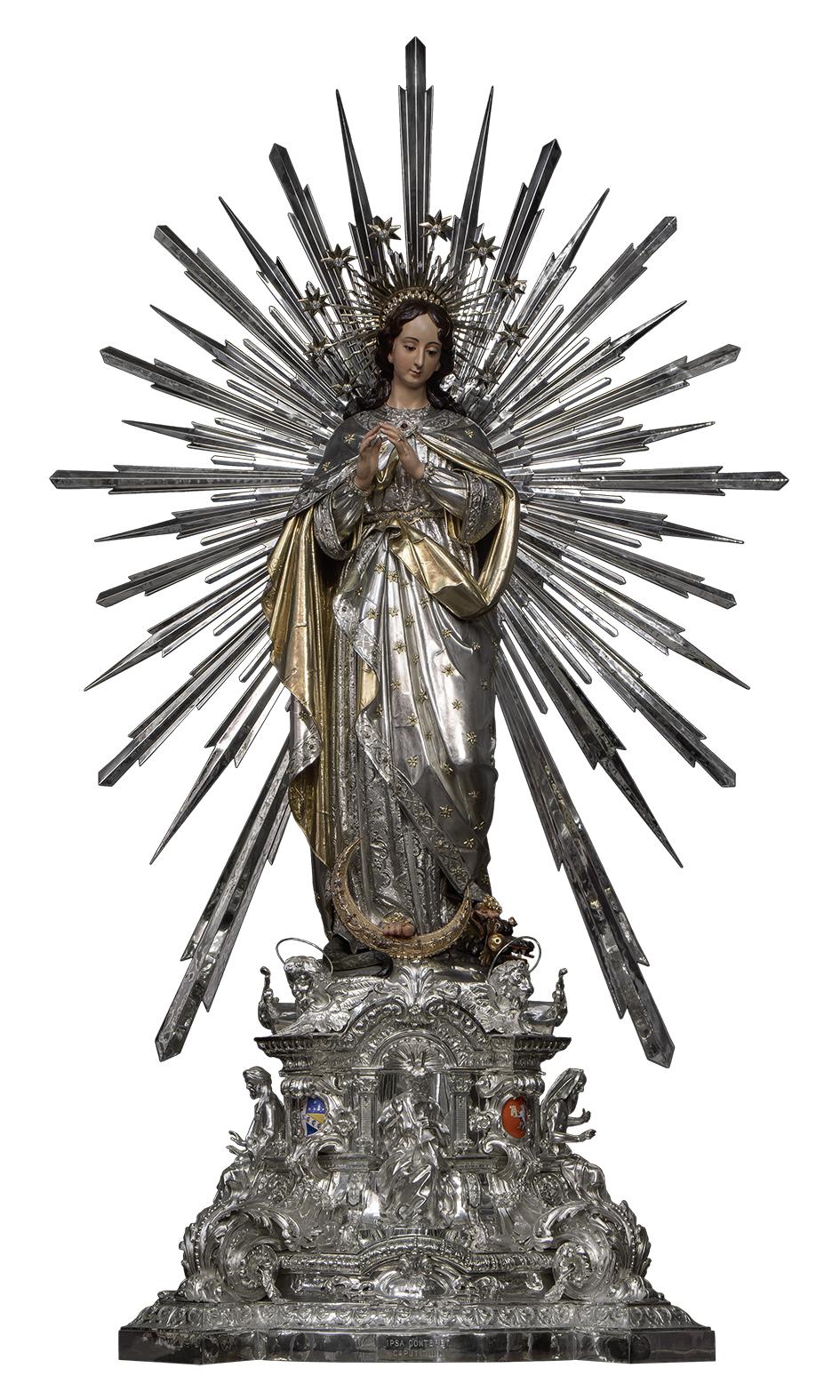 The statue of the Immaculate Conception (1905) at Cospicua parish church
Renowned firms such as Antonio Ghezzi of Milan, where many of the works in silver were actually produced, appear to have prized their association with a talent that, back in Malta, was to inspire a generation of artists and craftsmen.
This fine book documents a kind of art that is particularly visceral, and that has not been taken captive by museums.
The Immaculate Conception of Cospicua was, after all, (re)modelled by Abramo Gatt – as was the pedestal on which she stands, the ceremonial mace which heralds her ħruġ, and much more of the glittering splendour that surrounds her. The good people of Cospicua will tell you it rubs off on the soul.
 Mark-Anthony Falzon