Book-intolerant baroque Malta
There was not a single bookshop in the capital city and illiteracy was widespread, even among those occupying high administrative posts
At the height of its opulence during the baroque era, Valletta compared favourably with other capital cities in Europe – magnificent avant-garde architecture for palaces and churches, manic commercial activity, state-of-the-art healthcare, the cleanest streets in Europe, aristocratic elegance in fashion, sophisticated entertainment and cuisine.
Something, however, noticeably defaulted − not a single bookshop thrived in the capital city. Taverns, barbers, hairdressers and wigmakers, milliners, fashion outlets, gold and silversmiths, fishmongers, music and dancing schools, butchers, theatres, gambling dens, greengrocers, brothels, tobacconists aplenty, but not one librarian. The few merchants who believed they could earn a living as booksellers, all ended bankrupt.
While shops selling books flourished all over Europe, say Vienna, Rome, London, Venice, Marseilles, Frankfurt, Naples, Geneva, Amsterdam, Munich, Leyden, Lisbon and virtually all larger cities on the continent, especially university towns, buying and selling books met with the utmost indifference in Malta, even after the 1593 Jesuit Collegium of higher education turned into a fully-fledged university in 1769. Books? Useless expense. A private library? Clutter waste of space.
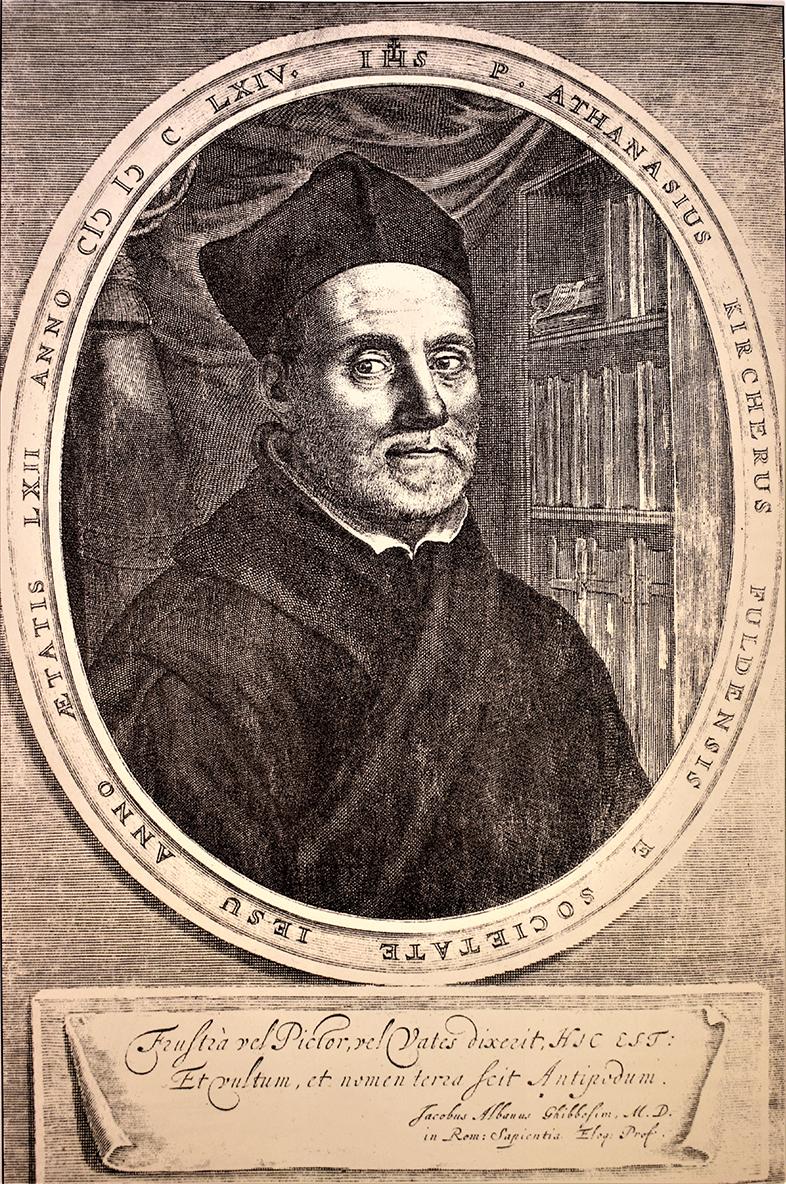 The renowned scholar Athanasius Kircher who left Malta because he was desperate for books.
The hospitaller and military Order of St John whose grand master became prince of Malta in 1530, was partly to blame for the book intolerance prevalent on the island. The Order saw defence, corsairing and survival, not learning, as priorities.
Knights who excelled in literature, like Pietro Bembo, Paolo del Rosso and Ciro di Pers, were never part of the frontline community. Cervantes, author of Don Quixote, served in Malta, but never joined the Order. Grand Master La Cassiére detested scholars and openly sneered at those who cultivated their minds rather than their biceps: “My Order needs warriors and seamen rather than graduates and other indolent layabouts who crowd this island, much to the detriment of this principality”.
This followed a sad tradition of illiteracy, dominant in Malta well before the knights took over: the level of education in medieval times was extremely low. Very few could read or write even their own name.
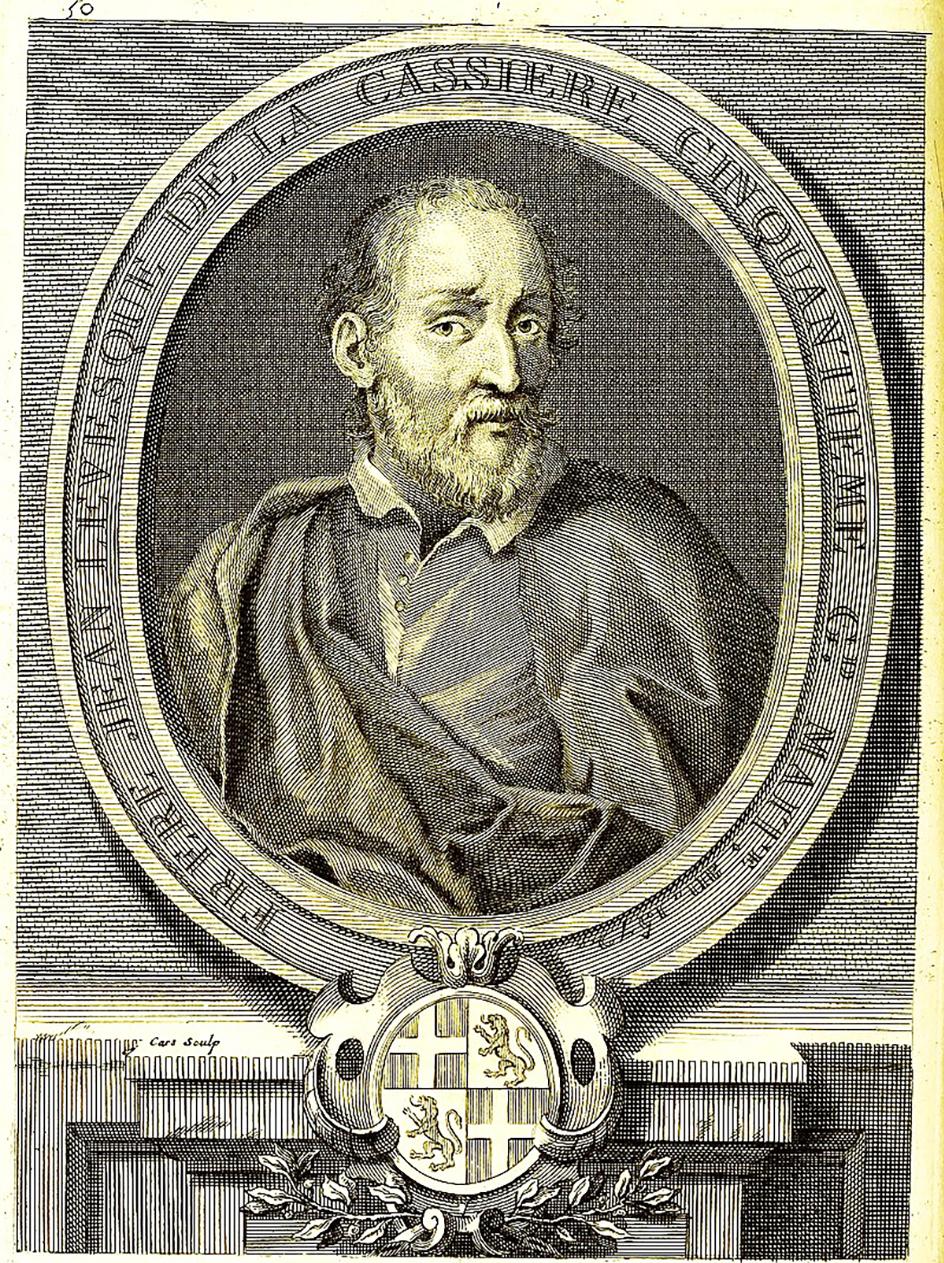 Grand Master La Cassière, who famously said that Malta needed soldiers, not idle scholars.
Illiteracy was by no means confined to the working classes but was also rife among people occupying high administrative posts. Judges included both literati and idioti (from indocti, meaning unlearned), the latter being often illiterate.
The saintly Bishop Baldassare Cagliares, dismayed by the widespread ignorance of the Maltese clergy, hoped that force-feeding them the books of scriptures would somehow improve their dismal literacy. He decreed that every priest should, as a minimum, own at least a copy of the Bible. In his 1615 census of the regular clergy of Malta, he noted the names of some 50 priests who never had a copy, and enjoined them, under penalties, to acquire one.
In 1637, the Jesuit culture-vulture Athanasius Kircher, arm-twisted to live and teach in the island, rebelled and confessed he could no longer waste away in Malta “owing to the dearth of books” which had caused him to interrupt his studies and writings: “puoca commodità di promuovere questi suoi pensieri”.
Almost a century later, in 1715, the Venetian republic appointed Giacomo Capello as extraordinary envoy to Malta to persuade the Order to join its fleet in forthcoming hostilities.
Capello, a keen and sceptical spectator, stayed in Malta four months and wrote a secret, devastating report of his observations, scathing and unforgiving. In it he notes there was not a single bookshop in Valletta. He dismissed the young knights as “a throng of desperate youth, cadet idlers protected in every excess, without fear of the world or of God; there are no bookshops in the city; there was only one bookseller, but he went bankrupt”. All that young knights needed to know to pass the literacy test was an ability to scribble their own name.
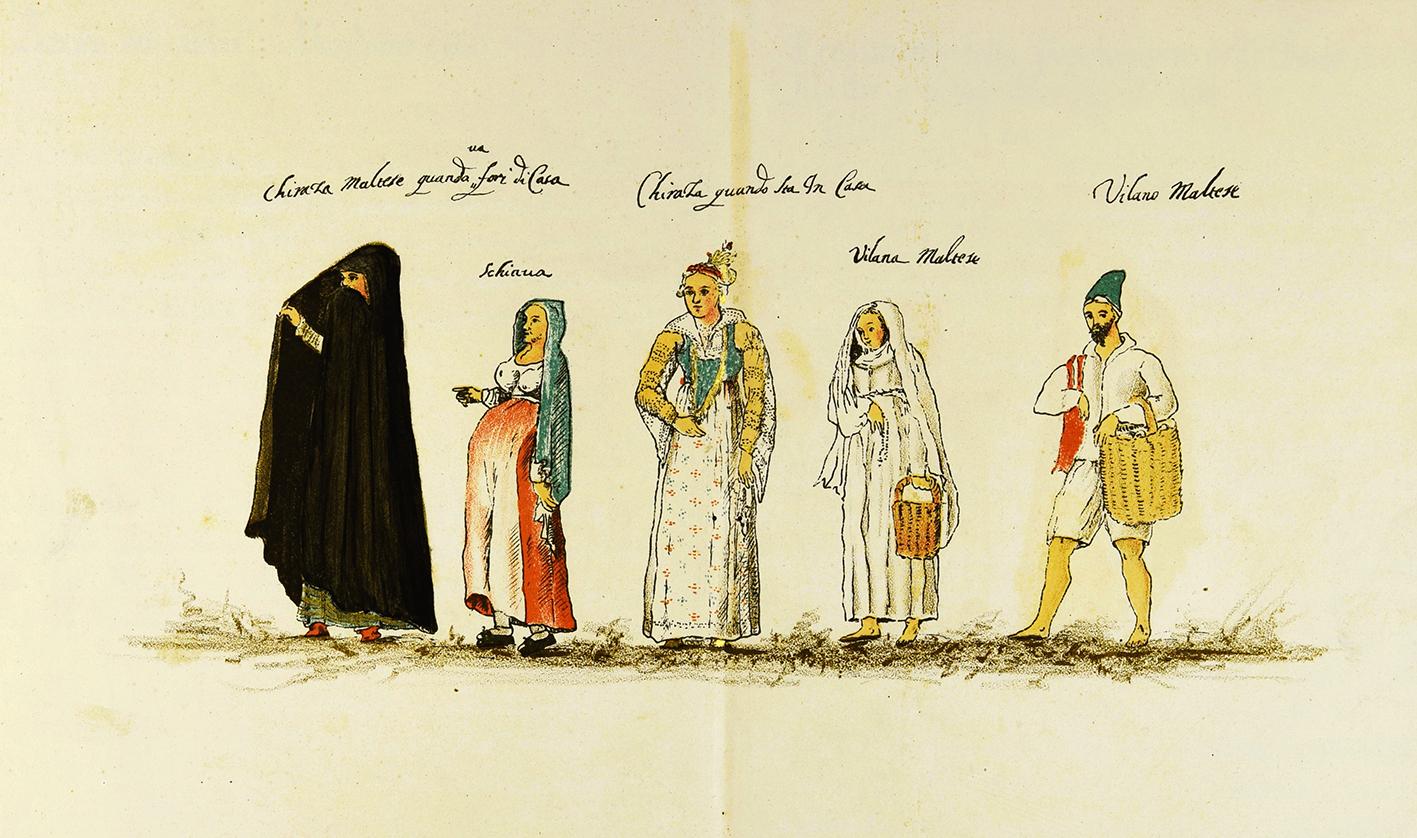 Five Maltese characters. Watercolour by Fra Opizio Guidotti, c. 1600. Courtesy of the National Library
This reflects the views of Bali Fra Pontius Francois de Fleury, who in a private letter expressed disconsolate views of the intellectual panorama in Malta: “I just hope that our little rock (Malta) is pulling itself out of the barbarian state in which it is today, as far as science and art are concerned”.
And Giandonato Rogadeo, the renowned Italian jurist invited by de Rohan to reform the codes and judicial system of Malta, did little to hide his contempt for the level of literacy among the Maltese. They fancy themselves as literati, he squirms, but have only produced a few miserable scribblers. This did not hold them back from publishing a book showing off their threadbare literary glories − the Biblioteca Maltese printed by Ignatio Saverio Mifsud in 1764.
Judges included both literati and idioti
By 1734, a French bookseller again tried his luck in Valletta, but we know of him through a clearance sale of books and prints, giving away polizze (broadsheets) at one carlino each. This bookseller, recorded only by his name Jean, had somehow managed to secure an exclusivity in the sale of French literature and doubled as bookbinder for the Order to ward famine off his door.
 The renowned Venetian publishers Remondini tried unsuccessfully to sell books in Malta. The above is an illustration from one of their books.
Venice’s Magistracy of Trade (the Cinque Savii alla Mercanzia) in 1754 appointed the knight Fra Massimiliano Buzzaccarini Gonzaga as its Huomo in Malta to promote and protect its business interests. Up to 1776, he regularly sent Venice secret reports to update the authorities about the political, military and social happenings on the island and about Venetian shipping movements in and out of Malta. His functions included assistance to merchants and seafarers from the Serenissima.
From him we know quite a lot about the book trade in Malta. In 1764, the Venetian Andrea Rappetti came on the librarian scene to put up some competition to Jean. The Frenchman’s monopoly appeared legally questionable as “it did not protect a novel manufacture or a new art useful to the community”.
Rappetti did not enjoy a recommendation from the Venetian authorities, and Buzzaccarini Gonzaga did not seem overly impressed by him; the prospects of good turnovers remained extremely poor on the island.
Only one year later, the Venetian publishers Remondini appointed a Maltese trader, Giuseppe Azzopardi, as their import agent in Malta. The Remondini enjoyed a good reputation in publishing circles and also ran fabbriche di ventagli – fan manufactories.
Buzzaccarini Gonzaga did not consider Azzopardi the right person for the job: he did not have the necessary experience to run a trade. He had neither owned any bookshop before, nor was he known to have established a small business of any sort in the city. Perhaps he would have done better as a wholesale trader, though even this was doubtful in a small place like Malta “which is no way inclined towards such a trade”.
Sure enough, by 1766, the court declared Azzopardi officially bankrupt, his debts amounting to at least a whopping 20,000 scudi. He took refuge in a church, without any intention of settling his liabilities or to reach accords with his creditors.
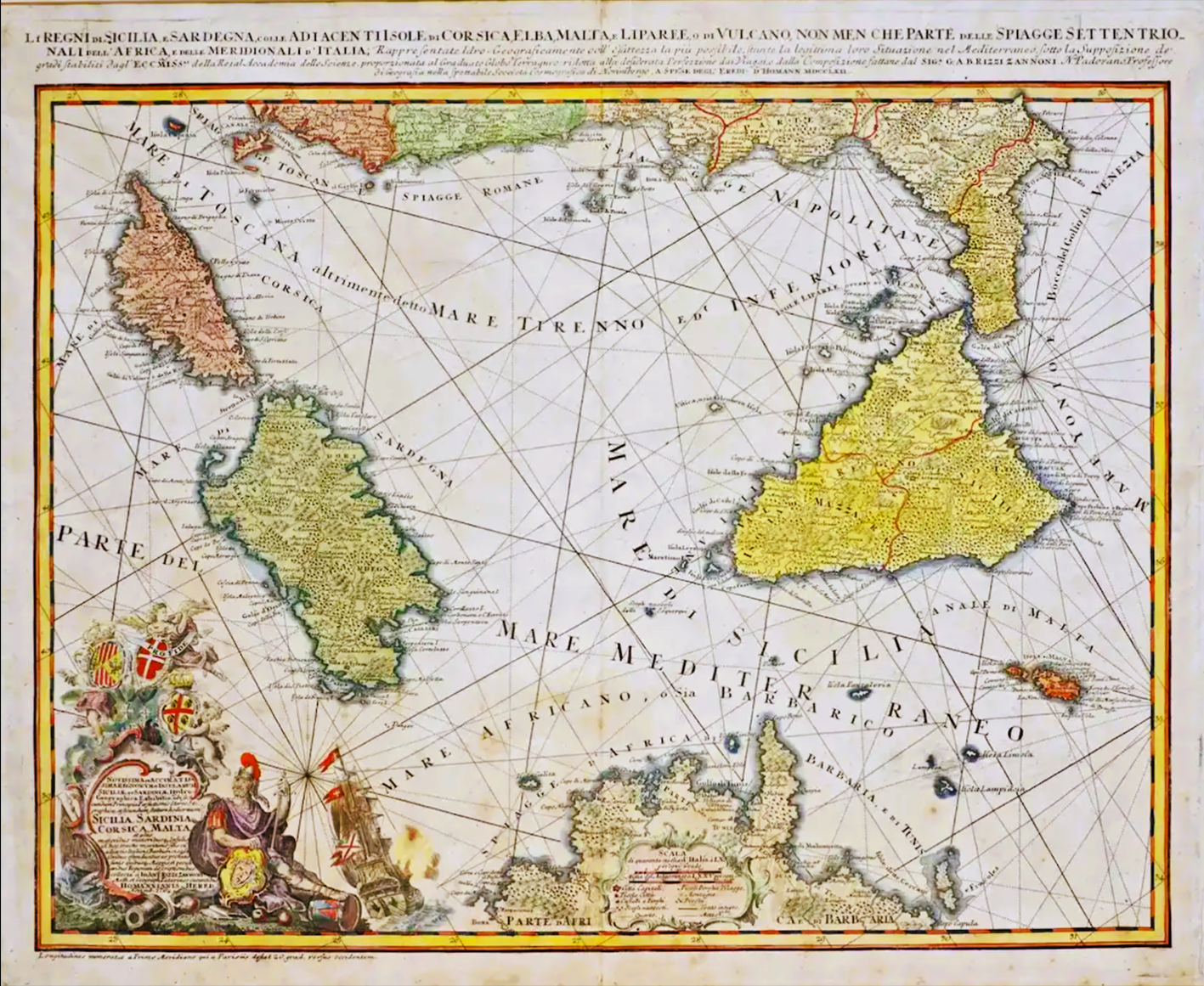 A map including Malta by Venetian publisher Antonio Zatta.
The Venetian knight pointed out one exception: the sale of broadsheets and leaflets in the public streets turned out fairly well, partly because of its novelty, and partly because they were traded at a much lower price than those of France which sold for the reputation they enjoy.
The agent of another Venetian book-publishing house, that of Antonio Zatta, also operated in Malta, apparently rather successfully. Buzzaccarini Gonzaga had his doubts: he feared this venture would soon meet the same fate of all its predecessors. Many French booksellers had had the misfortune of venturing on a similar project, only to be soon compelled by the force of bleak prospects to give it up altogether.
The Malta agent of the Zatta publishers had, so far, proved relatively fortunate by securing a niche market in which there was zero competition – schoolbooks − but the Venetian knight believed that unless the importer diversified, say to include cloth or silks, his prospects would be bleak.
Buzzaccarini Gonzaga disagreed vocally with instructions received from Venice to obtain the grand master’s approval to include this book importer in the Malta-Venice trade-agreement. The knight dismissed Zatta’s fear that a competitor would set up a rival business in Malta: “I feel certain that if such a thing were to happen, one would ruin the other and no one would gain. The country’s demand for books is such that it cannot even support the livelihood of one business”.
Although according to the Order’s statutes no customs tariffs attached to their importation, “books here” wrote Buzzaccarini Gonzaga that same year, “are an unknown commodity”; only a minimal fraction of the knights and the upper classes in Malta could read at all, and the large majority of the indigenous mases − read: the natives − were largely inarticulate and superstitious.
How right Buzzaccarini Gonzaga’s scepticism proved to be. Not long after, he reported that Zatta’s import agent felt compelled to leave Malta “being unable to survive in this country. His integrity and fine manners greatly contributed to his remaining here so long, but now that he has supplied the country, he can no longer earn a living”.
Perhaps it is not a mere coincidence that Malta ended up being the last country in Europe to have a stable printing press – in 1765. Or that the Order in Malta left the planning and construction of the public library to the very tail end of its rule.
Acknowledgements
Maroma Camilleri, Thomas Freller and Victor Mallia-Milanes, author of three fundamental Venice-Malta volumes (1988, 1992 and 2008).