Born without a forearm, engineer creates life-changing prosthetics
Xavier Vella's experience has made him even more determined to help others.
A Maltese-Australian engineer born without a left forearm now works designing prosthetics that are provided free of charge to children and adults.
Xavier Vella, 27, whose father Carl’s family moved from Malta to Melbourne decades ago, began volunteering at Free 3D Hands in Phillip Island in 2022.
He helps design and test prosthetics that are sent worldwide to those in need.
Vella said he feels “full of happiness” at work each day because he is making something that can help others.
The mechatronic engineer was born with a congenital limb deficiency, which means he is missing his left forearm.
While he does not use a prosthesis himself, he said his early negative experiences motivated him to create better ones for others.
 Xavier finds himself comfortable not using a prosthetic arm, and uses it rarely, such as when he is in the gym.
As a boy, he tried to wear one but it “was plastic, heavy and stiff like a doll’s arm”, he remembers.
“My parents put it on me, and I complained about it so much they decided not to force me to wear a prosthetic,” he told Times of Malta.
After that first experience, his parents gave him the freedom to grow up without using a prosthetic.
“My parents had a lot of faith and belief in me that I could be a fully independent person without the need for a prosthetic,” he said.
Vella grew up learning how to use cutlery, tie his shoelaces and manage daily tasks without the use of his left arm.
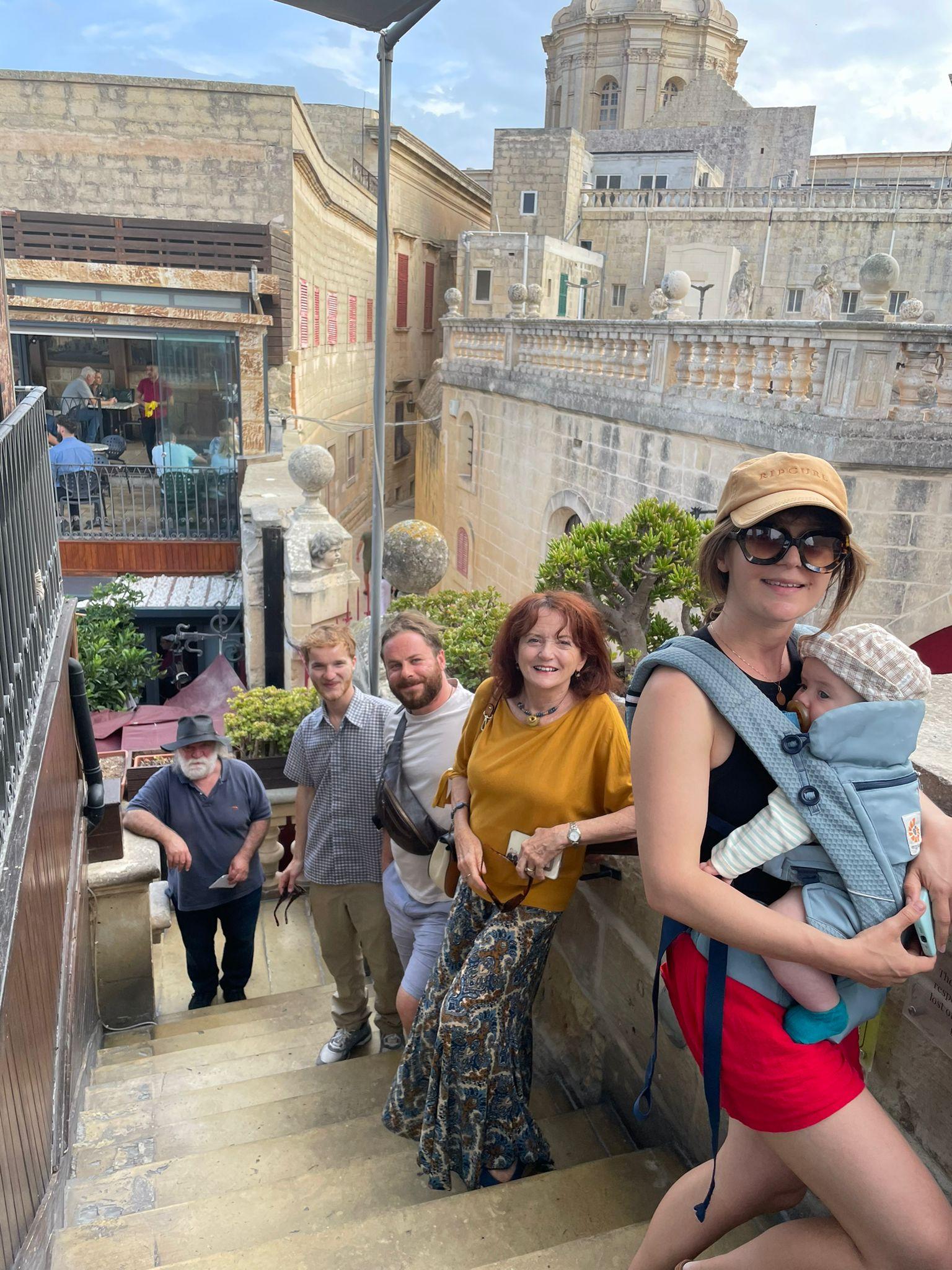 Xavier and his family in Mdina during a visit to Malta.
“Now, I would wear a prosthetic when I’m using weights at the gym, for example,” he said.
“I’m not used to wearing one, it feels like an external part of my body. I’m proud of who I am and confident to show my limb difference to people.”
But his experience has made him even more determined to help others.
We want to be able to serve people who cannot afford a prosthetic- Xavier Vella
“I want to use my skill set and lived experience, the struggle I experienced using a prosthetic, to make sure the devices we create are better than the one I had when I was a child,” he said.
“That’s our goal, whether you are 80 years old or a four-year-old, the device should be beneficial, comfortable and functional for you.”
Vella explained that a basic prosthetic device could cost, on average, around 20,000 Australian dollars (over €11,200), while a more sophisticated device would cost a whopping 100,000 Australian dollars (€56,000).
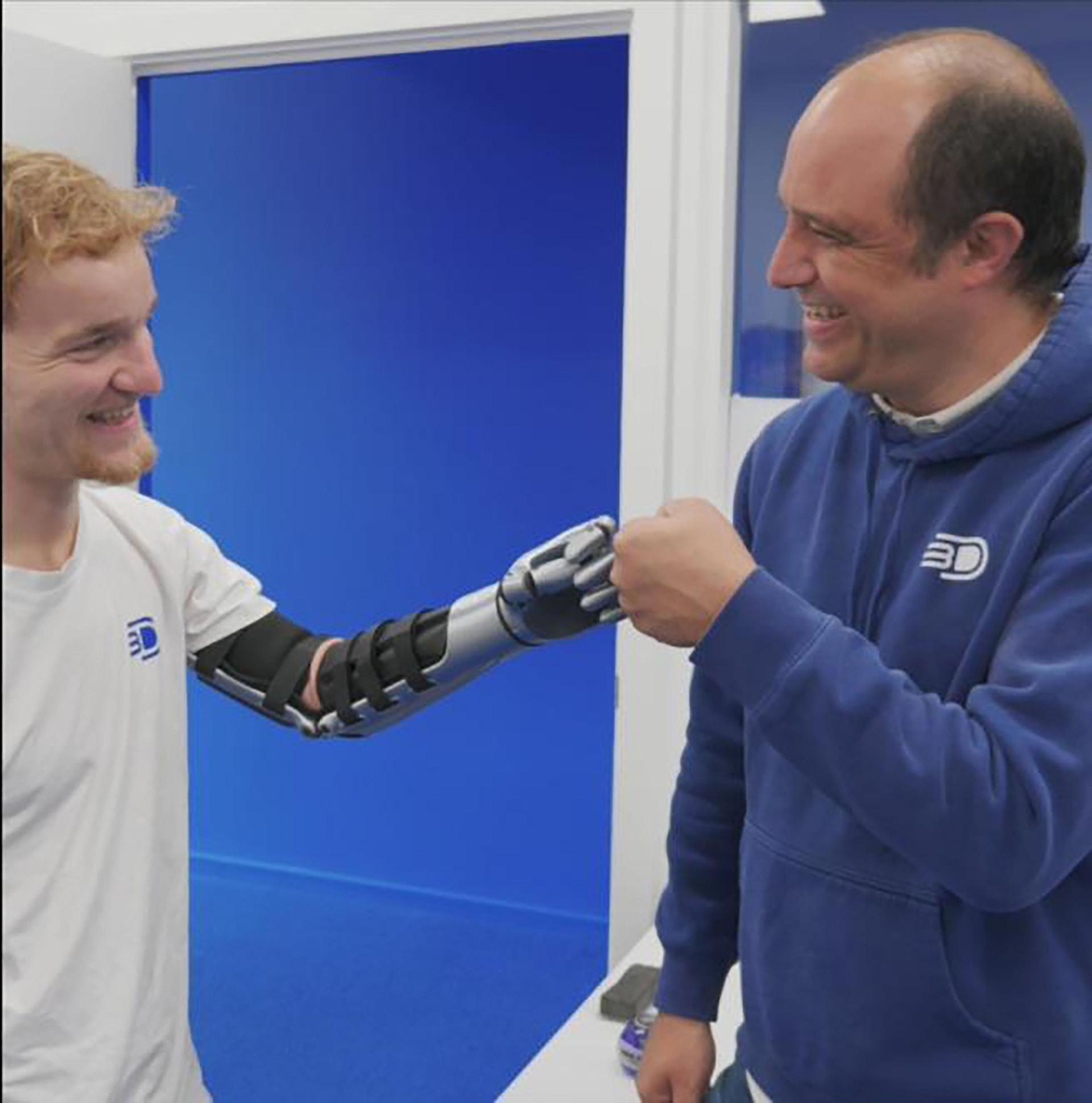 Xavier (left) and Free 3D Hands CEO Matt Bowtell.
Due to the high price tag, such prosthetic devices are inaccessible for many people, and that is when the Phillip Island-based charity steps in, making thousands of these devices free of charge.
Vella, who has a master’s in mechatronic engineering, works alongside biomedical engineer Michael Coghlan, designing and building the 3D prosthetics, while also testing the devices to ensure they are not too heavy and are comfortable for the client.
To create a device, clients send Free 3D Hands photos and measurements of their hand and the team uploads the data to software to design the prosthetic.
“Later, we would send the client a test device so they can try it on and make sure everything is scaled correctly and fits them well,” he explained.
The team also designs task-specific devices, such as hands tailored specifically for a sport, or kitchen tasks involving many utensils.
 The office of Free 3D Hands
All the work is free of charge.
“We want to be able to serve people who cannot afford a prosthetic,” he said.
One case that stayed with him involved a young boy from Saudi Arabia whose family contacted the charity. The boy was missing both hands and had a lot of scar tissue surrounding his limbs.
“It took us three to four attempts to get the prosthetics right. We created for him two hand devices, and later on, the family sent us a video of him wearing them while riding a bike and playing with his toys. He was so happy,” he recalled.