An eight-legged horse appeared at Xwejni, and not everyone is happy about it
Austin Camilleri hopes his sculpture will become a ‘natural supplement’ to the place
Xwejni’s cliffs have gained a striking new landmark with a bronze sculpture of a headless, eight-legged horse overlooking Gozo’s coastline.
The sculpture titled WIEĦED is Gozitan artist Austin Camilleri’s latest project, which he described to Times of Malta as being a “a playful take on the traditional equestrian monument”.
Standing 570cm tall, the sculpture was installed in the Natura 2000 site on the edge of the cliffs facing the sea on Monday. The area is largely untouched and mostly frequented by divers and operators of the nearby salt pans.
“In time, like most coastal towers, it will embrace and merge with its immediate rock fabric, eventually becoming a natural supplement to the place,” Camilleri said.
The project was one of four sculptures selected through an open call for public art in 2021 by the Ministry for Gozo and was eventually commissioned by the ministry in 2023.
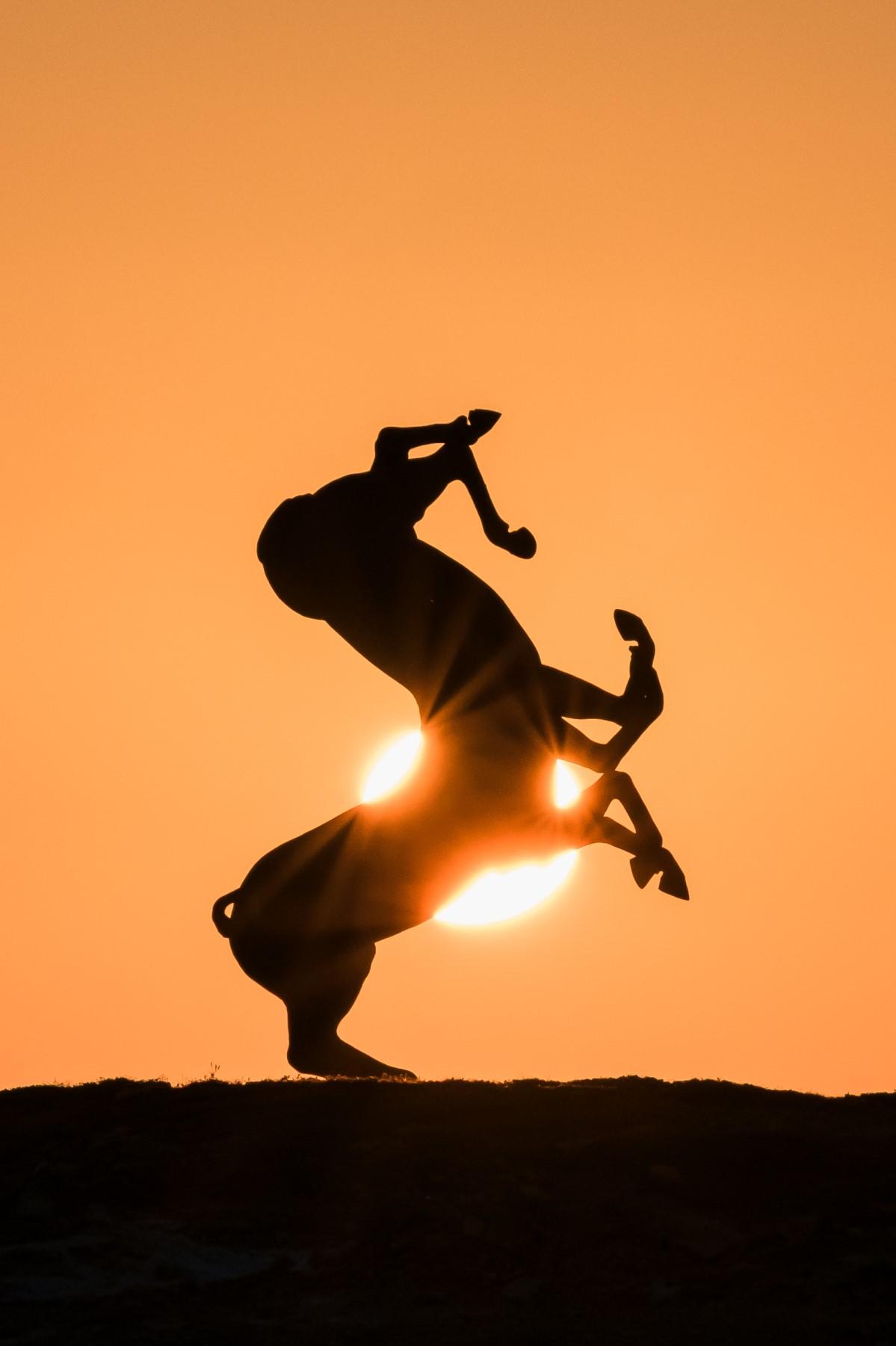 The bronze sculpture balances on just two points in a cantilevered form and has been treated to resist corrosion.
Multiple interpretations
“It suggests not one horse but two – an image constructed through a process of sampling and recombination," the artist said. "At the same time, I wanted to create an image, one that feeds and is part of nature.”
Rather than conveying a fixed message, he said the sculpture is intended to invite multiple interpretations and to “open up” to those who encounter it.
“The work does not belong to me anymore. It grants ownership to those who venture on site, whether temporarily or regularly. I would be satisfied if the work becomes something people would wish to return to – whether physically or in their reflections,” he said.
The sculpture balances on just two points in a cantilevered form that Camilleri said was designed to feel “almost improbable but still convincing”.
Its anchorage system, made from AISI 316L stainless steel, was installed following a detailed environmental and territorial assessment under the supervision of Perit Andrew Sultana, Camilleri said.
The bronze has been treated to resist corrosion, though not to shield it entirely from the elements. Instead, Camilleri said, the patina is intended to evolve with its surroundings.
“With time, it will embrace subtle changes, just as the coastline does,” he said.
NGO BirdLife Malta, which had initially objected to the project at the planning stage, retains its objections today
'Very few places remain untouched'
It received planning approval in 2023, despite objections from the Environment and Resources Authority and the Superintendence of Cultural Heritage, which cited its location within a Natura 2000 site designated as both a Special Conservation Area and a Special Protection Area.
NGO BirdLife Malta, which had initially objected to the project at the planning stage, retains its objections today.
BirdLife Malta CEO Mark Sultana told Times of Malta that, while the installation is a work of art rather than an obscene development, natural areas should remain free from human intervention.
“Very few places remain that are completely untouched by humans. To safeguard them, there should be no human intervention, whether aesthetically pleasing or not,” he said. He also raised concerns that, although no artificial lighting has been installed, it could be introduced in the future.
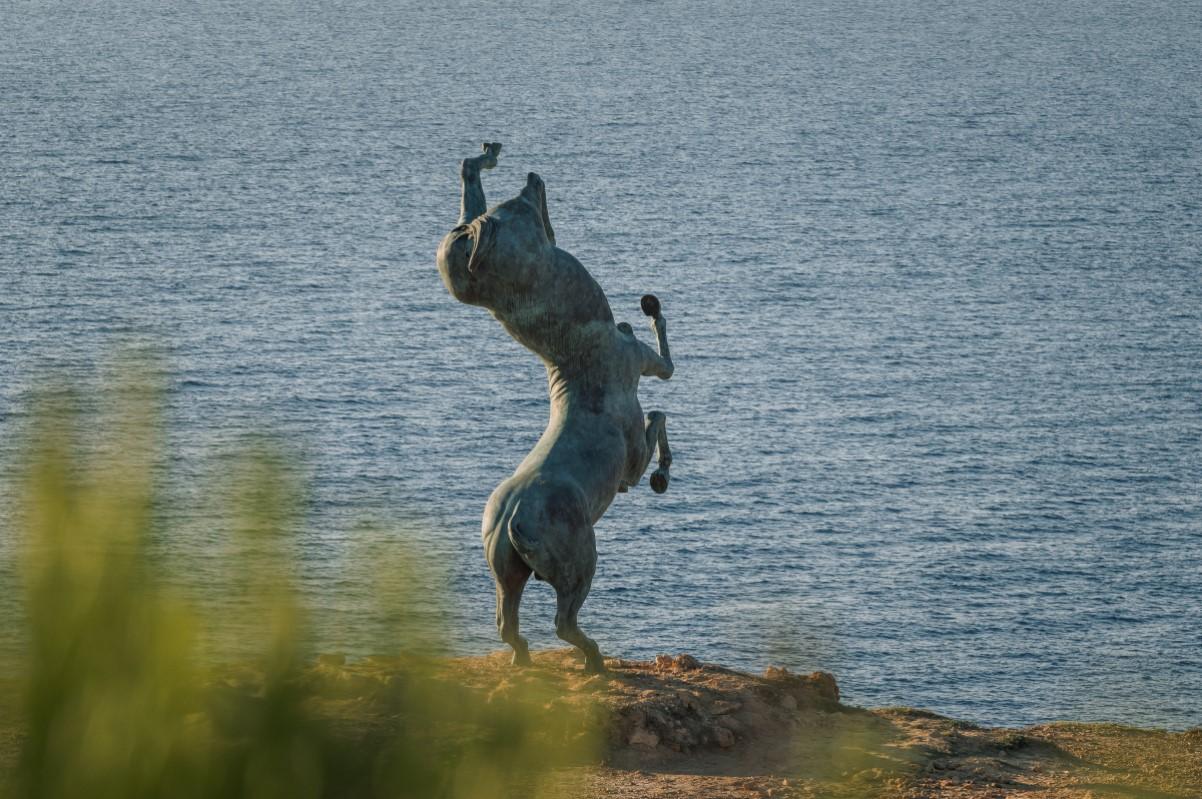 Standing 570cm tall, the sculpture was installed in the Natura 2000 site on the edge of the cliffs facing the sea on Monday.
'Art and nature not antagonists'
Addressing its placement, Camilleri argued that “art and nature have never been antagonists”.
“Art has always been a complementary celebration of the natural world and a vital tool in understanding it. What we create through art can also be considered an expression of the natural world,” he said.
The site was ultimately selected for practical reasons, as it lies close to a road yet remains removed from “urban spoil”, he said. As a result, the project required minimal intervention, with no need for new pathways or artificial lighting.
The sculpture, Camilleri said, “had to work with the forces of nature in a space which encompasses multiple points of view”.
“I wanted to create something that immerses in dialogue with them – the curvature, the erosion, the sense of deep time. Its form reacts to the Billinghurst cave situated underneath it and mirrors the contour of the coast,” he said.