Who builds peace when the guns fall silent?
Peace is not secured by ceasefires; it is built by those who rebuild society, writes Helena Dalli
Wars end much later than when the guns fall silent. They end when children return safely to school, families displaced by conflict come home, neighbours begin to trust one another again and dialogue replaces revenge.
We immediately celebrate those who negotiate ceasefires. We remember the presidents who shake hands before the cameras, the generals who sign agreements and the diplomats who broker deals.
Far less often do we ask a different question. Who builds the peace that follows?
That question stayed with me while I chaired the Second World Forum on Women in Diplomacy this week, when the international community was marking the International Day of Women in Diplomacy, a day established by the United Nations to recognise the contribution of women to international peace, security and cooperation.
The forum brought together diplomats, policymakers, academics, journalists and civil society representatives. We also heard the views of former United Nations Secretary-General Ban Ki-moon and former United States Secretary of State Hillary Rodham Clinton, both of whom have long argued that lasting peace demands inclusive leadership.
As I listened to discussions on diplomacy and conflict resolution, I found myself reflecting on a paradox. Why do we still speak about women’s participation in peacebuilding as though it were an experiment? History answered that question long ago.
Every day, our screens remind us of humanity’s capacity for destruction. We witness the devastation in Ukraine, the unbearable suffering in Gaza, the humanitarian catastrophe in Sudan, the continuing violence in the Democratic Republic of Congo.
Naturally, we ask how these wars can end. Far less often do we ask how peace will endure once they do. Ending a war is a political act. Building peace is a profoundly human one. And history suggests that ending a war is often the ‘easier’ part. A ceasefire can be signed in a single afternoon. Returning to ‘normal life’, rebuilding and reuniting takes years, sometimes generations.
As a sociologist, I have often reflected on why women so frequently emerge as peacebuilders. It is not because women are somehow naturally more peaceful than men. History offers enough examples to dispel that myth. Nor is it because men are incapable of reconciliation.
Rather, women have traditionally occupied different social roles during conflict. They are more likely to be caring for children, supporting older relatives, maintaining community networks, keeping schools functioning, sustaining families and preserving the fabric of everyday life. They experience war differently and they often approach peace differently.
There are some remarkable historical examples.
In Liberia, women led by Nobel Peace Prize laureate Leymah Gbowee united across religious and political divides to pressure the country’s warring factions to remain at the negotiating table. Their peaceful movement helped bring an end to 14 years of civil war and showed the extraordinary power of organised civic action.
In Northern Ireland, the Women’s Coalition entered negotiations dominated almost entirely by men. They insisted that reconciliation, integrated education, victims’ rights and community dialogue become part of what became the Good Friday Agreement. Their influence extended far beyond the number of seats they occupied around the negotiating table.
And, in Colombia, women successfully argued that peace could not simply mean ending armed conflict. The 2016 peace agreement incorporated victims’ rights, rural development and measures to combat gender-based violence, making it one of the most gender-responsive peace agreements ever negotiated.
Peace cannot be built by excluding half of humanity- Helena Dalli
These women shaped history. Yet, despite decades of evidence, women remain strikingly underrepresented in formal peace negotiations. In 2024, they accounted for just seven per cent of negotiators and 14 per cent of mediators worldwide. The contradiction is difficult to ignore.
Some of today’s conflicts offer further evidence that peace is built not only around negotiating tables but also in communities. In South Sudan, women supported by the United Nations now play a central role in local peace committees, mediating disputes before violence escalates and strengthening reconciliation within communities.
Closer to home, Cyprus reminds us that when formal diplomacy reached an impasse, women often kept diplomacy alive. For decades, Greek Cypriot and Turkish Cypriot women sustained dialogue, built confidence across the divide and protected fragile human connections that political negotiations alone could never have preserved.
Alongside formal negotiations, countless women have rebuilt trust between neighbours, supported displaced families and sustained communities through the long aftermath of war. Yet, their work rarely attracts headlines.
One of the strongest messages from the forum was that diplomacy itself is changing.
Today, diplomacy is no longer exercised exclusively by ambassadors and foreign ministers. Scientists collaborate across borders to confront climate change. Universities maintain dialogue when governments cannot. Civil society organisations keep communication alive when official channels collapse. Journalists shape how conflicts are understood and remembered. Local communities often succeed where formal negotiations struggle.
Women are leading in every one of these spaces.
This is why the role of the media also featured prominently in our discussions. In an age of misinformation and increasing polarisation, journalism does far more than report events. It decides whose voices become visible, whose experiences are recognised and whose leadership enters our collective memory.
If women peacebuilders remain invisible, their contribution will continue to be underestimated.
Ban reminded us that sustainable peace requires inclusive leadership. Clinton spoke about the courage required to challenge established norms.
Their words pointed towards the same conclusion: peace cannot be built by excluding half of humanity. If anything, this is a question of effectiveness.
The evidence no longer needs proving. But acting on it requires political courage.
Every conflict eventually reaches the same moment. The generals leave and the cameras move on.
Someone must convince frightened children that school is safe again. Someone must persuade neighbours to speak to one another after years of hatred. Someone must rebuild the daily life that war has destroyed.
And we know who has so often carried out that work.
Peace is not made only by those who stop shooting. It is made by those who persuade people not to shoot again.
Because every peace agreement has two signatures.
One is written on paper. The other is written slowly into everyday life.
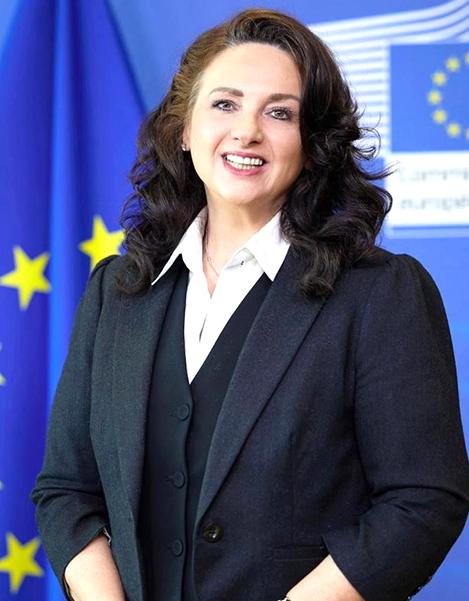
Helena Dalli is a former European commissioner and a former Labour cabinet minister.