Busy but empty? Challenging a generation living at full speed
Latest edition of 'Bible & Beer' series of talks explored why meaningful lives are built on purpose, not packed schedules
‘Busy but empty’ was the theme of the latest edition of ‘Bible & Beer’, an ongoing series of monthly discussions exploring the intersection between faith and contemporary life.
The event, held at the Missionary Society of St Paul’s Oratory in Birkirkara, was fully booked with young adults as it tapped into a reality many recognise all too well: calendars that are constantly full, careers that never seem to slow down, endless digital distractions, and the quiet question often underlying it all: is this really the life I want to be living?
The evening brought together three speakers: storyteller and film-maker Jon Mallia, economist and business leader Marisa Xuereb, and priest and youth coordinator Fr Giovann Tabone, MSSP, each of whom approached the subject from their own experience.
Mallia began by questioning the assumption that productivity automatically leads to fulfilment. Reflecting on his own life, he described how silence became the turning point that allowed him to rediscover who he really was. Rather than continuing to define himself by anxiety, fear or external expectations, he deliberately began rebuilding his identity from the inside out.
He explained that the decisions he makes today are no longer driven simply by opportunities or ambition, but by the kind of person he wants to become. He shared that becoming a father transformed the way he views success, and fatherhood became one of the defining aspects of his identity. Once he continued to discover his true identity, he could better clarify what to embrace and what to discard. His message was simple but powerful: busyness is often not the problem itself. The deeper issue is living without knowing who we really are.
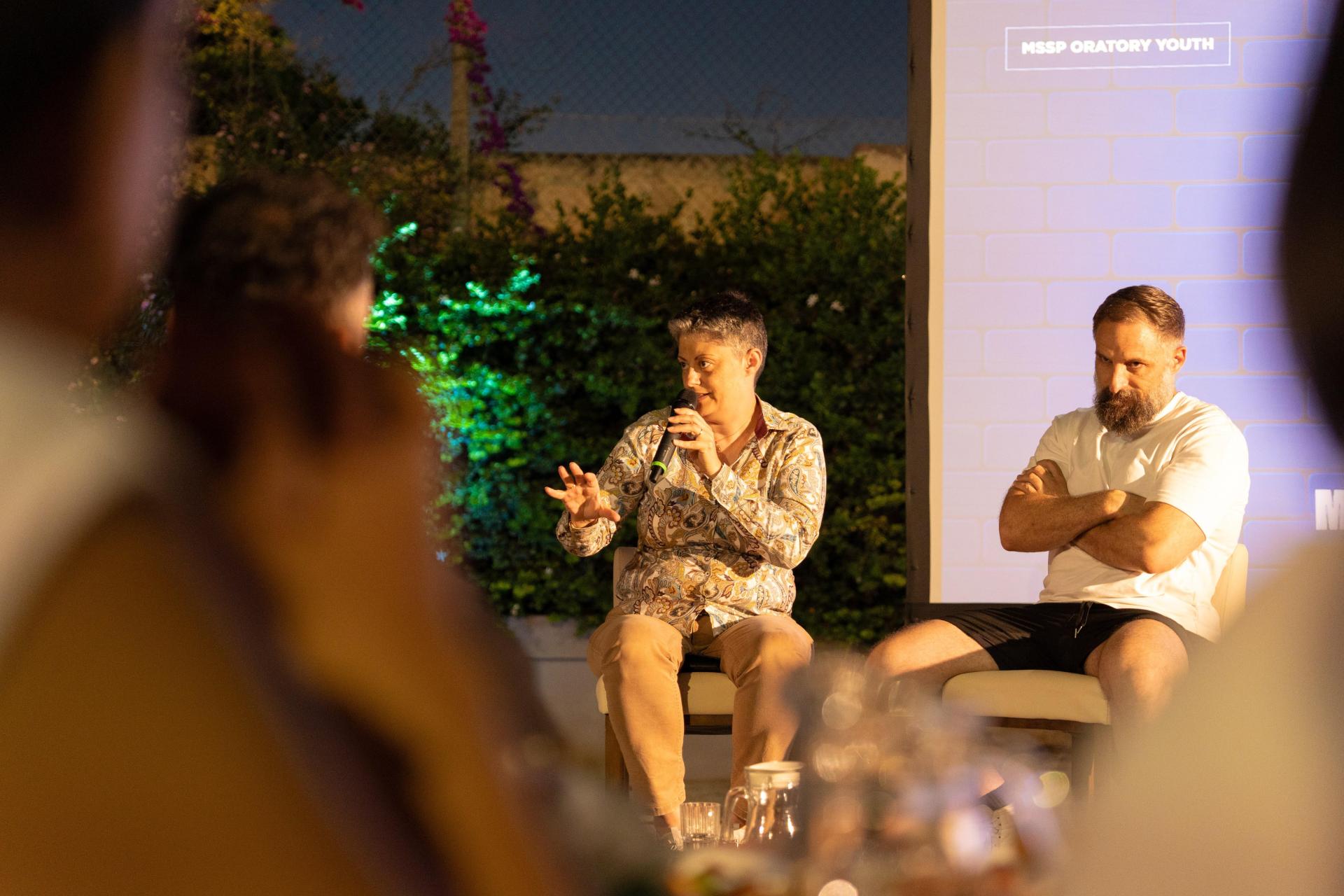 Speakers Marisa Xuereb and Jon Mallia.
Xuereb’s perspective was shaped by years of leading businesses and navigating demanding professional responsibilities. She argued that meaningful work can become one of life’s greatest sources of fulfilment; the question is not primarily how many hours we work, but whether our work contributes to something worthwhile.
She distinguished between work-life balance and what she described as a more realistic harmony between work and the rest of life. Work should not exist in competition with family, friendships, rest or personal growth, but should become one dimension of a well-lived life.
She also stressed the importance of making intentional decisions, reminding participants that many of the stresses people attribute to work actually arise from poor priorities or unhealthy expectations.
She also refleced on relationships. She suggested that the most important decisions many people will ever make is their choice of the right life partner. Shared values, mutual support and respect create the foundation that allows both people to flourish, even during life’s busiest seasons.
The goal of life is not to fill every available space in our calendars, but to discover what genuinely deserves our time and energy
Drawing from his pastoral work with young adults, Fr Tabone challenged what he described as the growing tendency to glorify busyness itself. Too often, he argued, saying “I’m busy” has become a badge of honour rather than a warning sign. The goal of life is not to fill every available space in our calendars, but to discover what genuinely deserves our time and energy.
Building on ideas from psychology, leadership and spirituality, he reflected on how fulfilment emerges when our work reflects our deepest values, when we are free to make meaningful choices, when we continue growing, and when what we do genuinely connects us with others.
Quoting thinkers such as Jeff Bezos and Simon Sinek, he suggested that the real measure of success is not how much we accomplish, but whether we can look back at the end of each day and honestly say that it was worth living.
He also challenged participants to recover something many have forgotten: the ability to rest. In a society that rewards constant activity, genuine rest has become increasingly difficult. Yet without moments of silence, reflection and stillness, people gradually lose contact with themselves. Faith, he argued, is ultimately not an invitation to keep doing more, but an invitation to find a space where the heart can finally come home.
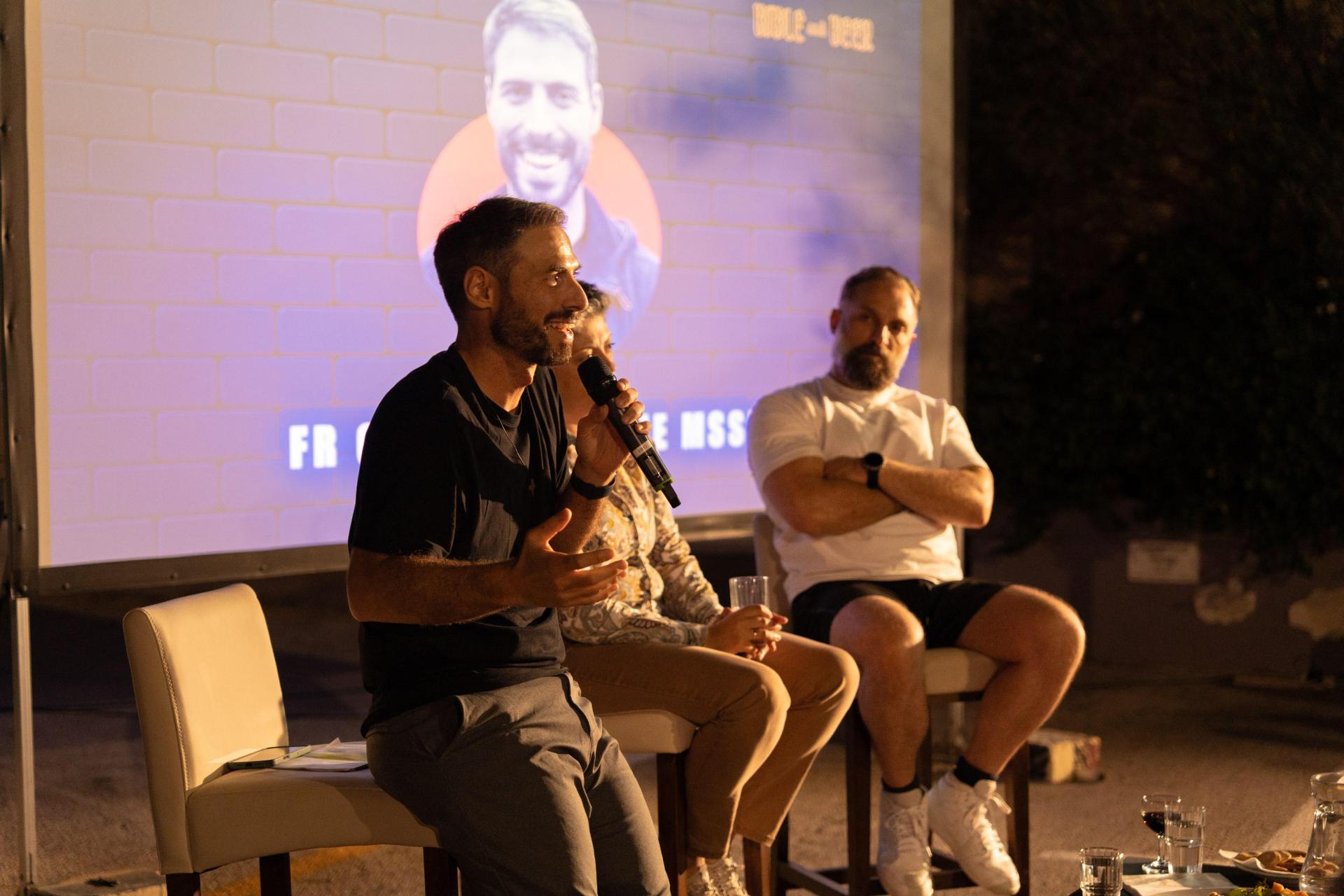 Fr Giovann Tabone, MSSP, addressing the audience.
Throughout the evening, a number of common themes emerged. Identity became the thread connecting the entire discussion. Participants were encouraged to discover who they truly were before allowing careers, expectations or social pressures to define them.
They were reminded that meaningful work should energise rather than consume them, that relationships deserve intentional investment, and that fulfilment often comes not by adding more to life but by having the courage to remove what no longer serves its purpose.
The discussion also explored fear, purpose and vocation. Several reflections centred on the reality that people frequently settle for less because they are afraid of pursuing what truly gives them life. The challenge was not simply to work harder, but to live more intentionally, making decisions that reflect one’s deepest convictions rather than external expectations.
The response from participants suggested that the evening struck a chord. Feedback highlighted the relevance of the topic, the honesty of the conversation and the practical wisdom shared by the panel. Many described leaving with a renewed desire to rethink their priorities, create space for silence and pursue lives shaped by purpose rather than pressure.
As one participant reflected afterwards, the evening was not really about work at all. It was about learning that the opposite of an empty life is not a busy one, but a meaningful one.
Bible & Beer sessions will return after summer. The series is organised by MSSP Oratory Youth and forms part of the community’s ongoing commitment to create spaces where young adults can engage honestly with questions shaping their lives, faith, and future.
This edition was partially sponsored by APS Bank.