You can’t invade your way to justice and peace
A Christian response to the illusion of redemptive violence, says Ivan Cauchi
There are moments when the world moves so abruptly that our moral compass struggles to catch up.
The sudden American military action in Venezuela is one of those moments. Supporters call it decisive. Critics call it reckless. Most people, understandably, feel confused. But beneath the noise lies a question that matters far more than geopolitics: Can violence ever truly deliver justice and peace?
From a Christian perspective, this is not a theoretical issue. It is the heart of our faith.
Venezuela has suffered terribly. Years of economic collapse, corruption, shortages and repression have drained the life out of ordinary families. Many Venezuelans are not asking for ideology; they are asking for food, safety, dignity and a future for their children. Anyone who claims to care about human suffering cannot ignore that reality.
Yet, history teaches us something equally uncomfortable: when powerful nations intervene by force, the poor almost always pay the price. Bombs do not fall on regimes. They fall on neighbourhoods. Blockades do not weaken presidents; they weaken hospitals, schools and kitchens. Even when the stated aim is liberation, the lived experience on the ground is often fear, disruption and deeper instability.
This is where Christian ethics becomes sharply relevant. The gospel never measures justice by who holds power. It measures justice by what happens to the weakest. Jesus did not ask which empire was more efficient. He asked who was hungry, who was excluded, who was crushed by systems too big to resist.
We are told that this intervention is about restoring order, fighting crime, defending democracy. Perhaps some of that is true. But when military action is coupled with talk of controlling resources, oil fields and national infrastructure, something darker enters the picture. It begins to sound less like rescue and more like ownership.
And that should trouble us because when suffering nations become strategic assets, their people are no longer neighbours – they become collateral.
When powerful nations intervene by force, the poor almost always pay the price- Ivan Cauchi
Christian faith does not allow that kind of moral shortcut. Justice, in the biblical sense, does not fall from the sky. It is built patiently through law, reconciliation, accountability and respect for human dignity. It is slow, frustrating and deeply unglamorous but it is the only kind that lasts.
Peace, too, is not simply the absence of a dictator. It is the presence of security, food, hope and trust. You cannot bomb a society into wholeness.
This is why the language of triumphalism now coming from Washington should make us uneasy. When military might speaks as though it alone can remake nations, history tells us what follows: resentment, resistance and cycles of violence that last generations.
Christians are called to something better. We are called to pray for the Venezuelan people, not as abstractions in a headline but as families with names and stories. We are called to demand humanitarian access, international law and genuine diplomatic engagement. We are called to reject the comforting illusion that brute force is the same thing as moral clarity.
Above all, we are called to remember that the Kingdom of God does not arrive in the downdraught of low-flying helicopters and armed extraction, however ‘clean’ the operation is made to sound.
It arrives wherever justice meets mercy, wherever power bows to humility, wherever the poor are treated not as obstacles or bargaining chips but as brothers and sisters.
In moments like this, that is the kind of justice and peace the world desperately needs.
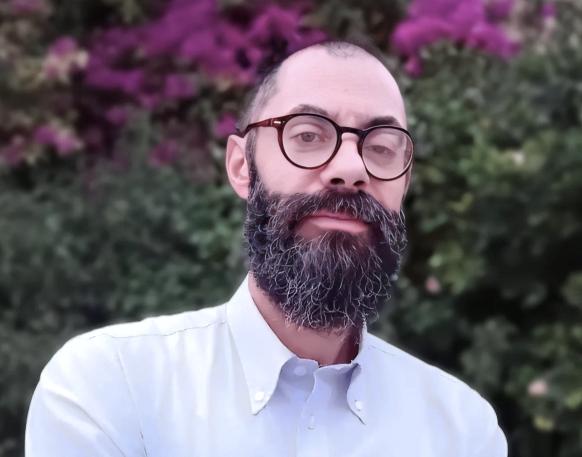
Ivan Cauchi is a lecturer in economics and public policy. He also serves on the Justice and Peace Commission within the Archdiocese of Malta and is actively involved in the lay community of the Missionary Society of St Paul (MSSP).