The Caracas precedent: might, right and the rule of law
Is the capture of one man, Nicolás Maduro, worth the sacrifice of the international legal order? For small states, the answer is a resounding no, says Omar Grech
The capture of Nicolás Maduro by United States special forces on January 3 has been framed by Washington as a triumph for justice. Yet, the initial global response has been characterised by much more mixed feelings. From the halls of the United Nations to the capitals of the Global South, the concern is clear: we are witnessing the dismantling of the post-war legal order. For a small, neutral state like Malta, the ‘Caracas precedent’ is a warning that the rule of law is being replaced by the rule of the strongest.
The US operation relied on a controversial legal theory: the ‘unwilling or unable’ doctrine. This doctrine posits that a state may use military force on the territory of another if the host government is either unwilling or unable to suppress a threat – in this case, ‘narco-terrorism’ – emanating from its borders.
By invoking this standard, Washington essentially declared itself the unilateral judge of Venezuelan sovereignty. For small nations, this is a terrifying shift; it suggests that our borders are only as secure as our perceived ‘effectiveness’ in the eyes of others.
This doctrine feeds into a radical expansion of the right to self-defence under article 51 of the UN Charter. By labelling criminal activity as an “armed attack” on the US, Washington is attempting to treat the serving of an arrest warrant as a military trigger. However, international law recognises no such exception to the prohibition on the use of force.
In its judgments, the International Court of Justice has been unequivocal: the existence of criminal activity emanating from a state does not constitute an “armed attack” justifying a military invasion. By bypassing the rules of international law to perform a ‘snatch-and-grab’ in a foreign capital, the US has unilaterally violated the territorial integrity of a state.
This violation of territorial integrity was the precursor to a second breach of a well-established rule of international law: the circumvention of the immunity afforded to a head of state. This move probably relies on a deeply flawed historical analogy.
US prosecutors may currently be leaning on the 1990 trial of Manuel Noriega. But the comparison is a legal mirage. Noriega was a military commander who never held the constitutional title of president of Panama. Maduro, by contrast, occupied the highest office of a sovereign state recognised by the United Nations.
The US argument – that it can simply “de-recognise” a leader to strip them of their legal protections – would leave every world leader vulnerable to the domestic courts of their enemies. If ‘recognition’ is the only thing that confers immunity, then international law is no longer a set of universal rules but a discretionary tool of foreign policy.
For small, neutral nations, the UN Charter is our only security infrastructure- Omar Grech
This exact issue was addressed just months ago, in July 2025, by the French Court of Cassation (Case No. 24-84.393). In a landmark ruling regarding the former Syrian president, Bashar Al Assad, France’s highest court reaffirmed that the immunity of a sitting head of state is an “objective status” rooted in international custom.
The court ruled that this immunity is absolute and cannot be waived by another state’s refusal to recognise the leader. The French ruling reminds us that immunity is not a gift for “good behaviour”.
It is a procedural “stop sign” intended to prevent the international system from collapsing into a series of retaliatory arrests.
Accountability for the crimes of the Maduro administration is a moral necessity. But the path to that justice lies in The Hague. The International Criminal Court (ICC) was built for this exact purpose: to navigate the tension between sovereignty and accountability through a multilateral mandate. The Maduro regime certainly committed crimes and, in fact, the ICC has been investigating them. That is the proper multilateral forum for holding leaders to account.
Why should this matter to a Maltese reader? Because for small, neutral nations, the UN Charter is our only security infrastructure. Our sovereignty depends on the principle that borders are sacrosanct and that military might does not grant the right to act as a global vigilante.
If we allow ‘narco-terrorism’ or ‘state failure’ to justify an invasion today, what prevents a regional power from defining a different ‘threat’ to justify an intervention in our own neighbourhood tomorrow?
When the rules become elastic, they cease to be rules; they become mere justifications for the exercise of power.
When a superpower chooses a unilateral military path over a multilateral legal one, it destroys the very legal system it claims to defend.
The Caracas operation may have removed a dictator but it has left a crater in the UN Charter.
We must ask ourselves: Is the capture of one man worth the sacrifice of the international legal order?
For small states, the answer is a resounding no.
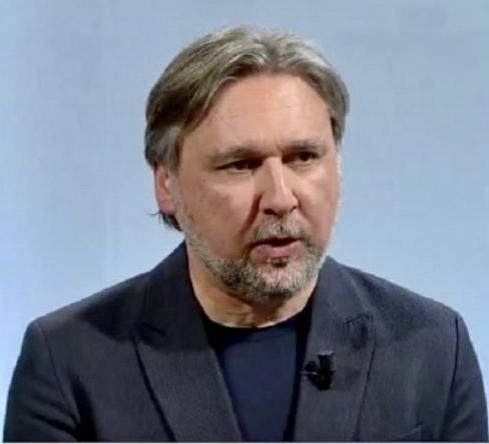
Omar Grech is associate professor of international law at the University of Malta.