‘CARE-OMICS’: cracking the Maltese genome to tackle rare diseases
A focus on mitochondrial and neuromuscular disorders
The Malta Human Genome Project supported by the Malta Council for Science and Technology (now Xjenza Malta) served to map Maltese DNA to advance understanding of health and disease, in particular, certain rare congenital diseases of blood.
Building on this foundation, the CARE-OMICS “Comprehensive Approach for Rare Diseases Employing Multi-Omics Strategies” project is intended to combine multi-omics and bioinformatics to provide insights for the management of rare diseases.
In CARE-OMICS REP-2024-067 – financed by Xjenza Malta, through the FUSION: R&I Research Excellence Programme –multiple layers of biological data, including DNA, expression of genes and biochemical reactions, will be integrated to understand how cells work in relation to health and disease.
At the heart of the project is a focus on mitochondrial and neuromuscular disorders – diseases that are tricky to diagnose and often lack treatments. By comparing data from healthy individuals and affected patients, the team hopes to spot biological “switches” that could be flipped with future therapies.
Scientists are building a high-resolution ‘map’ of the Maltese reference genome known as ‘eMalta’, using whole genome sequencing and SNP arrays, right down to the mitochondria, and the X and Y chromosomes.
When assessing whole genome sequencing data from rare disease patients, having such a reference genome specific to the Maltese population may prove crucial. In a population-wide library of genetic variants, it becomes much easier to flag specific variants as common, and thus likely benign, within the Maltese population. The data will also help us understand the genetic impact of historical events and population movements that shaped the Maltese gene pool.
Without such a reference genome available, it is possible that harmless population-specific variants, that would be absent from global variant databases, would be wrongly considered as possibly pathogenic for a particular disease. Indeed, it is known that such global population variant databases (such as gnomAD) under-represent small populations, leading to false positives in such small populations as a result.
The best approach for rare disease variant investigations, especially in small countries such as Malta, normally involves searches against both global and local variant databases, with multiple samples from rare disease patients where possible. This allows researchers to hone in on possible variants of interest, which should be present in all patients with a positive disease diagnosis and absent in the Maltese (and likely also global) population references.
Maria Vella is a PhD student in Applied Biomedical Science and a research support officer II for the CARE-OMICS project at the Faculty of Health Sciences, University of Malta. Josef Borg completed a PhD in astronomy at the ISSA in the University of Malta and is currently a post-doctoral researcher in space biology at the Faculty of Health Sciences. Joseph Borg is a leading biomedical scientist spearheading groundbreaking research in genomics and space bioscience. He is also the principal investigator for the CARE-OMICS project. Alex Felice is a senior fellow at the University of Malta.
Photo of the week
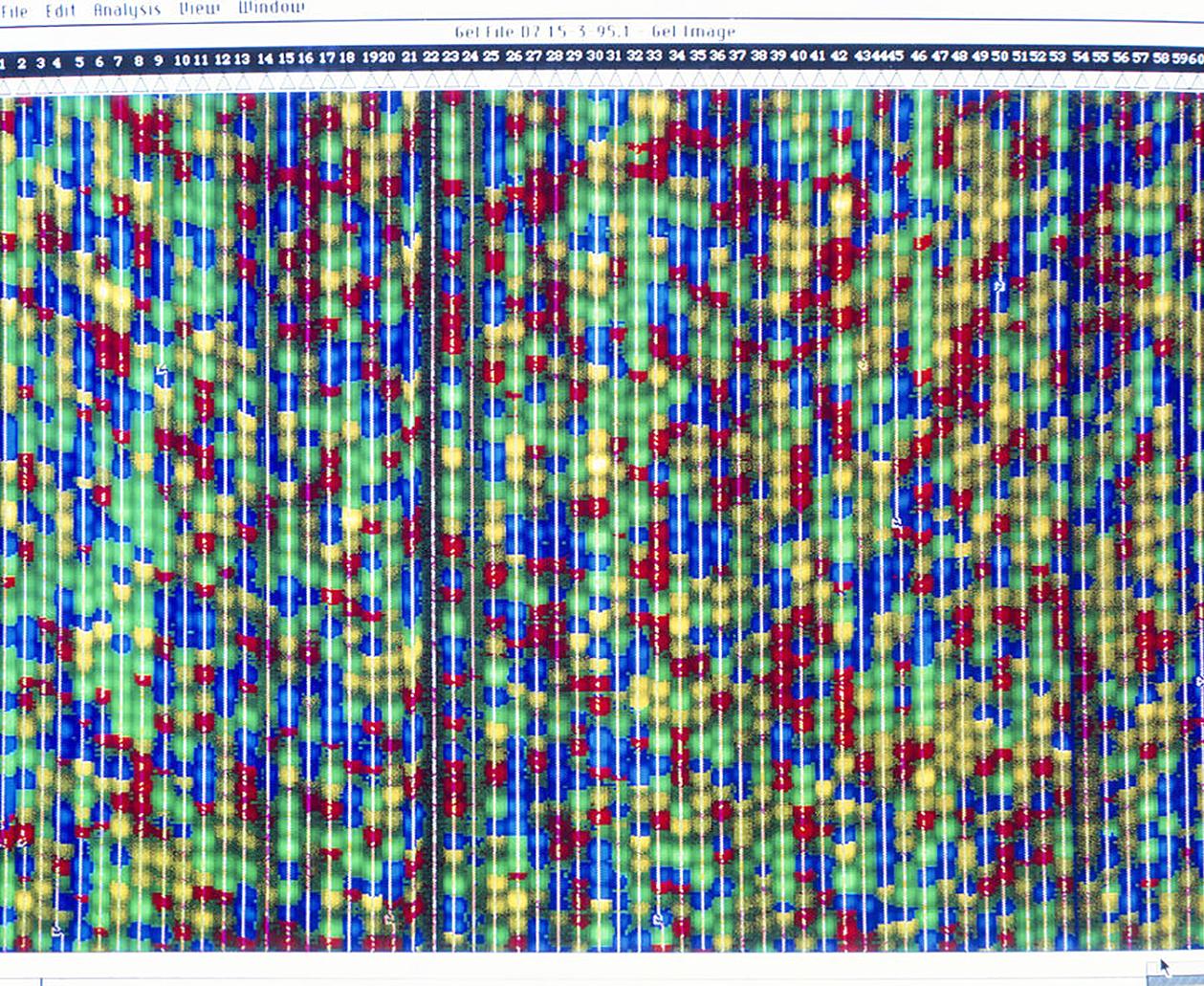 Photo: Science Photo Library
DNA sequencing: A computer display of a DNA (deoxyribonucleic acid) sequencing pattern showing in colour the four chemical bases in DNA. The bases in DNA are repeated millions of times along the molecule, with their sequence spelling out in code form the entire set of genes (the genome) in an individual. Working out the base-sequence of specific fragments of DNA allows genes to be identified and their function established.
Sound Bites
• Haematology in space: Unveiling blood and immune system changes under extreme conditions. At the 2025 European Haematology Association Congress, researchers highlighted spaceflight as a powerful model to study human physiology. Microgravity and other stressors impact blood and immune systems, offering insights into red blood cell production, gene regulation and immunity. These findings inform astronaut health and shed light on blood disorders like haemoglobinopathies, advancing precision medicine. For Maltese-led spaceflight research, see DOI: 10.1038/s41467-024-49289-8.
For more sound bites listen to Radio Mocha every Saturday at 7.30pm on Radju Malta and the following Monday at 9pm on Radju Malta 2 https://www.fb.com/RadioMochaMalta/.
DID YOU KNOW?
• Rare diseases affect around 300 million people globally, often going undiagnosed due to complex genetic and environmental factors. While challenging, this complexity opens doors for discovery. Advances in genomics and multi-omics are uncovering disease mechanisms and guiding new treatments, benefitting both rare disease patients and wider healthcare.
• Your cells carry two genomes: nuclear DNA, the “main hard drive,” and mitochondrial DNA, the “power pack”. Nuclear DNA, inherited from both parents, directs growth and function, while maternal mitochondrial DNA powers the body. Mutations in either can disrupt vital organs. Together, they are the blueprint and battery of life.
For more trivia, see: www.um.edu.mt/think.