Change of direction – a must
The Labour government is incapable of changing direction. It lacks ideas, and it is outdated, says Noel Muscat
Times, fashion and trends change continually. Due to the rapid advancement in technology, economies like ours need to adapt to change and if we are not swift enough, we will lose our competitive edge. This may have severe consequences on Malta’s well-being.
Malta’s economy was created after independence and its main pillars were tourism, manufacturing and education.
Subsequent Labour governments failed to invest in modern technology and infrastructure and they drove the economy to an absolute standstill. We lacked power and adequate water supply, our telecommunications sector was in shambles, education was shamefully dismantled and humiliated and manufacturing industries were based on labour-intensive production. Foreign investment evaporated.
Unemployment soared and the government’s only solution was to introduce para-military corps like the Dejma, the Pijunieri and Dirgħajn il-Maltin. Free trade was replaced by bulk buying and quota restrictions were imposed on the importation of cars and other goods. Wages and pensions were frozen. Violence and terror were the order of the day. Gloom reigned imperiously.
Yet, the socialist government clung on to power and it ridiculed democracy by governing with a minority of votes. It found solace in communist dictators and Malta depended heavily on aid received from Muammar Gaddafi. They used to scare one and all by claiming that if the Nationalists were elected to power, Libya would stop offering Malta preferential oil prices. On two occasions, the Labour Party had invited Gaddafi to address their mass meetings.
The Nationalist Party never lost faith in Malta’s potential and, once back in power in 1987, it hit the ground running and, in a few years, the PN upgraded Malta’s infrastructure to acceptable and competitive levels. Friendship with western democratic countries was restored, education was once again given the importance it deserved and democracy flourished. A new power station, a new airport and several reverse osmosis plants were built. The best telecommunications system was introduced and the Freeport started functioning in earnest. Tourism was upgraded and modern technology was introduced.
Malta became a normal country once again and it was now in a position to proceed with its application to join the EU. Several changes were made to make Malta eligible to join the EU and one of these measures was the introduction of VAT in 1995.
Labour claimed that they were not in favour of Malta joining the EU and they preferred Malta to be a ‘Switzerland in the Mediterranean’, whatever that meant. Before the 1996 general election, Labour insisted that they would freeze Malta’s application to join the EU and VAT would be removed. Labour succeeded to convince the electorate and they were returned to power.
Prime Minister Alfred Sant kept his word and Malta’s application to join the EU was frozen, VAT was removed and it was replaced by a new tax called CET. Confusion reigned galore, political problems mounted and economic trouble was looming. After just 18 months in power, the government resigned and the Nationalist Party won the election of 1998.
The strain on our infrastructure has become disproportionate and increasingly untenable- Noel Muscat
The new PN government lost no time in reopening negotiations with the EU. It started preparations to upgrade and modernise the economy by introducing new sectors such as the financial services, maritime industry, aeronautical engineering and industries driven by modern technology. Foundations were laid to give tourism a boost. Loss-making government-owned industries were shut down, education reinforced and MCAST reopened to prepare our students to work in these new sectors. Emphasis was laid on the environment and open spaces.
Eventually Malta did join the EU and the country’s economy flourished. The re-introduction of VAT and free trade dismantled barriers and paved the way for new businesses to prosper in the vast EU market. Valletta, Mdina and Vittoriosa were restored to their former glory. Finally, parliament had its own premises designed by a world-renowned architect, Renzo Piano. Bastions were cleaned and road networks were built. After only four years as members of the EU, Malta succeeded to introduce the euro.
During the run-up to the 2013 general elections, Joseph Muscat, who had fiercely opposed Malta’s entry in the EU, convinced the electorate that the Labour could do much better than PN and it was returned to power.
Unfortunately, the new government immediately lost the promised road map, ditched all the undertakings that had been made and started working in earnest on three sectors that were not included in their electoral manifesto: the sale of state hospitals, the sale of Enemalta and the sale of passports. The electorate had been duped. Corruption became the order of the day and an investigative journalist was brutally murdered.
Muscat, now prime minister, his right-hand man, Keith Schembri and Minister Chris Cardona were forced to resign. The once super minister Konrad Mizzi vanished from the political scene. The government was confused and alienated and its only solution to manage the economy was the easy way out and that was an uncontrolled increase in the population.
We all know that Malta is the most densely populated country in Europe after Monaco, itself cushioned by the open expanses of the French Riviera. We also know that an economy driven relentlessly by numbers and volume is unsustainable on an island of Malta’s size. The strain on our infrastructure and the ever-rising cost of sustaining such growth have become disproportionate and increasingly untenable.
Yet, this has been the government’s singular focus and it is afraid and incapable of changing direction. This government is as stale as moulded bread; it lacks ideas and it is outdated. It resembles the Nikolaus.
A change of direction is a must. We simply cannot keep turning our face the other way and pretend that we are on the right track. We must have the courage to change tack. The PN, under the leadership of the energetic and visionary Alex Borg, is prepared and determined to do this. Just like PN governments transformed Malta’s economy in the 1960s, 1980s and after the millennium, the PN government in waiting is now geared, poised, determined and prepared to lead Malta into the future with a modern and slick economy.
We need quality and not quantity. We need high-yield industries and not labour-intensive ones. To overcome the cost of living, we need jobs that will pay better salaries. This country needs to be run efficiently. And an adjourned and forward-looking education system is master key to this.
We need Malta as we knew it – a Malta where people live well. We need to generate prosperity that truly reaches everyone. We need strong communities. We need a government that takes care of you. We need Malta to be ready for tomorrow.
Together we are capable of doing this. There are no options; change is a must.
 N
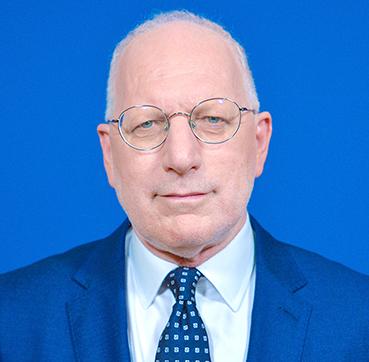
NNoel Muscat is the mayor of Swieqi.