Children raising themselves: Report warns of neglect and 'digital babysitters'
The Blossom Project has supported over 8,000 children in 12 schools over the past decade
A girl keeps asking her school counsellor to adopt her because she thinks she is a burden to her parents. Another child wakes herself up and gets ready for school alone, often arriving late.
These were some realities that emerged through a report launched on Monday by The Blossom Project, a Malta Trust Foundation initiative founded 10 years ago to provide psychosocial support to students in 12 schools.
The report paints a picture of children facing issues of neglect and abandonment — some children go to school hungry, they rely on “digital babysitters” for company when spending long hours home alone as parents work long hours, explained Bernadine Satariano, who compiled the report presented during a conference titled 'From Insight to Impact: Making Student Wellbeing a National Priority.'
A lack of awareness from the parents emerged as one counsellor quoted in the report said: “As children grow older, especially in Grade 5 and 6, neglect seems to increase. Parents feel the children are old enough to fend for themselves but they are still too young.”
Another counsellor said: “There are situations that truly terrify me, like when parents leave a 16-year-old with a 10-year-old… we are confronted with signs of incest, and sadly, this isn’t rare.”
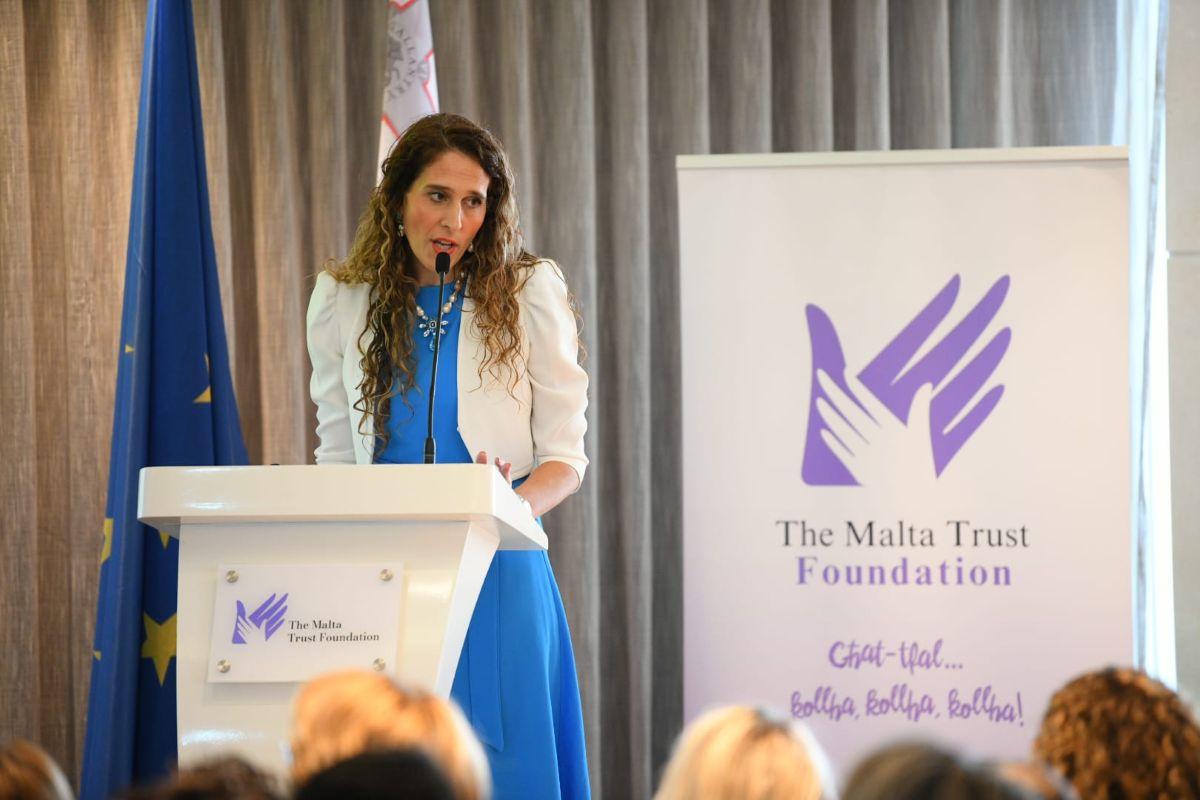 Bernardine Satariano. Photo: Matthew Mirabelli
The study analysed data from cases seen by the psychosocial team between 2023 and 2024, along with qualitative interviews from the previous year. During the year 2023-2024, the team saw 626 children, amounting to 4,873 interventions.
Demand for the service was overwhelming, and time was limited within the academic year.
Children’s educational issues often intensified in Years 4 and 5, when exam pressure began to rise, and again during MATSEC years. Most cases referred involved family problems and emotional regulation difficulties such as anxiety, anger, and low self-esteem.
Behavioural issues frequently reflected deeper emotional struggles, while social and relational problems became more prominent in secondary school. These issues appeared across all family types — nuclear, single-parent, and blended families — though family support often made a significant difference.
Boys tended to struggle more with behavioural challenges, while girls more often sought help for friendship and emotional issues.
Raised by devices
The report also noted that many children are effectively being “raised by devices.” Laptops and mobile phones have become digital babysitters, exposing children to harmful content and online abuse.
With no one present at home, some children miss out on extracurricular activities, while others spend increasing time outdoors unsupervised, sometimes forming gangs. The findings underline an urgent call for systemic change — to protect children, support parents, and make student wellbeing a true national priority.
Discussions during the conference also revealed the need for more investment in professionals to serve more children in more schools.
“We are living in a time of timetables and slots. People talk about ‘quality time’ with kids, but we need to truly be with our children, not just schedule them into our lives."
Speaking during the conference, chair of the Mental Health Services Anton Grech remarked, “We are living in a time of timetables and slots. People talk about ‘quality time’ with kids, but we need to truly be with our children, not just schedule them into our lives. We have to live the journey together. Children feel this — we need a culture that reflects it.”He also spoke about the need to introduce a strong culture of time limits on screens.
Roberta Attard, from the University of Malta’s Department of Counselling, stressed on the need for parental supervision when a child was using a device. She said that one of the biggest issues in small children was the lack of empathy.
Since its inception, Blossom — founded by Her Excellency Marie-Louise Coleiro Preca under The Malta Trust Foundation — has supported more than 8,000 schoolchildren, becoming one of the foundation’s most impactful initiatives.
Coleiro Preca emphasised that the mental wellbeing of students must become a national priority. “This is not charity but a right of the children and our moral obligation. How can we talk about increasing the birth rate if we are not caring for the children we already have? We need more psychosocial professionals in schools and greater investment in counselling.”
Lydia Abela, the prime minister's wife, noted that the findings reflect what she has witnessed as a lawyer, a mother, and in public life. “Once, during a visit to a primary school, a 13-year-old girl told me she wanted to end her life because she felt unheard and alone. It was heartbreaking.”