Christian spirituality: The Bread of Life
Combining faith with reason, Catholics are called to live out their belief in the Eucharist through reverence, charity, and witness
The sacrament of the Eucharist is central to the Christian faith. At every mass, the miracle of Transubstantiation occurs, where the bread and wine become the actual body and blood of Christ, even though their physical appearance remains unchanged.
This belief of the real presence of Christ in the sacred host is rooted in his words at the Last Supper when he said: “Very truly, I say to you, unless you eat the flesh of the Son of Man and drink his blood, you do not have life within you. Whoever eats my flesh and drinks my blood has eternal life, and I will raise him on the last day.” (John 6:53-54)
This teaching is a challenge to many. Shockingly, around 60% of Catholics struggle with or deny this doctrine, undermining the Church’s authority in proclaiming Christ’s message. Yet, for devout Catholics, receiving Christ’s body through the Eucharist is a sacred experience. First of all, they recognise that they must be in a state of grace, achieved through sincere repentance and the sacrament of Confession. This exercise demands rigorous self-examination, acknowledging sin, seeking forgiveness, and striving for holiness.
Catholics must live authentically, avoiding hypocrisy or scandal that could discredit their faith and hinder the spreading of the Good News.
In a secular world that often denies the spiritual, science is increasingly offering support
Thankfully, Catholics are not without means to defend their faith. In a secular world that often denies the spiritual, science is increasingly offering support. The growing body of scientific evidence and research on recorded Eucharistic miracles is shaking even the most hardened sceptics and helping to reveal the profound mystery of the Eucharist. These studies validate aspects of faith once thought to be purely mystical.
And here, Carlo Acutis (1991-2006) comes into play thanks to his astonishingly great devotion to the Eucharist. This led him to create a website documenting over 100 Eucharistic miracles, one dating back over 1,300 years. His passion for sharing these stories was an invitation for others to explore the reality of these miraculous events.
The oldest and most well-known Eucharistic miracle occurred in Lanciano, Italy, where a consecrated host transformed into human heart tissue. The findings are amazing: there is no trace of preservatives; the collected blood is type AB, the same as found on the Shroud of Turin; the proteins in the blood are similar to those in fresh human blood; such proteins do not last more than half an hour but they are still there 1,250 years later; and it continues.
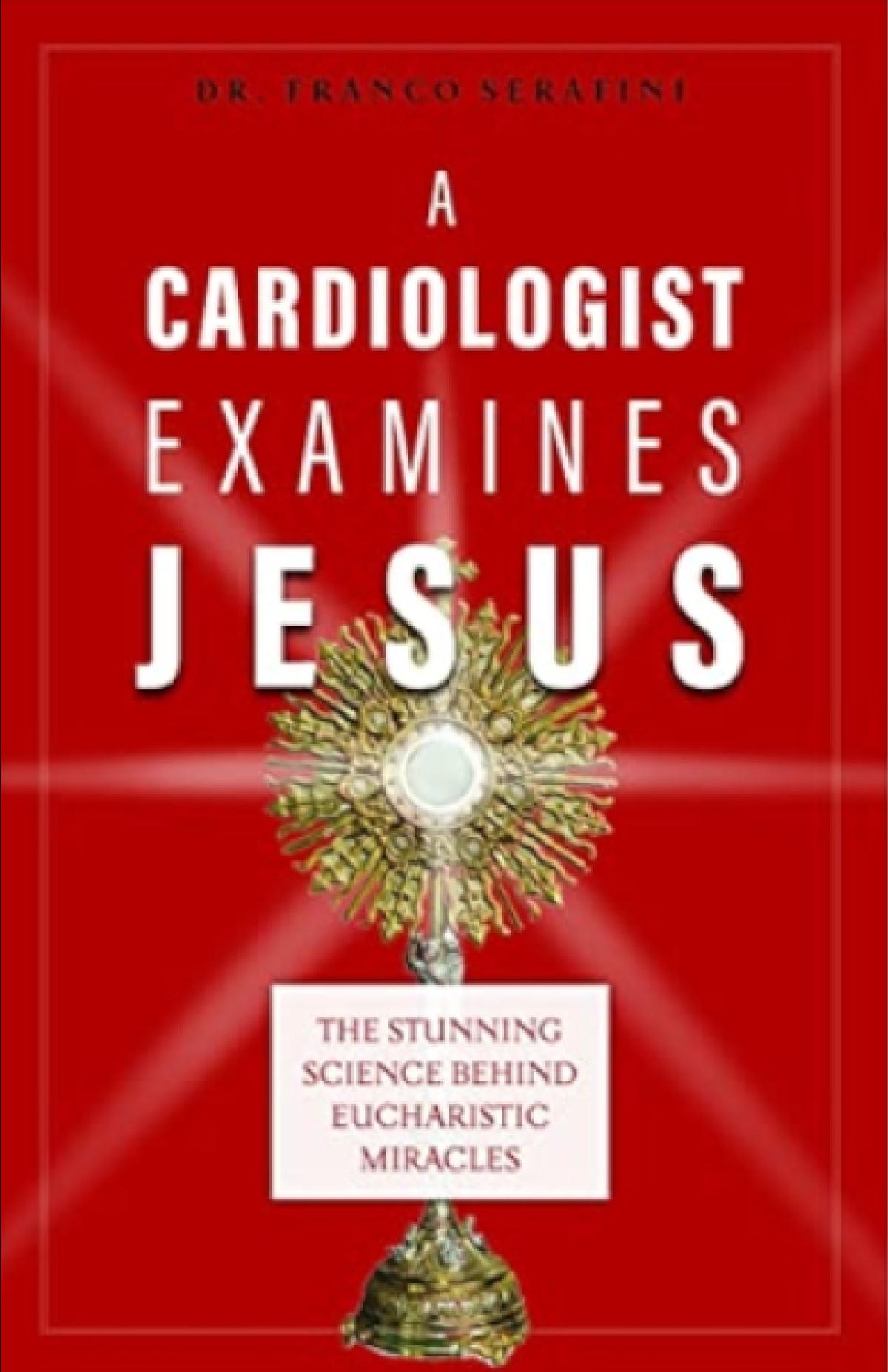 A Cardiologist Examines Jesus: The Stunning Science Behind Eucharistic Miracles, by Dr Franco Serafini.
This prompted Dr Franco Serafini, using the latest technology, to investigate in great depth five Eucharistic miracles, four of which took place within the last 30 years. Incredibly, there was concurrence in all the studies on the heart tissue and blood specimens, to a degree of probability beyond imagination. In 2021, he published his findings in a book titled A Cardiologist Examines Jesus: The Stunning Science Behind Eucharistic Miracles, dedicating the book to Carlo Acutis.
This compelling amount of evidence, supported by the expertise of medical and scientific professionals, is now widely accessible through the internet.
With faith and reason, Catholics are called to live out their belief in the Eucharist through reverence, charity, and witness.
Armed with the truth, Catholics can help others discover the miracle at the heart of their faith – the Bread of Life.