‘Ciao Ciao’: sharp, witty and downright hilarious
The cinematography embellished the narrative of the story
If someone were to ask me to describe Maltese culture, a cocktail of sounds, colours and smells would come to my mind: the small hops I make on the sizzling sand of Għajn Tuffieħa in July; eavesdropping on elderly women gossiping over tea in a village café; the oily residue left on my fingers after devouring a flaky, crunchy pastizz.
The last thing that would come to mind is the Maltese habit of taking a lifetime to say goodbye – how, as a nation, we never say one “ciao” and leave, but rant on, starting new conversations despite having one foot out the door.
Ciao Ciao delves into this overstretched goodbye and its consequences.
I was invited to the film’s premiere last week, and with a big bucket of popcorn in hand, I settled into my seat, eyes glued to the screen, eagerly awaiting a good giggle.
It wasn’t just a giggle I had. Shortly from the start, the theatre was filled with roars of laughter.
The film is directed by Keith Albert Tedesco, the mind behind Uwijja and Serena. Tedesco teamed up with star actors Antonella Axisa, Chris Dingli and Mikhail Basmadjian to co-write the script.
Ciao Ciao opens with two old school friends, Charlotte (Axisa) and Jessica (Simone Spiteri) catching up at a dinner party with their husbands.
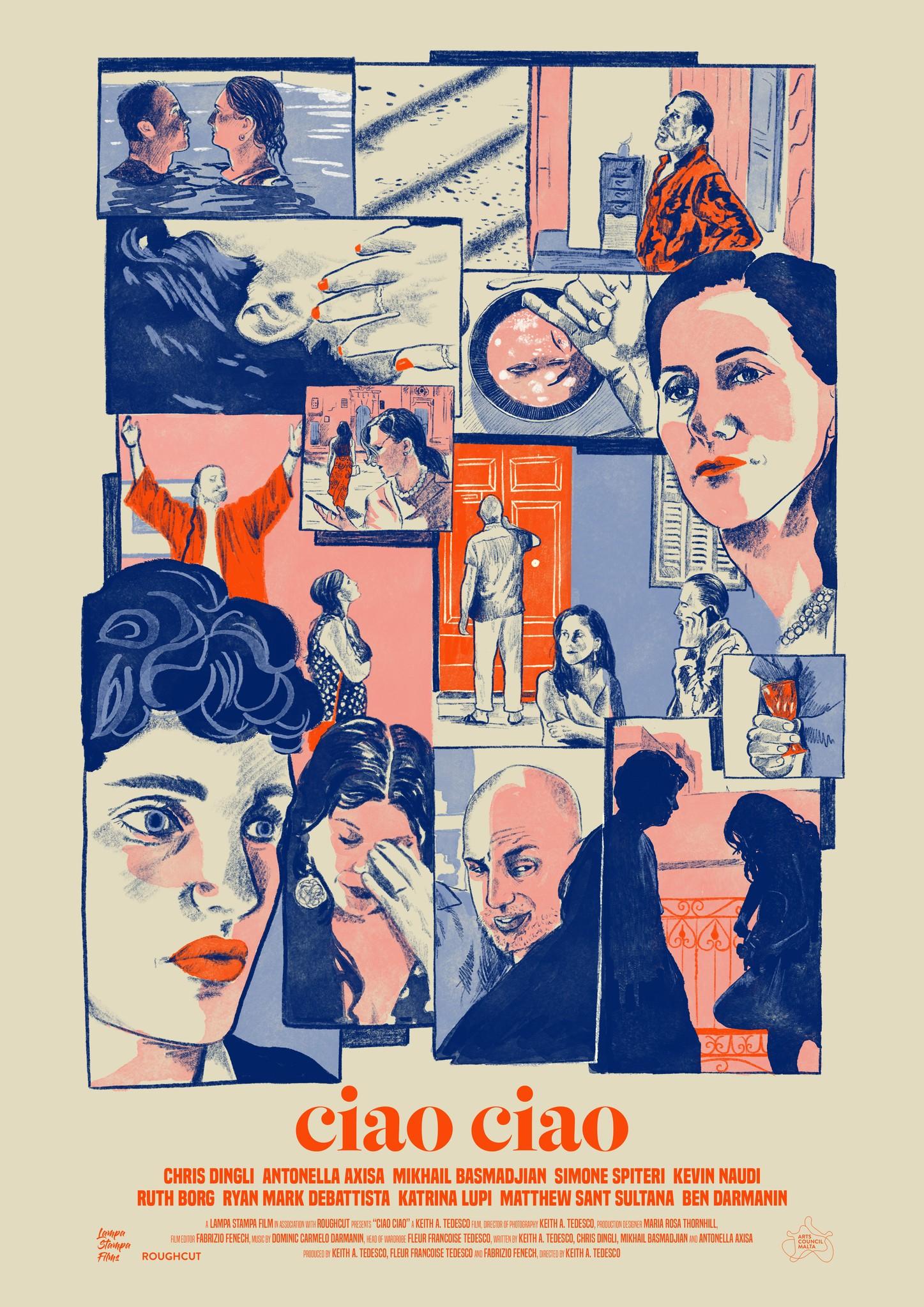 The poster designed by Moira Zahra
Despite good intentions, the evening is full of hiccups and tense discussions on the three forbidden dinner topics: sex, one’s earnings and family.
Jessica’s partner Sam (Dingli) is a character we know all too well: an introvert who would prefer to be anywhere but at an awkward dinner making small chit-chat with Victor (Mikhail Basmadjian), whose life goal it seems is to show off how much better he is than everyone else.
Filmed using a Mamiya photo lens, the first thing that caught my attention was not so much that the film is in black and white but, more so, the camera angles used.
The cinematography embellished the narrative of the story, with the clever use of the camera focusing on even the slightest facial expressions – an eye-roll, a smirk. Tedesco managed to perfectly capture the awkward chit-chat as a fourth goodbye was being exchanged.
It was the script that was the true showstopper
One scene that had the theatre roaring with laughter was between Dingli and Basmadjian as they discussed a painting. Basmadjian’s one line, Dingli’s facial expression and the pause on the painting was cinematic gold.
It’s easy to say that the performance of their tense but comical exchanges was one of the film’s unforgettable moments.
While I marvelled at the camera angles, it was the script, mostly in Maltese, that was the true showstopper. It is sharp, witty and downright hilarious, with smart one-liners that cracked everyone up.
As the dinner party unfolds, the polite smiles and friendly comments fade away into total chaos. But the last thing I want to do is to spoil the fun. Hence, I will hold my tongue.
Apart from the dinner party, there are two separate stories being told, one of these involving two youngsters who click over their love of music. While relatively short scenes, actors Ryan Debattista and newcomer Katrina Lupi have fantastic charismatic energy on screen.
Another storyline centres around Michael Bufto (Kevin Naudi) who we find is literally on the edge (pun intended) of a breakdown, until he meets a woman (Ruth Borg) who makes his evening a truly eventful one.
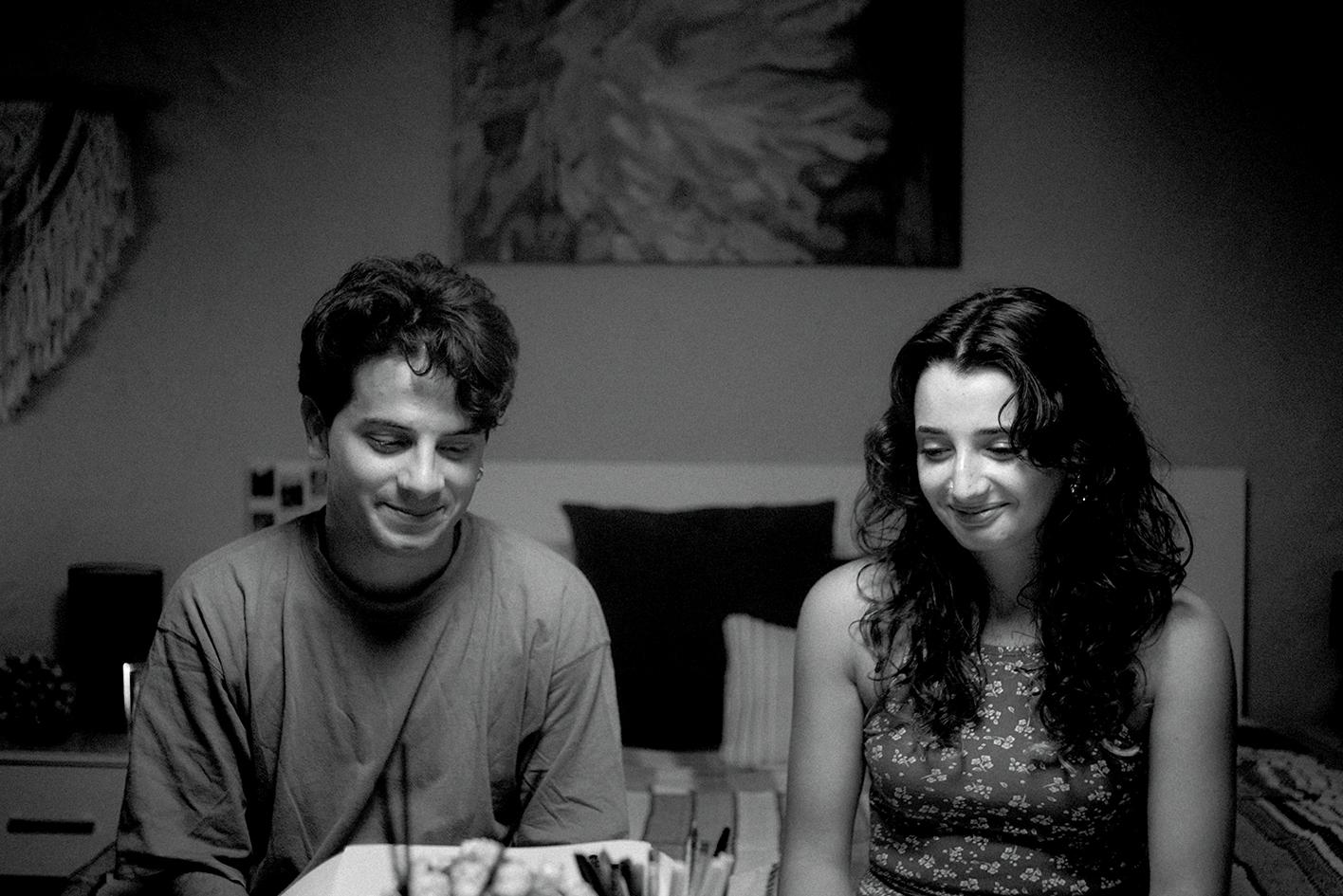 The tragicomedy is split into three storylines, each intertwined cleverly to create an unusual story.
While Naudi is best known for his stand-up comedy, he provides an outstanding performance as his character is both truly relatable and hilarious.
Ciao Ciao’s unexpected twists and turns leave the audience at the edge of their seat, curious to see how the three separate stories all connect.
It’s been a while since I watched a film that kept me both guessing until the very end and laughing wholeheartedly.
The combination of comedy and tragedy echoes the Woody Allen-film style, a film with a fantastic dialogue, sharp-one liners and an eye for detail in the cinematography.
The decision for the film to be mostly in Maltese but casually dropping English phrases also got a solid nod of approval, as it reflects how many natives speak in every day, making it more realistic.
Tedesco, the actors, producers and crew also deserve an applause at the fact the filming took place over a period of just 10 days last year. What could have only been a very stressful and hectic period delivered a beautiful, magical and much-needed production in Maltese cinema.
One cannot deny Malta is beaming full of local talent and fantastic stories to be retold, and Ciao Ciao is a fantastic example of what happens when you have a great story, good direction and a pool of amazing actors.
Ciao Ciao was supported by Arts Council Malta, part-financed by Lampa Stampa Films in collaboration with Roughcut pictures. The film is being screened across Malta and Gozo until April 5.