Where does the Merill nest? Public asked to keep an eye on national bird
Citizen science project helps to shed light on habits of Malta’s national bird
A pair of ornithologists are roping in members of the public in an attempt to learn more about the movement and behaviour of the Blue Rock Thrush (il-Merill), Malta’s national bird.
Merilli Malta is a citizen science project created by Marie Claire Gatt and Benjamin Metzger in 2022.
The project uses colour-ringing - a research technique that allows for uniquely marked wild birds to be identified by an alphanumeric code printed on the ring without being recaptured.
 Marie Claire Gatt (left) and Benjamin Metzger, the scientists behind Merilli Malta.
After Gatt, Metzger and other trained ringers fit the rings onto the birds, anyone who photographs a Blue Rock Thrush wearing such a ring can fill in a form on the project’s website, with details such as when and where the bird was observed, as well as its sex.
Birds ringed in Gozo are given yellow rings, those ringed in Malta have white rings, and those ringed on Comino have blue ones.
Speaking to Times of Malta, Gatt explained that because the system uses colour rings with a code instead of standard metal ones, spotting and identifying individual birds does not have to be done solely by professionals.
“Anyone with a camera that can photograph a bird from a distance can participate. The project essentially gives us more eyes and provides us with observations from places that we don’t visit regularly,” said Gatt, adding that around 280 birds have been ringed so far.
Members of the public do not have to be avid photographers to take part – they can also inform the project of nest sites or birds that appear to be exhibiting nesting behaviour
Gatt said the project was helping to fill in knowledge gaps about the bird, which became Malta’s national bird in 1971, partly in response to its exploitation as a caged bird, prized for its song.
“The major unanswered question has to do with the bird’s movements, both within Malta and externally. Across the species’ wider range across the world, some populations are resident while others are migratory, moving south for the winter, but it is unclear which category Malta’s population falls into.”
Gatt said the project is already beginning to challenge assumptions about the species’ behaviour, particularly in places where the birds were thought to be far less common than they actually are.
“Before the project began, if a birdwatcher had been asked how many Blue Rock Thrushes nest on Manoel Island, they might have guessed one or two pairs. However, observations on the island show around 40 birds.”
The birds on the island also appear to be protective of their territory, with at least six separate territories documented on Manoel Island.
“The birds there are definitely not migrating. They have a home base and defend it,” Gatt said.
Public sightings have also helped trace individual birds beyond the areas regularly monitored by the researchers. In one case, a bird often observed at Wied il-Għasel was later photographed about a kilometre away in the fields of Burmarrad, suggesting it had moved away from its usual area to forage.
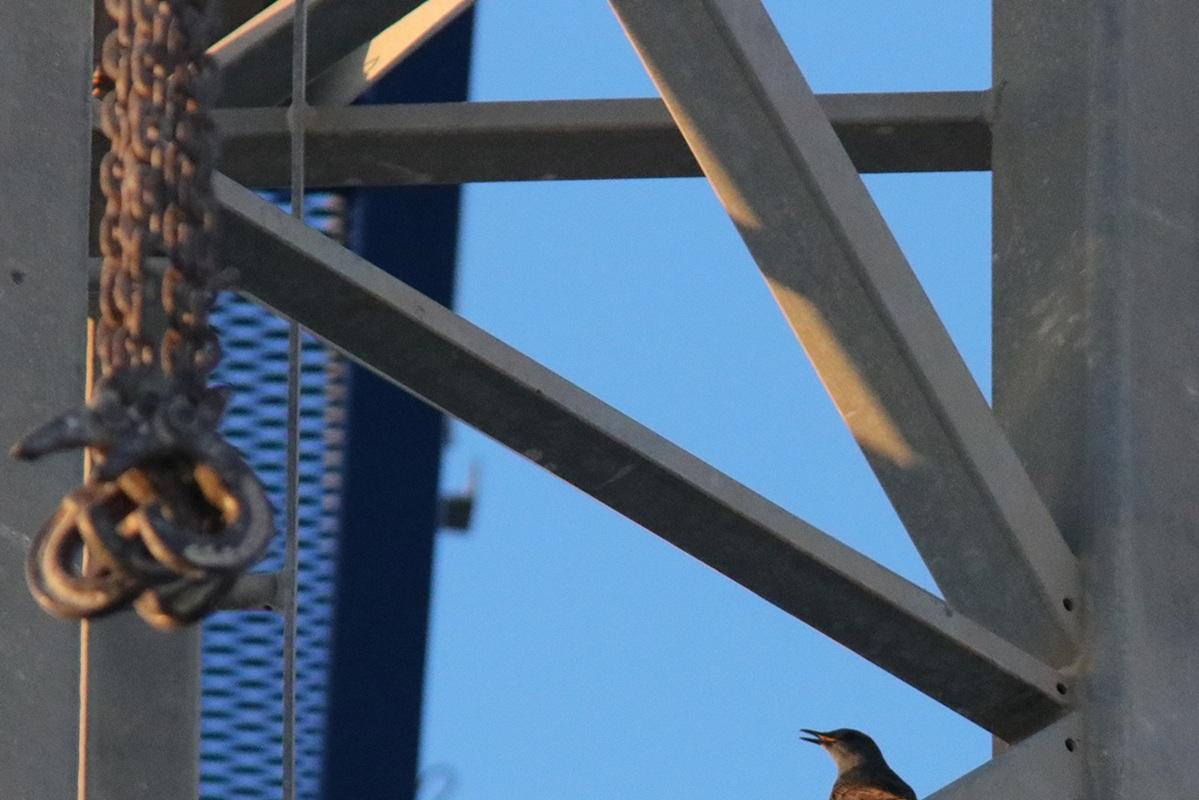 A female Blue Rock Thrush on a construction site
Nesting in urban environments
Members of the public do not have to be avid photographers to take part – they can also inform the project of nest sites or birds that appear to be exhibiting nesting behaviour.
Knowing where nests are allows the researchers to ring chicks and later track dispersal movement - how far young birds travel from where they hatched when they become independent and search for their own territory.
“Adults may be seen carrying food, which suggests they are feeding chicks. They may also give alarm calls when they have chicks and perceive a threat nearby.
They build an open cup nest made of twigs and vegetation and lay blue eggs. The nest is very recognisable,” Gatt said.
In nature, Blue Rock Thrushes nest in rock crevices, such as cliffs and valley walls, rather than in trees.
In urban areas, they use similar spaces in buildings, such as ledges, hollow bricks, unfinished rooms, abandoned buildings or construction sites.
While this has led the birds to adapt to Malta’s construction boom, nesting in such places is risky, and the shrinking amount of green space also presents other challenges.
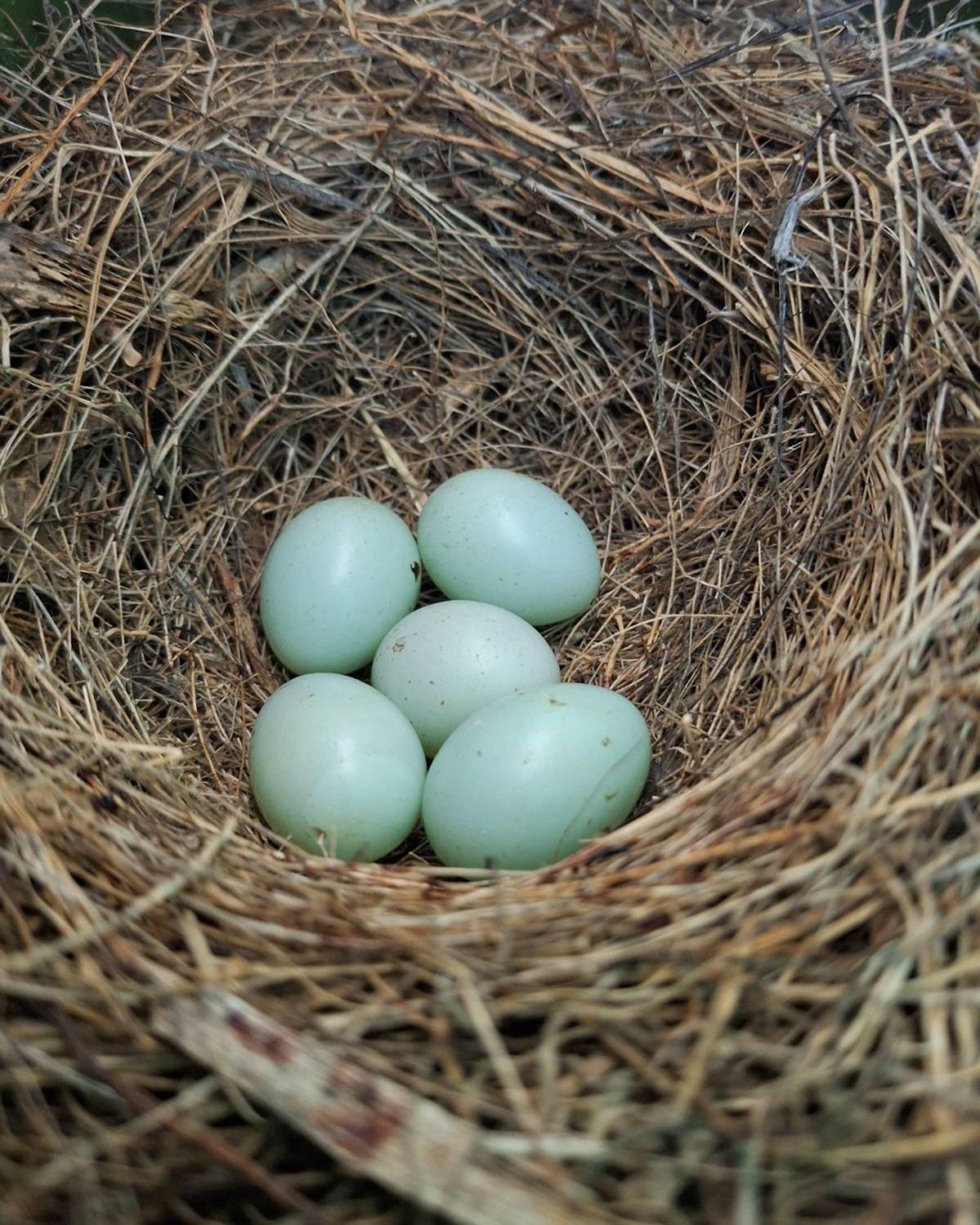
Not only are the males of the species blue, but so are the birds’ eggs
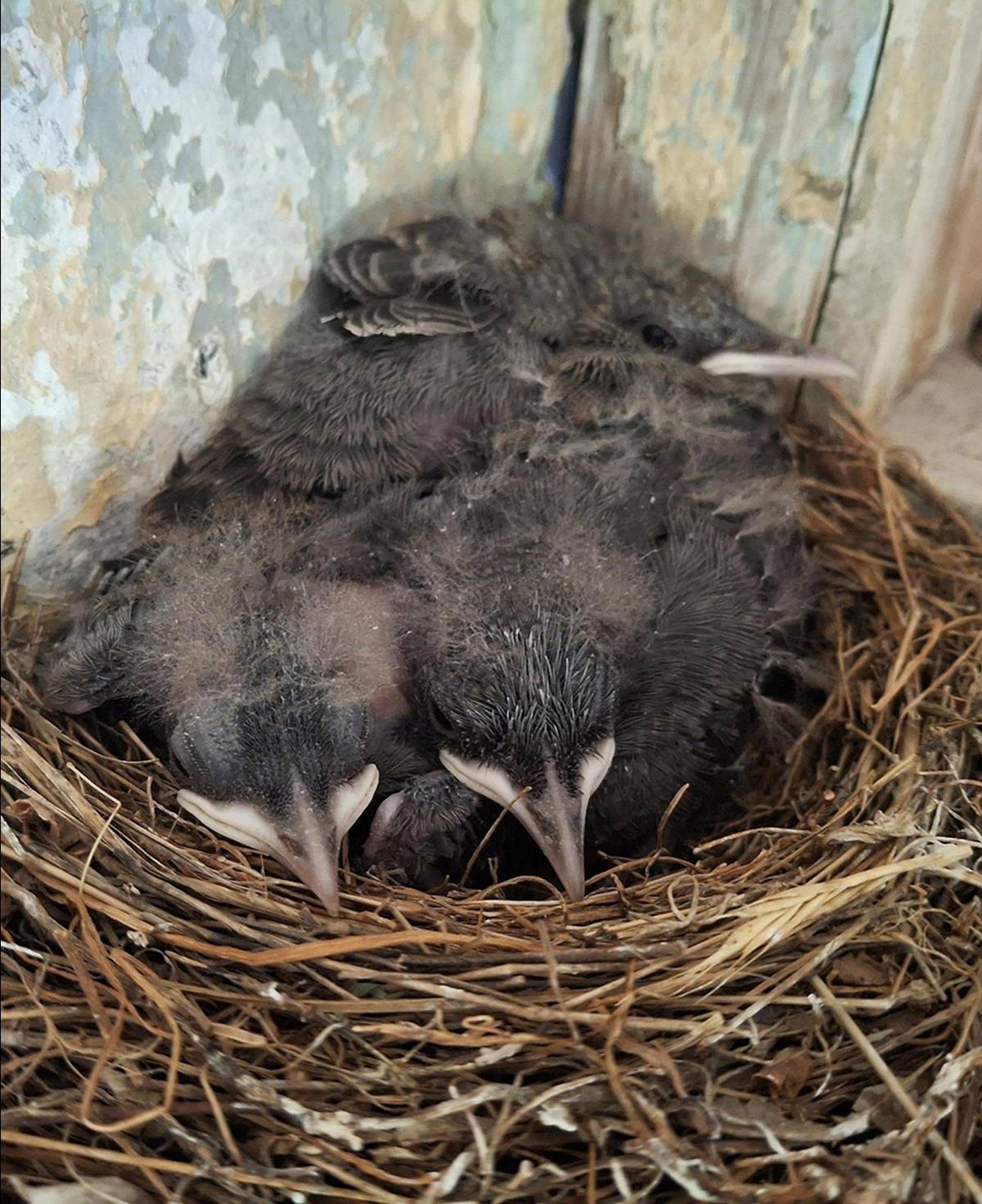
A nest with chicks almost ready to fledge
“Blue Rock Thrushes depend on some amount of natural space and intact urban biodiversity to forage and feed their young,” Gatt said, explaining that the birds feed on a wide variety of fauna, including grasshoppers, flying ants, lizards, geckos and snails.
Some species may be affected even more severely, such as the Sardinian warbler, known in Maltese as bufula sewda, because they rely on trees and bushes.
“There is concern that bird populations could crash simply because there is not enough food.”
Because of the temporary nature of the birds’ urban nesting sites, Gatt and Metzger also developed a nest box programme.
A nest box is a man-made shelter designed to give birds a safe place to nest, usually by imitating the kind of natural spaces they would use in the wild.
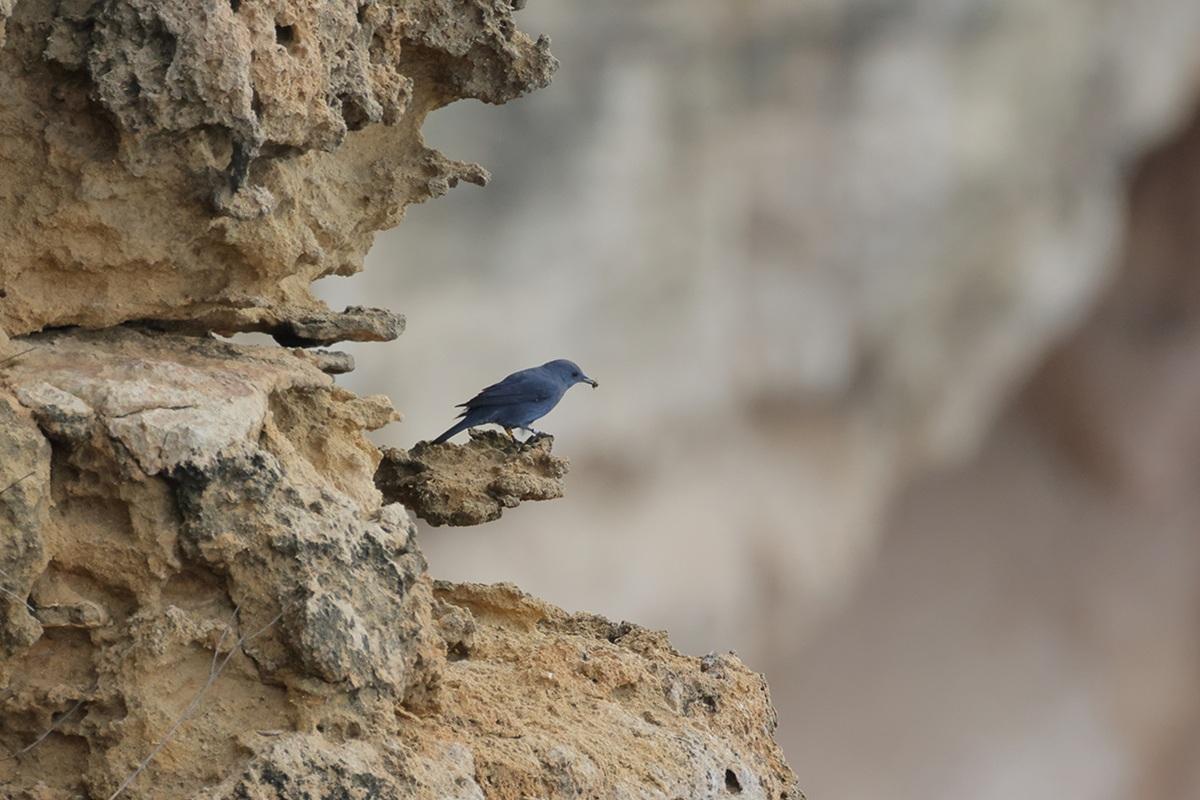 A Blue Rock Thrush perched on a cliff face
The boxes were installed in public and community buildings such as schools, convents, museums, and the historic Old Bakery of Comino, where a Blue Rock Thrush has successfully nested.
“As far as we know, a Blue Rock Thrush using a nest box has never been documented before,” Gatt said, adding that aside from providing safer nesting sites for the birds, the boxes also increase public engagement and a sense of ownership in the project, and allow for even more research and monitoring to be carried out.
Gatt said the project has received a lot of positive attention from the public.
“People are excited to spot Blue Rock Thrushes from their homes, schools and workplaces. Part of the project’s aim is to increase awareness and appreciation of the national bird. To protect what Malta has, people first need to know about it and appreciate it. I believe the project shows that people still crave a connection with nature.”
All birds are handled by trained professionals holding a EURING-recognised bird ringing licence from BirdLife Malta. The project is co-funded by the Malta Environment Foundation.