Civil liberties cannot mean selective visibility
Malta’s progress on equality was not accidental. It was the result of deliberate political choices based on a simple principle: every person deserves dignity, respect and equal treatment under the law, writes Helena Dalli
Over the past decade, Malta established itself as a European leader in equality. For several years, our country occupied first place on ILGA-Europe’s Rainbow Map, becoming a model for legislative and social progress. This achievement was not merely about LGBTIQ rights. It reflected a broader vision of Malta as an open, modern and inclusive society, one that recognised diversity as a strength.
That is why I find recent comments suggesting that schoolchildren should not be exposed to LGBTIQ diversity concerning.
At first glance, such arguments may appear harmless. They are often presented as a matter of parental rights or the protection of children. Yet, beneath them lies a more troubling question: What exactly are children being protected from?
Children already live in a diverse world. They meet people from different backgrounds, cultures, religions, abilities, identities and family structures. Some children have LGBTIQ relatives. Some will discover that they themselves are LGBTIQ. Others will simply grow up alongside classmates, neighbours and colleagues whose lives are different from their own.
To acknowledge this reality is education not indoctrination.
The duty of schools is not to prepare children for an imaginary society in which everyone is the same but to prepare them for the world in which they actually live. And that world is diverse.
Children do not become open-minded because diversity is hidden from them but because they grow up understanding that diversity is a normal part of life.
Education equips young people with the knowledge, understanding and critical thinking skills necessary to navigate a complex society. It teaches them to respect others even when they may not share the same beliefs, experiences or identities.
This is why it is a shame when the language of civil liberties is invoked to justify excluding certain groups from public visibility. Civil liberties mean the freedom of every individual to live openly, authentically and without fear of discrimination.
History teaches us that efforts to restrict visibility are rarely confined to visibility alone. Across Europe, we have witnessed attempts to portray LGBTIQ people as people from which children need protection.
Hungary’s controversial legislation restricting access to LGBTIQ-related content was justified using precisely that argument. It was presented as a measure to protect children, yet, many saw it for what it was: an attempt to stigmatise and marginalise an already vulnerable community.
The significance of that case extends beyond Hungary. The European institutions challenged the legislation because it was considered incompatible with the fundamental values upon which the European Union is built.
More recently, the Court of Justice of the European Union confirmed that such restrictions violate core principles of European law, including respect for human dignity, freedom of expression and the right to non-discrimination.
I find recent comments suggesting that schoolchildren should not be exposed to LGBTIQ diversity concerning- Helena Dalli
Malta is not Hungary. No one is proposing identical legislation. But ideas matter. Political discourse shapes public attitudes long before it shapes public policy. When we begin to suggest that children should be shielded from the existence of certain groups of people, we are adopting a logic that Europe has already examined and rejected.
That is why these conversations should concern all those who value the Malta we have worked hard to build.
Our country’s success did not come from fearing diversity but from recognising it. It came from understanding that equality strengthens social cohesion rather than undermines it. It came from acknowledging that every person deserves to be seen and respected.
Today, however, there are signs that we should not take this progress for granted. While our country remains among Europe’s leaders, growing normalisation of rhetoric that questions the visibility of LGBTIQ people should give us pause. It signals a shift in the public conversation that risks eroding the values that Malta has welcomed over the past decade.
Parents, of course, have their own values and beliefs. In a democratic society, they should always be free to pass those values on to their children.
But public institutions have a different responsibility. Their duty is to prepare young people for the reality of the society in which they live. That reality includes people of different ethnicities, religions, abilities, family structures and identities. No democracy can sustain itself by pretending otherwise.
The Malta that earned international recognition for equality was not a Malta that hid difference from view. It was a Malta confident enough to embrace it.
The question before us today is whether we continue on that path or whether we begin to retreat from it.
Malta’s place among Europe’s leaders on equality was earned through courage, vision and a commitment to human dignity. It would be a mistake to assume that this progress will sustain itself automatically. The language we use today about who should be visible in our society will shape the freedoms we enjoy tomorrow.
I remain convinced that the vast majority of Maltese people believe in an open and inclusive country. The challenge before us is to ensure that our public discourse reflects those values and that future generations inherit a Malta that is confident in its diversity rather than fearful of it.
The choice before us is whether we continue to work for the diverse society in which we live or whether we start pretending that diversity itself is something from which we need protection.
I know which Malta I believe in.
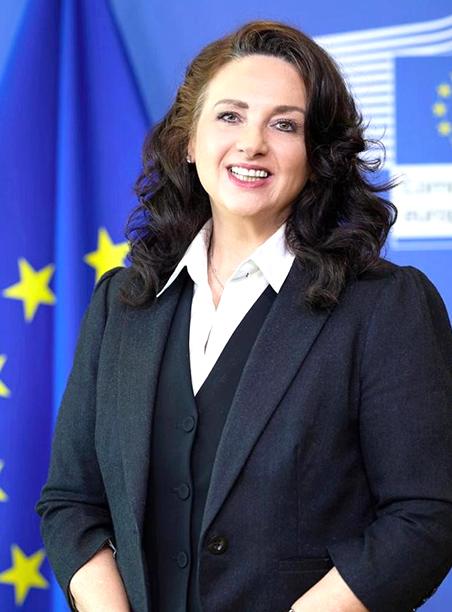
Helena Dalli is a former European commissioner and Labour minister.