A cloth through time: unravelling the mystery of the Sudarium of Oviedo
A modest linen cloth preserved in northern Spain continues to intrigue historians, scientists and believers through its long journey from Jerusalem and its striking links to ancient burial customs
In a fortified chamber of the medieval cathedral of Oviedo, northern Spain, lies a linen cloth that has travelled across continents and survived upheavals for more than 1,300 years. Known as the ‘Sudarium of Oviedo’, this creased, stained textile is one of Christianity’s most intriguing relics, drawing interest from historians, scientists and pilgrims alike.
The Sudarium is traditionally identified with the soudarion mentioned in the Gospel of John. When Peter entered the empty tomb, he saw the burial cloths lying there “and the cloth that had been around Jesus’s head, not lying with the linen cloths but rolled up in a place by itself” (John 20:6-7). This small but precise detail forms the basis of the relic’s identity.
The word soudarion itself offers cultural insight. In Roman society, it referred to a napkin used at meals. A folded napkin signalled that the diner intended to return; an unfolded or crumpled napkin indicated the meal was finished and the person was not returning.
Early Christian commentators drew symbolic parallels between this custom and the folded cloth in the tomb: the folded soudarion was interpreted as a quiet sign of Christ’s intention to return, while an unfolded cloth would have implied finality. Whether symbolic or literal, the Gospel reference anchors the Sudarium within early Christian memory.
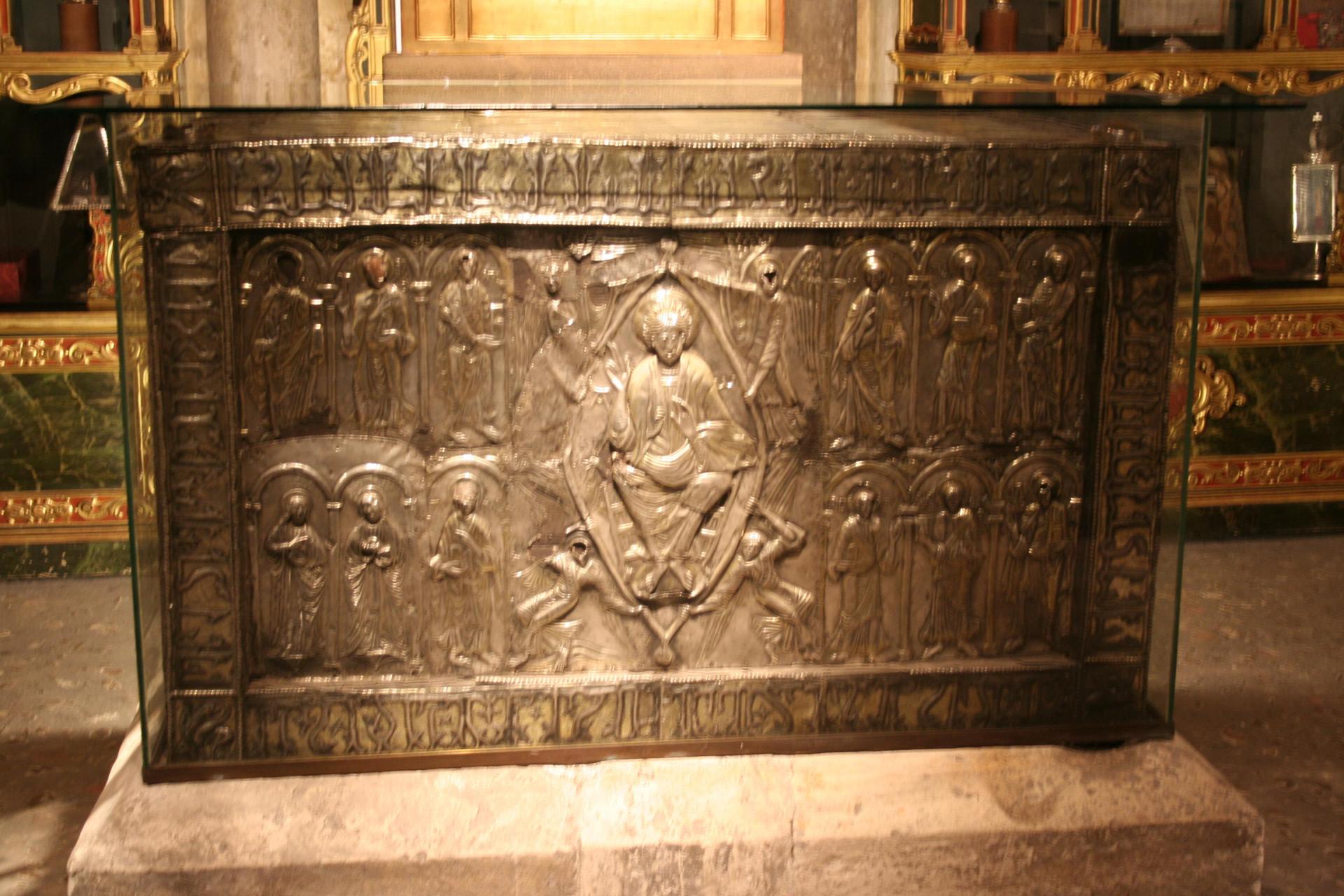 The ark that contains the Sudarium of Oviedo.
The cloth’s early history begins in 1st century Judea. Jewish burial customs required multiple cloths: a large shroud for the body and a smaller cloth to cover the head, especially when the deceased had suffered trauma. The Sudarium would have served this purpose, absorbing blood and fluids during the removal of the body from the cross.
For centuries, Jerusalem’s Christian community safeguarded objects associated with the Passion. But the 7th century brought instability. As Persian and later Arab invasions threatened the city, custodians feared the destruction of sacred relics. According to long-standing tradition, the Sudarium was taken from Jerusalem to Alexandria, then to North Africa and eventually to Spain.
By the early 8th century, the relic had reached the Christian kingdom of Asturias. King Alfonso II built the Cámara Santa in Oviedo, located within the Cathedral of San Salvador, to house rescued relics, and the Sudarium has remained there ever since. Unlike many relics with uncertain histories, its presence in Oviedo is documented continuously from the 9th century onward.
The cloth contains type AB blood, the same type identified on the Shroud of Turin
Scientific studies have added further layers of interest. The cloth contains type AB blood, the same type identified on the Shroud of Turin. The stains correspond to facial wounds, including bleeding from the nose and mouth, and suggest the cloth covered the face of a man who died upright − consistent with crucifixion.
Pollen analysis has identified grains from plants native to the Middle East. Digital comparisons of the Sudarium and the Shroud of Turin reveal notable correspondences in the shape and position of bloodstains, suggesting both cloths may have touched the same face at different moments.
Today, the Sudarium is displayed publicly only three times a year: on Good Friday, on the feast of the Triumph of the Cross (September 14) and on the octave of that feast. For many who gather in the Cámara Santa, the cloth’s power lies not in spectacle but in simplicity. Whether viewed as a historical artefact or a devotional object, the Sudarium remains a compelling link between past and present, inviting reflection on suffering, memory and the enduring mystery of faith.