'Colonisers did more’ - activists attack authorities' track record on heritage
Activists strongly criticise SCH, which hits back at 'wilful misrepresentation'
Updated November 5, 2025 with SCH reply
Activists and residents have accused heritage, environment and planning authorities of failing to protect Malta’s heritage.
In a statement Monday listing a series of perceived failures by authorities, the group said the Superintendence of Cultural Heritage (SCH), Planning Authority (PA) and Environment and Resources Authority (ERA) were playing a “role in the destruction of heritage”.
The statement issued by conservation NGO Flimkien għal Ambjent Aħjar (FAA) followed a press conference outside the offices of the SCH, an authority it described as “abdicating its duty to protect Maltese heritage”.
Xagħra resident Carmen Bayada said the superintendence had “denied” the discovery of burial pits and remains during works at the Ta' Verna Temple site until FAA reported it. At which point, he said, SCH announced the find, which included skulls “laid out in a ritual burial”.
“Still, excavations using heavy construction machinery continued, and material that had a high probability of containing archaeological remains was dumped,” he said.
“No information has been provided about the remains on this site, which pre-dates Ġgantija by 1,000 years, and the SCH has approved development which will destroy these burial sites”.
Bayada noted the Planning Authority is set to process permits for the development of the site tomorrow.
Drawing attention to a recent application to build a 27-apartment complex within the Ġgantija temples buffer, Din l-Art Ħelwa Għawdex activist Daniel Cilia said the NGO had asked for a heritage assessment before the application is processed.
He said the government was “completely ignoring” its agreements with world heritage body UNESCO.
Residenti Beltin president Billy McBee accused SCH of having “total indifference” to Valletta, arguing the city’s world heritage status was being used as a “marketing tool rather than as a means of protection”.
He said authorities’ “business first” mindset was causing the capital to lose its authenticity while “betraying” UNESCO guidelines.
Din l-Art Ħelwa president Patrick Calleja said that, according to PA minutes from a 2012 meeting, the Cultural Heritage Advisory Committee had disagreed with a proposal to dismantle the barracks at the site of the Fort Chambray development.
The statement noted that the information had not been made public before the PA recommended the development for approval.
Referring to an application to demolish a 130-year-old Rabat farmhouse and its garden of trees to make way for 83 basement garages and 49 residential units, FAA coordinator Astrid Vella said the site was metres away from an archaeological necropolis where 18 tombs were discovered in 1968.
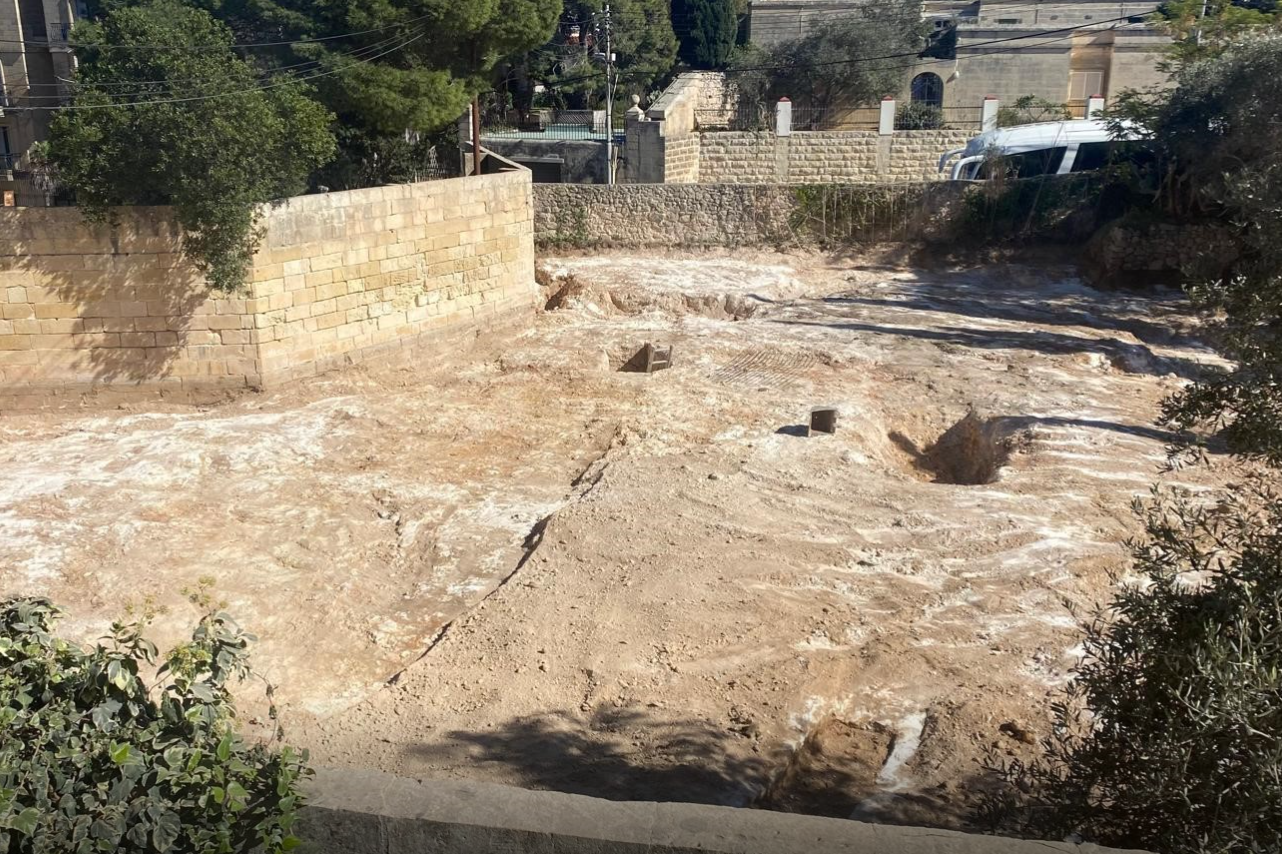
FAA noted that tombs had been discovered at the site of a Rabat development. Photo: FAA.
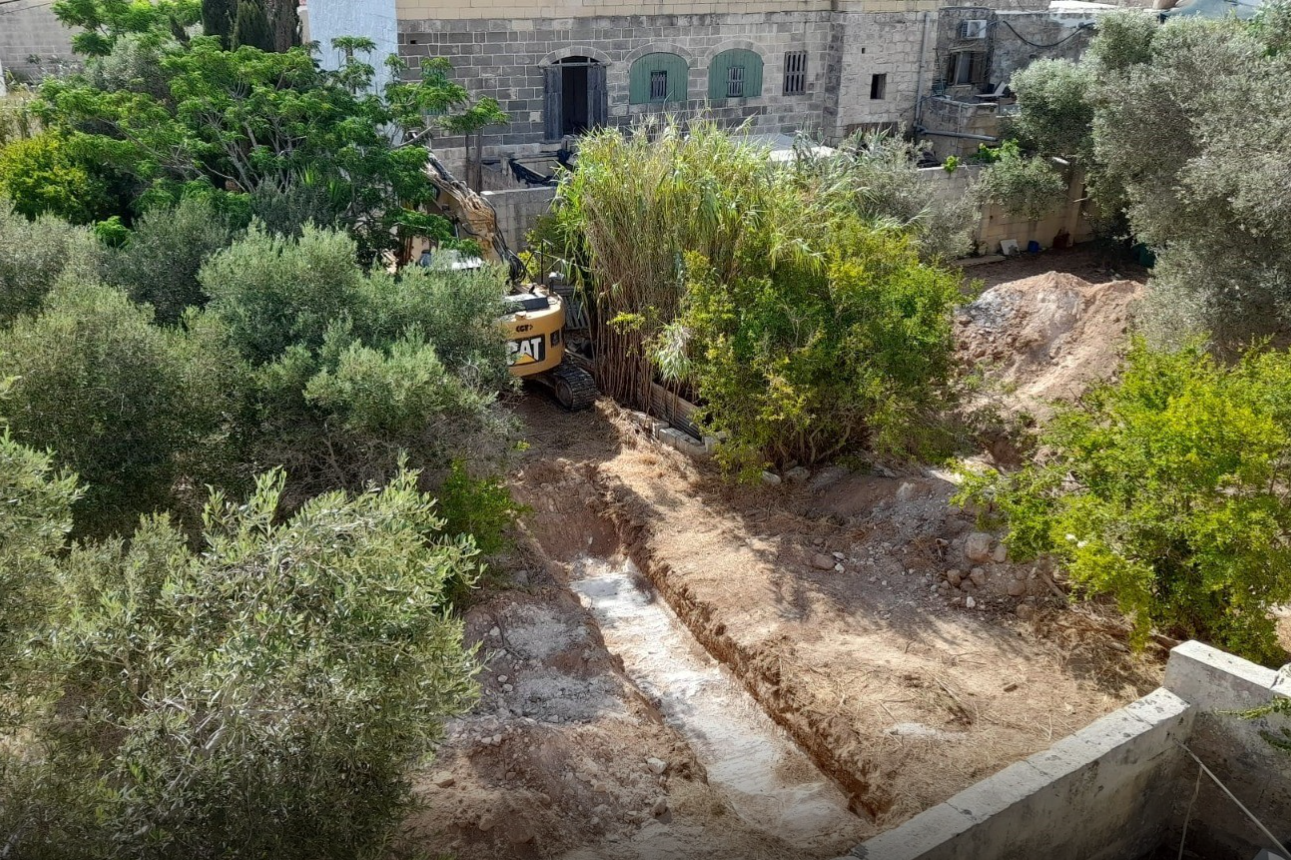
The Rabat site before investigations began. Photo: FAA.
She said the NGO and Rabat residents were “extremely concerned” by the use of heavy machinery during archaeological investigations at the site and the “lack of publication of a method statement regulating these works”.
"This total lack of transparency or adherence to accepted norms points to the SCH’s abdication of its responsibility to protect Malta’s precious heritage,” she said.
“Malta’s colonisers have done more to protect Malta’s heritage than the SCH, PA and ERA, whose collusion amounts to a Taliban-like wrecking of our heritage, in order to allow developers to destroy our towns and our Maltese identity.”
SCH: A 'campaign of misinformation'
In a reply, a spokesperson for the Superintendence of Cultural Heritage said the NGO accusations were untrue and unfair.
"The Superintendence has always valued and supported voluntary organisations working in the heritage sector, whose input is invaluable. At the same time, it cannot remain silent in the face of what appears to be a campaign of misinformation, which misrepresents the facts and misleads the public," it said.
Protests concerning the Xagħra site misrepresent the situation, the SCH said, as with works at the site proceeding in line with approved permits and with archaeological monitoring.
"To date, only a single small burial pit has been identified, which was investigated by professionals and specialists working with the Superintendence," it said, adding that this pit was clearly dateable to the Ġgantija phase.
In Rabat, the use of heavy machinery for archaeological evaluation was "legitimate and internationally accepted where development-led, preventive or rescue archaeology is required," it said. The SCH cited the European Archaeology Council’s EAC Guidance 5 – The Benefits of Development-led Archaeology in Europe and Beyond (2024) and the proceedings of the 19th Heritage Symposium, Development-Led Archaeology in Europe: Meeting the Needs of Archaeologists, Developers and the Public (2019) as relevant sources.
The SCH also dismissed suggestions that a Heritage Impact Assessment is required for every development within World Heritage Site boundaries.
UNESCO guidelines state that an initial screening is required to determine whether such an impact assessment is necessary - something the SCH said it always does and which it makes publicly available as part of the relevant PA application casefile.
The SCH challenged activists to "provide specific examples" of its alleged indifference to the situation in Valletta, "so that they may be addressed constructively."
"In all its actions, the Superintendence remains committed to fulfilling the State’s duty to protect and make accessible Malta’s cultural heritage, welcoming objective criticism but not wilful misrepresentation," the SCH said.