The comeback begins now
This result bodes well for the PN and for Malta. The country needs a strong opposition
In July 1945, just after leading Britain to victory in World War II, Winston Churchill lost the general election and was ousted. The Labour Party, knowing Churchill’s popularity, campaigned with the slogan ‘Love Churchill, Vote Labour’.
Alex Borg was elected leader of the Nationalist Party (PN) and appointed opposition leader eight months ago. In that short time, he energised the party, restoring enthusiasm amongst its roots. His leadership was thrown into the deep end when Prime Minister Robert Abela called a snap general election. The nation stood and wondered how this young leader would approach this election.
During this campaign, rather than going for a ‘Hate Labour, Vote PN’ message, Borg opted for a positive ‘Love Malta, Vote PN’ motif, even hinting at a ‘Like Labour, Vote PN’ stance in his speeches.
Whilst this risked alienating certain elements of core voters, as the campaign progressed it became clear that the PN was making gains with the electorate. The party events drew younger and wider audiences and former party followers returned. By week two of the campaign, the PN began to set the national agenda.
The visible momentum was confirmed by last weekend’s election result. Despite Labour’s incumbent advantage, a biased public broadcaster and stronger finances, Labour’s previous significant lead was halved. The PN increased its vote share in all districts, gaining two more parliamentary seats and narrowing Labour’s parliamentary majority from nine to five.
Gozo switched back to the PN by a slim margin. Borg received the most first preference votes, surpassing Abela. All this was achieved in under 300 days.
This result bodes well for the PN and for Malta. The country needs a strong opposition. In recent years, the PN has struggled to present itself as a credible or united opposition, as evidenced by the heavy poll defeats.
There are a lot of positives that can be derived from these results but the party cannot, and should not, rest on its laurels. The ultimate ambition of the party is that of being an alternative government. Last weekend’s event and results are already the past. We now need to build towards the future.
We must focus on moving the country forward. The government faces significant challenges, many of which are self-inflicted. The country’s infrastructure is collapsing under the weight of a constantly growing population. Investment in transport, waste management, hospitals and education cannot be delayed any longer. Rising national debt limits the government’s ability to deliver promised projects.
Someone must pay the piper, including for the costs of the promises made by the Labour government in the weeks leading up to the election. I am not referring solely to the manifesto pledges but also to those promises made to appease voters. How many more people were added to the public sector’s and related agencies’ payroll over the past weeks and days? We will soon find out when the official statistics are published.
We need to be conscious of the fact that our society is more diverse than it was 10 years ago
But the PN would be wrong to focus only on keeping the government in check. The PN must build on recent gains.
Labour failed to undermine Borg, who, together with the party, emerged stronger from the process. Borg now needs a skilled, diverse team to hold the government accountable and prepare for the 2029 European Parliament and local council elections.
This time, he has three years instead of four weeks to prepare for such an election and an additional year to prepare for the next general election. He will likely find more open doors, more willing listeners and more people ready to share ideas. Why? Because people now believe he can deliver.
But he cannot do this on his own.
The PN and its new parliamentary group need support to connect with the grassroots and maintain a two-way flow of communication with every sector of society. The party’s grassroots structure has, over the years, been in constant decline. This last election showed the PN is on the right track towards addressing the problem.
Social media helped the party reconnect with a wide base during the latest campaign. We must build on this and maintain strong ties, especially with younger and more digitally engaged voters.
The PN, over the past years, failed to shake the perception of being the ‘establishment’. There were occasions when we shot ourselves in the foot. On important issues, we found ourselves on the wrong side of the argument – failing to align our core values with those of the electorate. It is important that, over the next legislature, we avoid drawing attention to ourselves for similar wrong reasons.
We need to be strong on the issues that matter to the people and be sensitive to the country’s and the people’s emerging needs. Moreover, we need to be conscious of the fact that our society is more diverse than it was 10 years ago and being receptive to these realities does not necessarily make us less Maltese. We, moreover, need to show that genuine respect for the environment we live in should not be the compromise for short term political gain.
We have an electorate that is ready to listen. Perhaps even more than they are prepared to listen to a Labour prime minister who is now serving his third term. Politics can quickly turn cruel that way.
A breath of fresh air has arrived, despite the election loss. The hope that has been restored can turn it into a whirlwind.
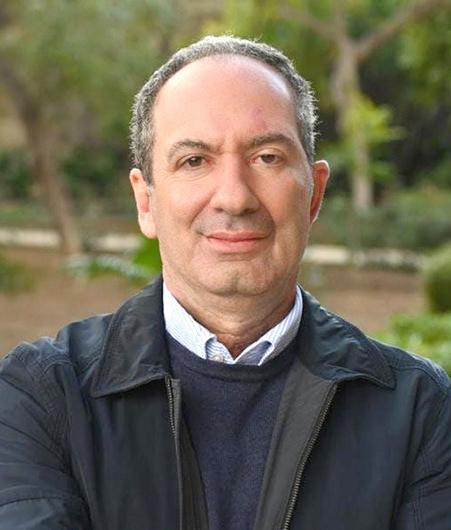
Mario de Marco is a former PN minister and deputy leader