The conservation and restoration of a Caracciolo painting
'The Holy Family on their Return from Egypt' is hung on one of the side altars of the Jesuits’ church in Valletta
For centuries, the monumental painting The Holy Family on their Return from Egypt by the well-known Neapolitan artist, Giovanni Battista Caracciolo, hung quietly on one of the side altars of the Jesuits’ church in Valletta. Worshippers passed beneath it, visitors glanced up, while time began its slow, invisible work.
Paintings, though silent and still, are shaped over time by their environment. Colours shift, surfaces darken, structures weaken. When these changes begin to threaten the work’s stability or legibility, intervention is required.
Such a moment was reached with Caracciolo’s painting, and soon it found its way to Heritage Malta’s Conservation Division in Bighi for assessment and treatment. This marked the beginning of an interdisciplinary programme in which the painting was documented internally by the Technology and Experience Development Unit and analysed by the Diagnostic Science Laboratories and art historians, also based in Bighi.
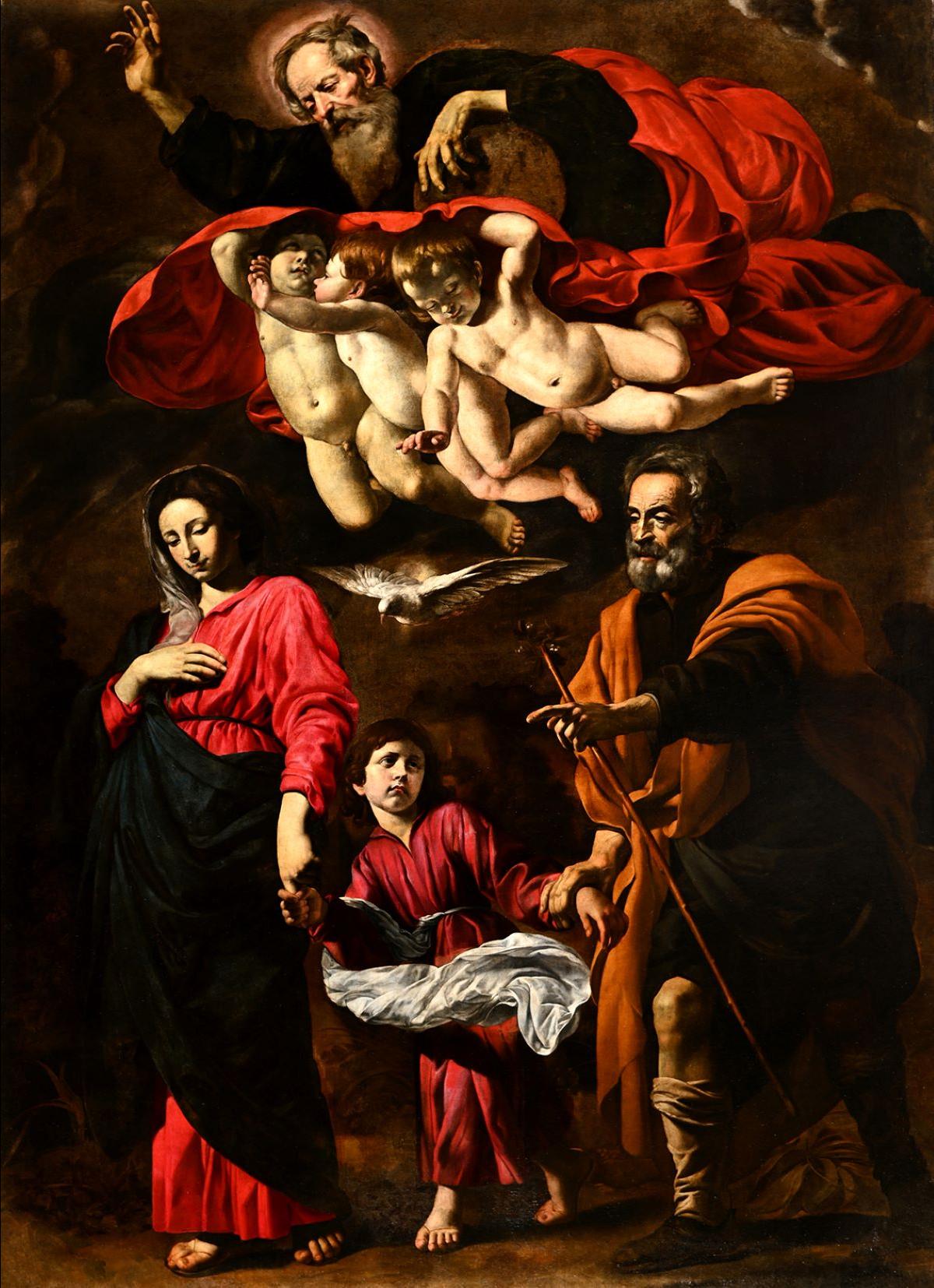 The Holy Family on their Return from Egypt after treatment.
Before any cleaning or repair could begin, the painting had to be documented and understood. Conservators examined the surface closely, mapping cracks, distortions, and areas of weakness. Art historians leafed through historic documents, while scientists used advanced imaging technologies to look beyond what the eye could see. This helped to unravel the painting’s past, so that we could learn more about the artist’s technique and past interventions.
X-ray imaging enabled the observation of the internal structure of the canvas and its paint layers. Together with other techniques – such as Near Infrared Reflectography – it transpired that the artist did not make significant corrections. In any case, the findings were revealing: Caracciolo planned his work meticulously, and the minor corrections observed in the technical photograph highlighted his attention to detail and attempts at correcting only minute details. The forms of the painting are well defined, while his brushwork demonstrate remarkable confidence and skill.
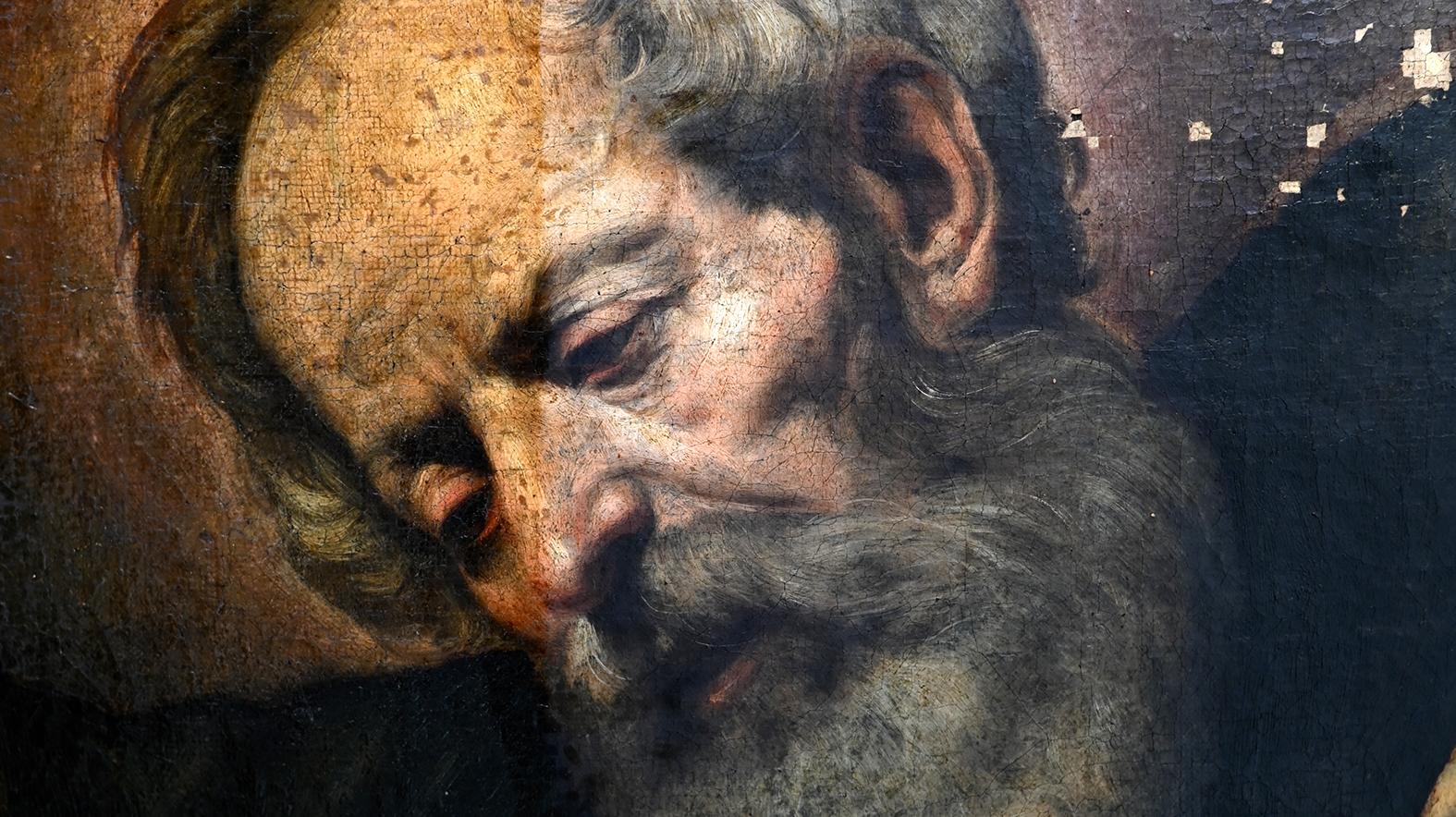 Detail during removal of non-original varnish.
These scientific results were applicable and vital especially to conservators in making informed decisions, so that they could define a treatment methodology that is tailor-made to the needs of this painting. Knowing how the painting was constructed, and how delicate certain areas were, for instance, helped conservators in devising a treatment that not only preserved the artwork’s constituent materials, but also respected its authenticity and history.
One of the most delicate treatments consisted in the removal of non-original paint and varnish to uncover the original. The latter materials darkened and yellowed, obscuring and visibly altering the original hues and tonalities.
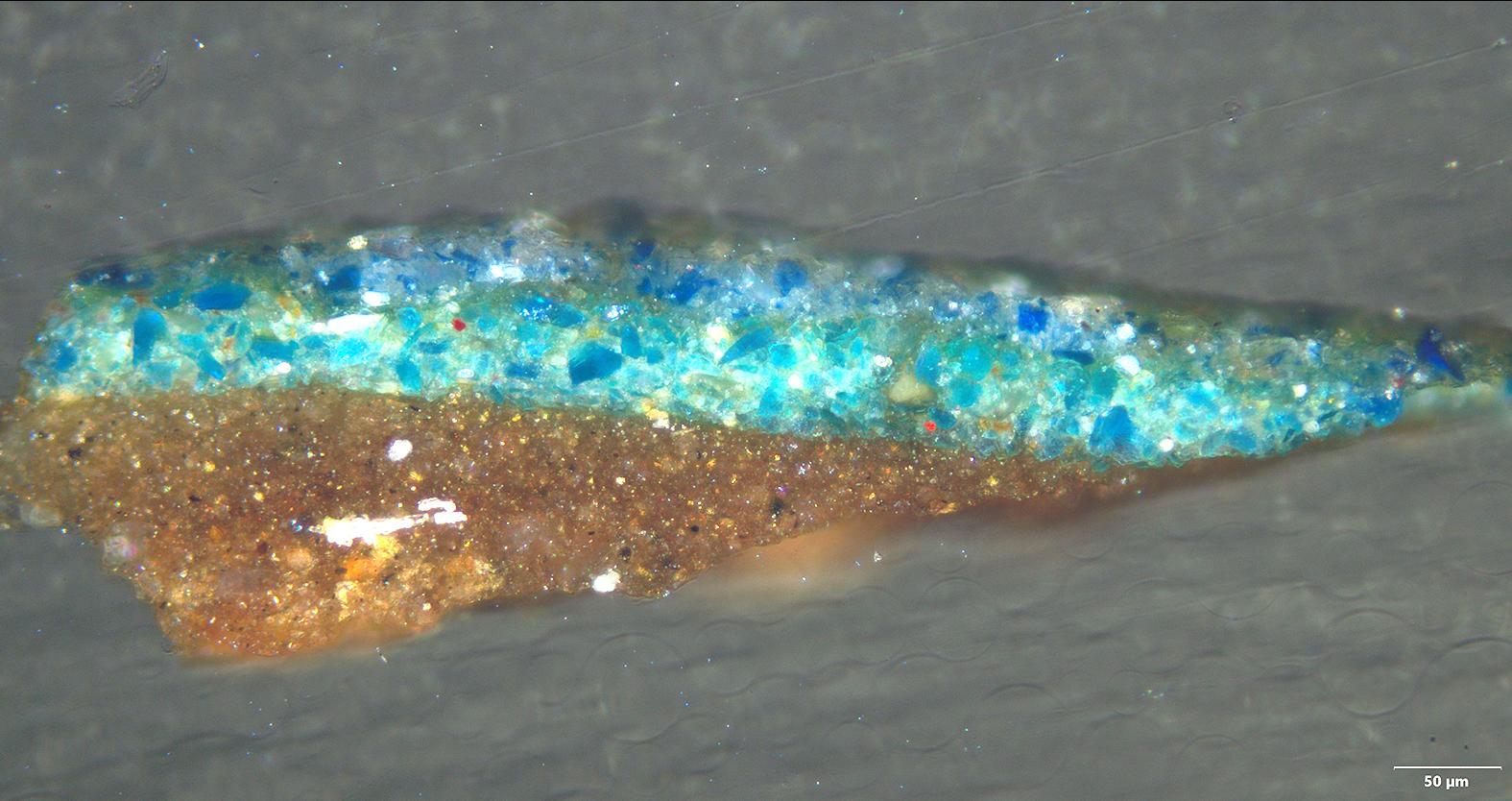 A fragment being examined under the microscope showing the various layers making up the Virgin’s blue draping.
First the conservators cleaned the surface of the painting with modified water having the same acidity and conductivity of the original. Then different chemicals and methods had to be used for every colour of the painting. It was decided to remove the non-original varnish and paint in a gradual and controlled manner to avoid damaging the underlying original.
As the varnish was gradually removed, the visual character of the painting began to shift. Depth returned. Light re-emerged. Subtle colour relationships, once flattened, started to breathe again. At every stage, the process paused for reassessment. Science and conservation advanced together through continuous dialogue.
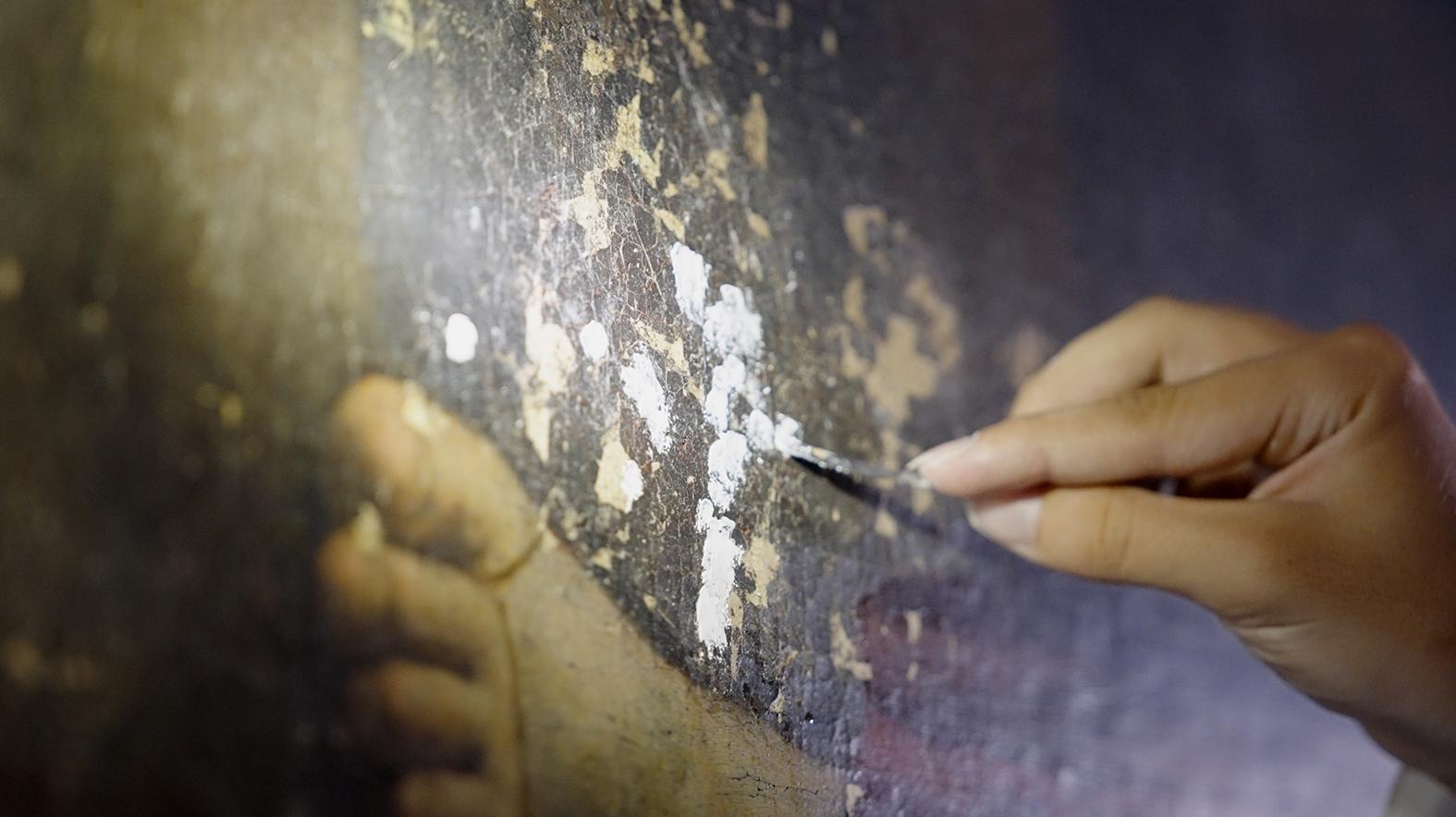 Application of filler in paint losses.
One of the most surprising discoveries came through pigment analysis. Using X-ray Fluorescence technology, scientists examined the chemical elements within the paint layers. The results further confirmed that some colours had altered by a significant degree as the painting aged, thus making the artwork look different from when it was created back in the 17th century.
Certain passages that appeared brown were once blue, while areas perceived as black had originally carried green tones. These shifts were the result of natural ageing and, in some cases, older restoration materials that had interacted aggressively with the pigments.
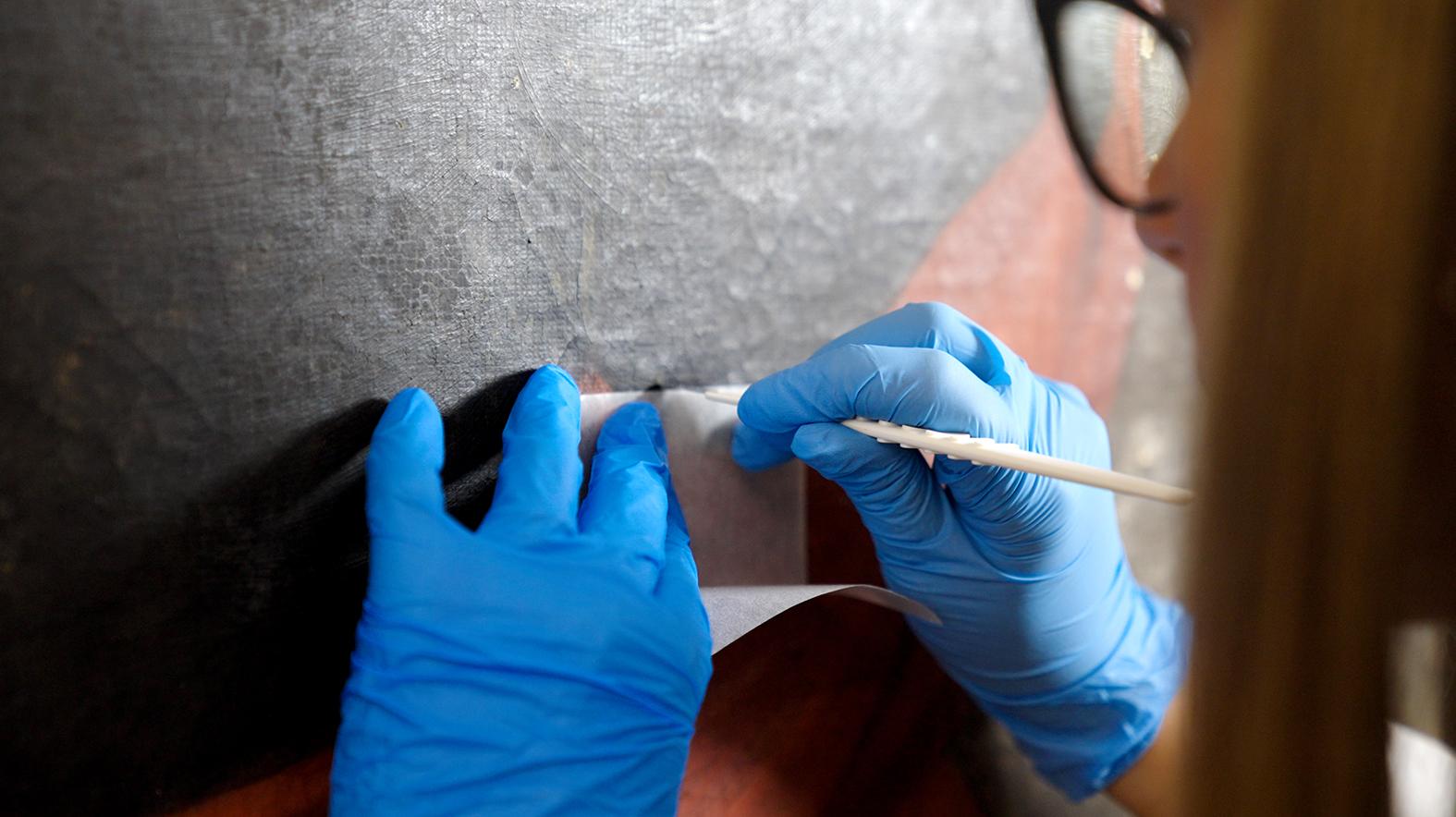 Microsampling of a pigment fragment, known as a cross-section.
Upon identifying the changes that the painting underwent through the centuries, scientific investigations also help define a better idea of how the painting looked when it was created.
While surface beauty draws the eye, a painting’s integrity also depends on its foundation. Structural analysis showed that earlier conservation efforts, particularly an old textile attached with organic adhesive, was causing the painting to distort.
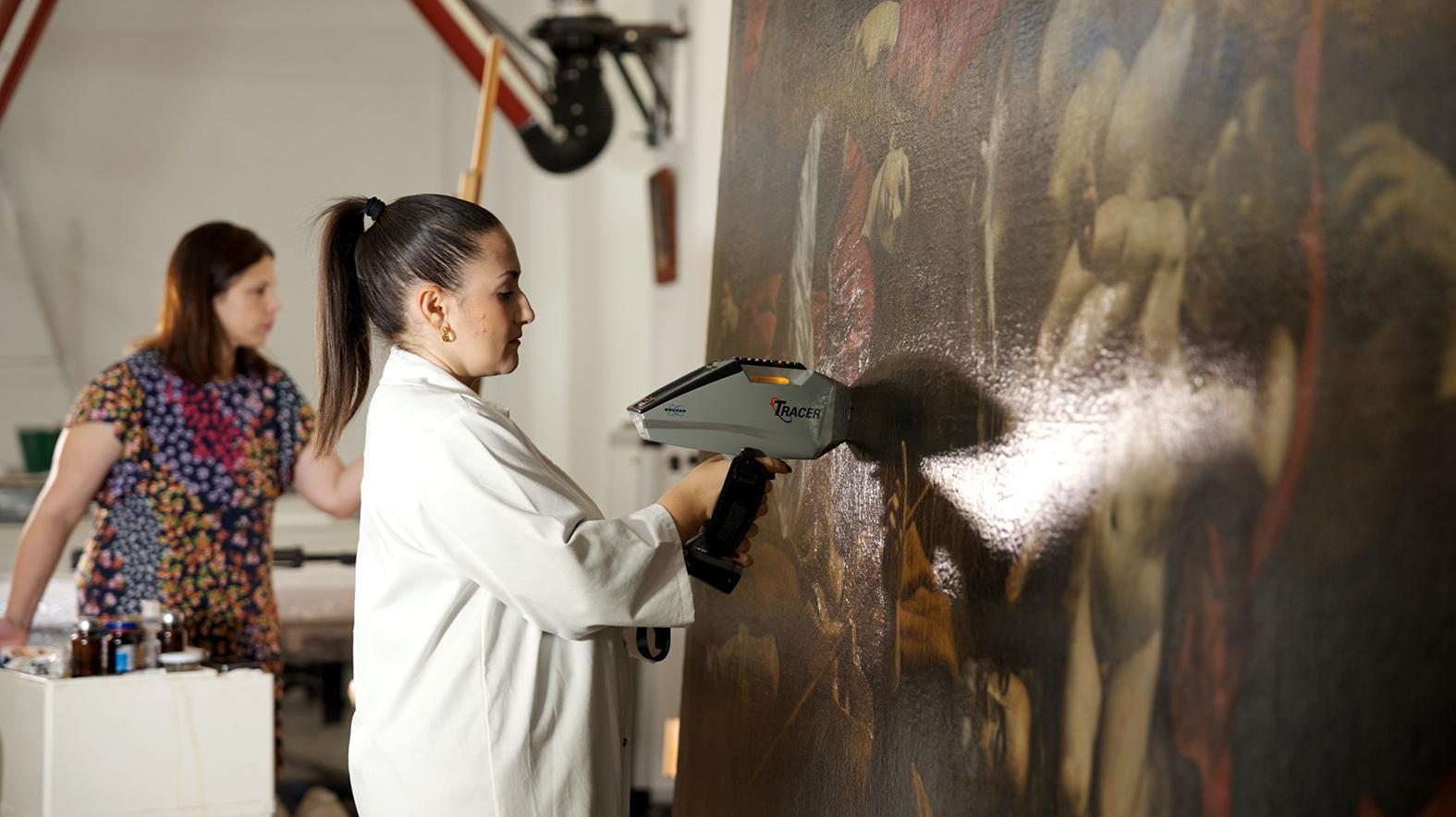 Non-invasive X-ray fluorescence used for palette profiling.
Removing this lining required patience and precision. The additional, non-original fabric and adhesive were carefully taken away and eventually tears and punctures in the original canvas were repaired thread by thread. Canvas deformations were then reduced using controlled humidity, heat, and pressure.
The painting was given a new support, attached with a modern synthetic adhesive chosen for its stability and reversibility. Once again, science guided ethics: every material used had to protect the painting not just for the time being, but also in the future.
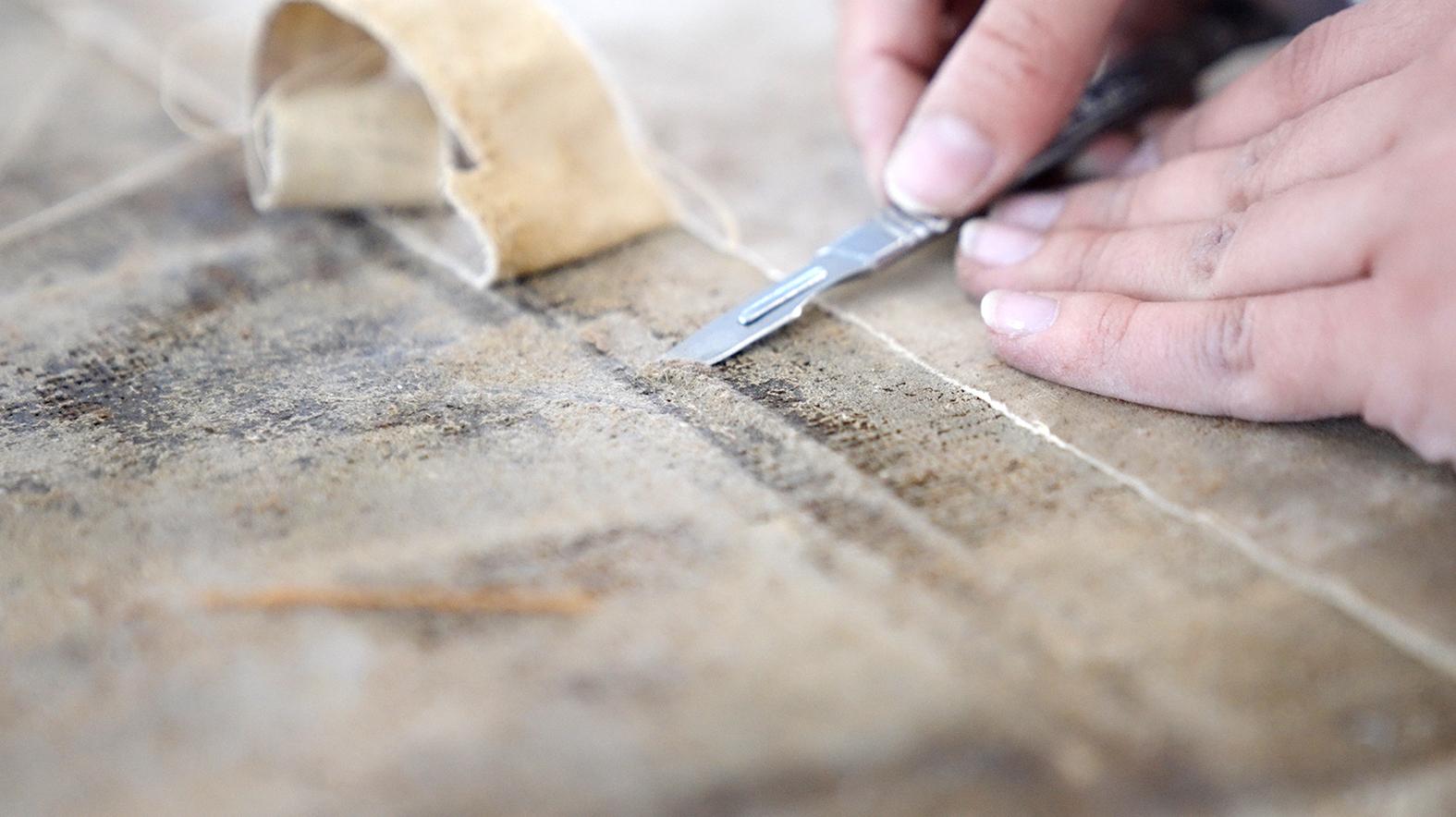 Removal of the lining canvas and adhesive.
The final stages focused on visual coherence. Small losses in the paint layer were filled and retouched in fine dots; an approach that blends with the original from a distance while remaining visible up close.
This ensures transparency, allowing viewers and future conservators to distinguish between original and restored areas. A protective coating was then applied, safeguarding the surface while remaining fully reversible.
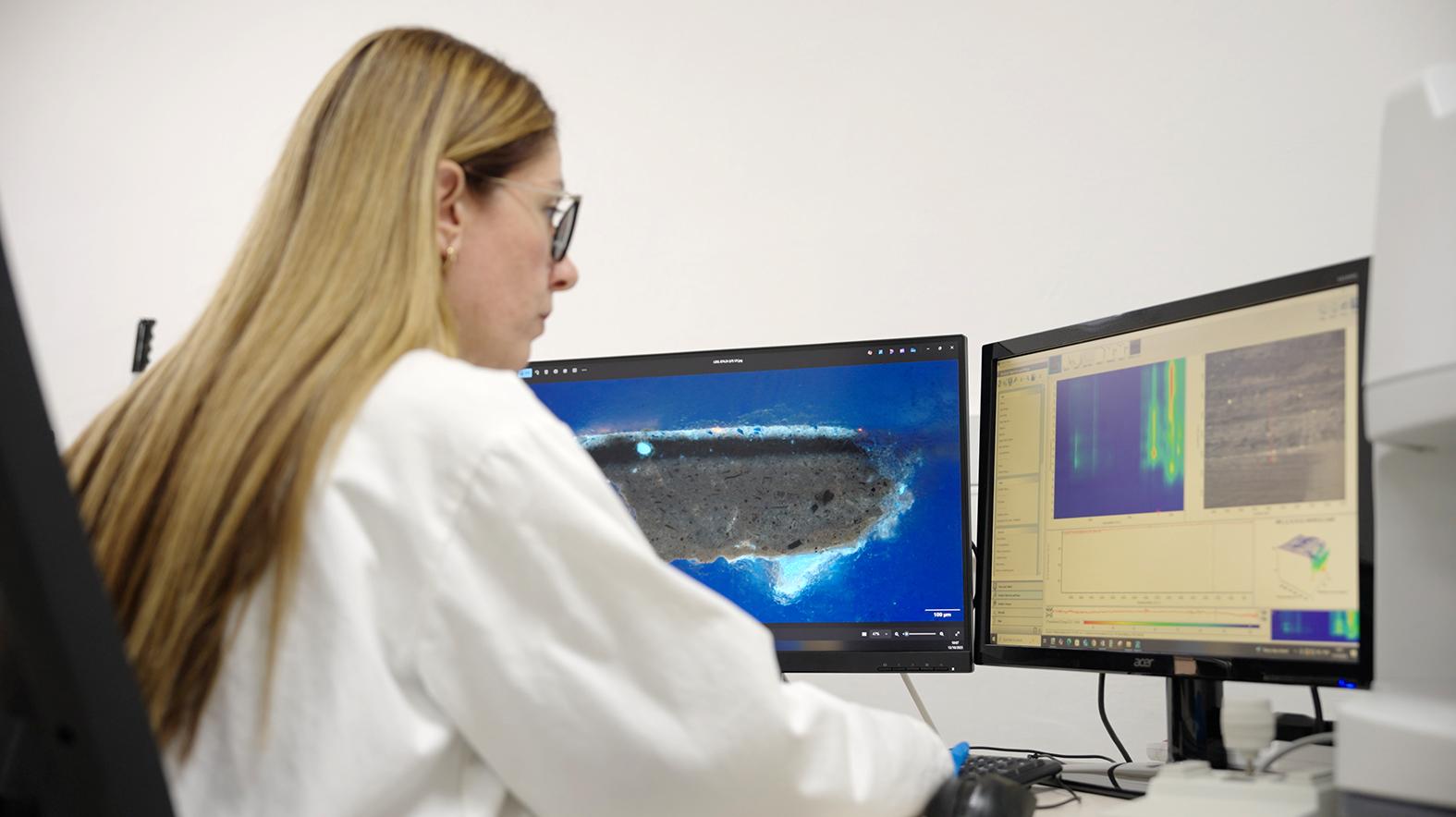
Pigment analysis using infrared microspectroscopy.
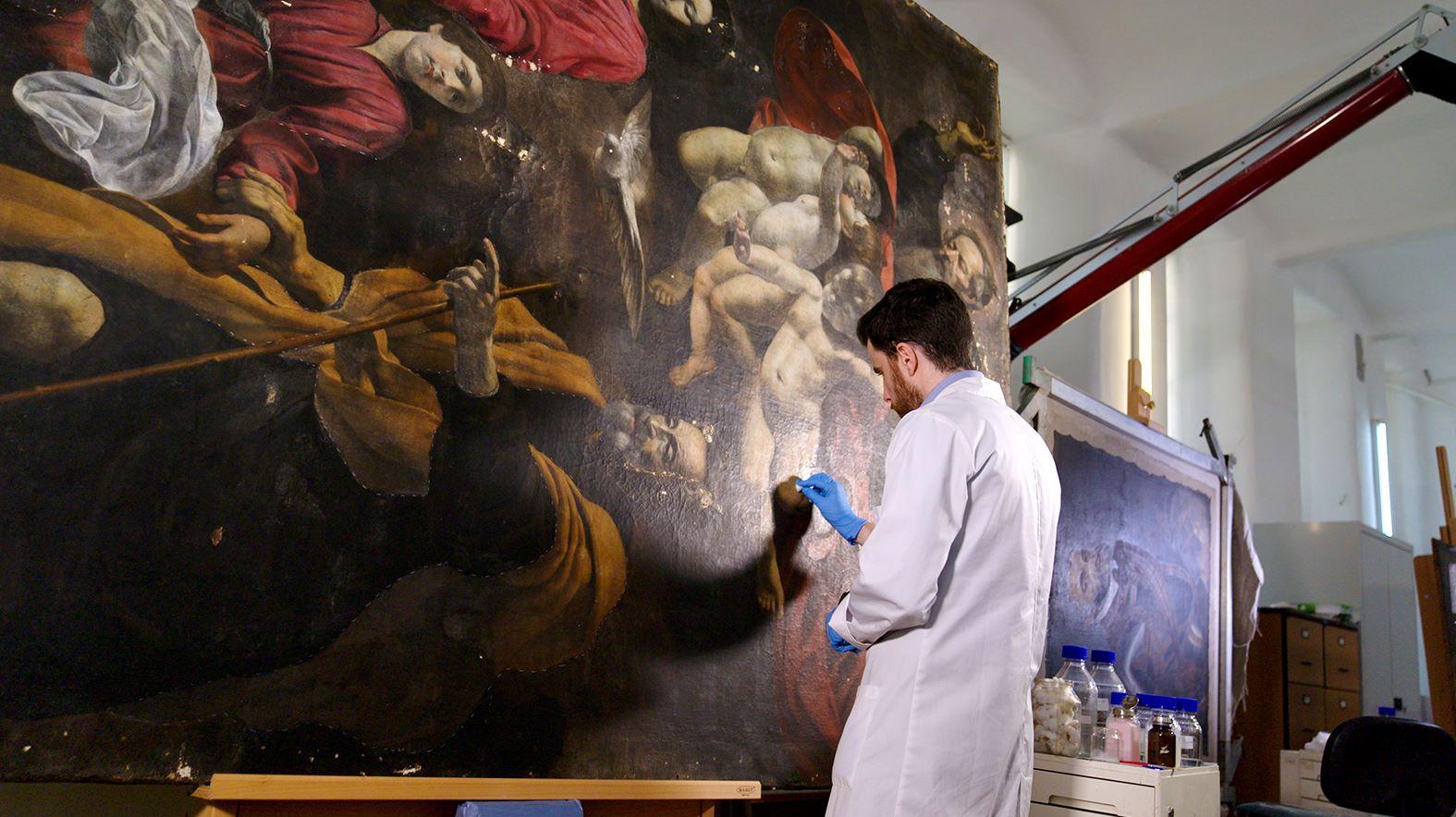
Removal of non-original varnish.
Now that conservation has been completed, The Holy Family on their return from Egypt is ready to be returned to its original place within the Jesuits’ church in Valletta. The intervention has safeguarded the painting’s structure and clarified its visual language, while respecting the traces of age that form part of its history.
Visitors encountering the work today do so with the assurance that it has been preserved according to the highest professional and ethical standards.
Fiona Vella is a principal officer, communications at Heritage Malta.