Conserving the English language
In today’s interconnected world, English has become a unifying thread, connecting people from vastly different backgrounds, says Ivan Grixti
Times of Malta recently marked its 90th anniversary. The souvenir programme published for this occasion stated that it “established itself as a leading daily English-language newspaper”. With this in mind I feel it is timely to reflect on the importance of preserving our nation’s command of this vital global language.
In today’s interconnected world, English has become a unifying thread, connecting people from vastly different backgrounds. Despite humanity’s rich cultural diversity, English has created a shared space for dialogue – bridging borders and fostering understanding.
With sweeping advancements in science and technology, the idea of a ‘global village’ has moved from metaphor to reality. Whether in business, education, tourism, or international collaboration, English is the common language that enables these interactions to flourish. It is the language of innovation, cooperation, and possibility.
Multinational companies span continents, universities such as our own Alma Mater welcome students from every corner of the world, and digital platforms host millions in conversation daily. Across industries – whether scientific, commercial, academic, or cultural – English drives dialogue and progress.
As globalisation accelerates, the need for a shared language grows with it. English isn’t just a tool – it’s an entry point into a global society. To fully participate, we must not only recognise this fact but embrace it wholeheartedly. Hence, the ever growing need to cherish this nation’s command of the English language.
As our island continues to attract more foreign direct investment (FDI) it is noteworthy to understand why this is still the case. Apart from having a series of rigorous legal frameworks with regards to various fiscal aspects, it is also important to remember that we were bold enough to have adopted international financial reporting standards (IFRSs) 30 years ago, in 1995.
Not only did we switch to this international language of producing a set of financial statements but also, we went as far as entrenching them into company law – setting an example to other jurisdictions. Since then, Malta joined the EU, but this major economic bloc moved swiftly to do so as well in 2002, as an aftermath of the Enron debacle across the Atlantic. Since 2005, the roughly 7,000 listed companies have to apply IFRSs.
This observation becomes all the more relevant in light of the UK’s departure from the EU.
With that unwarranted decision by the British people in 2016, as things stand, Malta and Ireland remain the only jurisdictions within the union where English holds an official language status.
As globalisation accelerates, the need for a shared language grows with it- Ivan Grixti
Yet this linguistic advantage is far from guaranteed. If we do not invest in ensuring that younger generations actively engage with English – both academically and within their homes – we risk diminishing one of our most strategic assets.
This issue demands attention not just from current policymakers but also from future governments as well.
It’s not enough to promote Malta as a prime destination to learn English. We must also ensure that our children continue to grow up being bilingual and if possible multilingual as well. This isn’t only a cultural concern – it’s an economic imperative, particularly as we strive to attract even more FDI.
I take pride in my native language and firmly believe that Maltese has its place, even in sectors like financial services, especially in ensuring that Maltese citizens understand better what they are getting involved with as they engage with various investment products offered by the local market. Yet, I also deeply value the personal and national benefits of a strong command of English.
Of course, learning a language requires more than classroom instruction. Meaningful engagement with reading materials is what truly makes the difference. Reading shapes thinking, unlocks creativity, and enhances our ability to communicate effectively in discussions, compositions, and public debate. As the saying goes: reading is knowledge, and knowledge is power.
Beyond the economic benefits, academic research has also highlighted the perceived advantages of a bilingual population. In a recent article in The Economist the most striking discovery from numerous studies conducted was that “bilinguals undergo a later onset of dementia, perhaps of around four years, on average”. So, I wonder, what the results would look like if specific research is carried out in Malta, given that most of us and the younger generation speak also Italian, French, Spanish or German?
For 90 years, Times of Malta has played a key role in promoting English literacy across Malta. Its pages have supported countless readers – especially students and young minds – in maintaining the nation’s fluency and appreciation of the English language and, maybe, also contracting dementia in later years of their old age.
I wish the Times of Malta a very happy 90th birthday. I hope I will be around to celebrate its first centenary!
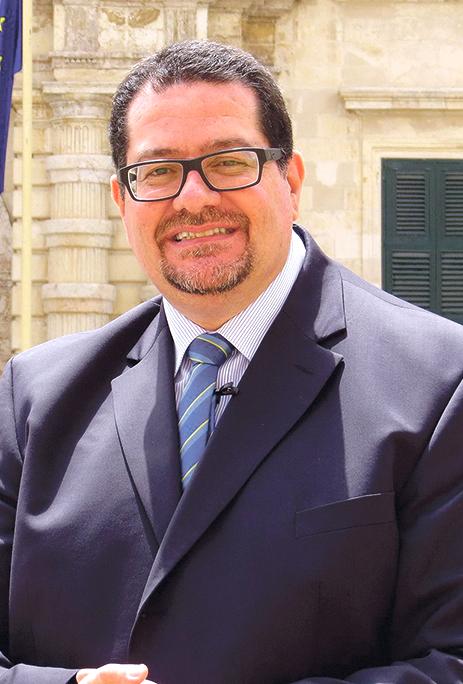
Ivan Grixti is a senior lecturer in financial accounting at the University of Malta.