Contemporary art project animates Inquisitor’s Palace
'Moving with the Wind, Like Waves' listens for what escapes official record
The Inquisitor’s Palace, long associated with authority, record-keeping and institutional control, is being reactivated through contemporary art in Moving with the Wind, Like Waves, a new exhibition curated by Elyse Tonna and commissioned by the Bank of Valletta Foundation. Open until January 4, the project invites visitors to encounter the historic site not as a fixed monument, but as a living system shaped by residues, habits and quiet continuities.
Rather than focusing on documented history, the exhibition listens for what escapes official record. “The palace was built to stabilise meaning,” Tonna explains. “But what interested us was not what was written down and preserved – it was what continues to move within the building despite that effort at control.”
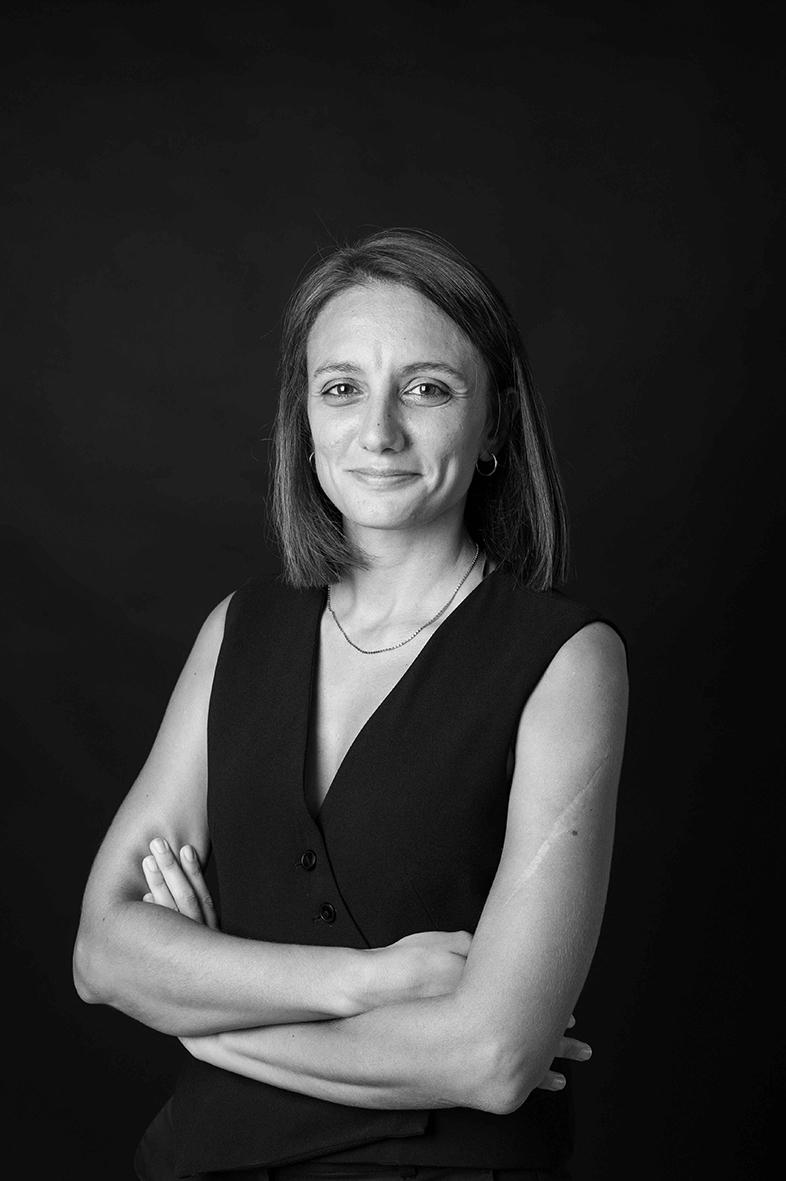 Elyse Tonna
The project unfolds across multiple rooms of the palace, with artists developing works in direct response to specific spaces. According to Tonna, this approach was central to the curatorial vision. “The site isn’t a backdrop here,” she says. “It’s an active collaborator. Each work grows out of a particular room, its function, its rhythms and its afterlives.”
In the historic kitchen, Victor Agius explores cycles of heat, cooling and preservation, framing transformation itself as an inherited practice. “This isn’t about symbolism,” Tonna notes.
“It’s about recognising how processes like cooking, storing and maintaining are forms of knowledge passed through repetition.”
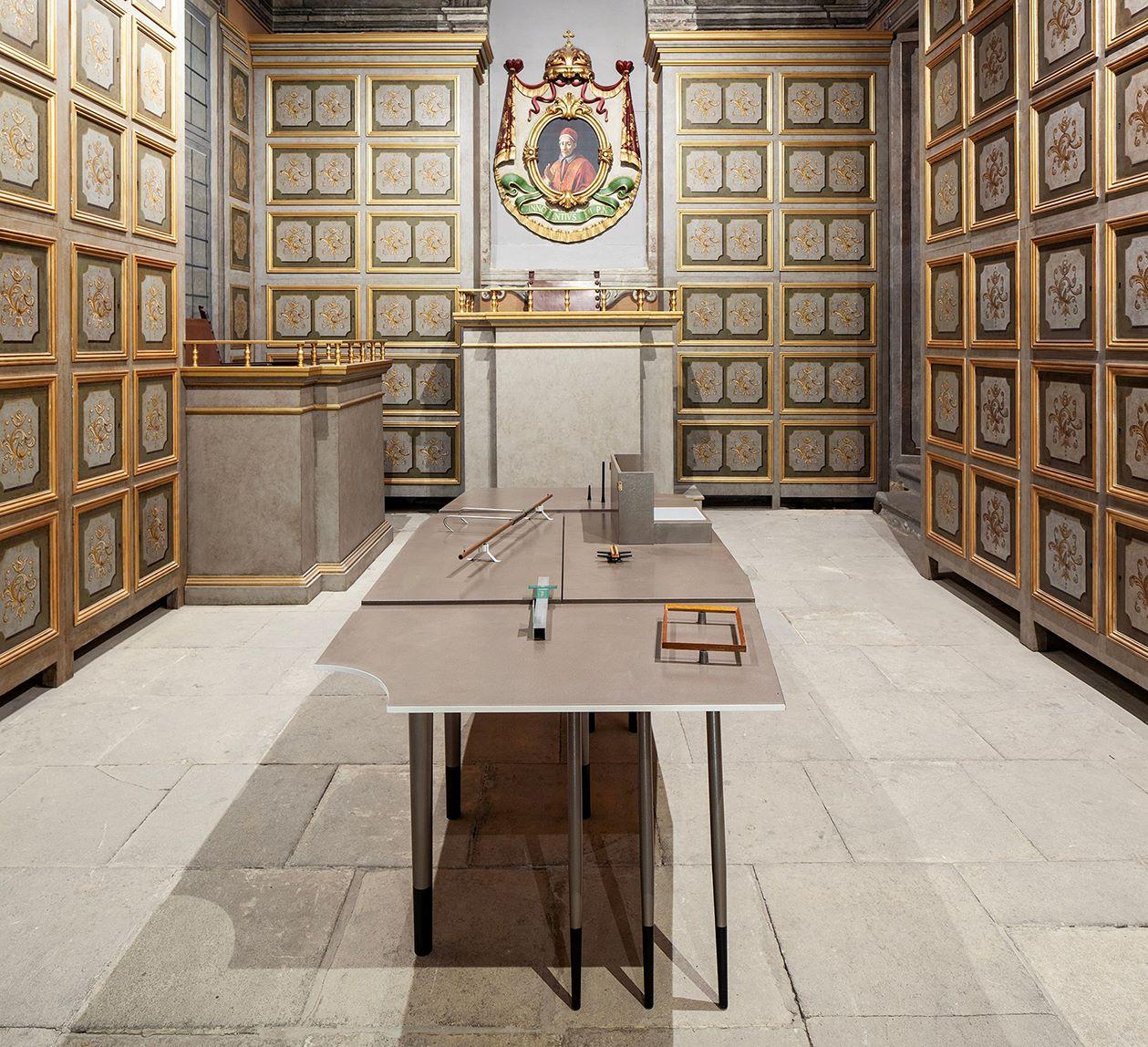 Table for Uncertain Use by Tom Van Malderen
Movement becomes a form of archive on the staircases, where Julian Micallef uses analogue film to trace gestures accumulated over time. His work extends beyond the exhibition through participatory workshops. “Julian is interested in how bodies leave traces,” Tonna says. “The analogue process mirrors that – it’s slow, physical and dependent on collective action.”
Water, sediment and debris emerge as alternative archives in Sheldon Saliba’s installations, which activate wells and subterranean chambers. These works reveal long-term relationships between domestic life, neglect and care.
Nearby, Jacob Saliba’s living micro-ecosystems in the reception room highlight tensions between stewardship and confinement. “Both works ask uncomfortable questions about control,” Tonna reflects. “Who decides what is protected, and at what cost?”
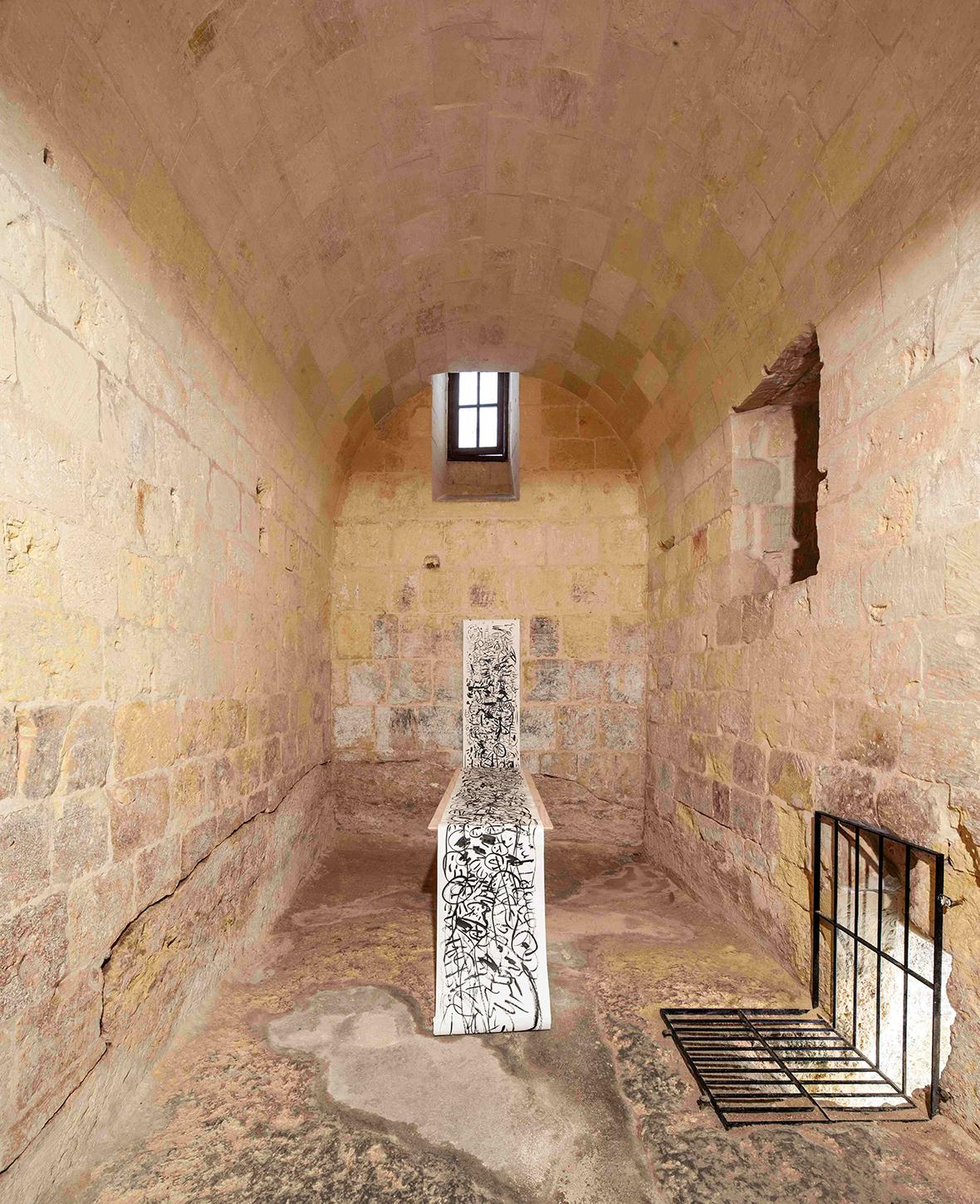 Fragments I by Ryan Falzon
Authority itself is examined through subtle gestures. In the Cancelleria, Tom Van Malderen reimagines the courtroom table as an object that almost disappears into its surroundings.
Public response becomes another layer of the institution – something that circulates, accumulates and changes the site
“Neutrality is never neutral,” Tonna says. “The furniture of power choreographs behaviour, often invisibly.” In contrast, Matthew Schembri’s durational writing performances introduce time and presence as materials, offering what Tonna describes as “a quiet resistance to procedural record-keeping.”
Memory and erasure come into focus in the former prison cells. Ryan Falzon works with fragments, rumour and myth, while Wioletta Kulewska Akyel uses frottage to lift scratched inscriptions from the walls, transforming them into paintings and fresco-like fragments. “These marks are fragile, damaged, but persistent,” Tonna explains. “They carry resilience without certainty.”
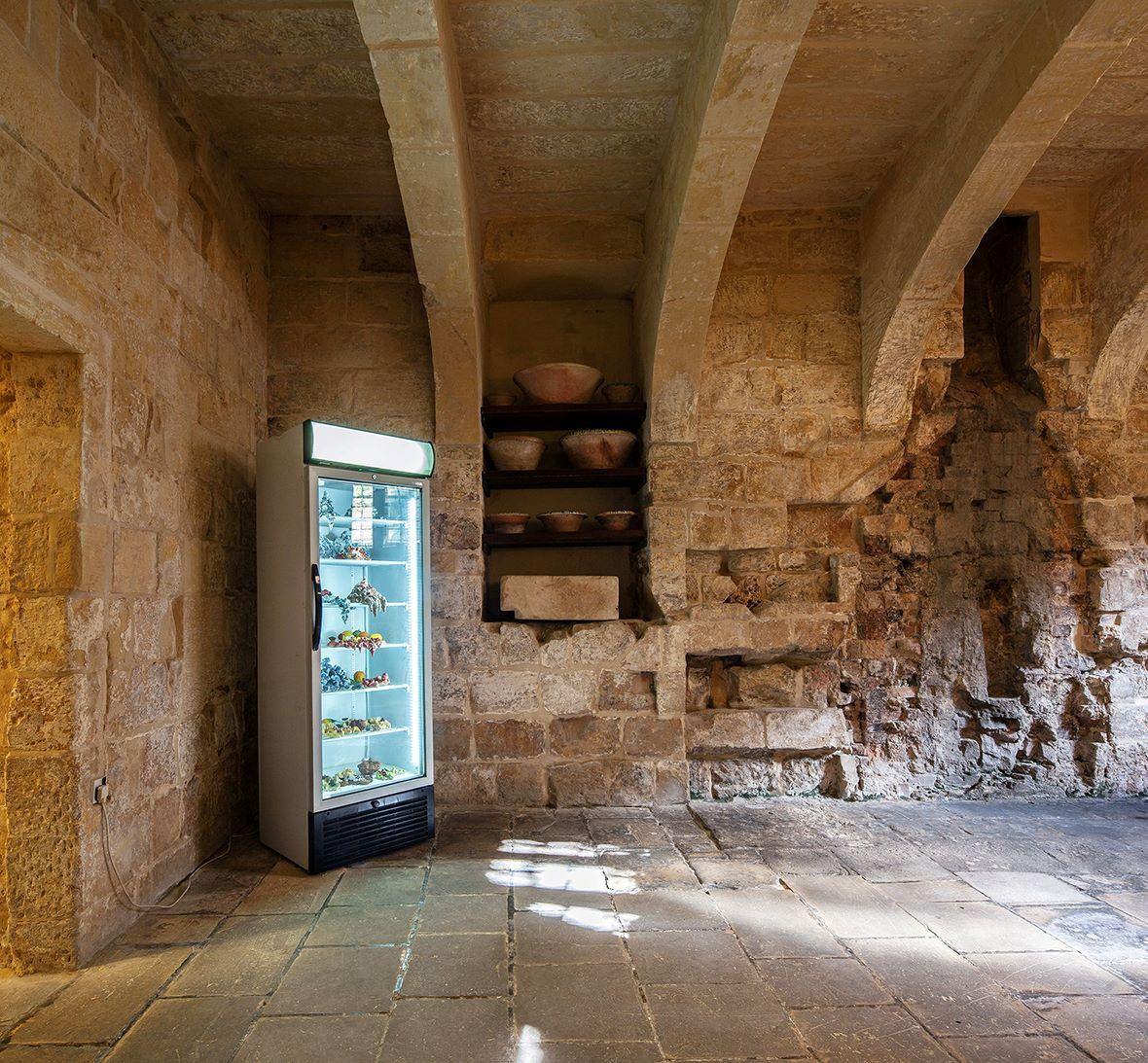 Transmutations by Victor Agius
Visitor voices also form part of the exhibition. Laura Besançon’s work unfolds across three locations, collecting guestbook notes, overheard remarks and recorded reflections. “Public response isn’t an add-on,” says Tonna. “It becomes another layer of the institution – something that circulates, accumulates and changes the site.”
Beyond the exhibition, Moving with the Wind, Like Waves includes a public programme of performances, workshops and guided activations. Children work with drawing, clay and frottage; adults gather around food to discuss ecological knowledge; movement-based sessions explore embodied memory. “We wanted engagement to be experiential,” Tonna says. “Learning happens through making, moving and being present.”
At a time when heritage sites are often expected to offer clear narratives, Tonna believes contemporary art can do something else entirely. “This project isn’t about resolving history,” she says. “It’s about creating conditions to listen – to what was never written, but never entirely disappeared.”
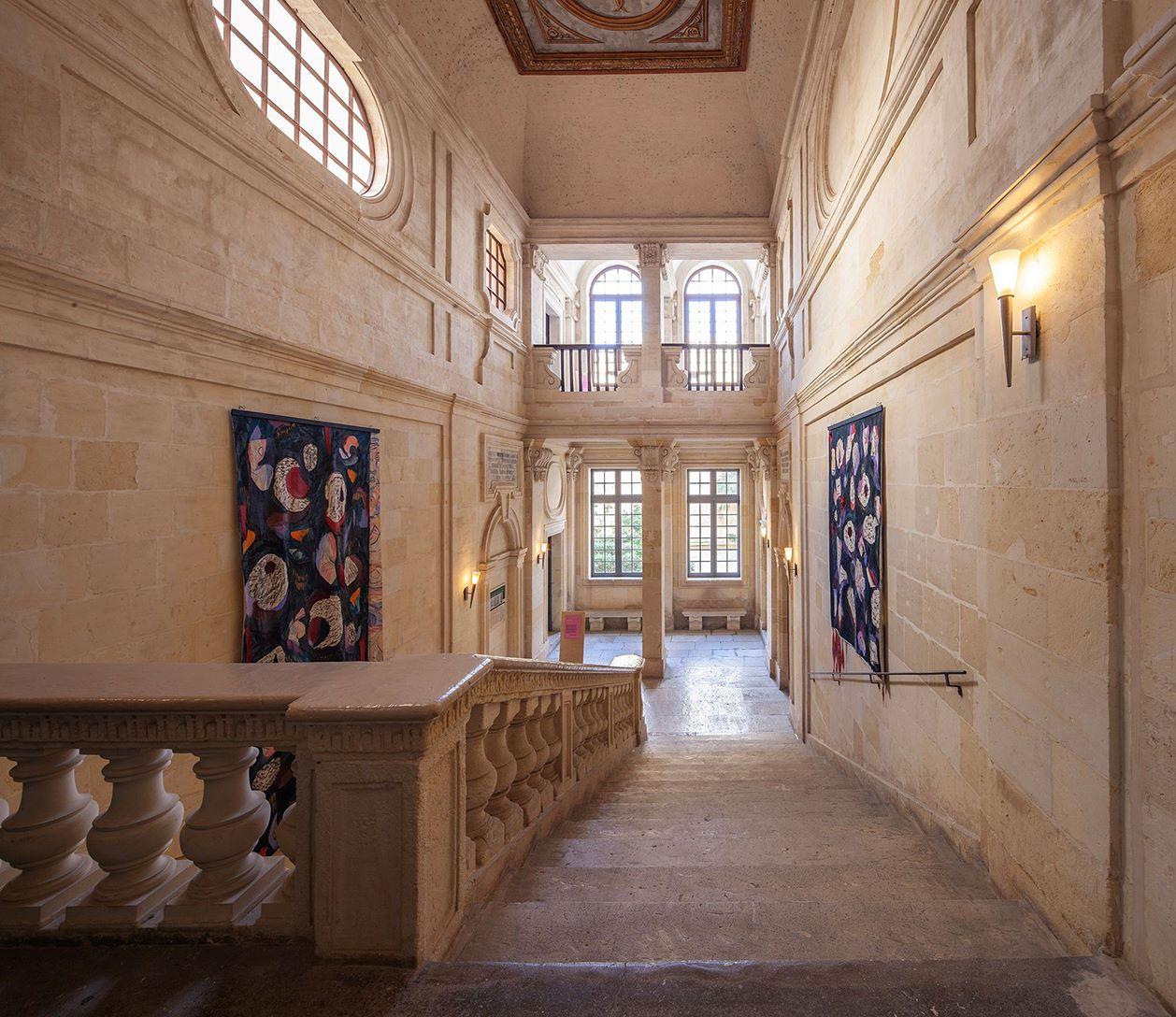 Truth Has Two Faces and the Snow Is Black by Wioletta Kulewska Aykel
The palace, she adds, remains unchanged in structure, but altered in perception. “It’s no longer still,” Tonna says.
Moving with the Wind, Like Waves is a contemporary art project developed and curated by Elyse Tonna and commissioned and supported by the Bank of Valletta Foundation. The exhibition is open until January 4 and subject to purchasing of a museum ticket. Check out the project’s programme of events on its social media channels. Get in touch on mwwlw.exhibition@gmail.com for more information.