The cost of luxury: growth is great, but it’s not enough, experts warn
An entrepreneur, a sociologist and an economist react to Robert Abela’s Times of Malta interview
While it is positive for a country’s prime minister to boast about affordable boats and cars amid global uncertainty, economic growth driven by population growth and construction is masking a severe infrastructure problem and productivity crisis, according to three experts.
Times of Malta asked economist professor Stephanie Fabri, sociologist professor Michael Briguglio and entrepreneur and economist Marisa Xuereb to react to Robert Abela’s interview last weekend.
During that interview Abela strongly defended Malta’s aggressive economic growth model, arguing that his policies have turned former luxuries like cars and boats into affordable realities for ordinary people.
He argued that the greatness of his government lies in making luxuries accessible, transforming an economy where people once begged for basic wages into one where citizens can now afford new vehicles, modest boats, and multiple holidays abroad.
When confronted with the negative side effects – such as an additional 46,000 cars on the road since 2022 – the prime minister said people must accept that newfound wealth comes with a price. “Life has trade-offs,” he said, and you “can’t have the cake and eat it”.
But the experts argue that measuring national success by consumption ignores a failing infrastructure, a massive shortfall in public investment, and an economy that is failing to become more efficient.
‘Boat owners are a tiny fraction’
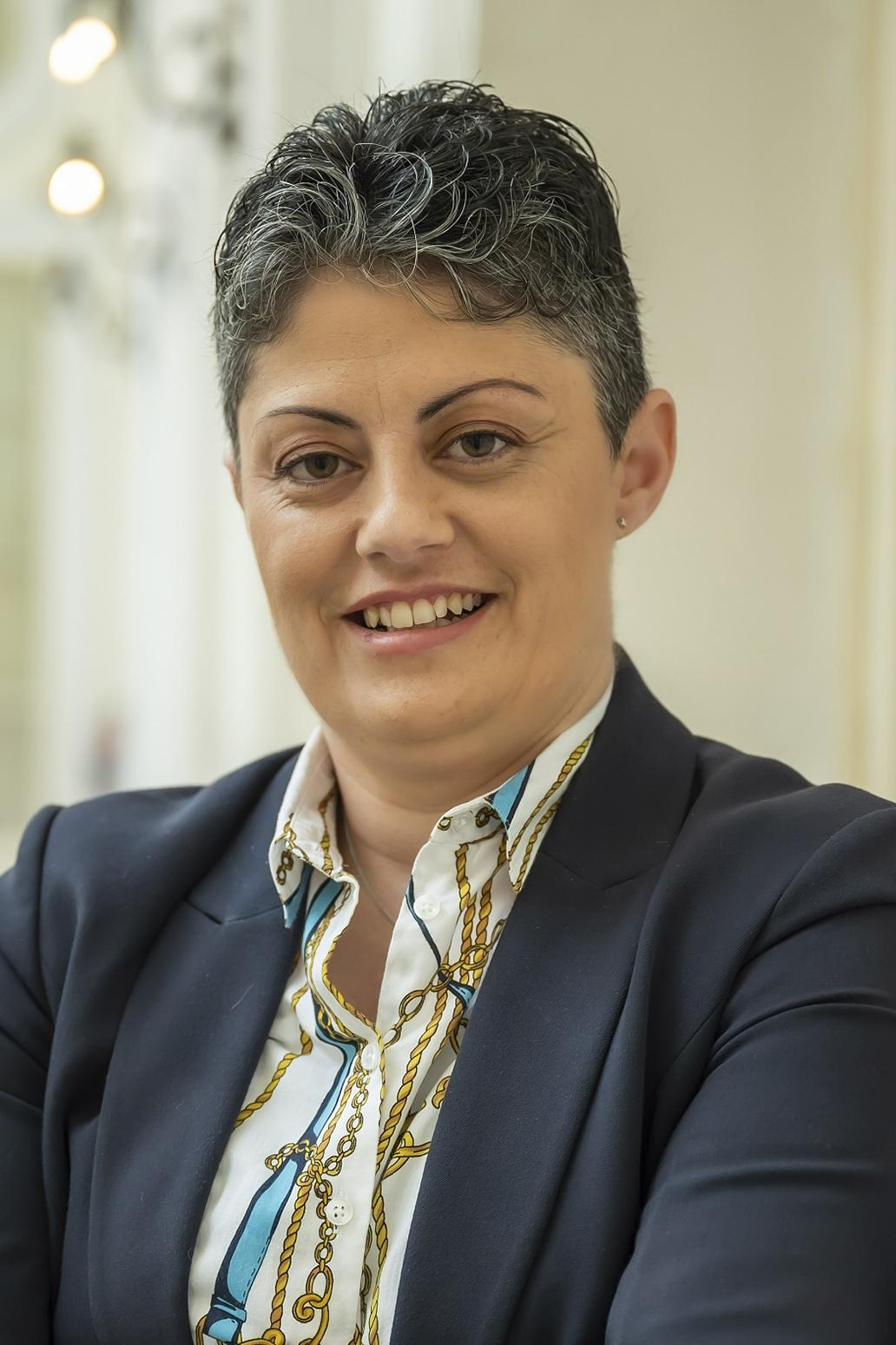 Economist, entrepreneur and former Chamber president Marisa Xuereb
Entrepreneur and economist Marisa Xuereb criticised Abela’s focus on material consumption and said that pointing to boat owners as a symbol of national prosperity is misleading.
While the number of private boats under 24 metres has grown from 16,000 in 2013 to over 20,000 today, this still represents a tiny, unrepresentative fraction of the population, the former Chamber of Commerce president argued.
More concerningly, many recent boat owners are linked to industries like property development, which have boomed at the direct expense of public well-being, she said.
“You can run an election campaign by dishing out benefits targeting specific groups and make sure that just about everyone is promised something. And that is essentially what we saw in the recent electoral campaign. But when that is over and you’re in government, it becomes more challenging because people start asking about when they will be getting what they were promised. And that’s when all the talk about time frames and trade-offs comes into the picture,” she said.
“And people react to that. The more fantastic the pre-election talk is, the less amenable people will be to talk of protracted implementation and trade-offs, and the more aggressively they will react when groups that are perceived to be doing better than others are paraded as evidence of widespread prosperity.”
We ignore the impact on the quality of both the tourism experience and life for the locals
By celebrating metrics like the number of boats, cars and holidays, she argues, the government continues to measure the wrong things while ignoring the urgent need to fund infrastructure by charging a fair price for the private use of public resources.
“We keep on flaunting increasing tourism numbers and claiming they are sustainable because they are necessary to sustain continued investment in property and ignore the impact on the quality of both the tourism experience and life for the locals, not to mention the irreversible degradation of the environment,” she said.
“We miss out on opportunities to talk about the importance of upskilling and becoming more productive, potentially because we presume that people would rather hear about boats than about work and education.”
‘He was speaking to the silent majority’
 Sociologist professor Michael Briguglio
Sociologist professor Michael Briguglio said that while his comments may have been infuriating to many people, Abela was reflecting the sentiment of the silent majority – the people who are not out on the streets protesting, or sharing their opinions on social media, but who silently want the economy to continue to grow the way it is, and it is this majority that decides who wins the election.
Abela knows this and spoke to these people throughout the campaign, and so his comments last weekend were faithful to and consistent with the promise he made to the silent majority.
And this silent majority behaves in a contradictory way, Briguglio added. They love to complain about traffic, overdevelopment and mass tourism, yet they simultaneously invest in property, buy more cars and rent out apartments to tourists.
“They accept that as the price they must pay for personal financial comfort and Abela understood that, which is why he spoke that way,” he said.
“He knew he was speaking to a silent majority that already knows, deep down, that it is willing to sacrifice a lot for a little more wealth.”
However, Briguglio warned that this tolerance has its limits and that the tools Abela is promising to use to mitigate this price are hardly enough to handle the mounting pressure.
“Even the people who have it good can feel that the island’s lived reality is becoming increasingly uncomfortable,” he said.
He was speaking to a silent majority that already knows, deep down, that it is willing to sacrifice a lot for a little more wealth
“You cannot walk on a pavement in Sliema without bumping into a construction site, tripping over broken concrete, or slipping on water seeping out on the street from air conditioners.”
Briguglio questioned whether the government is giving enough importance to its own well-being index and to social impact assessments over projects and pledges, and whether the economic model is productive enough for the price people are paying for it.
“We’re still not having a serious discussion over whether our economic model is sustainable,” he said.
Growth without productivity
 Economist professor Stephanie Fabri
Both Xuereb and economist professor Stephanie Fabri raised concern over the underlying math of Abela’s economic strategy.
In his interview, Abela said the economy will need to add a net influx of around 14,000 foreign workers annually to keep real GDP growth at 4%.
Xuereb took aim at that, arguing that an influx of 14,000 workers represents exactly 4.2% of the existing workforce (which currently stands at 333,000).
This proves that the government is not planning to achieve any part of its 4% economic growth through improved efficiency or productivity. Instead, more money will only come because there will be more people.
“Our economic growth remains totally reliant on headcount,” she said.
“In the age of AI, this is not just lack of ambition, but lack of foresight on the potential impact of AI on the job market and the potential adverse economic and social consequences of not anticipating that and taking proactive actions to make sure there are enough jobs to go round and the local population is well equipped to take up those jobs when the impact of AI on the job market becomes a systemic reality.”
Fabri agreed that Malta has reached a critical turning point where the conversation must change.
She said that while Malta should not apologise for its past economic growth – which successfully created jobs and raised incomes – the country can no longer rely on yesterday’s formula.
The debate is no longer whether Malta should grow. It is whether Malta can grow differently
“Abela is right about one thing: Malta should not apologise for economic growth. Growth has created jobs, increased incomes and given many families opportunities that simply did not exist a decade ago. Prosperity should never become politically unfashionable,” she said.
“But every successful economy eventually reaches a point where the question changes. The debate is no longer whether Malta should grow. It is whether Malta can grow differently.”
She said that means shifting from growth driven by numbers to growth driven by value.
Fabri argued that instead of constantly expanding the workforce, both businesses and government ministries need to deploy AI and digital technologies to generate higher value with the exact same number of people.
“That starts with productivity. Every business should be asking how artificial intelligence, automation and digital technologies can create more value with the same workforce. Every ministry should be asking the same question,” she said.
‘We can experiment because we are small’
She urged policymakers to view green and digital transitions not as financial burdens or environmental obligations, but as aggressive industrial policies designed to keep Malta competitive.
And Malta has a great advantage here: it can experiment because it is small, she added.
“While others spend years debating reform, Malta can experiment. We should stop thinking of ourselves as Europe’s smallest member state and start thinking of ourselves as Europe’s living laboratory,” she said.
“Pilot autonomous transport. Test drone logistics. Become the first country to integrate AI across schools and public services. Trial smart electricity grids and circular economy zones. If they work, export the expertise. That is how small countries become influential.”
Building for the influx
One of the biggest drivers of prosperity for common people is also one of their biggest frustrations. To sustain a growth model based on adding 14,000 workers a year, the country is locked into a cycle of relentless construction.
During the interview, Abela defended the issuance of permits for 6,000 new apartments annually, saying he cannot strip people of their legal development rights under local plans and warning that doing so would lead to “anarchy”.
He described real estate as a necessary “lubricant” for the economy and guaranteed the property sector would never collapse because the economy will keep growing.
Xuereb took issue with this. She argued the only reason Malta must build 6,000 apartments a year is to house the massive influx of foreign workers required to keep the GDP numbers up.
The investment in infrastructure must match these growth rates
And while landlords benefit from retaining a portion of foreign wages through rent, the wider public pays the price.
The core problem, Xuereb noted, is that public infrastructure investment has completely failed to match these breakneck growth rates.
“The investment in infrastructure must match these growth rates. At this point in time, it actually needs to be higher to catch up with the shortfall of past years when substantial spending that could have otherwise been invested in the infrastructure went to finance COVID and energy subsidies, and investment in healthcare was derailed due to the VGH saga,” she said.
Tourism: volume vs value
The debate over sustainability extends heavily into tourism. Abela expressed satisfaction that Malta has reached a “critical mass” of four million tourists annually, claiming the country can handle the volume because arrivals are now spread more evenly across the entire year rather than being crammed into three summer months. He said new regulations, such as capping hotel room counts and banning new hotels under three stars, was proof he was managing the sector properly.
However, Xuereb dismissed the idea that spreading out arrivals solves the problem. She argued that low value-added tourism remains exactly that, even if it is spread over a longer season.
“It still has a high public cost and relatively low economic gain,” she said.
The true test of a sustainable tourism model is the quality of visitors during peak season, she said, and Malta urgently needs radical interventions to pull itself out of the “cheap booze” market and protect its degrading natural environment.
“We have much more to offer if we manage to clean up,” she said.
‘Don’t deny public frustration’
Xuereb said people’s struggles should not be trivialised and that denying widespread public frustration will ultimately backfire.
“We need more transparency on these issues: publish complete data sets; include those employed with private contractors seconded to public sector jobs in calculations of the percentage of the workforce engaged in public sector activity; answer PQs promptly and comprehensively; commission third-party audits by firms of international standing and publish their results; do not trivialise people’s concerns; implement more proactive rather than reactive interventions and do not be afraid to say why you are implementing certain measures,” she urged the government.
“People generally appreciate honest, decisive leadership if the long-term strategy is clearly explained.”
The next luxuries
Fabri said it is nice to see people enjoying the luxuries they aspire to.
“This is positive. The next luxury, however, is not just higher consumption. It is cleaner air, shorter commutes, world-class digital services, better public spaces and an economy that creates more value without placing greater pressure on our island,” she said.
“Malta has already proven it can grow. The next challenge is far more ambitious: to become one of Europe’s smartest, greenest and most innovative economies. That would be the next growth story worth writing about.”