Couples to get seven days extra leave each under miscarriage leave proposals
Women who miscarry within 22 weeks, and their partner, will be eligible
Updated 5.17pm
Women who experience a miscarriage within the first 22 weeks of pregnancy will be entitled to seven consecutive days of miscarriage leave, along with their partner, according to new government proposals.
The cost of the leave will be covered by the government, with each person receiving the equivalent of the median wage — just over twice the minimum wage — meaning they could receive up to approximately €600.
The proposed miscarriage leave is separate from sick leave and will be granted in addition to existing entitlements.
However, UHM Voice of the Workers criticised the government for not including parents who lose a child after birth in these proposals, saying this had been part of the discussions with stakeholders but failed to make it into the proposed bill.
Parents whose child dies soon after birth are only entitled one day of bereavement leave.
The UHM on Friday also expressed its "disappointment" that the number of leave days only amounted to seven when the government had indicated during the consultation phase that parents would be granted 10 days off.
Moreover, the union suggested compensation should be "in full, based on the individual's wage". As proposed, bereavement leave compensation would be less than the employee's regular pay in certain cases.
“The UHM believes that if we truly want to recognise human dignity and the mental health of workers, these situations must be addressed in a comprehensive, not partial, manner," the UHM said.
This was echoed by the Nationalist Party who also called for the same miscarriage leave to be extended to parents who lose a child after birth, insisting this would make the law "more inclusive and fair".
The measure proposed by the government will apply to all employees in both the public and private sectors, including part-time workers on a pro-rata basis. Self-employed individuals and those working through employment agencies will also be eligible.
The government will cover the National Insurance contributions of the employer and employee during the leave period.
Besides paid leave, couples will also have access to psychological support.
Parliamentary Secretary Andy Ellul presented the proposals following four months of public consultation. The proposals were approved by the cabinet, during a press conference Thursday.
The proposals will now move to the Employment and Industrial Relations Board for technical discussions, before the government drafts a bill. Ellul was unable to give a timeline for process at the time of publication.
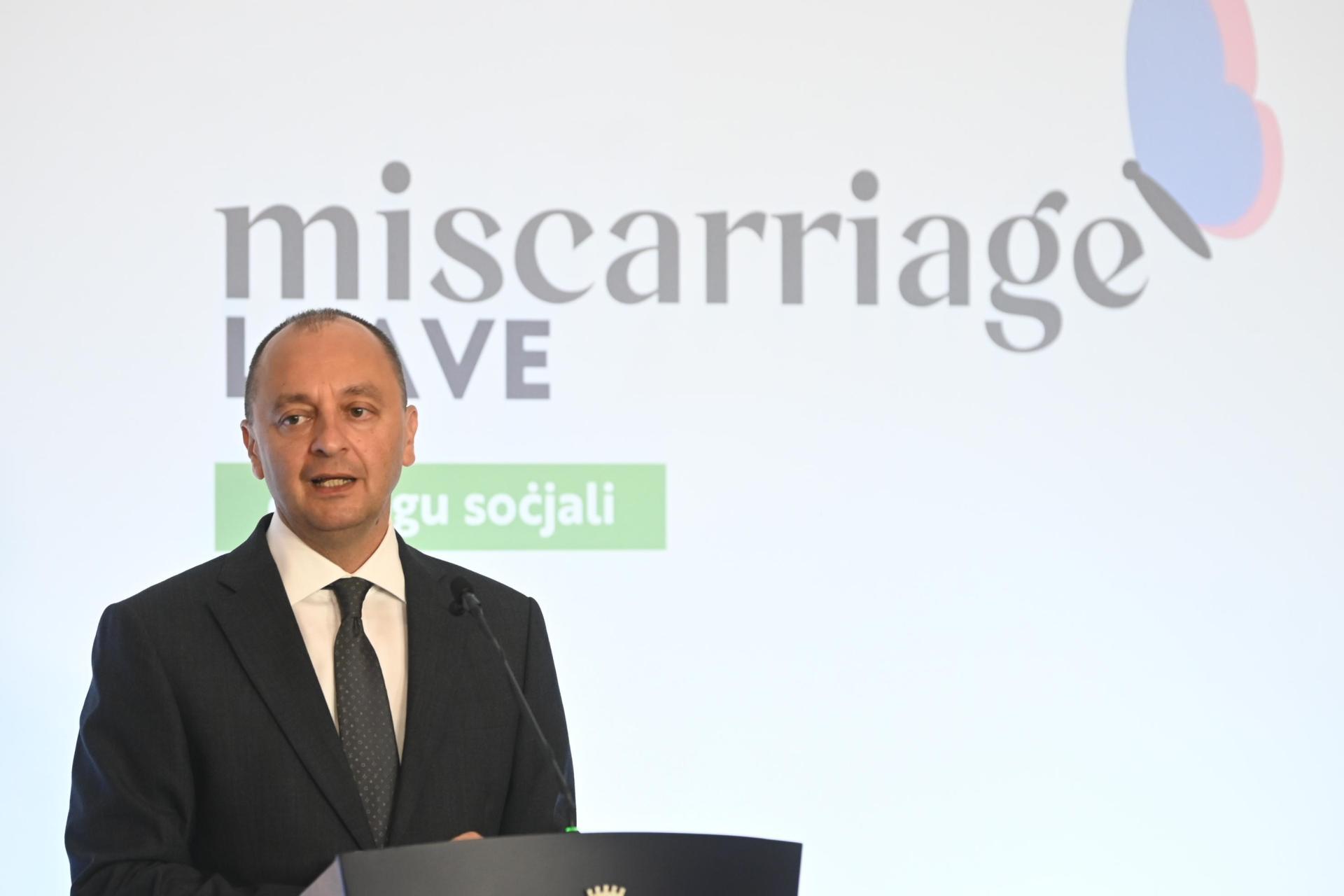 Parliamentary secretary Andy Ellul presenting the miscarriage proposals. Photo: Jonathan Borg
“This proposal acknowledges the pain and sadness these couples will be going through, and sends a message that the government is here to support you. We will be the first country in the world to have a model for miscarriage leave, where the government fully funds miscarriage leave,” said Ellul.
He said the measure, besides aiding partners suffering from trauma, will support the country economically.
“From studies that we carried out, we found that miscarriages cost businesses around €4 million a year,” Ellul said.
Ellul explained the government decided on a seven-day leave period after receiving feedback from the consultation.
The 22-week timeline is based on the World Health Organisation’s definition of miscarriage. Ellul added the government also plans to amend the law so that, after 22 weeks of pregnancy, all women will be eligible for maternity leave.
Currently, maternity leave can only be applied for from the 28th week of pregnancy.
The proposals say that all types of pregnancies will be eligible for miscarriage leave, including cases where a woman is forced to terminate her pregnancy to save her life.
This applies to all couples, regardless of whether they are same-sex or unmarried.
To apply for miscarriage leave, the woman will need to present a medical certificate from a gynaecologist to her employer. The partner can present the same certificate to their employer.
The certificate does not need to include details about how the miscarriage occurred.
Couples will still be eligible for miscarriage leave even if they had not informed their employer of the pregnancy.
In addition to miscarriage leave, Ellul also referred to situations where parents lose a child at a young age; he said the government will be announcing proposals for bereavement leave in the coming days.