Court of Appeal sends Villa St Ignatius hotel proposal back to tribunal
The villa is located within an urban conservation area in Balluta.
Din l-Art Ħelwa has welcomed a decision by the Court of Appeal ordering a rehearing by the Environment and Planning Review Tribunal of a planning decision on the redevelopment of historic Villa St Ignatius into a hotel.
The villa is located within an urban conservation area in Balluta.
The appeal was filed by the environment NGO together with residents and St Julian’s and Sliema councils.
They argued that the EPRT had misapplied planning policy in its decision and any deviation from the site’s residential designation must be contingent on a proper assessment of compatibility with the surrounding neighbourhood and the absence of unacceptable cumulative impacts - considerations that, in this instance, were never adequately examined.
Commenting on the ruling, a Din l-Art Ħelwa spokesperson said: “We welcome the court’s decision, which reaffirms that planning policies must be applied consistently and lawfully. Malta’s heritage and residential communities deserve a planning process that is transparent, accountable and fully respectful of the protections enshrined in law.”
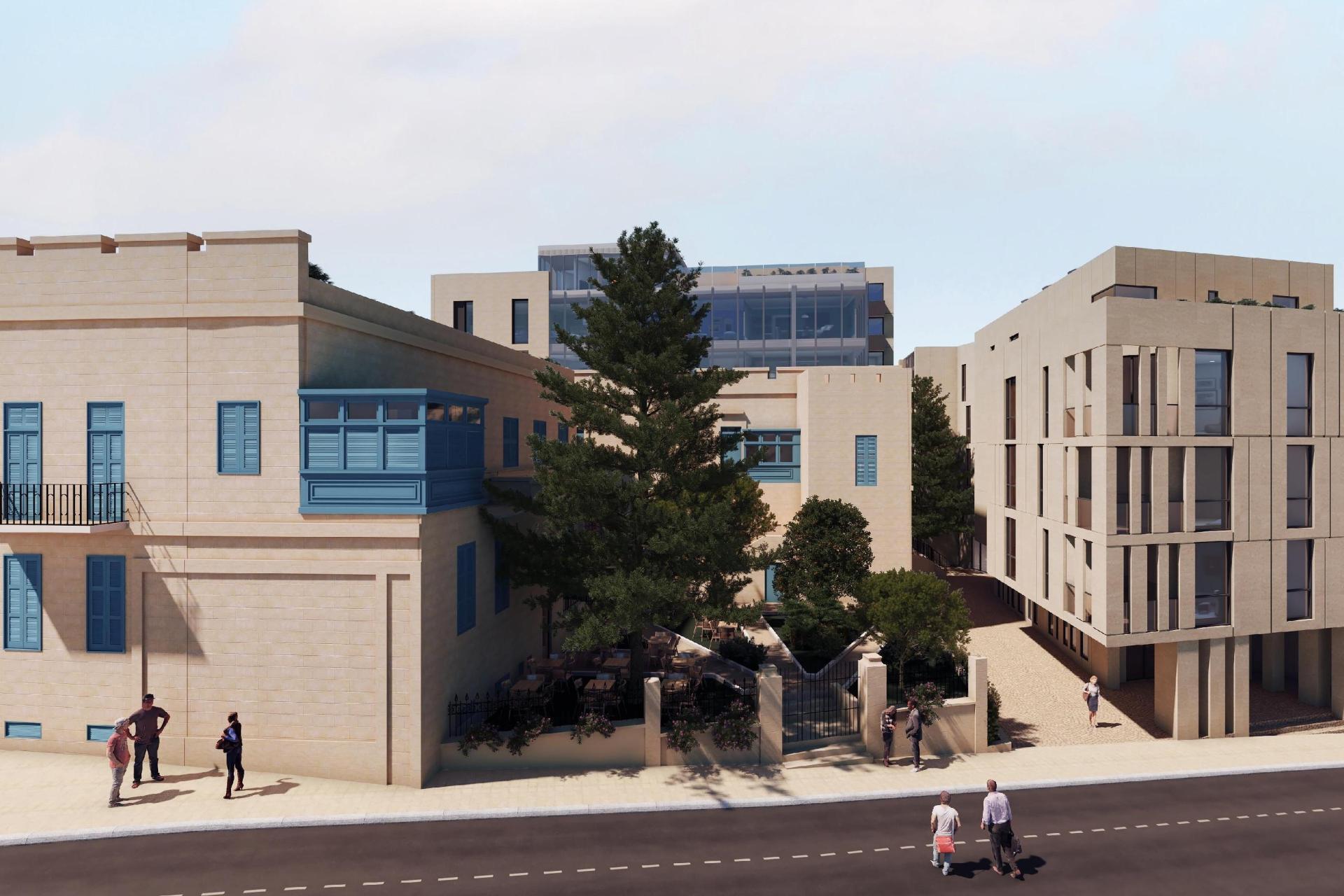 A render of the proposed project. Photo: StudjUrban
Villa St Ignatius was built in the 1820s by British merchant John Watson, a prominent tradesman, who selected the prime site in Balluta and surrounded the elegant residence with extensive gardens, stables, fields and other ancillary structures.
The villa may be one of the earliest examples of Gothic revival architecture in Malta, with distinguishing architectural features including crenellated rooftops and pointed Gothic-style arches. It was also originally painted a bright red ochre and fitted with white trims - an aesthetic which still survives in some sections of the building today.
In 1846, the villa was purchased by the English Missionary Association who converted the villa into a Protestant college, and in 1872 the property was converted into a Jesuit College.